
Amsterdam is a city you read from the water outwards. Concentric canals curve around the old centre, gabled houses lean over the quays, and the streets between them fill with bicycles from early morning. The whole canal ring is a UNESCO World Heritage site, yet it is also where people live, shop, cycle to work and stop for a beer on a café terrace at the end of the day.
The pleasure of a trip here is how much fits into a small space. A morning with Rembrandt, an afternoon in the Jordaan's markets and brown cafés, a free ferry across the IJ to the old shipyards of Noord: all of it is a short ride apart. Book the big museums before you go, learn a few rules of the bike lane, and the city opens up easily.
The Areas
Every area below is a few minutes by tram or bike from the others, so choose by mood rather than distance.
- The canal ring and the Nine Streets — the grand canals and the small cross streets that link them, known locally as De 9 Straatjes, with boutiques, cheese and chocolate shops, canal-house museums and well-regarded restaurants. The most central base, and the most photogenic.
- The Jordaan — a former working-class district of elm-lined canals, galleries, brown cafés and the Noordermarkt, with the Anne Frank House on its edge. It keeps a real neighbourhood feel and suits visitors who like to wander without a plan.
- The Museum Quarter (Oud-Zuid) — the Rijksmuseum, the Van Gogh Museum, the Stedelijk and the Concertgebouw around Museumplein, with high-end shopping streets nearby. Calm, green and well placed for the airport bus.
- De Pijp — lively and international, built around the Albert Cuypmarkt street market and the gardens of Sarphatipark, with terraces and cafés that have drawn creatives and students since the 1960s. About five minutes by tram or ten by bike from the centre.
- Oud-West — bordered by the Vondelpark, with independent restaurants, design shops and De Hallen, a renovated former tram depot with a cinema and a large food hall. A relaxed base for longer stays.
- Noord — directly across the IJ, reached by free ferry from behind Central Station, with green spaces, small villages, new architecture, the Eye Filmmuseum and waterside terraces. For visitors who want space and a creative edge.
- The Eastern Islands — maritime heritage and modern architecture side by side, with the National Maritime Museum, NEMO Science Museum and the Muziekgebouw aan 't IJ. Quieter in the evening, about ten minutes from the centre.

What to See and Do
The Rijksmuseum covers 800 years of Dutch art, from Rembrandt, Jan Steen and Frans Hals to the Cuypers Library with its spiral staircase, and Rembrandt's The Night Watch is the painting most visitors come for. It opens daily from 9am to 5pm, including public holidays. Tickets cost €25 for adults and visitors aged 18 and under go free, but everyone needs to book a start time, including Museumkaart holders, and tickets at the door depend on availability.
Across Museumplein, the Van Gogh Museum sells tickets online only, each with a start time, and there is no ticket desk. Adults pay €25 (€26 from 1 January 2027) and under-18s enter free. Hours change through the year: in most months it opens at 9am and closes at 5pm or 6pm, with Friday openings until 9pm on many weeks, so check the date you want. Next door, the Stedelijk Museum holds a permanent collection of more than 90,000 works, from Mondrian and Picasso to Warhol and Kusama, in a building often compared to a bathtub.
The Anne Frank House, opened as a museum in 1960, preserves the annexe where Anne Frank and her family hid for two years during the occupation. It can only be visited with a ticket bought online for a specific time slot, children included. New tickets go on sale every Tuesday at 10:00, for visits six weeks later. Adults pay €16.50 including the booking fee, ages 10 to 17 pay €7 and under-10s €1, and you can add a 30-minute introductory programme in English before your visit. It is open daily from 9am to 10pm, with shorter hours on a few holidays. A few steps away, the Westerkerk, built in 1631, is the largest Protestant church of its kind in the country; Rembrandt was buried there, its bells appear in Anne Frank's diary, and many of its concerts are free.
Smaller museums reward a slower day. Huis Marseille shows photography in a grand canal house with a courtyard and a modern annex. The Grachtenmuseum (Museum of the Canals) explains how the canals were engineered from swampland, and the Houseboat Museum lets you step aboard the Hendrika Maria, a cargo ship from 1914 turned into a home.

Canals, Bikes and the IJ
The Seventeenth-Century Canal Ring Area inside the Singelgracht was inscribed on the UNESCO World Heritage List in 2010. It was laid out as a new port city, built by draining marshland and digging concentric arcs of canals west and south of the medieval centre, and UNESCO describes it as a model of large-scale town planning that served as a reference until the 19th century. The city counts 165 canals in all. A canal cruise remains the easiest introduction; most routes pass along the Prinsengracht and the Brouwersgracht in the Jordaan or the Herengracht, one of the oldest and grandest canals.
Behind Central Station, blue-and-white ferries cross the IJ for free, carrying pedestrians, cyclists and mopeds. The busiest route runs to Buiksloterweg for the Eye Filmmuseum and Tolhuistuin and also runs through the night; others go to IJplein and to the NDSM Wharf, with the street-art museum STRAAT, restaurants and cultural spaces. You simply walk on, with countdown boards above each berth showing the next departure.
Cycling is the most Amsterdam way to get around, and a few rules make it easy. Ride in the bike lane on the right, marked with white lines and bike symbols, and keep off footpaths, pavements and shopping streets. Signal before turning by putting your hand out, cross tram rails at a sharp angle so your tyres do not get caught, and use front and back lights after dark, which is required by law. Around 8am thousands of bikes are on the road and junctions queue up, so wait for the rush to pass if you can. Amsterdammers are known for running red lights; do not copy them. Park only in racks or bike garages: bikes left elsewhere may be removed to the Fietsdepot, where reclaiming one costs €25.

What to Eat and Drink
Dutch food is happiest when it is informal. Start with haring, raw herring from one of the herring carts found all over the city: ask for a broodje haring, served in a small roll with pickles and onions. It is said to be at its sweetest between May and July. If that feels too brave, try kibbeling, battered and fried pieces of white fish, at a street market. Stroopwafels, two thin waffles stuck together with syrup, are best eaten warm from a market stall, and bitterballen, crisp fried balls served with mustard, are on the menu in almost every bar.
In the Jordaan, Dutch apple pie, deep and spiced with cinnamon, is served with whipped cream; Winkel 43 and the nearby Café 't Papeneiland are both known for theirs. The rijsttafel, an Indonesian-influenced meal of many small dishes, is part of the city's table too, a reminder of the colonial period. In colder months look for stamppot, potatoes mashed with vegetables such as kale or sauerkraut and served with sausage, and around New Year for oliebollen, sugared doughnuts sold from street stands.
To drink, try jenever, the juniper spirit that came before gin, served in a tulip-shaped glass and often alongside a beer, a pairing called a kopstootje. Proeflokaal A. van Wees, a distillery tasting room on the Herengracht since 1973, is a good place to learn. For a market lunch, the Albert Cuypmarkt in De Pijp has 260 stands from Monday to Saturday, and the Noordermarkt in the Jordaan has a farmers' market on Saturdays.
Getting There and Around
From Schiphol, trains run eight times an hour to Amsterdam Central Station and take about 17 minutes. You can check in at the yellow card readers with a contactless bank card or phone. If you are staying near the museums, the Amsterdam Airport Express bus 397 leaves every ten minutes during the day from stop B17 outside Schiphol Plaza and runs to Museumplein, the Rijksmuseum and Leidseplein without a change; the Niteliner N97 runs hourly at night. A one-way ticket costs €6.50 and a return €11.75, and the driver accepts only debit or credit cards, not cash. A taxi from the official rank to the centre typically costs €35 to €55.
In the city, trams, buses and the metro are run by GVB. The simplest way to pay is OVpay: tap your contactless bank card or phone when you board and again when you get off, with no app needed. When you travel on GVB this way, you pay a maximum of €10.50 per day, however many journeys you make. Only one person can check in per card. Much of the centre is walkable anyway.
When to Go
Spring is the classic season. Keukenhof, the bulb garden at Lisse, opens from 18 March to 9 May 2027, and on 27 April the whole city turns orange for King's Day, the king's birthday and one of the biggest street parties in the country. Early summer brings the best of the herring, and long evenings on the canals.
Autumn is lively, with Amsterdam Dance Event in October and the Van Gogh Museum holding extra evening openings for it. In winter, the Amsterdam Light Festival fills the canals with light art; its 15th edition runs from 26 November 2026 to 17 January 2027.
Good to Know
Book the big three before you travel. The Anne Frank House releases tickets six weeks ahead, every Tuesday at 10:00, and sells nothing at the door; the Van Gogh Museum is online only; the Rijksmuseum requires a start time. The I amsterdam City Card does not give a discount at the Anne Frank House and does not cover the airport transfer.
Amsterdam charges a tourist tax of 12.5% of the room price, excluding VAT. Since 1 January 2026 VAT on hotel stays has also risen nationally, to 21%, so the total tax on a hotel night is about 33.5%; check whether a quoted rate includes it. Carry a contactless card: the airport bus takes no cash.
Our Picks
- To seeRijksmuseum
800 years of Dutch art and The Night Watch; book a start time, and under-18s go free.
- To seeAnne Frank House
The secret annexe, best with the 30-minute introductory programme; tickets go on sale six weeks ahead.
- To seeHuis Marseille
Photography exhibitions in the period rooms of a canal house, with a courtyard and a bookshop.
- To seeEye Filmmuseum
A film museum on the far bank of the IJ, reached by the free ferry from behind Central Station.
- To eatAlbert Cuypmarkt
The country's largest outdoor market, with herring and fresh stroopwafels, Monday to Saturday.
- To eatWinkel 43
Deep Dutch apple pie with cream; come on a Saturday for the farmers' market outside.
- To eatFoodhallen
A large food hall in a former tram depot, next to the daily Ten Katemarkt.
- To drinkCafé 't Papeneiland
A brown café in a building from 1642, also known for its apple pie.
- To drinkProeflokaal A. van Wees
A distillery tasting room since 1973 for jenever, old Dutch liqueurs and bitterballen.
Where to Stay

Rosewood Amsterdam
About 1 km from the centre, within walking distance of the Rijksmuseum, the Flower Market and the Munt Tower, with a bar, spa and fitness centre.
View on TRVL ↗
Grand Hotel Amrath
An Art Deco hotel in the heart of Amsterdam with 165 individually decorated rooms, a full-service spa and an indoor pool.
View on TRVL ↗
Hotel Cornelisz
On PC Hooftstraat, close to the Rijksmuseum, Museumplein and the Van Gogh Museum, with a tour assistance desk and concierge.
View on TRVL ↗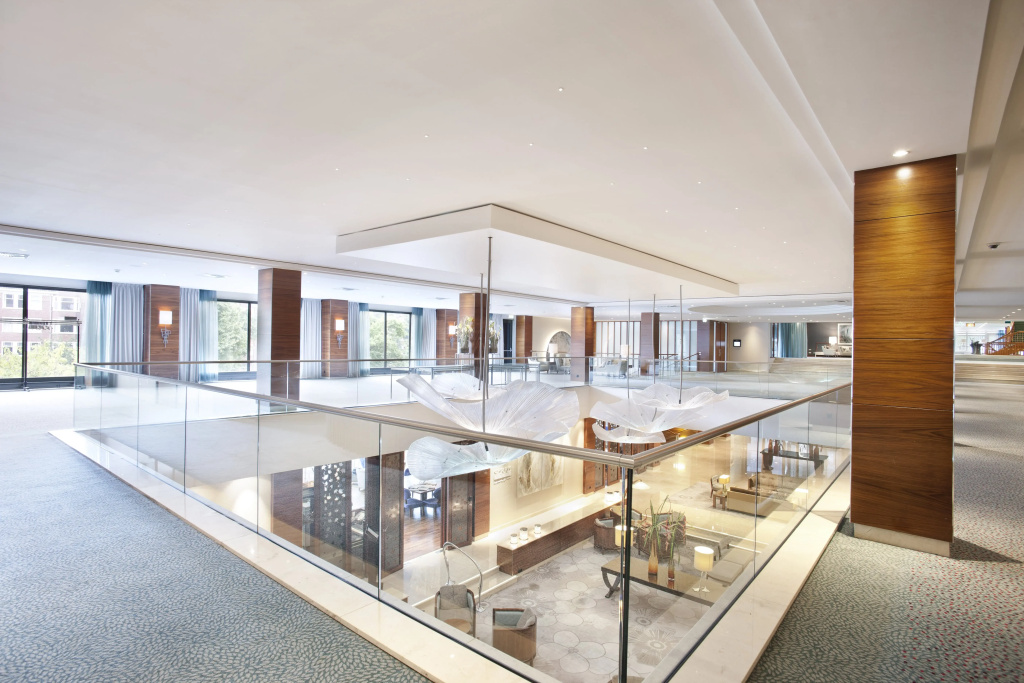
Hotel Okura Amsterdam
A luxury five-star hotel within 2 km of the historic centre, with a spa.
View on TRVL ↗The Essence
Amsterdam is generous to anyone who slows down. Book your museum slots, then leave the rest of the day open: a ferry across the IJ, a slice of apple pie by the Noordermarkt, a herring from a cart, a glass of jenever in an old tasting room, and an evening ride home along canals that have shaped the city for four centuries. It is a place built on water and made for living in, and it shows you both, one bridge at a time.