
Arrive by sea and Ermoupoli explains itself before the ferry has tied up: a town of pale neoclassical facades rising from the harbour, and above it two hills, each crowned by a church. Greece's tourism board reads them as the portrait of two communities that have shared the island for centuries, Orthodox below and around, Catholic on the medieval hilltop of Ano Syros. Ermoupoli, the Town of Hermes, was founded in the 1820s by refugees from other islands during the Greek Revolution and within a few decades was the leading commercial and industrial centre of Greece and its main port.
That history left Syros with something rare in the Cyclades: a real town that lives all year. Ermoupoli is the capital of the South Aegean region, the island had 21,124 residents at the 2021 census, and the ferries from Piraeus run in every month. This guide is for planning a trip that mixes marble squares and an opera house with sandy bays on the west coast, a box of loukoumi for the ferry home, and, if you can, a visit outside the summer, when the island is at its most itself.
The Areas
Ermoupoli is the natural base, and the best one if you are coming without a car. The town centre, around Miaouli Square and the harbour front, puts the museums, the theatre, cafés and the bus station within walking distance, and as the island's capital it is a working town all year. Its mansions and squares date mostly from the 19th century; the first street plan was laid out in 1837.
Vaporia, on the slope east of the centre, is the old shipowners' quarter: neoclassical mansions, palm trees and terraces stepping down to the sea, with the church of St Nicholas, the town's patron, at its edge. It suits couples looking for a quieter, more elegant corner of town that is still a short walk from everything.
Ano Syros, the medieval settlement built on the hill of San Giorgio from the early 13th century, is a tangle of white houses, arches and stepped alleys about a kilometre from the harbour. Staying here means views over the bay and the islands opposite, and a climb at the end of the evening, so it is best for those who travel light and enjoy walking.
The coastal villages are where to go for a beach holiday. Galissas and Kini on the west coast, Finikas and Posidonia in the southwest, and Vari and Azolimnos in the southeast are all built around beaches and seaside tavernas. Apano Meria, the rugged north, is the wild end of the island, with stone villages such as San Michali and beaches reached by boat or on foot.

What to See and Do
Start at Miaouli Square, the marble-paved heart of Ermoupoli, lined with palm trees and watched over by the Town Hall designed by Ernst Ziller. You can step inside for a coffee in its arcaded atrium under a glass ceiling. The building also houses the town's Archaeological Museum. This is the square where the town gathers, for the evening stroll and for the big moments of the year.
A few minutes away, the Apollon Theatre is one of the reasons to come. Designed by the Italian architect Pietro Sampo, who drew on four Italian theatres including La Scala in Milan, it opened in 1864 and is often described as Greece's first opera house. It still has a full programme, from plays to festivals, and houses a small Theatre Museum. When it is not in use for rehearsals or performances, visitors can look inside daily from 10:00 to 14:00 and 18:00 to 21:00; check the theatre's online calendar before you go.
The Industrial Museum of Ermoupolis, spread across four historic buildings, tells the story of how this town of refugees became an industrial port: tanneries, printing, shipbuilding at the Neorio yard, steam navigation, and a hall devoted to loukoumi. It opens Tuesday to Saturday, 08:30 to 14:30. The Greek Steamship Company was founded here in 1856, which gives you a sense of how central the town once was.
Then climb to Ano Syros. The lanes lead up to the Catholic Cathedral of St George at the summit, with wide views over the island and the Cyclades. On the main street, the Piazza, a two-part exhibition is devoted to Markos Vamvakaris (1905 to 1972), the rebetiko musician born on Syros, with his personal belongings, instruments, records and an audio guide drawn from his autobiography. A free island bus runs up from the Agora stop in the morning and evening; a taxi costs about €6.
Beaches and a Year-Round Island
Syros has beaches for every kind of day, and most are on the gentler west and south coasts. Six carry the Blue Flag: Galissas, Kini, Finikas, Agathopes, Vari and Azolimnos. Galissas, 9 km from Ermoupoli, is sandy with shallow water and suits families and water sports. Kini is a long sandy beach shaded by tamarisks, about 20 minutes from town by bus. Vari is a large sandy bay with shallow water, good for children. Agathopes, near Finikas and Posidonia, is sheltered from the wind and fully organised.
For something wilder, Delfini lies 2 km from Kini along an unsurfaced road or a 20-minute hike, a pebble beach with turquoise water. In summer small boats run from Kini to the northern beaches of Apano Meria, among them Varvarousa, Aetos, Lia and Grammata, which are otherwise reached only on foot.
What sets Syros apart is that the island does not close when the beaches do. The ferries from Piraeus and the flights from Athens run all year, the Apollon Theatre keeps its programme going well into the autumn, and the calendar is full of reasons to come out of season. Carnival takes over the island before Lent, with a parade from the port to Miaouli Square and the Zeibekia dance in Ano Syros. At Easter, Orthodox and Catholic communities celebrate side by side, and on Good Friday the Orthodox processions meet on the steps of the Town Hall. Summer brings a run of festivals, from the International Festival of the Aegean to rebetiko and jazz.
What to Eat and Drink
Loukoumi is the island's signature. The recipe came to Syros in 1832 with refugees from Chios, and the soft cubes, made by hand from starch, sugar and water and dusted with icing sugar, were added to Greece's national list of Intangible Cultural Heritage in 2019. Flavours run from rosewater and mastic to bergamot, almond and pistachio, and the classic way to eat one is with a Greek coffee. Some say the slightly salty island water is part of the taste.
Halvadopita is the other sweet to take home: almond nougat made with local honey and egg whites, pressed between thin wafers, and an easy snack while you walk the town. Chiou Street, near the market, is the place for both, along with herbs and other local produce.
For the table, look for San Michali, a hard cow's milk cheese from the village of the same name in Apano Meria, a PDO product since 1996, matured for four to eight months and sweet, spicy and nutty; it is eaten on its own or grated over pasta. Louza, pork loin cured in sea salt and red wine with spices, is the island's charcuterie, and local loukaniko sausage is flavoured with fennel. Capers grow wild in the north and turn up in salads and sauces. Most coastal villages have seaside tavernas, and in town Miaouli Square, where locals gather, is the place for a coffee or an evening drink.
Getting There and Around
Piraeus is the main gateway. Blue Star Ferries' conventional ships take about 3 hours 20 to 3 hours 35 minutes, and Seajets' high-speed catamarans about 2 hours; ferries run all year, with up to six daily crossings in high season. Ferries to Syros leave from gates E1, E6 and E7 of the port of Piraeus. From Rafina, closer to Athens airport, there is usually no direct boat: the trip involves a connection via Tinos or Mykonos and takes about five to seven hours, so check the timetable before planning around it.
Syros Airport, Dimitrios Vikelas, lies 3.5 km southeast of Ermoupoli. Flights from Athens take about 25 minutes and run all year, operated by SKY express and AEGEAN, with seasonal flights from Thessaloniki.
On the island, KTEL buses leave frequently from the station in Ermoupoli for the beaches and villages; buy tickets on board and arrive about ten minutes early. Kini is about 20 minutes away by bus, and Galissas 20 minutes direct or 45 minutes on the route round the south. A free town bus climbs to Ano Syros from the Agora stop. Taxis are useful for the evening: Ermoupoli to Finikas costs about €15. For Apano Meria and the remote beaches, a hire car makes life easier.
When to Go
June to September is beach season, with average temperatures of 23 to 25°C, almost no rain and long, sunny days; July and early September are also festival season. May and late September to October are the sweet spot for walking, sightseeing and swimming without crowds: in October the average is around 19°C with nine hours of sun a day.
Winter is mild, averaging 12 to 14°C, and is the wettest time of year, but this is where Syros differs from most islands. Ermoupoli stays fully lived in, the ferries keep running, and carnival in February or March and Easter in spring are two of the best times of the year to visit.
Good to Know
- Ermoupoli is built on slopes and steps; comfortable shoes make the town, and Ano Syros especially, much more enjoyable.
- Check the Apollon Theatre calendar before visiting: it is closed to visitors on rehearsal and performance days.
- The Industrial Museum is closed on Sundays and Mondays.
- Buy bus tickets on board and be at the stop a few minutes early.
- Rafina has no regular direct boat to Syros; Piraeus is the simpler route.
- Loukoumi and halvadopita travel well, so leave room in your bag for the ferry home.
Our Picks
- To seeApollon Theatre
The 1864 opera house by Pietro Sampo; look inside between 10:00 and 14:00 or 18:00 and 21:00, or better, book a performance.
- To seeIndustrial Museum of Ermoupolis
The story of the town's shipyards, workshops and loukoumi across four historic buildings; Tuesday to Saturday mornings.
- To seeMarkos Vamvakaris Museum
Two small spaces with the rebetiko musician's instruments, records and manuscripts, and an audio guide from his autobiography.
- To seeCathedral of St George
The Catholic cathedral at the top of the medieval town, with views over the bay and the Cyclades.
- To walkMiaouli Square to Vaporia
From the marble square and Ziller's Town Hall to the shipowners' mansions and the church of St Nicholas above the sea.
- To swimGalissas
A Blue Flag sandy bay with shallow water, easy for families.
- To swimDelfini
Pebbles and turquoise water at the end of a dirt road or a 20-minute walk.
- To swimAgathopes
A Blue Flag beach sheltered from the wind, fully organised.
Where to Stay
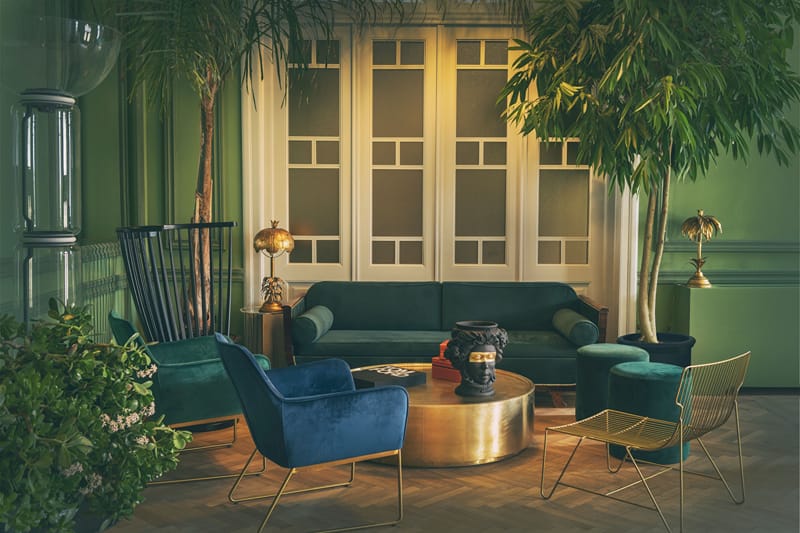
Aristide Hotel Syros
A restored mansion with a marble staircase and Doric columns, nine suites, an art gallery and a rooftop bar with open sea views, in the old shipowners' neighbourhood.
View on TRVL ↗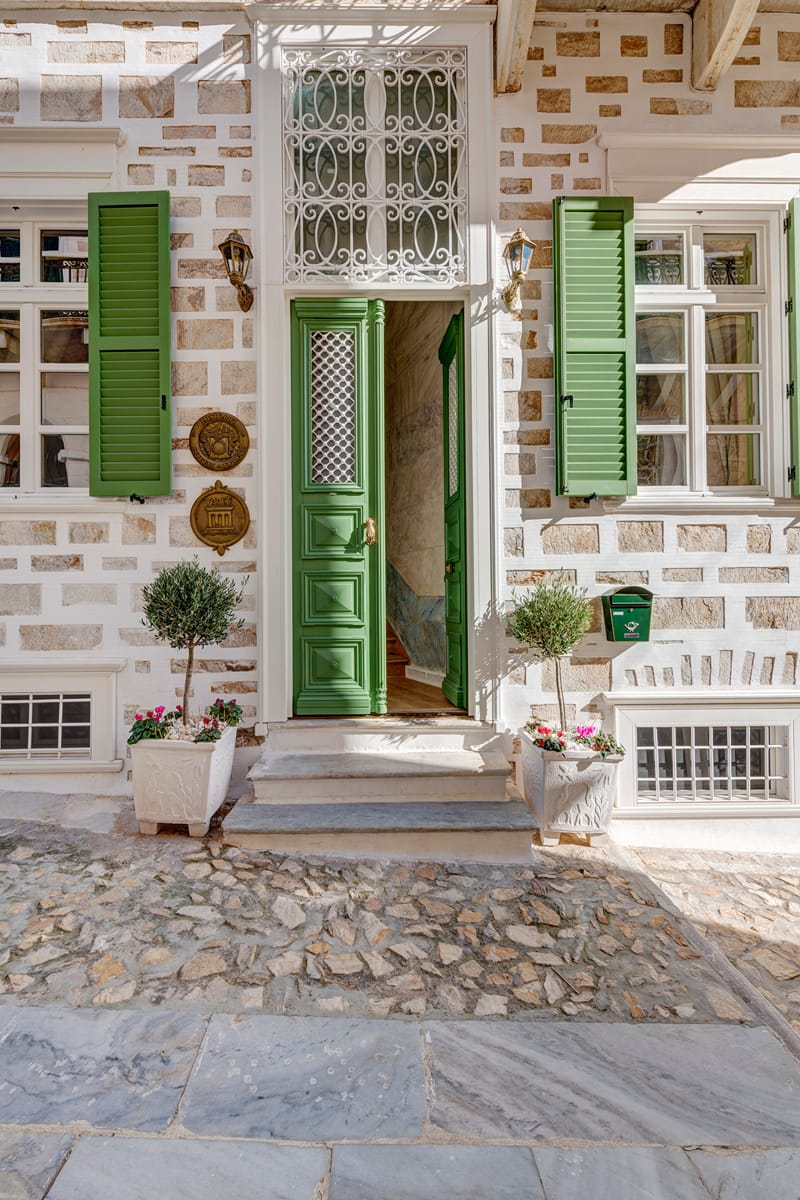
Palazzo Santa Maria
A restored 1874 mansion designated a monument by the Ministry of Culture, with restored frescoes and six individually designed rooms, a member of the Historic Hotels of Europe.
View on TRVL ↗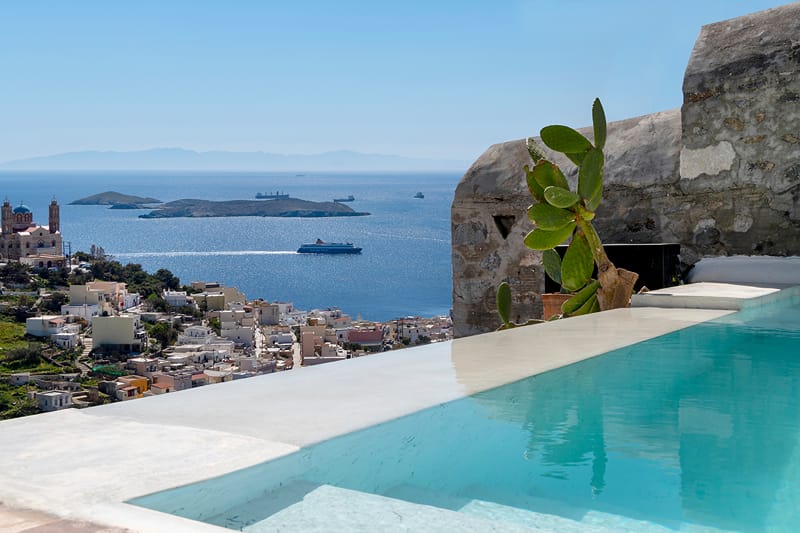
Wind Tales
In the oldest core of the medieval settlement, just below the monastery of St George, looking out over Ermoupoli's harbour towards Tinos, Mykonos, Delos, Paros and Naxos.
View on TRVL ↗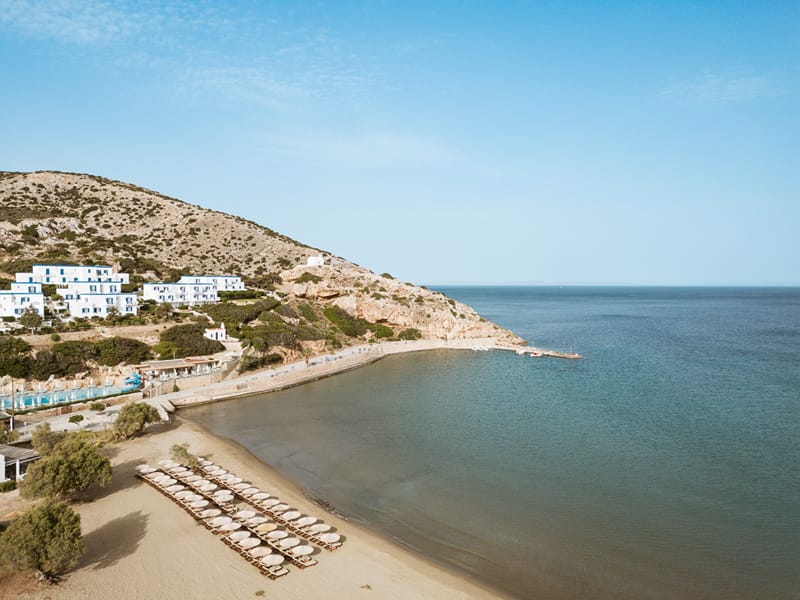
Dolphin Bay Seaside
A resort built amphitheatrically in Cycladic style above the sandy Blue Flag beach of Galissas.
View on TRVL ↗The Essence
Syros rewards the traveller who wants an island with a town in it. Spend the morning in the marble squares and museums of Ermoupoli, climb to Ano Syros for the view and the songs of Markos Vamvakaris, swim at Galissas or Delfini in the afternoon, and come back for an evening at the theatre that Pietro Sampo built in 1864. Then take a box of loukoumi home, and think about returning in February for carnival or in spring for Easter, when the island shows the year-round life that sets it apart in the Cyclades.