
Berlin is a city you put together yourself. Its centre is not one old town but a chain of neighbourhoods, each with its own squares, markets and late-night corners: grand avenues and museums in Mitte, cafés and courtyards in Prenzlauer Berg, canal-side evenings in Kreuzberg and Neukölln, bars and clubs in Friedrichshain, and the elegant West around the Kurfürstendamm. A single ticket on the U-Bahn, S-Bahn, tram or bus links them all.
It is also a city that wears its history in the open. You can walk along a surviving stretch of the Wall, climb into a glass dome above the parliament, stand in front of Nefertiti and then eat a currywurst at a stand that taxi drivers swear by. Come for a long weekend and you will see the landmarks; give it a week and you will find your own Berlin.
The Areas
Berlin is large, but the neighbourhoods most visitors want sit close together and are well connected by public transport. Choose by mood rather than by distance.
- Mitte — the historic and political centre: Museum Island, the Brandenburg Gate at the top of Unter den Linden, the TV Tower and, around Hackescher Markt, the restored Art Nouveau courtyards of the Hackesche Höfe with bars, galleries and the Chamäleon Theater. Best for first-timers who want the sights on foot.
- Prenzlauer Berg — relaxed streets of cafés and bars around Wasserturmplatz, where Berlin's oldest surviving water tower, built in 1877–1878, rises above a rose-planted park. Mauerpark and its Sunday flea market are on the edge. Good for couples, families and slow mornings.
- Kreuzberg — bars and restaurants along Oranienstraße and Mehringdamm, delis on Bergmannstraße, the waterfall and vineyard of Viktoriapark and the Markthalle Neun food hall. Lively and diverse, with the Landwehr Canal running through it.
- Neukölln — the canal-side Maybachufer market, Weserstraße for an evening out, and stages and cinemas along Karl-Marx-Straße. Young, creative and multicultural, with the vast open space of Tempelhofer Feld next door.
- Friedrichshain — across the Spree from Kreuzberg via the Oberbaum Bridge, with bars and cafés between Warschauer Straße and Frankfurter Allee and the highest density of clubs in the city in the south. Suits night owls, and it is home to the East Side Gallery.
- Charlottenburg — the West's grand district, centred on the Kurfürstendamm, with the Kaiser Wilhelm Memorial Church and Charlottenburg Palace and its Baroque garden. Calmer and more classic, good for shopping and for a quieter base.

What to See and Do
Start on Museum Island, a UNESCO World Heritage Site since 1999. It holds five museums: the Altes Museum, Neues Museum, Alte Nationalgalerie, Bode Museum and Pergamonmuseum, with the James-Simon-Galerie, designed by David Chipperfield and opened in 2019, as the visitor centre. In the Neues Museum, open Tuesday to Sunday from 10:00 to 18:00, the bust of Queen Nefertiti from Amarna, dated to around 1340 BC, is the star of the Egyptian collection. Plan around the Pergamonmuseum: it is closed for refurbishment and reopens on 4 June 2027, when the Pergamon Altar and a redesigned Museum für Islamische Kunst in the north wing return to view. Until then, the nearby Pergamonmuseum. Das Panorama is open. Next door, Berlin Cathedral's Hohenzollern Crypt reopened on 1 March 2026 after six years of work and holds 91 burials.
From the island, walk west along Unter den Linden to the Brandenburg Gate and on to the Reichstag. Its glass dome and roof terrace are free to visit, but only with advance online registration, giving the full name and date of birth of everyone in the group; places left over can be booked in person at the service centre on Platz der Republik at least two hours ahead. Visits run every quarter of an hour, with last admission at 21:45, and anyone 16 or older needs an original photo ID. A 20-minute audio guide in English is included. Note that the dome is closed from 19 to 30 October 2026, though the roof terrace stays open. Just south of the gate, the Memorial to the Murdered Jews of Europe, Peter Eisenman's field of 2,710 concrete stelae, is open around the clock, and its underground Information Centre is free from Tuesday to Sunday, 10:00 to 18:00.
For the view from the top, the TV Tower at Alexanderplatz, built in 1969 and 368 metres tall, opens its observation deck and revolving Sphere restaurant daily from 9:00 to 23:00. In the West, Charlottenburg Palace, built from 1700 for Queen Sophie Charlotte and Frederick I, is open Tuesday to Sunday; a ticket for the Old Palace costs €12, or €19 with the charlottenburg+ ticket that covers the palace garden's other museums.

Following the Wall
The Wall once ran for 155 kilometres around West Berlin, and two places show it best. On Bernauer Straße, between Mitte and Prenzlauer Berg, the Berlin Wall Memorial stretches for about 1.4 kilometres. The open-air exhibition is open daily from 8:00 to 22:00, and the Visitor Center and Documentation Center, with its observation tower over a preserved section of the border strip, are open Tuesday to Sunday from 10:00 to 18:00. All exhibitions on Bernauer Straße are free.
Then head to Friedrichshain for the East Side Gallery on Mühlenstraße, at 1,316 metres the longest continuous section of the Wall still standing. Painting began right after the Wall fell on 9 November 1989, and 118 artists from 21 countries created more than a hundred murals; it opened as an open-air gallery on 28 September 1990 and is open around the clock. Walk its length beside the Spree and cross the Oberbaum Bridge into Kreuzberg, where street musicians often play.
For open space with history underfoot, go to Tempelhofer Feld, the former airport that stopped flying in 2008 and opened as a park in 2010. Its more than 350 hectares are free, open from sunrise to sunset, and the old runways belong to cyclists, skaters and kite flyers.

What to Eat and Drink
Berlin's street food has two classics. Currywurst was created in the city shortly after the Second World War: Zur Bratpfanne in Charlottenburg has served it since 1949, Konnopke on Schönhauser Allee in Prenzlauer Berg is Berlin's oldest imbiss stall, and Curry 36 on Mehringdamm in Kreuzberg is its western counterpart and a late-night favourite of taxi drivers. The Berlin döner, spiced meat with salad and sauce in a pitta pocket, was developed here in the early 1970s, and the city now has more than 1,000 places selling kebabs. Hasir on Adalbertstraße, whose owner Mehmet Aygün is credited with the idea of putting the meat in bread, and Mustafas Gemüse-Kebab on Mehringdamm, known for its vegetable kebab, are both in Kreuzberg.
Markets are the best way to see how the city eats. Markthalle Neun on Eisenbahnstraße in Kreuzberg, a hall that reopened in 2011, 120 years after it was first inaugurated, adds international street food stalls every Thursday, when it stays open until 22:00. In Neukölln, the market along the Landwehr Canal at Maybachufer brings up to 180 traders on Tuesdays and Fridays from 11:00 to 18:30, with fresh, regional and international food. For something gentler, Café Einstein at Unter den Linden 42 serves apple strudel and Austrian specialities with the charm of a Viennese coffee house, from breakfast at 7:00.
Getting There and Around
Flights land at Berlin Brandenburg Airport (BER), whose station is directly below Terminal 1. The airport lies in fare zone C, so you need an ABC ticket: a single costs €5.00 and is valid on the FEX Airport Express, regional trains and the S-Bahn. Since the December 2025 timetable change, the FEX runs twice an hour and reaches Hauptbahnhof in about 23 minutes, Potsdamer Platz in about 19 and Südkreuz in about 14.
In the city, U-Bahn, S-Bahn, trams and buses share one fare system. Central Berlin is zones A and B: a single AB ticket costs €4.00 and is valid for 120 minutes in one direction, including changes, while a 24-hour ticket costs €11.20 for AB or €12.90 for ABC, which also covers the airport. A short trip ticket, €2.80, covers three stops by S-Bahn or U-Bahn, or six by tram or bus. Validate paper tickets before you travel; tickets bought in the BVG app are ready to use.
When to Go
Summer is the season for canals, parks and beer gardens, with July averaging highs of about 25°C; June and July are also the wettest months, usually in short showers. Spring and early autumn are milder and ideal for long walks between neighbourhoods. Winter is cold, with January averaging between about −2°C and 3°C, and it is when the city glows.
Berlin's Christmas markets are among its great pleasures. The official season opens on 22 November 2026, and most markets start the following day: the WeihnachtsZauber on Gendarmenmarkt runs from 23 November to 31 December, the market in front of Charlottenburg Palace until 27 December, and those at Breitscheidplatz by the Kaiser Wilhelm Memorial Church and at the Rotes Rathaus until 3 January 2027. The market on Schlossplatz by the Humboldt Forum opens earliest, on 18 November. In Neukölln, the tiny Alt-Rixdorf market runs for just one weekend, 4 to 6 December.
Good to Know
Berlin charges a City Tax of 7.5% of the net room price, excluding extras such as breakfast; it has applied to business stays as well since April 2024, and your hotel adds it to the bill. Book the Reichstag dome as early as you can, and carry the original ID of everyone named on the booking; copies are not accepted.
Many museums and memorials close on Mondays, including the Neues Museum, the Wall Memorial's indoor centres and Charlottenburg Palace, so keep Mondays for the outdoor sites, the East Side Gallery and Tempelhofer Feld. Mauerpark's flea market is on Sundays from 10:00 to 18:00. The TV Tower is closed on 23 November 2026, and the James-Simon-Galerie on 20 October 2026. The EU emergency number, 112, works throughout Germany.
Our Picks
- To seeNeues Museum
Nefertiti in the North Dome Hall and the Berlin Gold Hat, Tuesday to Sunday.
- To seeReichstag dome
Free with online registration, and the best rooftop view of the centre; book well ahead.
- To seeBerlin Wall Memorial
1.4 kilometres of the former border strip with an observation tower, all free.
- To walkEast Side Gallery
The longest surviving stretch of the Wall, painted by 118 artists, open day and night.
- To walkTempelhofer Feld
More than 350 hectares of former airfield for cycling, skating and picnics.
- To eatMarkthalle Neun
A 19th-century market hall with international street food every Thursday evening.
- To eatCurry 36
The West Berlin currywurst institution, with Mustafas Gemüse-Kebab a few steps away.
- To eatKonnopke
Berlin's oldest imbiss stall, and the eastern side's answer to Curry 36.
- To drinkCafé Einstein
Viennese-style coffee house with strudel and photo exhibitions in the back rooms.
- To seeCharlottenburg Palace
The largest former royal palace in the city, with Berlin's finest Baroque garden.
Where to Stay
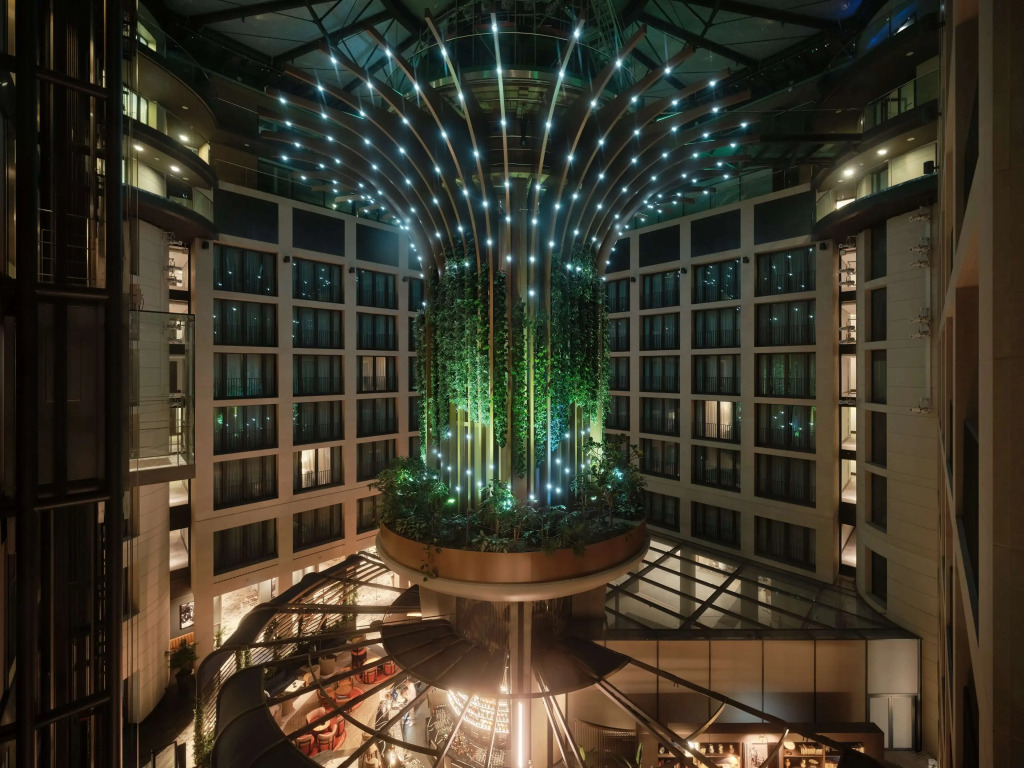
Radisson Collection Hotel
A luxury five-star hotel within walking distance of the city centre, with a restaurant, bar, fitness centre, sauna, swimming pool and spa.
View on TRVL ↗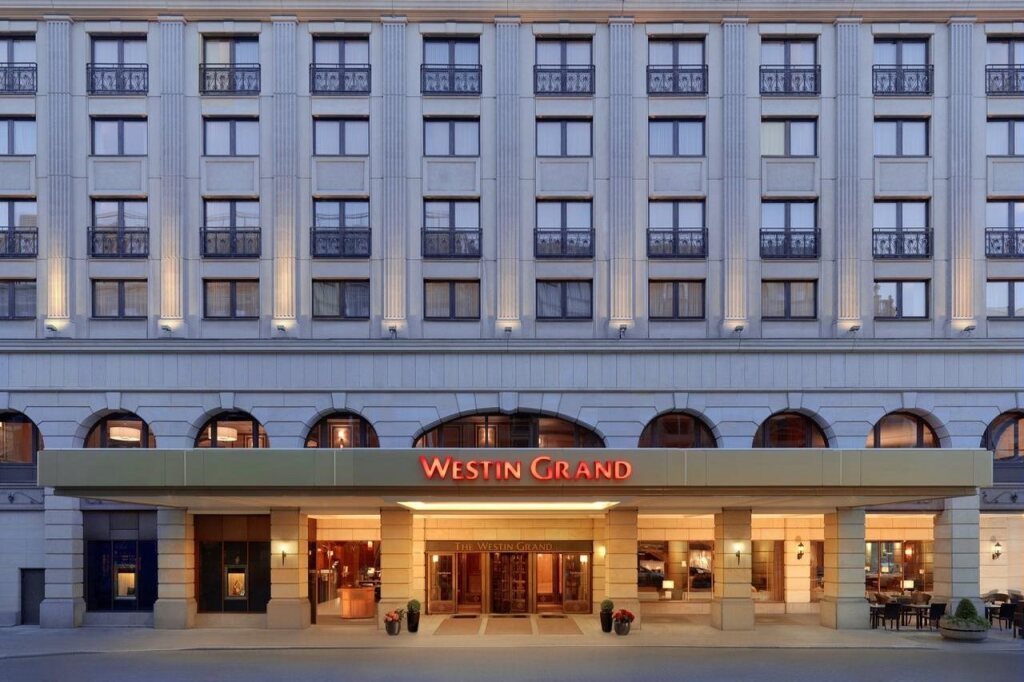
The Westin Grand
In the centre of the city near Französische Straße, Unter den Linden and Galeries Lafayette, with a bar, restaurant, sauna and spa centre.
View on TRVL ↗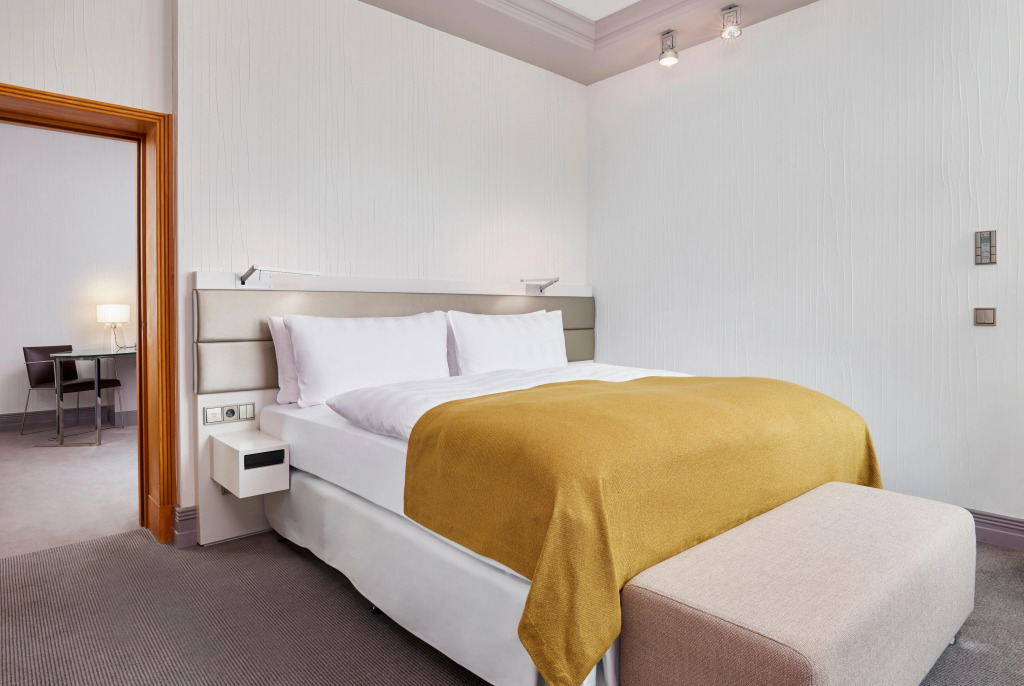
InterContinental Berlin by IHG
A first-class hotel close to Berlin Zoo and its aquarium, with a bar, restaurant, café, sauna and spa centre.
View on TRVL ↗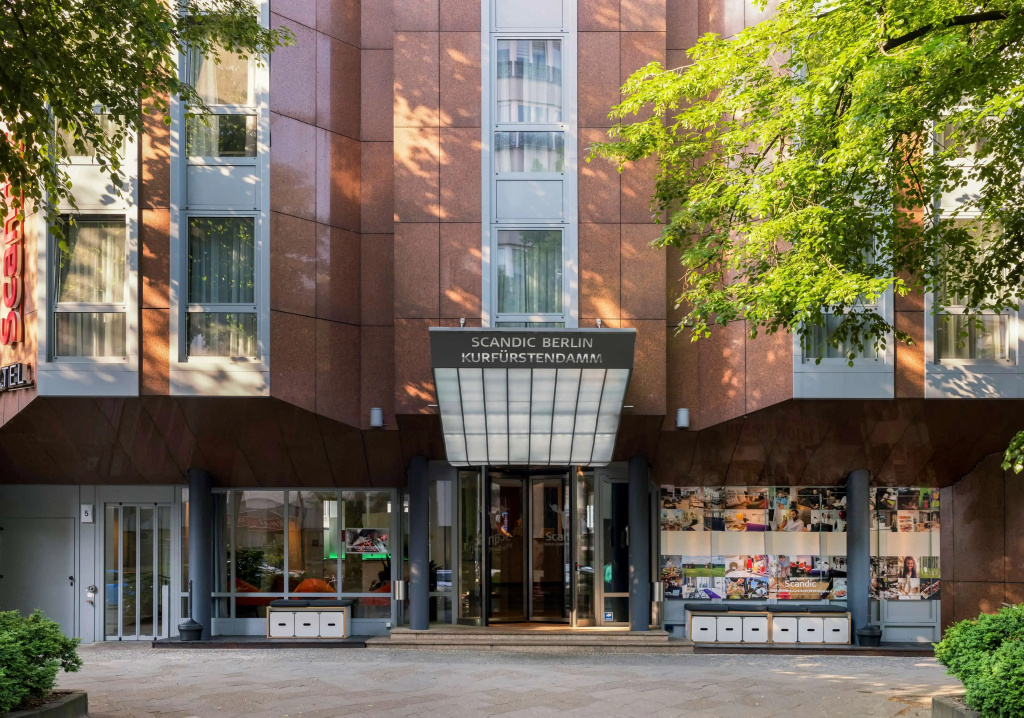
Scandic Berlin Kurfürstendamm
On Augsburger Straße near the KaDeWe department store, with a bar, restaurant, café, sauna and steam bath.
View on TRVL ↗The Essence
Berlin rewards those who wander. Spend a morning with Nefertiti, an afternoon walking the line of the Wall, an evening by the canal in Kreuzberg or Neukölln, and finish with a currywurst at a stand that has seen it all. Come in summer for parks and long light, or in December for mulled wine under the lights of Gendarmenmarkt, and leave room in the plan: the best Berlin days are often the ones you did not schedule.