
Halkidiki reaches into the northern Aegean in three long fingers, and each one keeps its own pace. On the westernmost, Kassandra, beach bars and resorts run village to village. On the middle one, Sithonia, the road climbs over a wooded spine between coves, olive groves and vineyards. On the third, the monasteries of Mount Athos look out to sea, and the closest most visitors come is a boat ride along their shore. Behind them all lies a mainland of olive groves and hill villages, and the city of Thessaloniki, within about two hours by car of even the far end of Sithonia.
Halkidiki has been a summer destination since the late 1950s, and it shows in the variety: large resorts and small guesthouses, stone villages and marinas, a cave where one of Europe's oldest human skulls was found, and a wine estate with organic vineyards on the slopes of Mount Meliton. Choose your peninsula well and the rest of the trip falls into place.
The Areas
The leg you choose largely decides your holiday. Moving between them takes time, and there are no direct buses between Kassandra and Sithonia, so most people pick one peninsula, or split a longer stay between two.
- Kassandra — the most developed of the three, with sandy beaches, resorts, nightlife and villages such as Afytos and Kallithea along the coast. It is the closest to Thessaloniki and the best served by buses. Best for families, groups of friends and anyone who wants everything within reach.
- Afytos — on Kassandra's north-east coast, about 73 km from Thessaloniki, a village of stone houses and narrow streets, with restored buildings turned into guesthouses and cafés and viewpoints over the Toroneos Gulf. One of the most handsome bases on Kassandra, and good for couples.
- Sithonia — wilder and greener, with secluded coves, pine-covered hills rising to Mount Itamos at 817 metres, and marinas for boating. Busy in high summer but more spread out. Best for swimmers, drivers who like to explore and anyone who wants a different beach every day.
- Nikiti — at the base of Sithonia, about 100 km from Thessaloniki, with an old village of cobbled streets and stone houses up the hill and a beach-side town below. A good base for both coasts of Sithonia.
- Neos Marmaras and Toroni — Neos Marmaras, on the west coast about 125 km from Thessaloniki, has a lively waterfront of cafes, restaurants and bars, and the Porto Carras estate just outside. Further south, Toroni has a long curved beach of thick yellow sand. Vourvourou, on the east coast, sits opposite Diaporos island.
- Ouranoupoli and the Athos coast — the last settlement before the border of the monastic state, with its Byzantine tower, the pier for the Athos ferries and the sightseeing boats. Nearby, Ammouliani is the only permanently inhabited island of Halkidiki. Best for a quieter stay and for anyone who wants to see Athos from the water.

What to See and Do
Start inland. Petralona Cave lies at the foot of Mount Katsika, about 50 km from Thessaloniki and 1 km from the village of Petralona. Discovered in 1959 by a shepherd looking for water, it is known for its stalactites and for the human skull found inside in 1960, one of the oldest and best-preserved in Europe. A path leads through the cave, and a small museum on the grounds shows finds from it. The cave reopened in 2024 after renovation and is open every day in summer and every day except Tuesday in winter. It is an easy stop on the drive from Thessaloniki to Kassandra.
On Kassandra, the best walk is through Afytos itself: stone houses, narrow streets and lookouts over the gulf. The village was the ancient Aphytis, important enough to send ships to the Persian Wars, and a small folklore museum, founded in 1980, keeps the more recent past. After that, Kassandra is really about the sea, with a chain of beaches running down both coasts.
Sithonia rewards a slow loop by car. In Nikiti, climb to the old village, whose oldest part dates from the early 1300s, when people moved inland away from the coast, to the church of Saint Nikitas, built in 1867 at the highest point. In Toroni, the ancient city stood on a steep rocky hill between the bay of Porto Koufo and Lekythos, a harbour fort rebuilt in Byzantine times. Thucydides tells how the Spartan general Brasidas took Torone by night in 423 BC. Next door, Porto Koufo is described as the largest natural harbour in Greece. The beaches of Sithonia are many and small; Armenistis, Platanitsi, Sarti, Toroni, Lagomandra and Porto Carras are among those listed with Blue Flags.
In Ouranoupoli, the tower in the centre was built in the 13th century under the emperor Andronikos II Palaiologos and now houses an exhibition on Christian Halkidiki. From the harbour, sightseeing boats follow the coast of Athos. Ammouliani is reached from Trypiti, the small port on the mainland opposite the island.

Seeing Mount Athos
Mount Athos is an autonomous monastic state and a UNESCO World Heritage Site, with twenty monasteries spread across a mountainous peninsula that rises to 2,033 metres. It has its own rules, and they are worth knowing before you plan around it.
Entry is limited to men, and every visitor needs a special permit, the diamonitirion, issued by the Mount Athos Pilgrims' Bureau. Pilgrims holding it take the daily ferries from Ouranoupoli to Dafni; the Pilgrims' Bureau office is next to the main pier in Ouranoupoli, and its hours can change at short notice. Check the current procedure with the Pilgrims' Bureau directly before you travel, and do not rely on second-hand advice.
For everyone else, and for anyone without a permit, the way to see Athos is from the sea. In summer, sightseeing cruises leave Ouranoupoli and follow the coastline of the peninsula, passing some of the monasteries. The boats stay at least 500 metres offshore, and women may join. Several agencies in the village run them, so compare times and routes once you are there.

What to Eat and Drink
Halkidiki eats from its own land. Olive oil is pressed in many areas, from Mount Meliton and Pallini to Polygyros, Ormylia, Olynthos and Nea Moudania, and the region is known for its green olives. Honey is another speciality: Nikiti and Arnea are the two main honey centres, with flower and pine honey, and Nikiti has become one of the leading honey-producing towns in Europe. Tsipouro is the local spirit, best taken slowly with meze by the sea.
Wine is the other reason to linger. Domaine Porto Carras, on the slopes of Mount Meliton above Neos Marmaras, was established in 1967 and covers about 110 hectares between 200 and 300 metres above the sea. Its vineyards have been certified organic since 1996, and the estate helped revive the Greek grapes Malagouzia and Limnio. Tastings run all year in the Melissanthi tasting room, and guided vineyard tours look out over the Aegean. Tsantali, one of the big wine companies of Macedonia, made its name in part with a wine labelled Agion Oros, after the Holy Mountain.
For the city's own table, from the seafront to the tavernas of Ladadika, see our Thessaloniki guide; it makes a natural first or last night of a Halkidiki trip.
Getting There and Around
Fly into Thessaloniki Airport Makedonia, which has car rental desks, taxis and a public bus service into the city. Halkidiki has no railway or airport of its own, so a car is the most practical way to see it. The A24 motorway links Thessaloniki and the airport with Nea Moudania and Kallithea on Kassandra. Allow about 1.5 to 2 hours by car from Thessaloniki to Toroni at the far end of Sithonia, and expect traffic on the motorway on summer weekends.
Buses are run by KTEL Chalkidikis from its own station on the Thessaloniki to Nea Moudania road, separate from the city's main bus station. There are regular daily services to Nea Moudania, Kassandra and Sithonia, and Kassandra is the best served. The bus to Toroni takes about three hours, and to Ouranoupoli two to three hours, with five or six departures a day. There are no direct buses between Kassandra and Sithonia, and local services are limited, so if you want to move around, rent a car.
When to Go
The climate is Mediterranean: long, hot and fairly dry summers and cool, wet winters. July and August are the peak, when villages like Nikiti and Neos Marmaras grow from around 3,000 residents to an estimated 20,000 people each. The Athos sightseeing cruises run in summer.
The shoulder months either side of the peak are the sweet spot: summer weather on the coast, with fewer people in villages built to hold many times their winter population. Autumn suits the inland side of Halkidiki: Petralona Cave is open every day through October, and the Porto Carras tasting room is open all year. In winter, the mountain villages of the mainland draw visitors of their own.
Good to Know
- Pick one peninsula per stay, or split a longer trip between two. There are no direct buses between Kassandra and Sithonia, and daily crossings eat into beach time.
- Mount Athos is for men only, with a diamonitirion from the Pilgrims' Bureau. Everyone else can see it from the cruise boats, which keep 500 metres offshore.
- Petralona Cave costs €10, plus €5 for the museum, with reduced and free entry for some visitors; it is closed on Tuesdays from November to March and on several public holidays.
- Leave Thessaloniki early on summer Saturdays, or travel midweek, to avoid the worst of the motorway traffic.
- The KTEL Chalkidikis bus station is not the main Thessaloniki bus station; allow time for a taxi between them.
Our Picks
- To seePetralona Cave
Stalactites, a path through the cave and the story of one of Europe's oldest human skulls, about 50 km from Thessaloniki.
- To walkAfytos old village
Stone houses, narrow streets and lookouts over the Toroneos Gulf, the most handsome face of the busiest peninsula.
- To walkOld Nikiti
Cobbled lanes climbing to the 1867 church of Saint Nikitas, a quiet hour above the beach town.
- To drinkDomaine Porto Carras, Melissanthi tasting room
Organic wines from the slopes of Mount Meliton, poured all year, with vineyard tours above the sea.
- To seeLekythos and ancient Torone
A Byzantine harbour fort on the site of a city Thucydides wrote about, beside one of Sithonia's best sandy beaches.
- To swimToroni beach
A 2.5 km curve of thick yellow sand on the south-west coast.
- To seeThe Tower of Ouranoupoli
A 13th-century Byzantine tower at the edge of the Athos border, now an exhibition on Christian Halkidiki.
- To seeAthos coast cruise
In summer, boats follow the coast of the Holy Mountain past its monasteries, open to everyone.
Where to Stay
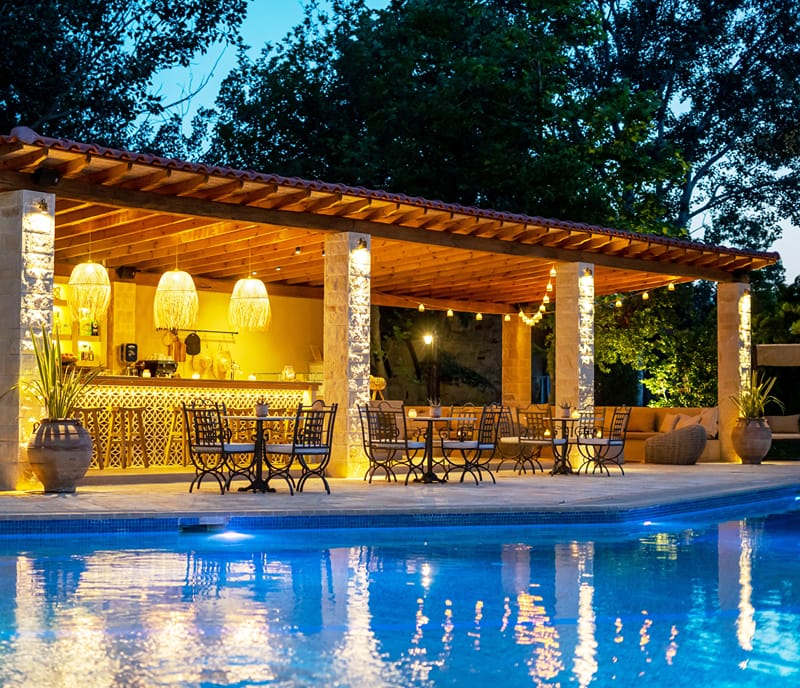
Petrino Eco Village
A peaceful, eco-friendly hideaway built only with local stone and wood, among gardens of olive and fruit trees.
View on TRVL ↗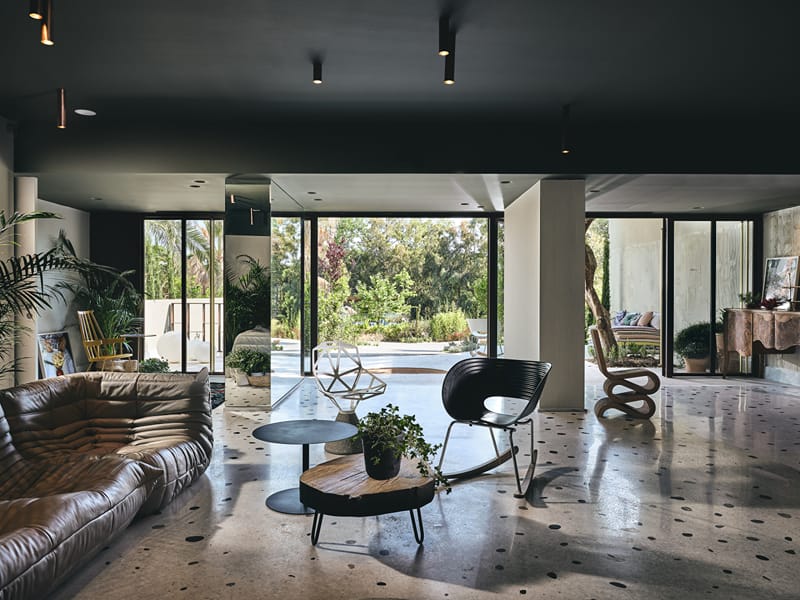
Ekies All Senses
A design-led hotel influenced by feng shui, where natural materials, solid wood and Greek grey marble lead out to the sandy beach.
View on TRVL ↗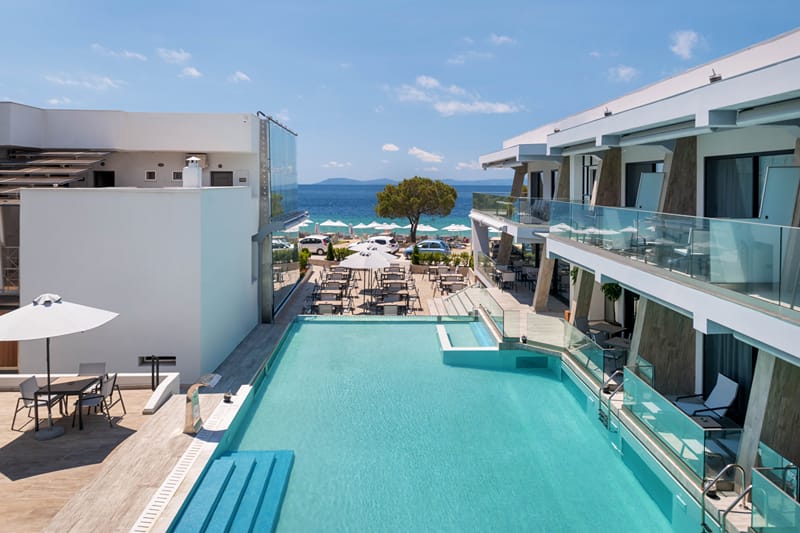
Akti Toroni Boutique
A beachfront hotel of 13 suites and 26 studios with sea or pool views, 1.5 km from Porto Koufo.
View on TRVL ↗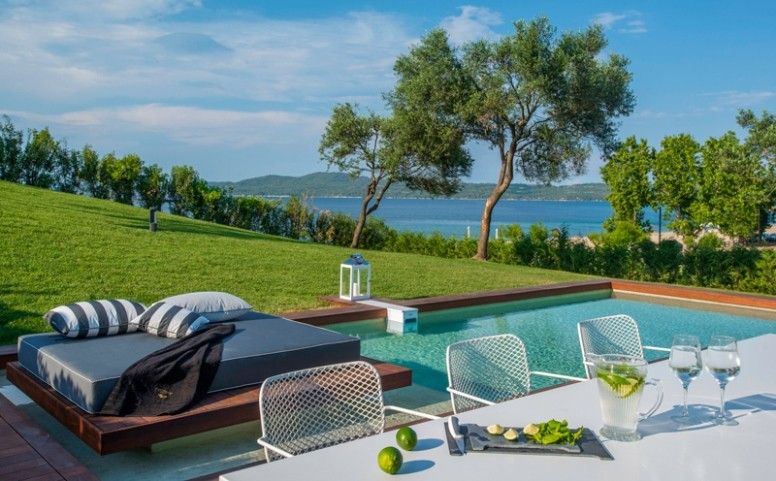
Avaton Luxury Beach Resort
A contemporary beachfront collection of 56 rooms, suites and villas, most with private pools, with yacht cruises around Mount Athos.
View on TRVL ↗The Essence
Halkidiki works because it lets you choose. Spend the mornings on a Sithonia cove, an afternoon among the vines of Mount Meliton, an evening on a terrace in Afytos with a glass of tsipouro, and one day on the water off Ouranoupoli, watching the monasteries of Athos pass at a respectful distance. Then drive back towards Thessaloniki slowly, with a jar of Nikiti honey on the back seat.