
Cross the causeway from the mainland, walk around the foot of the rock, and the road simply ends at a gate in a stone wall. Step through and you are in the Lower Town of Monemvasia: one main street, cobbled lanes, mansions, domed churches and the sea showing at the end of almost every alley. There is no other way in, which is exactly what the name says: moni emvasis, the sole entrance.
The town has been lived in since the 6th century, when people from Laconia took to the rock for safety, and it grew rich as a trading station between Western Europe and Byzantium. Its sweet wine travelled so far that the Franks called both the town and the wine Malvasia. Today the wine is made here again, the old houses have become small hotels, and the whole peninsula, quiet and car-free inside the walls, is a place to slow down for a few days, in summer or by a fireplace in winter.
The Areas
Monemvasia is really three places: the walled town on the rock, the modern town across the causeway, and the countryside of vineyards, olive groves and fishing harbours around it. Where you sleep decides the rhythm of your stay.
- The Lower Town (Kato Poli) — the walled town on the southeastern slope of the rock, still lived in, with one main street, Yiannis Ritsos Street, running from the gate to the main square. It has 26 preserved churches. Stay here for the evenings, when the day visitors have gone; there are no cars, so pack light.
- The Upper Town (Ano Poli) — on the flat top of the rock, uninhabited since it was gradually abandoned under Ottoman rule. You do not stay here; you climb up for the ruins, the church of Agia Sofia and the view.
- Gefyra — the modern town on the mainland side of the causeway, where most of the inhabitants moved in the early 20th century. It is the practical base: more shops and services, easier parking, and more places stay open out of season.
- The countryside — vineyards and estates spread inland and along the coast, around villages such as Agios Stefanos. Suits drivers who want space, a pool and a view of the rock rather than a room inside it.

What to See and Do
Start in the Lower Town square, where the metropolitan church of Christ Elkomenos was first built in the 6th or 7th century and renovated in the 11th. Opposite stands a 16th-century Ottoman mosque that now houses the Archaeological Collection of Monemvasia, which tells the story of the town as a centre of the Byzantine and Frankish Peloponnese; its highlight is a fully restored Byzantine iconostasis from the castle’s earliest church. It opens 08:30–15:30 every day except Tuesday, all year, with a full ticket at €5.
Then walk the main street to its end, past the house of the poet Yiannis Ritsos near the gate, which Visit Greece describes as a museum of his life and work, and on to the 16th-century church of Panagia Chrysafitissa on its great bastion. Inside the walls you will also find old merchant mansions, gates in the sea wall and small chapels; the best plan is to put the map away for an hour.
The climb to the Upper Town is the highlight. A paved, zigzagging path called the Voltes leads up from the Lower Town to the single gate in the upper wall; allow 15 to 30 minutes depending on your pace, and wear proper shoes. At the top, on the northeastern edge of the plateau, stands Agia Sofia, also known as Panagia Odigitria: a 12th-century church in the shape of a domed octagon, the Upper Town’s most important monument and the only one still intact. It served as a Catholic monastery under the Venetians and as a mosque in the 16th century. Its doors open only on certain days, but the walk, the cisterns and the view down over the rooftops are reason enough.
For a swim right below the walls, Portello, the old sea gate of the Lower Town, has steps and ladders into deep water and terraces for sunbathing. There is no sand.

Day Trips: Gerakas and Elafonisos
Monemvasia sits in a municipality with a long coastline, and two day trips show it at its best.
Gerakas lies about 20 km north, roughly 20 minutes by car. A narrow, fjord-like inlet runs in from the sea to a small harbour, and behind it a shallow lagoon of about 40 hectares draws little and great egrets, grey herons and grebes, with swans and mallards now and then. The municipality notes that the inlet was a Byzantine port from which Malvasia wine was shipped. Today there are fish tavernas along the water; walk the edge of the lagoon, then sit down to lunch.
Elafonisos is the longer day out, to the south. You drive to Pounta and take the small ferry across; the crossing takes about eight minutes, tickets are sold at the ports or on board out of season and cannot be booked ahead. The prize is Simos, two bays, Megalos and Mikros Simos, separated by a strip of land, with sand dunes up to ten metres high backed by cedar trees. The smaller bay has organised bathing facilities, the larger is left wild. Opposite the island, on the mainland shore, lie the remains of Pavlopetri, a submerged Bronze Age town.

What to Eat and Drink
The wine comes first, because it carries the town’s name. Malvasia was exported from here until the vineyards were lost around 1470, but local grape varieties such as Kydonitsa, Thrapsa, Asprovaria and Monemvasia survived in the mountains. In 2010 the sweet white Monemvasia-Malvasia was given protected designation of origin status: it is made from sun-dried grapes. The Monemvasia Winery, founded by the Tsimbidi family in 1997 to bring the wine back to its birthplace, works only with Greek native varieties; look also for the rare Kydonitsa, bottled on its own.
At the table, ask for gogges, a Laconian pasta rolled and pressed into small shell shapes with a finger, served with hot oil or butter and grated mizithra cheese, or with tomato sauce, as a main course. Many tavernas make their own. Local sweets fall into two families: almond macaroons made with egg white, butter and flower water, and syrupy pastries of dough, honey, nuts and spice, such as samousades, which have Byzantine roots.
Inside the walls, Matoula has fed visitors since the 1950s from a large terrace above the sea, with dishes such as rooster with noodles, pork cooked in wine with orange, egg-lemon dolmadakia and fresh fish when the weather allows. At Gerakas, the Diamantis fish tavern serves the family’s own daily catch, from grilled squid to red mullet carpaccio and crab risotto, with fish soup to start.
Getting There and Around
Monemvasia is roughly 300 km from Athens, about four hours by car: south on the motorway towards Tripoli, then via Sparta and Molaoi. A car is the easiest way to see the area, and the practical way to reach Gerakas and Elafonisos.
KTEL Lakonias buses run from Athens to Monemvasia, via Sparta; timetables change with the season, so check ktel-lakonias.gr before you travel.
The old town is entirely car-free. Park along the road near the gate or in the car park on the approach, and if those are full, in Gefyra; in high season spaces go early. Some hotels inside the walls help with luggage. From the gate, everything is on foot, on stone, and often on steps.
When to Go
Spring, April and May, and autumn, September and October, are the sweet spots: warm enough to swim, and the lanes are quieter. Midsummer is hot and busy, and small cruise ships call between May and September, so explore early or late in the day.
Winter is the season Monemvasia does best. The crowds thin out, and several of the stone hotels inside the walls have rooms with their own fireplace. The Archaeological Collection keeps its hours all year, with free entry on the first and third Sunday of each month from November to March, and at Christmas the lanes are decorated. At Gerakas, the Diamantis tavern stays open on Fridays and weekends through the year. Pack a warm layer for the climb to the Upper Town, and keep Elafonisos for the summer.
Good to Know
Fewer places stay open between November and March, both inside the walls and in the villages, so book your room and check restaurant days before you go; Gefyra keeps more services running. The Archaeological Collection is closed on Tuesdays and on a few public holidays, including 25 and 26 December. The lanes are stone and steep in places, so leave the wheeled suitcase in the car if you can. And in summer, aim to reach Gerakas or Simos before midday.
Our Picks
- To seeArchaeological Collection of Monemvasia
The town’s Byzantine story in a 16th-century mosque, with a restored iconostasis; open all year, closed Tuesdays.
- To walkThe Voltes to Agia Sofia
A steep paved path to a 12th-century church on the top of the rock and the widest view of the town below.
- To swimPortello
Ladders into deep water from the old sea gate, right under the walls.
- To eatMatoula
A family taverna since the 1950s with a terrace over the sea; go for the rooster with noodles.
- To drinkMonemvasia Winery
Where Malvasia was brought back to life; a four-wine tasting includes Kydonitsa and the sweet PDO Malvasia; book ahead.
- To seeGerakas lagoon
A shallow wetland behind a fjord-like inlet, with herons and egrets in the reeds.
- To eatDiamantis
The owner’s daily catch at the head of the inlet, open on weekends all year.
- To swimSimos
Two sandy bays with high dunes and cedars, eight minutes by ferry from Pounta.
Where to Stay
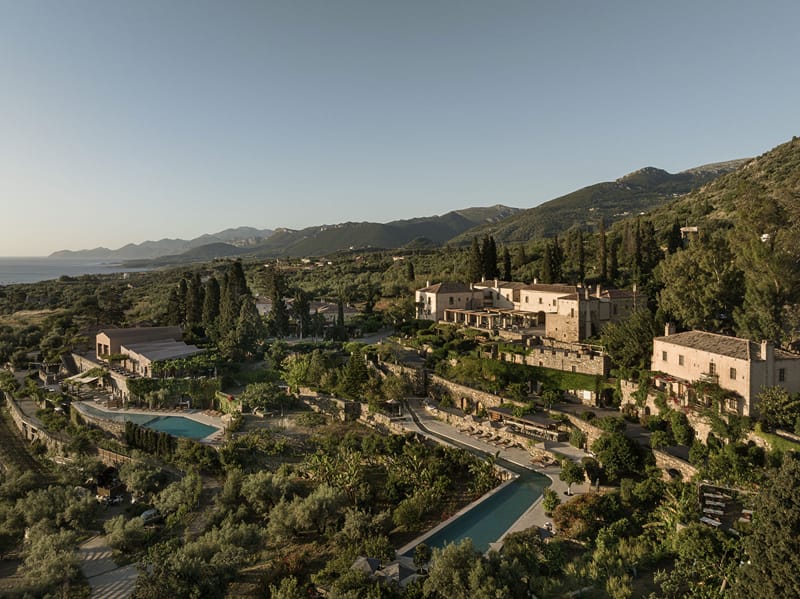
Kinsterna Hotel Monemvasia
A five-star boutique hotel in a historic mansion estate of 25 acres, with roots in the Byzantine, Ottoman and Venetian eras, among olive trees, vineyards and citrus, overlooking the castle of Monemvasia.
View on TRVL ↗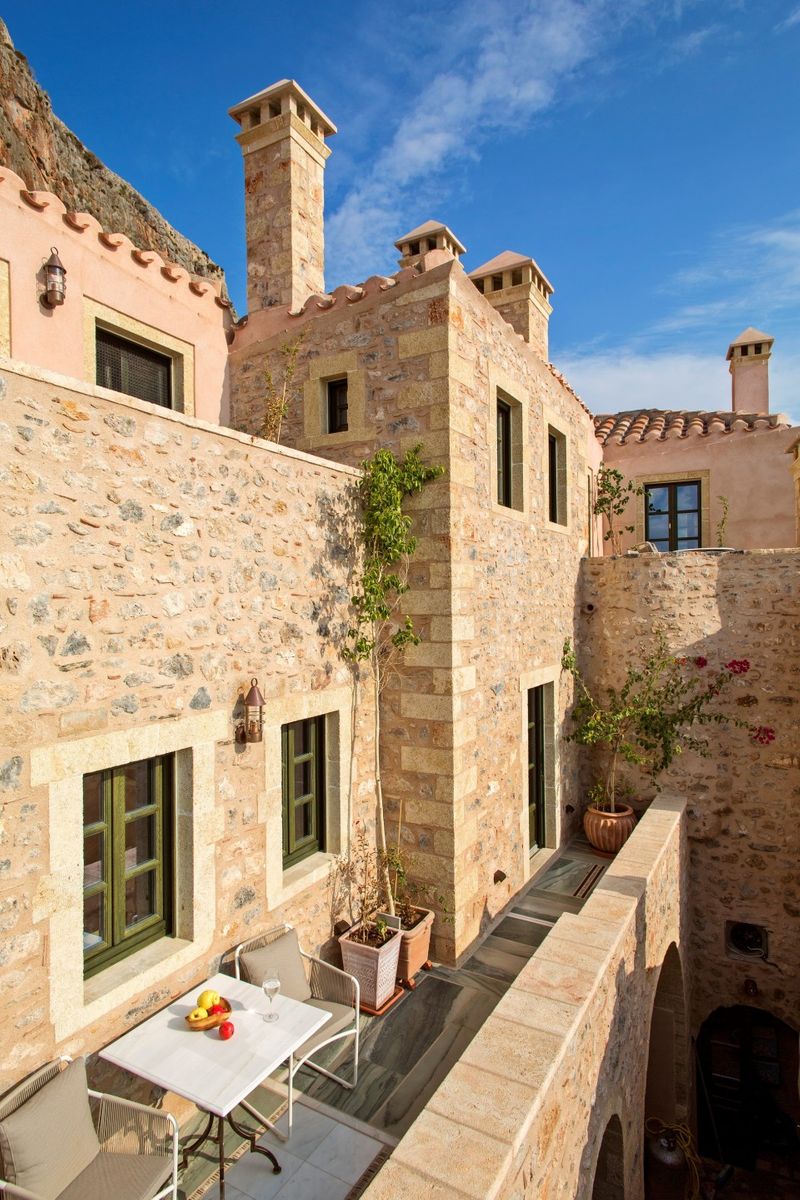
Moni Emvasis Luxury
Three stately homes restored into a boutique hotel just fifty metres from the castle gate, with the Chrisovoulo restaurant and bar and its balcony over the sea.
View on TRVL ↗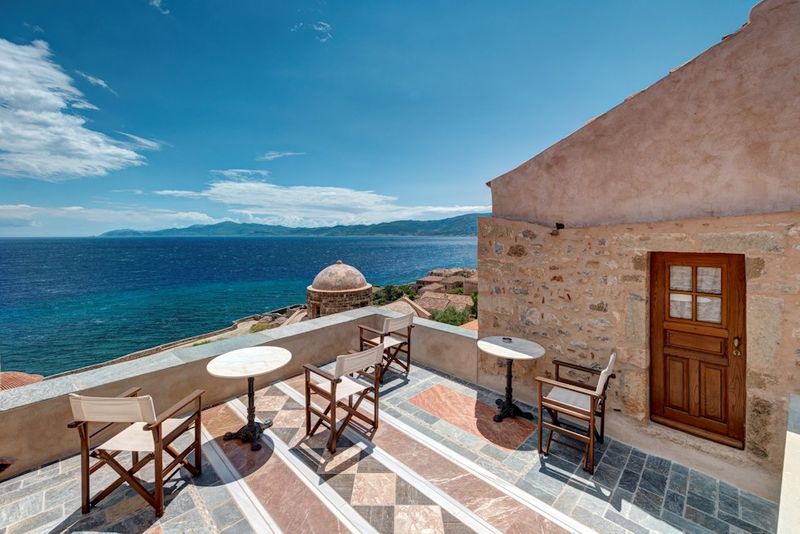
Malvasia Traditional Hotels
One of the earliest hotels in the castle, made by joining seven stone houses 300 metres from the gate, with 14 rooms decorated with antique furniture and rugs, many with a balcony and their own fireplace.
View on TRVL ↗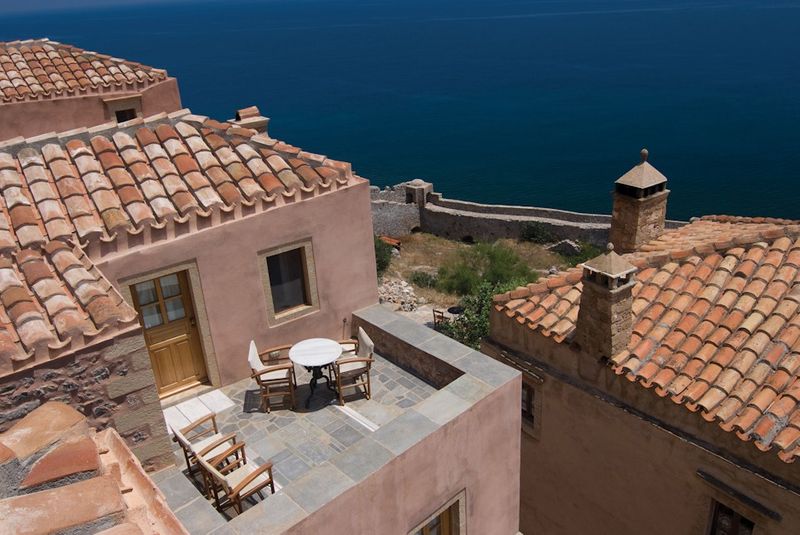
Bastione Malvasia Hotel
At the far tip of the castle, 300 metres from the gate, built of local stone, with sea-view balconies in some rooms and fireplaces for warmth in winter in others.
View on TRVL ↗The Essence
Monemvasia asks one thing of you: to leave the car at the gate. After that it gives a great deal. A morning climb to Agia Sofia, a swim off the rocks at Portello, a glass of Malvasia in the town that named it, a plate of gogges on a terrace above the sea, a drive north to the herons of Gerakas or south to the dunes of Simos. Come in June for the water or in January for the fire; the rock keeps its single entrance open all year.