
New Orleans is a city you hear before you see. Brass drifts out of doorways on Frenchmen Street, a traditional jazz band plays a 45-minute set in a small room on St. Peter Street, and a green streetcar that has run along St. Charles Avenue since 1835 rattles past oak trees and old mansions. Add a plate of gumbo, a paper bag of beignets dusted with sugar, and a cocktail with its own museum, and the city has made its case within a day.
This guide is for planning that kind of trip: which neighbourhood suits you, where to hear music, what to eat, how to get in from the airport and around on the streetcar, and when to come, from the mild winter and Mardi Gras to Jazz Fest in spring. Prices are in US dollars and were checked on 16 October 2026; fares, hours and festival dates move, so confirm before you go.
The Areas
The neighbourhoods below sit close together, and the streetcar lines tie most of them to Canal Street, so you can stay in one and spend your evenings in another.
- French Quarter — the oldest part of the city, with Jackson Square, St. Louis Cathedral, Royal Street’s antique shops, Bourbon Street’s nightlife and Café du Monde by the French Market. Suits first-timers who want to walk everywhere and don’t mind noise after dark.
- Central Business District — the blocks on the other side of Canal Street, with large hotels a short walk from the Quarter, the river and the start of the St. Charles streetcar. Suits travellers who want a quieter night’s sleep and easy transport.
- Garden District — 19th-century mansions and oak-lined streets along the St. Charles streetcar, with Commander’s Palace on Washington Avenue. Suits couples, architecture lovers and slow walkers.
- Marigny and Frenchmen Street — shotgun houses and Creole cottages, with about three blocks of Frenchmen Street given over to live music. Suits music lovers and night owls.
- Bywater — the next neighbourhood downriver, home to the St. Claude Arts District and its galleries. Suits repeat visitors and anyone who likes galleries and quiet streets.
- Treme — described by the city’s tourism office as the oldest African-American neighbourhood in the nation, with Armstrong Park, Congo Square, the Backstreet Cultural Museum and Dooky Chase’s. Suits travellers who want the roots of the music and the food.
- Mid-City — City Park, the New Orleans Museum of Art, Bayou St. John and the Canal streetcar, with Parkway Bakery & Tavern for po’boys. Suits families, runners and longer stays.

What to See and Do
Start in the French Quarter on foot. A free walk takes in Jackson Square, St. Louis Cathedral, the Presbytère and the Cabildo, and the Jean Lafitte National Park visitor centre hands out free maps and information. From the French Market, the Riverfront streetcar runs along the Mississippi to the Convention Center, and the New Orleans Jazz Museum sits at the same stop.
Then ride the St. Charles streetcar, which the city’s tourism office calls the oldest continuously operating streetcar line in the world. It began in 1835, runs from Canal Street to Carrollton and Claiborne 24 hours a day, and takes about 45 minutes end to end. Get off at Washington Avenue for the Garden District: start at Fourth and Prytania streets for the grandest houses. Stay on to Walnut Street for Audubon Park, with its oaks and lagoons and Audubon Zoo at the back.
In Treme, Armstrong Park holds Congo Square, reached from the Rampart streetcar at N. Rampart and St. Ann. The Backstreet Cultural Museum is the place to learn about Mardi Gras Indian culture and see the suits up close. In Mid-City, City Park covers about 1,300 acres and has been open since 1854; the Besthoff Sculpture Garden inside it is free, and the New Orleans Museum of Art next door charges $15 for adults.
Near the river at 101 Magazine Street, the Sazerac House tells the story of the city’s cocktail with exhibits, tastings and a working distillery. Visitors must be of legal drinking age, and tours and tastings are booked online.

Live Music and the Festival Calendar
Music here is part of an ordinary evening. Preservation Hall, at 726 St. Peter Street in the French Quarter, has presented traditional New Orleans jazz since 1961. A ticket covers one performance of about 45 minutes; tickets are sold only online in advance, the hall welcomes all ages, and photos and recordings are not allowed during the set. Afterwards, walk to Frenchmen Street in the Marigny, where many clubs have low or no cover charges. Walk the street, step into whichever room sounds right, and tip the band.
Carnival is the city’s great season. The first 2027 parades roll on Wednesday 6 January, with Joan of Arc and Société des Champs Elysée in the French Quarter that evening. Parades continue through the season: Endymion rolls through Mid-City on Saturday 6 February, and on Mardi Gras Day itself, Tuesday 9 February 2027, Zulu and Rex parade Uptown in the morning. The schedule is tentative until the krewes confirm, so check it nearer the time.
In spring comes the New Orleans Jazz & Heritage Festival, known as Jazz Fest, at the Fair Grounds Race Course in Gentilly. New Orleans & Company lists the 2027 festival over two long weekends, Thursday to Sunday, 22 to 25 April and 29 April to 2 May, on 15 stages and tents from gospel to blues to brass. The line-up usually appears between December and mid-January. The 91 Jackson–Esplanade bus stops a few blocks from the gate, and an official shuttle drops you inside it.

What to Eat and Drink
New Orleans cooking draws on both Creole and Cajun traditions, which the tourism office is careful to call two distinct groups with their own history and culture. Gumbo is the dish to start with; Dooky Chase’s in Treme, open since 1941, is known for it, along with its fried chicken. Chef Leah Chase cooked Creole food there for more than seven decades.
For a po’boy, the long sandwich filled with fried shrimp or catfish, go to Parkway Bakery & Tavern in Mid-City and order it “dressed”. In the French Quarter, Central Grocery is known as the place where the muffuletta was invented. And for breakfast, Café du Monde at the French Market has served beignets and café au lait since 1862; go early or late to miss the longest queue.
For an evening drink, the Sazerac House is the obvious first stop for the city’s namesake cocktail. If you want to cook the flavours at home, Café du Monde sells its coffee and chicory blend and its beignet mix.
Getting There and Around
The airport (MSY) is a short drive from downtown. Taxis charge a flat $36 to the Central Business District or the French Quarter for up to two people, and $15 a person for three or more; they leave from the arrivals curb outside Baggage Claim Door 7, and drivers must accept cards. On a budget, the RTA Airport Express (route 202) costs $1.25 and leaves from outside Door 2 for Elk Place at Cleveland and the Union Passenger Terminal.
In the city, a single ride on an RTA bus or streetcar costs $1.25 and includes a two-hour transfer. A Jazzy Pass covers buses, streetcars and ferries: $3 for one day, $8 for three days, $15 for seven days and $45 for 31 days. Buy passes and single rides in the free Le Pass app and show the activated ticket as you board; if you pay cash, bring exact change, because operators do not give change. The Algiers Point ferry across the Mississippi costs $2.
Five streetcar lines cover most of what a visitor needs: St. Charles (12) to the Garden District and Audubon Park; Canal/City Park (48) to the museum and park, about 30 minutes from downtown; Canal/Cemeteries (47); Riverfront (49) from the French Market to the Convention Center; and Rampart/St. Claude (46) through Treme into the Marigny, with Frenchmen Street a block away. Cars generally come every 10 to 20 minutes; the app shows live arrivals.
When to Go
Winter is mild. Average highs are around 64°F (18°C) in January and 66°F (19°C) in February, with lows in the mid-40s (about 7°C), which makes Carnival season pleasant for standing at a parade route. Spring, from March to May, runs from the low 50s to the upper 70s (about 10 to 26°C) and brings Jazz Fest; it is the easiest season of the year.
Summer is hot and wet: highs of 90 to 92°F (32 to 33°C) from June to August, with 10 to 12 rainy days a month. The Atlantic hurricane season runs from 1 June to 30 November, peaking around 10 September, with most activity between mid-August and mid-October; if you travel then, book flexible rates and watch the forecast. Autumn cools from the upper 80s in early September to the 70s and 50s by November, and it is the busiest season for festivals and events.
Good to Know
- ESTA — visitors from Visa Waiver Program countries need an approved ESTA and an e-passport before flying. Apply only on the official site, esta.cbp.dhs.gov, and do it as soon as you start planning, ideally before you buy flights.
- Tipping — as across the US, tipping is customary for table service, at bars and in taxis, because servers often rely on tips. On Frenchmen Street, tip the musicians too.
- Cash for the streetcar — operators carry no change, so use the Le Pass app or carry exact change; a single ride is $1.25.
- Free things — Jackson Square, the Besthoff Sculpture Garden in City Park, Crescent Park (a 20-acre riverfront park for walking and cycling) and many Frenchmen Street shows cost little or nothing.
- Preservation Hall — book online before you go; tickets are sold in advance and are non-refundable.
Our Picks
- To hearPreservation Hall
Traditional New Orleans jazz since 1961, in 45-minute sets for all ages.
- To hearFrenchmen Street
About three blocks of live music, many rooms with low or no cover.
- To eatCafé du Monde
Beignets and café au lait since 1862; go early or late.
- To eatDooky Chase’s
Gumbo and fried chicken at a Creole restaurant open since 1941.
- To eatParkway Bakery & Tavern
Po’boys; order yours “dressed”.
- To seeSt. Charles streetcar
A line in service since 1835, 24 hours a day, for $1.25.
- To seeBackstreet Cultural Museum
Mardi Gras Indian suits and the culture behind them.
- To walkCity Park and the Besthoff Sculpture Garden
About 1,300 acres of park, with a free sculpture garden beside NOMA.
- To drinkThe Sazerac House
Exhibits, tastings and a distillery devoted to the city’s cocktail.
Where to Stay

NOPSI Hotel
A 4-minute walk from Canal Street and 6 minutes from Bourbon Street, with Cajun and Creole cooking at Public Service, an outdoor pool and a poolside bar.
View on TRVL ↗
InterContinental New Orleans
In the very centre of the city, near The Sazerac House and the Louisiana Maritime Museum, with a bar, restaurant, café, outdoor pool and fitness centre.
View on TRVL ↗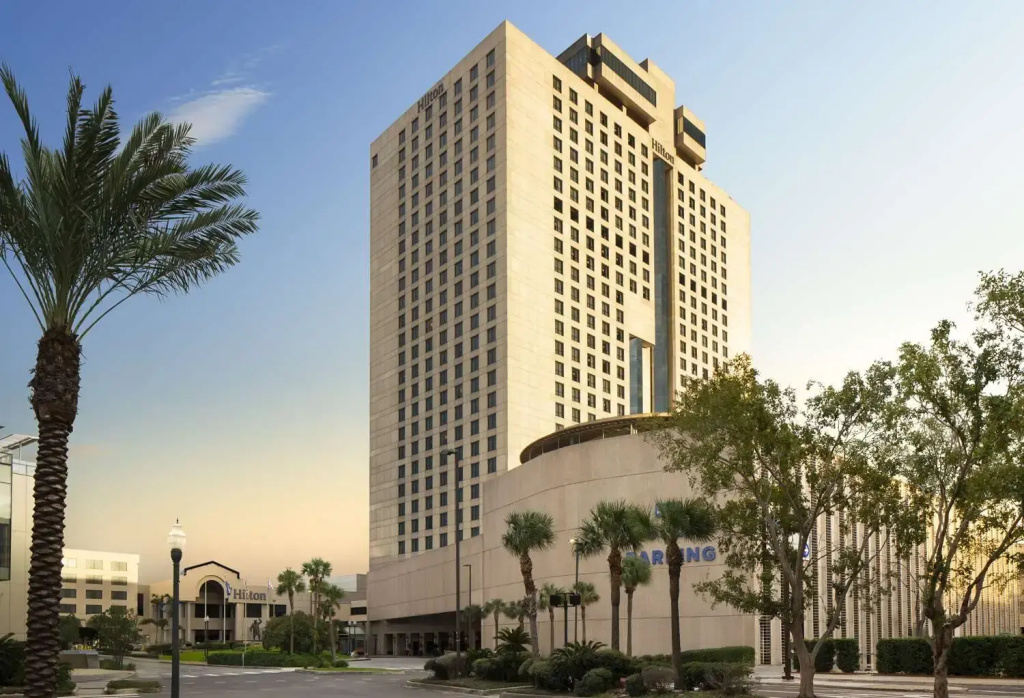
Hilton New Orleans
Minutes from the city centre, with a bar, restaurant, café, sauna, outdoor pool and fitness centre.
View on TRVL ↗The Essence
New Orleans rewards the traveller who lets the day run long: beignets at the French Market in the morning, a streetcar ride under the oaks of St. Charles Avenue, gumbo in Treme at lunch, a 45-minute set at Preservation Hall and then a slow walk along Frenchmen Street, following whichever band sounds best. Come in winter for the parades or in spring for Jazz Fest, but come ready to listen. The city plays every night, and it always saves a song for the next visit.