
Athens rewards the person who walks. Dionysiou Areopagitou, closed to traffic since 2003, runs from Hadrian’s Arch past the Theatre of Dionysus to the wooded paths of Philopappou Hill, with the Acropolis above you the whole way. Walk north to Athinas Street and you are under the glass roof of a market that has sold fish, meat and spices since 1884. Take the tram south and in about forty minutes from Syntagma you are on a beach.
Its pleasures sit close together and are still in daily use: a 10th-century basilica on Monastiraki Square, a marble stadium refitted for the 1896 Olympics where the Athens Marathon finishes in November, a cocktail bar in a three-storey building in Plaka, cafés crowding a leafy square in Pangrati. A good day here moves easily between them — loukoumades for breakfast, a morning with Cycladic marble, a long lunch, and a hill at sunset.
The Areas
Plaka hugs the base of the Acropolis, running from Filomousson Square down to Monastiraki. Its upper edge is Anafiotika, a quarter founded by workmen from the Cycladic island of Anafi that still feels like an island village, with cats, laundry lines and clay pots of flowers. Nearby are the Benizelos Mansion, described as the oldest surviving house in Athens, and the Monument of Lysicrates on its café-lined square. Plaka suits first-time visitors who want the old city on the doorstep — and who do not mind company in the lanes.
Monastiraki and Psyrri are the busy, sociable middle. Monastiraki’s flea market spreads around Avissinia Square, where street bands play on Sundays. Psyrri comes into its own after dark, when the vintage shops close and bar stools appear on the narrow streets; Iroon Square keeps an older Athenian feel. Stay here if you want to be central and out late.
Koukaki, just south of the Acropolis, has become one of the city’s most fashionable addresses since the Acropolis Museum opened in 2009 and the pedestrian walkway linked the ancient sites. Pedestrianised Drakou Street is one of the liveliest bar streets in town. It suits travellers who want to walk to the monuments in the morning and come home to a neighbourhood at night. Thissio, on the other side of Philopappou, puts you beside the Ancient Agora.
Kolonaki climbs the slopes of Lycabettus from Vasilissis Sofias Avenue. Planned in the late 19th century for the elite of the young Greek state, it is the city’s most polished district, with boutiques and cafés on the streets around Kolonaki Square, including Skoufa, and two of the best private museums in Greece, the Benaki and the Museum of Cycladic Art.
Pangrati is a middle-class neighbourhood with an artsy streak, long home to musicians, writers and academics. Its café life gathers around two squares, Platia Proskopon and Platia Varnava. The Goulandris Museum of Contemporary Art opened here in 2019 and the National Gallery reopened in 2021. It suits a slower, residential stay.

What to See and Do
The Acropolis comes first, and it works on a timed-entry system: you book a slot on the Ministry of Culture’s Hellenic Heritage platform, hhticket.gr. The site opens at 8am all year; an early slot beats the heat. Below it, the Acropolis Museum, designed by Bernard Tschumi, holds the sculpture of the hill; general admission is €20, it stays open until 10pm on Fridays, and the ticket includes the excavated remains beneath the building.
The Ancient Agora, with the Temple of Hephaestus and the museum in the Stoa of Attalos, is open 8am to 7:30pm under its current schedule, in force since April 2026. The National Archaeological Museum on Patission Street, which calls itself the largest archaeological museum in Greece, opens a major exhibition, Pylos of Nestor: A Mycenaean Kingdom Revealed, on 31 October 2026. In Kolonaki, the Museum of Cycladic Art shows more than 350 objects from the Early Cycladic culture, roughly 3200 to 2000 BC, including its famous marble figurines.
The Panathenaic Stadium in Pangrati — the Kallimarmaro, refitted in Attic marble for the 1896 Olympics — is open daily from 8am to 7pm. On Syntagma, the evzones of the Presidential Guard at the Tomb of the Unknown Soldier change every hour; for the full ceremony, go on a Sunday at 11am.
A few less obvious pleasures: the Ilias Lalaounis Jewellery Museum in Koukaki, set in the jeweller’s former workshop, with artists at work in the foyer; the Postal Philatelic Museum in Pangrati, where you can post a souvenir with a Hermes time stamp; and the Stavros Niarchos Foundation Cultural Center, Renzo Piano’s complex for the National Library and the Greek National Opera, with a 21-hectare park and dancing fountains in its canal. For the widest view, Lycabettus rises about 277 metres; a funicular runs up from Ploutarchou Street in Kolonaki, or you can walk.

The Coast and Beyond
Athens has the sea on its doorstep. The tram runs from Neos Kosmos metro to the coast; Akti tou Iliou beach is about forty minutes from Syntagma (get off at Zefyros), and Asteras Glyfada a little further. For Lake Vouliagmeni, a lake formed when a cave roof collapsed, with mineral-rich water that stays between 22 and 29°C all year, take metro line 2 to Elliniko and then the 122 bus; entry was €16 on weekdays and €19 at weekends when we checked. The same bus continues to Limanakia, a free rocky cove with wooden decks.
Cape Sounion is the classic half-day: the Temple of Poseidon, begun in 449/8 BC and finished around 440 BC, stands about 60 kilometres from Athens above the sea, and is known for its sunsets; Lord Byron carved his name on one of its columns. KTEL buses leave from the stops on the western side of Pedion Areos park, near Victoria metro, and take around two hours. For an island day, ferries from Piraeus reach Aegina in roughly 30 minutes to an hour and a half depending on the boat. The island’s pistachios carry a Protected Designation of Origin.

What to Eat and Drink
Start at the Central Market, the Varvakios, between Athinas, Sofokleous, Evripidou and Aiolou streets. It opened in 1884, paid for by the caviar importer Ioannis Varvakis, and its fish hall sits beside butchers, olive, cheese, honey, nut and spice sellers. It is closed on Sundays. By the main entrance on Athinas Street, the Mokka roastery serves Greek coffee.
Round the corner, Karamanlidika runs a deli on Evripidou and a meze restaurant on the corner of Sokratous and Evripidou, built around pastirma made to the traditional recipe of the Karamanli people of Cappadocia. On Aiolou, Lukumades fries loukoumades to order in a copper pot and lets you choose the topping, from thyme honey and walnut to cinnamon and pistachio. Souvlaki in pita, pork or chicken, is the city’s everyday street food.
For a drink, Athens is a serious cocktail city. The Clumsies, an all-day bar in a three-storey building on Praxitelous, is No. 30 on Europe’s 50 Best Bars 2026; its Mediterranean Gimlet uses a tomato-and-olive cordial. In Plaka, Brettos on Kydathinaion is a historic bar that is also the city’s oldest distillery, dating from 1909.
Getting There and Around
From Athens International Airport, metro line 3 reaches Syntagma in about 40 minutes, with trains roughly every half hour; it needs its own airport ticket, as the standard city ticket does not cover the airport section. The X95 express bus runs to Syntagma around the clock and takes about an hour. Taxis charge a fixed fare to the centre, higher at night.
In town, a standard ticket covers metro, tram, bus and trolley for 90 minutes. You can also simply tap a Visa or Mastercard on the validator (Tap2Ride), and your daily spend is capped at the price of a 24-hour ticket. The historic centre is compact enough to walk: Syntagma, Plaka, Monastiraki, Psyrri, Thissio and Koukaki are all close together.
When to Go
Spring and autumn are the sweet spots. Average highs are around 19°C in April and 24°C in May, 28°C in September and 22°C in October, when the sea is still about 22–25°C. July and August average above 30°C, and on the hottest days the Acropolis has closed between noon and 5pm, as it did several times in July 2025.
Summer brings the Athens Epidaurus Festival (1 June to 29 August in 2026). In early November the city fills with runners for the Athens Marathon, The Authentic, which in 2026 runs on 7–8 November from the town of Marathon to the Panathenaic Stadium. Winter is mild, with average highs around 12°C in January, quieter sites, and free entry to the Acropolis on the first Sunday of each month from November to March.
Good to Know
- Book the Acropolis ahead on hhticket.gr. Tickets cannot be refunded, but the time slot can be changed up to 14 days before your visit.
- The Acropolis and the Acropolis Museum are separate tickets. EU citizens under 25 enter both free with a passport.
- The Odeon of Herodes Atticus, on the south slope, is closed for restoration, so check the festival programme for other venues.
- Plaka and Anafiotika get busy; go early or late, and keep your voice down in Anafiotika, where people live.
- The Central Market is closed on Sundays, and the Acropolis Museum closes at 5pm on Mondays.
- Tap2Ride accepts Visa and Mastercard only, and reduced fares are not available through it.
Our Picks
- To seeAcropolis Museum
Open until 10pm on Fridays, with the excavated remains beneath the building included in the ticket.
- To seeMuseum of Cycladic Art
More than 350 Early Cycladic objects, and the clearest way to understand the marble figurines.
- To seeNational Archaeological Museum
The country’s largest archaeological museum, with the Pylos of Nestor exhibition from 31 October 2026.
- To seePanathenaic Stadium
An all-marble stadium refitted for the 1896 Olympics, open daily from 8am.
- To walkPhilopappou Hill
Dimitris Pikionis’s 1960s stone paths follow an ancient road and frame the Acropolis.
- To walkVarvakios Central Market
The city’s food hall since 1884, best on a weekday morning.
- To eatKaramanlidika
Cappadocian-style pastirma and meze, with a deli across the street to take some home.
- To eatLukumades
Loukoumades fried to order, with toppings from thyme honey to pistachio.
- To drinkThe Clumsies
An all-day bar ranked No. 30 on Europe’s 50 Best Bars 2026.
- To drinkBrettos
The city’s oldest distillery, dating from 1909, still pouring in Plaka.
Where to Stay
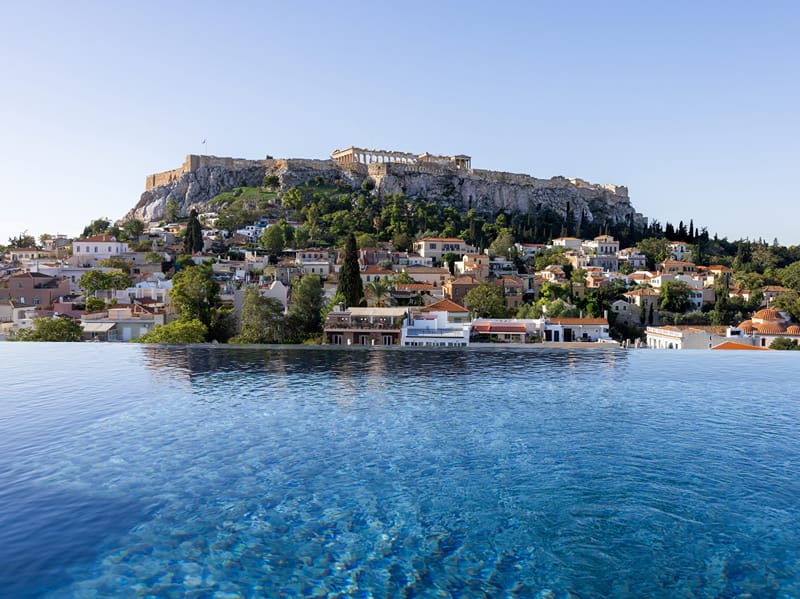
The Dolli® at Acropolis
Inhabits a restored landmark building signed by Greece’s stellar architect over 100 years ago, a few steps from the Acropolis and gazing at the Parthenon.
Read article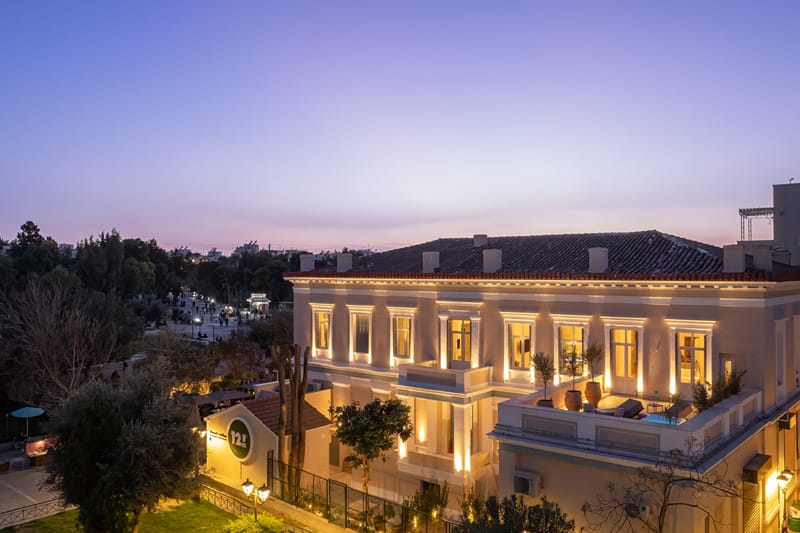
La Divina
A 12-suite hotel in a neoclassical building on Andrianou Street, with views of the Acropolis, the Ancient Agora and the Athens Observatory.
Read article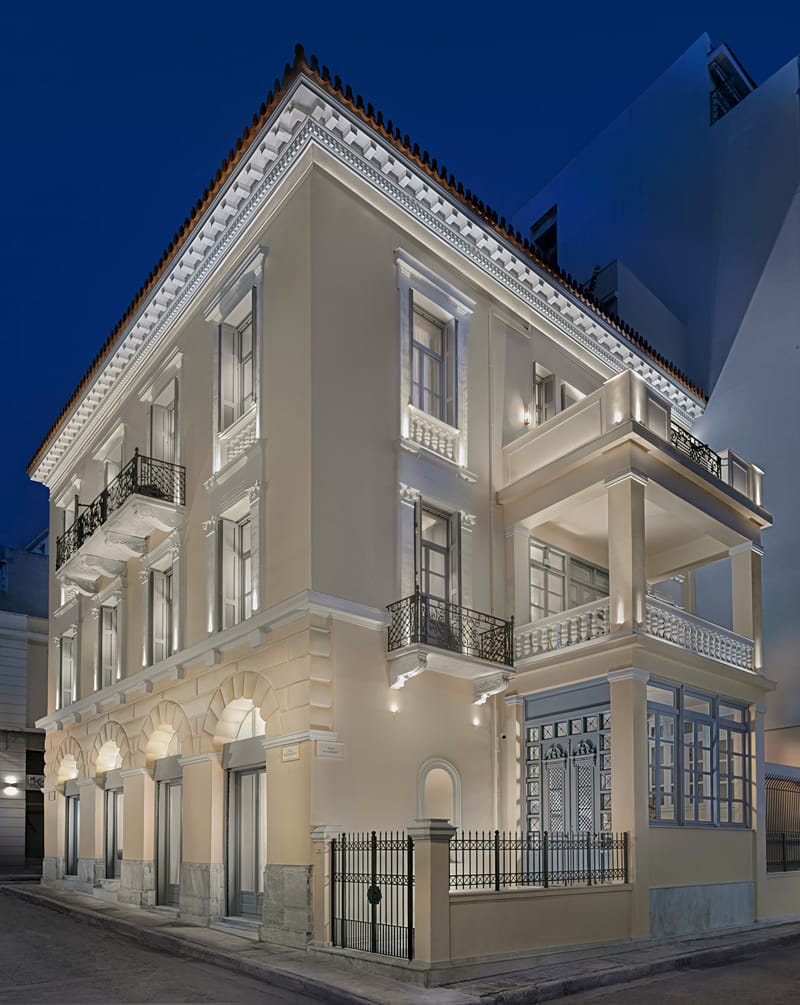
Monument Hotel
A rare find for travel connoisseurs who appreciate the art of discovery.
Read article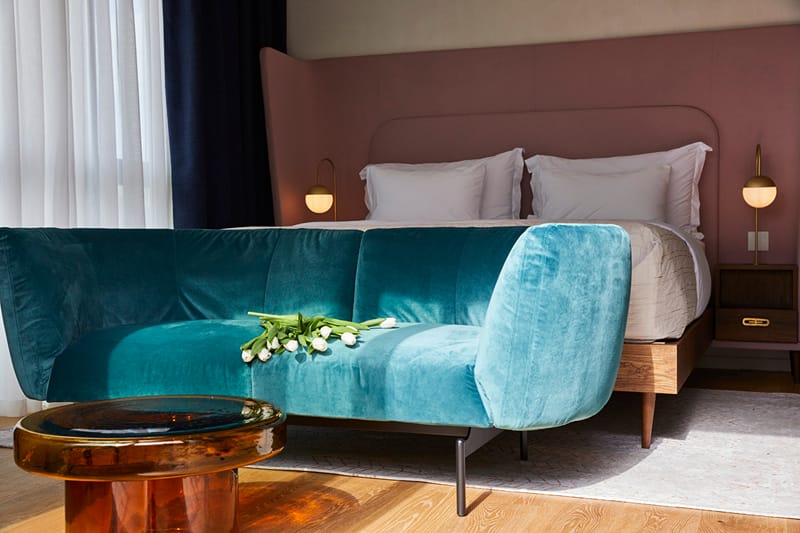
Gatsby Athens
A contemporary boutique hotel of 33 rooms with a roof garden offering urban views and a glimpse of the Acropolis.
Read articleThe Essence
Athens is best taken at walking pace: a timed slot on the Acropolis at eight, a coffee by the market, pastirma and meze at lunch, the stone paths of Philopappou as the light goes, and a cocktail in Plaka afterwards. The next day, the tram to the sea. It is a city that asks only that you keep moving between its hills, and repays every one of them with another view of the Parthenon.