
Mexico City starts the day with tamales from a street cart and ends it with pastor turning gold on the trompo as night falls, which is roughly how the city's own tourism office describes it. In between there is a lot of city: an Aztec temple uncovered beside the cathedral, a museum courtyard sheltered by a single concrete umbrella, tree-lined streets full of galleries in Roma and Condesa, and the blue house in Coyoacán where Frida Kahlo was born. Pick a base, buy a transit card, and let each neighbourhood show you a different side.
This guide is for planning that kind of trip: which area suits whom, what deserves a morning, what to eat and drink, how to get in from the airport and around on the Metro and Metrobús, when the rain comes, and what happens at Día de Muertos. Prices are in Mexican pesos (MXN), checked on 16 October 2026; confirm before you go.
The Areas
Most visitors stay between the Centro Histórico and Polanco, along Paseo de la Reforma, with Roma and Condesa just south. Coyoacán and San Ángel, further south, make easy day trips.
- Centro Histórico — the Zócalo, the cathedral, the Templo Mayor and the Palacio de Bellas Artes, in the district with the city's largest concentration of museums and cultural sites. Suits first-timers and anyone who wants history on the doorstep.
- Roma and Condesa — for a long time among the most visited neighbourhoods by foreign guests, with tree-lined streets, parks and plazas, many restaurants and some of the city's most popular galleries. Suits food lovers, walkers and longer stays.
- Juárez and Reforma — the blocks around Paseo de la Reforma, the avenue Emperor Maximilian commissioned as the Paseo de la Emperatriz, which runs past monuments such as the Ángel de la Independencia towards Chapultepec. Suits travellers who want to be central and well connected.
- Polanco — designer boutiques and galleries on Avenida Presidente Masaryk, the Museo Soumaya in its skin of aluminium hexagons, the Museo Jumex for contemporary art, and several of Mexico's most awarded restaurants. Suits couples, shoppers and serious diners, with Chapultepec next door.
- Coyoacán — twin plazas whose layout dates to the 16th century, the Casa Azul, the Museo Casa de León Trotsky and the green trails of the Viveros. Suits a slower day, and anyone who comes for Frida Kahlo.
- San Ángel — weekend art and craft at the Bazar Sábado on Plaza San Jacinto, and the studio-houses Juan O'Gorman designed for Diego Rivera and Frida Kahlo. Suits art lovers, ideally on a Saturday.

What to See and Do
Start at the Zócalo, officially the Plaza de la Constitución, with the Metropolitan Cathedral to the north, the National Palace to the east and a giant national flag raised and lowered each day. Just off its northeast corner, the Museo del Templo Mayor at Seminario 8 shows what has been recovered from the main temple of the Mexica city, across eight exhibition halls; it opens Tuesday to Sunday, 9am to 5pm. A few blocks west, the Palacio de Bellas Artes, inaugurated in 1934, wraps an Art Deco interior in an Art Nouveau and neoclassical shell, holds murals by Diego Rivera, José Clemente Orozco, David Alfaro Siqueiros and Rufino Tamayo, and is home to the Ballet Folklórico de México.
Give the Museo Nacional de Antropología a whole morning. Opened in 1964 to a design by Pedro Ramírez Vázquez, it stands in Chapultepec between Paseo de la Reforma and Mahatma Gandhi, around a courtyard roofed by el paraguas, a vast concrete canopy on a single pillar. The Stone of the Sun, the Aztec calendar stone, is in the collection. It opens Tuesday to Sunday, 9am to 6pm; since 1 January 2026 entry for foreign visitors costs MXN 210. Sunday free entry applies to Mexican nationals and residents, not to tourists.
Around it, Chapultepec park holds the castle on its hill, once the presidential residence and now the National Museum of History, and the Museo Tamayo and the Museo de Arte Moderno along Reforma. Sundays are busy, because locals visit the museums free.
In Coyoacán, the Museo Frida Kahlo, the Casa Azul at Londres 247, is where Kahlo was born in 1907 and died in 1954. It opens Tuesday to Sunday from 10am to 6pm (from 11am on Wednesdays) and is closed on Mondays. Buy tickets in advance through the museum's official site, boletos.museofridakahlo.org.mx, which is one of only two official sales points. After the visit, walk to the plazas, and on a weekend continue to San Ángel for the Bazar Sábado, founded in 1960 in a 17th-century house and known for folk art, silver, textiles and ceramics.

Day Trips: Teotihuacan and Xochimilco
Teotihuacan lies about 40 km northeast of the city, a UNESCO World Heritage Site since 1987. The Avenue of the Dead runs past the Pyramid of the Sun, among the largest pyramids in the world, to the Pyramid of the Moon. The site opens daily from 8am to 5pm and charges foreign visitors MXN 210 under the 2026 rates. Buses leave roughly every half hour from the Terminal Autobuses del Norte (Metro Line 5); make sure yours is going to the ruins rather than to the town of San Juan Teotihuacán. The trip takes about an hour. As of September 2026, the Pyramid of the Sun was closed to climbers and the Pyramid of the Moon could be climbed to its first platform, so check on the day. Go early: shade is scarce and tour groups arrive around 9.30.
Xochimilco, in the south of the city, keeps about 170 km of canals between chinampas, the farmed islands that fed the old lake city; UNESCO listed them with the historic centre in 1987. The colourful flat-bottomed trajineras leave from embarcaderos such as Cuemanco, and the Tren Ligero connects the area to the Metro. Around Día de Muertos, night trajinera trips pass ofrendas set on the chinampas.

What to Eat and Drink
Eating here follows the clock. Mornings mean tamales and pan dulce; evenings mean tacos al pastor, marinated pork carved from a vertical spit in a style that came to Mexico with Lebanese shawarma. In Coyoacán, the market draws a crowd every day for its tostadas de guisados and fried quesadillas. In the Centro, the Mercado de San Juan is where chefs shop, for edible flowers, pre-Hispanic insects, unusual meats and European cheeses.
For a long lunch, the Mexican way, book Contramar on Durango 200 in Roma Norte, open from midday to 8pm (from 11am at weekends): the tuna tostadas and the pescado a la talla, grilled with red chile and parsley, are its signatures. Polanco is where several of the country's most awarded tasting-menu restaurants cluster. Churrería El Moro has been frying churros since 1935, and its hot chocolate is made with cacao from Tabasco.
To drink, start with mezcal, distilled from the roasted heart of the agave and usually sipped neat with orange slices and sal de gusano; Oaxaca makes about 90 per cent of it. Pulque, a fermented agave drink, was once sacred to the Aztecs. Tipping of around 10 per cent is customary in restaurants, bars and cafés, up to 15 per cent for exceptional service; some places add it to the bill, so check.
Getting There and Around
Benito Juárez International Airport (MEX) is about 5 km east of downtown, with two terminals around 3 km apart. Metrobús Line 4 runs an airport service from Terminals 1 and 2 through the Centro Histórico for MXN 30. If you take a taxi, the UK Foreign Office advises using only authorised pre-paid airport taxis, and in town a sitio taxi from an authorised rank or one ordered by your hotel.
In town, buy a Tarjeta de Movilidad Integrada (MI card, MXN 15) at any Metro ticket office or at Metrobús, Cablebús and Tren Ligero machines; The Metro has 12 lines and 195 stations and costs MXN 5 a ride, whatever the distance or number of changes; it runs from 5am on weekdays, 6am on Saturdays and 7am on Sundays, until midnight. The Metrobús has seven lines and costs MXN 6. On both systems you can also tap a contactless bank card or phone at the turnstile. Front carriages are reserved for women and children, and rush hours run roughly 7am to 10am and 5pm to 9pm.
When to Go
Mexico City can be visited all year. Spring (March to May) and autumn (September to November) bring warm afternoons and cool nights, and May is usually the hottest month. The rainy season runs roughly from June to September; storms tend to last a couple of hours, usually in the afternoon, but can flood streets and snarl traffic. Winter, from December to February, is drier, with cold nights and early mornings. The sun is strong in every season, so pack a hat and sunscreen.
Día de Muertos, on 1 and 2 November, is when families build ofrendas with marigolds, photographs and the favourite food of those they remember; UNESCO added the tradition to its intangible heritage list in 2008. In 2026 the city's programme includes the Festival Flores de Cempasúchil on Reforma from 18 October to 1 November, the Gran Desfile parade along Reforma to the Zócalo on Saturday 31 October at 2pm, and a monumental ofrenda in the Zócalo from 29 October to 2 November. In San Andrés Mixquic, families light thousands of candles on the graves on the night of 2 November; arrive early, ask before taking photographs, and keep quiet during the vigil.
Good to Know
- Altitude — the city sits at about 2,230 m, so take the first day easy.
- Water — the UK Foreign Office advises drinking only boiled or bottled water and avoiding ice.
- Money — the currency is the Mexican peso (MXN). Carry a card and a day's worth of cash, and use ATMs in daylight inside shops or malls, as the Foreign Office suggests.
- Safety — the Foreign Office advice is practical: keep expensive things out of sight, travel by day where you can, use authorised taxis, and move away from demonstrations, which are common in the city. Read the current advice at gov.uk before you travel.
- Earthquakes — they happen. The city's 911 CDMX app can give early warning, but only with a local phone number. The emergency number is 911.
- Mondays — the Templo Mayor, the Anthropology Museum and the Casa Azul are closed; plan markets and walks.
- Plugs — 110V with flat two-pin plugs, as in the US; bring an adapter.
Our Picks
- To seeMuseo Nacional de Antropología
The Stone of the Sun and the paraguas courtyard; closed Mondays, MXN 210 for foreign visitors.
- To seeMuseo Frida Kahlo (Casa Azul)
The house where Kahlo was born and died; buy tickets online before you go.
- To seeMuseo del Templo Mayor
The main temple of the Mexica city, beside the Zócalo; Tuesday to Sunday, 9am to 5pm.
- To seePalacio de Bellas Artes
Murals by Rivera, Orozco, Siqueiros and Tamayo under an Art Deco interior.
- To eatContramar
Tuna tostadas and pescado a la talla over a long lunch.
- To eatMercado de Coyoacán
Tostadas de guisados and fried quesadillas after the Casa Azul.
- To eatMercado de San Juan
Where the city's chefs come for edible flowers, insects and rare ingredients.
- To drinkChurrería El Moro
Churros since 1935, with hot chocolate made from Tabasco cacao.
- To shopBazar Sábado
Folk art, silver and textiles in a 17th-century house, at weekends.
- To walkViveros de Coyoacán
The area's main green refuge, with tree-lined trails.
Where to Stay
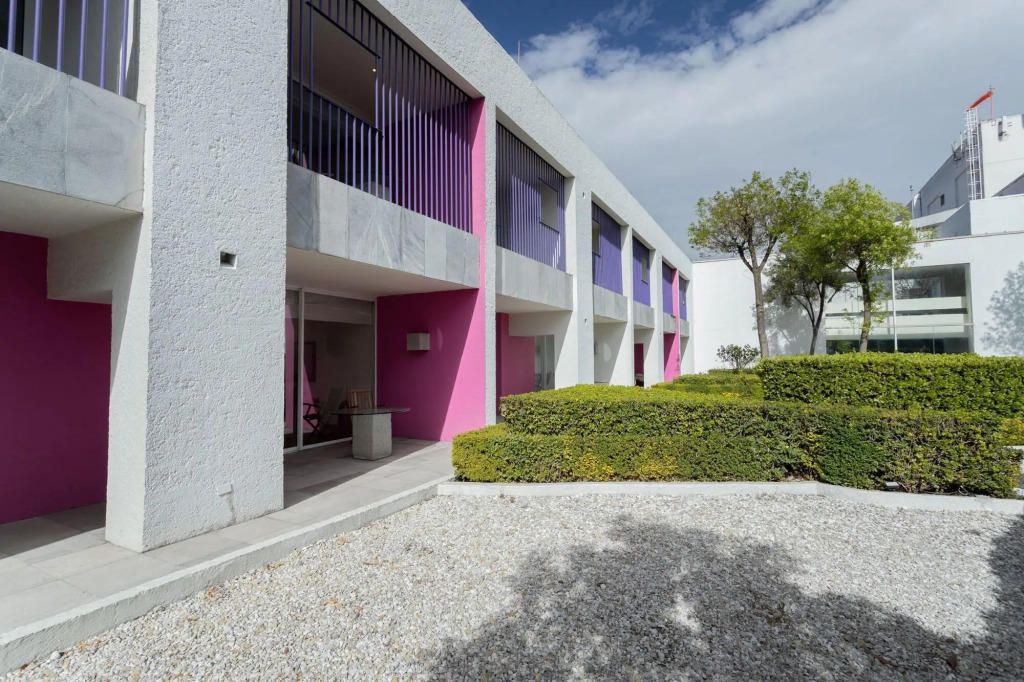
Camino Real Polanco
Close to the Museo Rufino Tamayo, the Museum of Modern Art and the National Museum of Anthropology, with a spa, an outdoor pool, a bar and a restaurant.
View on TRVL ↗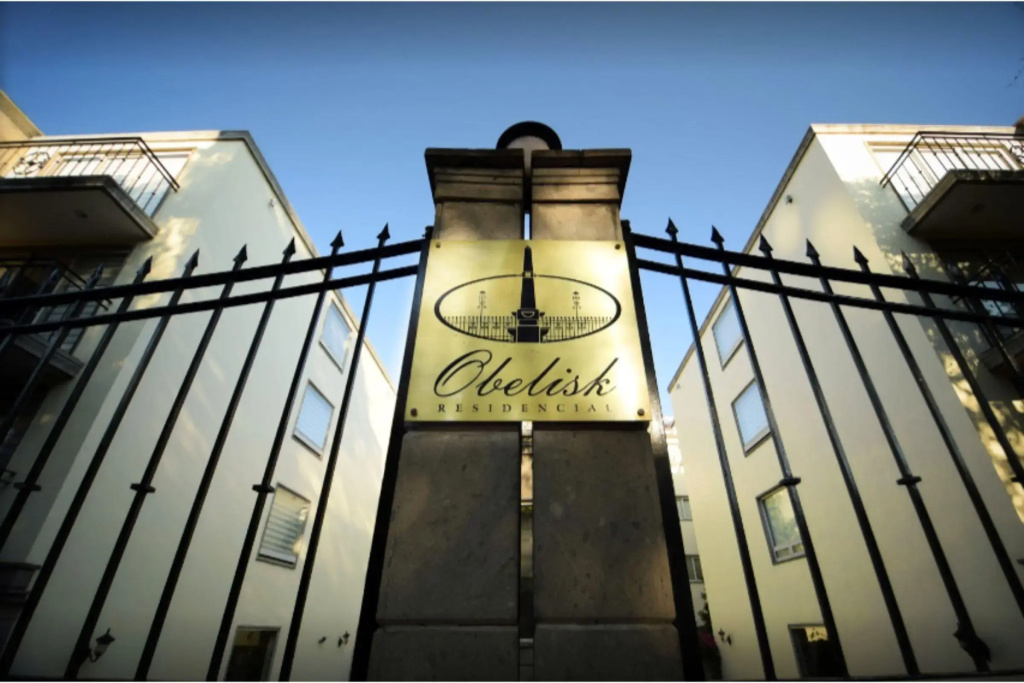
Suites Obelisk
Near the Auditorio, Chapultepec Zoo and the National Museum of Anthropology, with a bar, a restaurant and a fitness centre.
View on TRVL ↗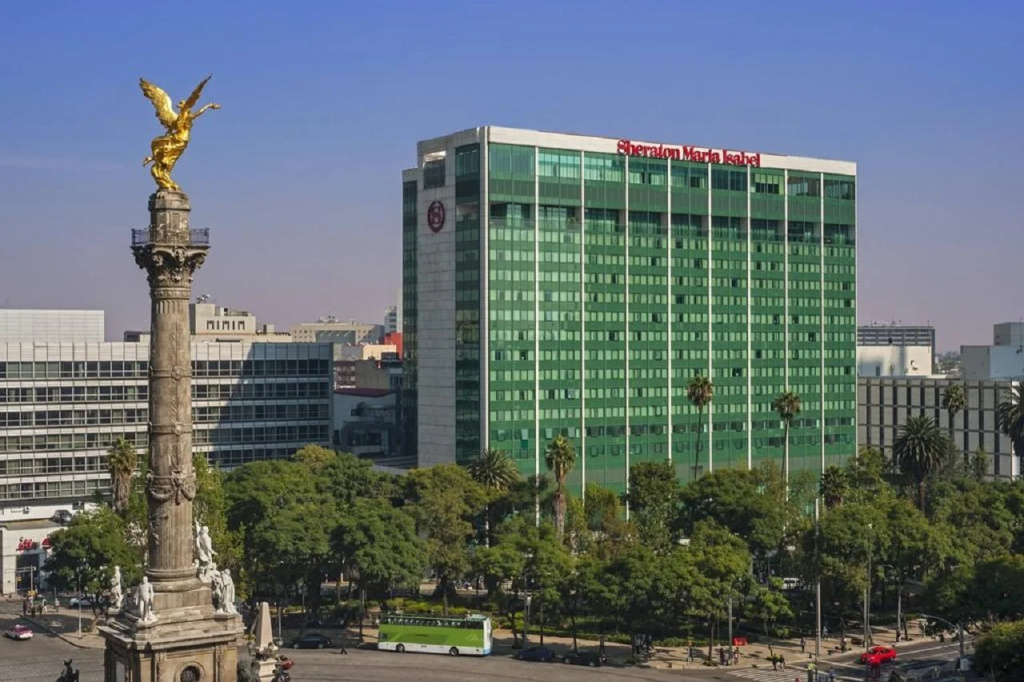
Sheraton Maria Isabel
Within walking distance of the Angel of Independence and Zona Rosa, with a pool, a spa and a restaurant.
View on TRVL ↗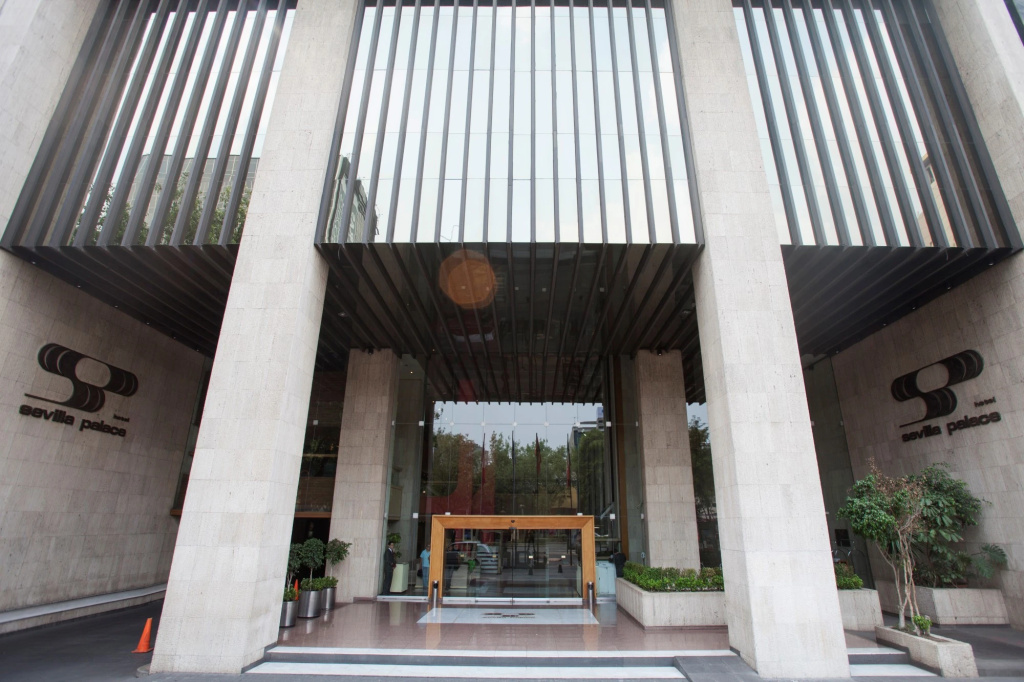
Sevilla Palace Hotel
Near the National Museum of the Revolution and La Ciudadela, with indoor and outdoor pools, a sauna and a restaurant.
View on TRVL ↗The Essence
Mexico City gives most to the traveller who lets it set the pace: tamales on the way to the Templo Mayor, a morning under the paraguas at the Anthropology Museum, a long fish lunch in Roma, a Saturday among the silver and textiles of San Ángel, and an early bus to stand on the Avenue of the Dead before the heat. The city is too large to finish, which is the best reason to come back, perhaps in late October, when Reforma fills with marigolds and the whole capital sets a place for those it remembers.