
Three bridges fan out from Prešeren Square across the Ljubljanica, and most visitors cross them without noticing that two of them were added later. The architect Jože Plečnik set a footbridge at a slight angle on each side of the 1842 stone bridge so it would stop being a bottleneck, and the Triple Bridge opened in its present form in 1932. That small, practical gesture is a good introduction to the whole city. In 2021 Plečnik's works in Ljubljana, from the river embankments and bridges to the market, were inscribed on the UNESCO World Heritage List as an example of human-centred urban design.
Ljubljana is a capital you can cross on foot. Much of the centre is closed to cars, the castle is a one-minute funicular ride above the market, and on Fridays from spring to autumn a square beside the market turns into an open-air kitchen. Lake Bled and the caves of Postojna are each an easy day away. This guide is about enjoying all of it at a walking pace.
The Areas
The Ljubljanica divides the centre in two, with the castle hill rising on the old-town side. Distances are short: from the railway station to the Triple Bridge is a stroll, and most sights sit within a radius of a couple of kilometres.
- Old Town — the medieval streets of Mestni trg, Stari trg and Gornji trg on the right bank, under the castle, with footpaths climbing to the walls in about ten minutes. Best for a first visit, when you want the river, the market and the castle on your doorstep.
- Prešeren Square and the centre — the left bank around the Triple Bridge, Slovenska cesta and Congress Square, where Plečnik's green promenade along Vegova Street passes the National and University Library. Practical for short stays and for travellers who like cafés and shops close at hand.
- Trnovo — a residential quarter south of the centre, home to Plečnik House and the Trnovo Bridge, both part of his legacy. Suits repeat visitors and anyone who prefers evenings by the river away from the busiest streets.
- Tabor and Metelkova — the streets east of the railway station, around the Metelkova cultural centre, about five minutes' walk from the trains. Good for arrivals by rail or bus, for night owls and for travellers on a tighter budget.

What to See and Do
Start on the river. The UNESCO inscription covers the promenade along the embankments and bridges of the Ljubljanica, so simply walking the water's edge from the Triple Bridge is a tour of Plečnik's city. Downstream, the Dragon Bridge of 1901 carries 20 dragons, four large copper ones on the corners and sixteen smaller ones; it is often called the most beautiful bridge produced by the Vienna Secession. Between the two bridges runs the Central Market, whose riverside colonnade Plečnik designed in the 1930s and which was built between 1940 and 1942.
To understand the man, go to Plečnik House at Karunova 4–6 in Trnovo. Plečnik (1872–1957) conceived many of his ideas here, and his original home can be seen only on a guided tour, which starts every hour. It opens Tuesday to Sunday, 10:00–18:00; a house visit with the tour costs €12 for adults, and booking online is recommended. The wider UNESCO site also takes in the Roman walls in Mirje, two churches and the Žale Garden of All Saints.
Then go up to Ljubljana Castle. The funicular has run from Krekov trg, by the market, since December 2006, and the ride takes about 60 seconds; a return ticket on its own is €6. If you prefer to walk, the Študentovska path from Vodnikov trg reaches the top in about ten minutes. The Castle Ticket, €19 at the counter or €17.10 online including the funicular, covers the Viewing Tower, the Slovenian history exhibition, the Museum of Puppetry, a 4D film and the temporary exhibition halls. From October to April the castle opens 09:00–19:00, and from May to September until 22:00.
For green space, Tivoli Park, the largest park in the city, was laid out in 1813 to plans by the engineer Jean Blanchard, when Ljubljana belonged to the French Illyrian Provinces. Plečnik's Jakopič Promenade runs through it on an axis from Tivoli Castle towards Ljubljana Castle, and the shallow Tivoli Pond, dug in 1880, sits at the south-eastern end.
Metelkova shows the city's other side. Seven former army barracks near the railway station were taken over by artists in September 1993 and became an autonomous cultural centre, with studios, galleries, concert spaces and clubs; it was declared national cultural heritage in 2005. The clubs get busy on Friday and Saturday nights.

Day Trips: Bled and Postojna
Lake Bled is the classic day out. On the island, 99 stone steps lead up to the Church of the Mother of God, with its free-standing 52-metre bell tower and a wishing bell that visitors ring; tradition says a groom carries his bride up all 99 if they marry there. You reach it by pletna, the flat wooden boats that have rowed on the lake since 1590; there are 23 of them, leaving from several points including Mlino and Velika Zaka. Allow about an hour and a half for the trip, around half an hour of it on the island, where Potičnica sells potica, the rolled Slovenian festive cake. Above the water, Bled Castle, first recorded in 1004, is described as the oldest castle in Slovenia; inside are a museum, a printing works where you can hand-print a souvenir and a wine cellar where you can bottle your own wine.
Save room for the Bled cream cake, kremna rezina, whose recipe arrived in Bled in 1953 with the confectioner Ištvan Lukačević; by 2009 some ten million had been baked.
Postojna Cave, about 46 kilometres from Ljubljana, belongs to a 24-kilometre cave system described as the largest show cave in Europe. Visits begin on the world's only double-track cave railway, running underground since 1872, with a 3.7-kilometre ride before an easy walk; the whole tour takes about an hour and a half. It stays at 10°C all year, so bring a warm layer. A combined ticket adds Predjama Castle, built into a cliff face for about 800 years. Cave tickets were listed at €34.90 and the cave and castle together at €49.90 at the time of writing.

What to Eat and Drink
Open Kitchen, Odprta kuhna, is the city's favourite lunch. From March to November, on every sunny Friday, cooks from restaurants across the city set up stalls on Pogačarjev trg by the market, from 10:00 to 21:00 and until 22:00 on warmer days. The tourist board calls it one of the most popular culinary projects in Slovenia, and 2026 is its fourteenth season.
The Central Market, open every day except Sunday, is the place to shop: flowers where Pogačarjev and Vodnikov trg meet, fish and dried fruit on the lower level of Plečnik's hall, and herbs, spices and crafts under the colonnade by the Triple Bridge.
Look out for the dishes of central and Alpine Slovenia. Štruklji are rolls of dough, boiled or baked, filled with tarragon, cottage cheese, walnut, apple or poppy seed. Kranjska klobasa, the Carniolan sausage, first recorded in 1896, is the best known Slovenian speciality. Potica comes in more than 80 varieties, and prekmurska gibanica layers poppy seed, cottage cheese, walnut and apple.
Slovenia has three wine regions: Primorska on the Mediterranean side, with Teran, Refošk and the wines of Goriška Brda; Podravje in the east, mostly white and known for sparkling wines; and Posavje along the Sava, home of the light red Cviček. Ljubljana brings them together twice a year at the Ljubljana Wine Route, a free street festival in the Old Town with more than 100 stalls, held in June and around St Martin's Day in November. November is also November Gourmet Ljubljana, a month of food events across the city.
Getting There and Around
Ljubljana Jože Pučnik Airport is about 26 kilometres from the centre, roughly 20 minutes by car. A regular public bus runs to the combined bus and railway station, taking about 50 minutes, and shared shuttles such as GoOpti and Nomago also make the trip.
The railway station is Slovenia's main rail hub, with international trains to Vienna, Munich, Zagreb, Budapest and Trieste among others, and the bus station beside it has direct coaches from Venice, Trieste and Milan. For Bled, buses leave hourly and take about 75 minutes; trains reach Lesce-Bled, about 4 kilometres from the lake, in just under an hour, with local buses on to town. Domestic buses also serve Bohinj and Postojna Cave.
In town you will walk most of the time: a large part of the centre is closed to cars, and the Triple Bridge has been pedestrian-only since 2007. City buses are paid with the Urbana card, which costs €2 and holds credit; a ride is €1.50 and covers up to 90 minutes, including changes. You can also tap a contactless bank card, but then free changes do not apply. Small electric Kavalir vehicles give free rides within the pedestrian zone, mainly for older visitors and anyone who finds long walks hard, and the BicikeLJ bike-share system has stations across the centre.
When to Go
From spring to early autumn the city lives outdoors: Open Kitchen fills Pogačarjev trg on Fridays from March, the summer Wine Route comes in June, and from May to September the castle stays open until 22:00. October brings the Ljubljana Marathon, and November belongs to food and wine.
December is the other high point. The festive lights, which the tourist board counts among the most beautiful in Europe, are switched on on 27 November 2026, the Friday before Advent, and green stalls of the festive markets line the Old Town with mulled wine, hot tea, local food and handmade gifts, alongside outdoor concerts and Father Frost parades. Celebrations run through December into early January, and the city asks visitors to celebrate with lights and candles rather than firecrackers.
Good to Know
- The Ljubljana Card costs €41, €49 or €54 for 24, 48 or 72 hours (children 6–14 €26, €31 or €35). It includes city buses, the castle, a river cruise, a guided walk of the centre and the National Gallery, among more than 30 attractions, each once. It starts on first use and can be bought online or at the tourist information centre, the airport and the castle's lower funicular station.
- Plečnik House is closed on Mondays and on 1 January, 1 November and 25 December; on 24 and 31 December it closes at 14:00. Call ahead if you plan to use the Ljubljana Card there.
- The tourist information centre is at Adamič-Lundrovo nabrežje 2, by the river; from October to May it opens Monday to Saturday 09:00–18:00 and Sundays 09:00–17:00.
Our Picks
- To seeLjubljana Castle
Take the funicular up and the Viewing Tower for the whole city at once; open every day of the year.
- To seePlečnik House
The architect's own home, shown on an hourly guided tour; the best way into his city.
- To seeDragon Bridge
Twenty Secession dragons from 1901, the city's emblem in copper.
- To seeMetelkova
Former barracks turned into studios, galleries and clubs, busiest on Friday and Saturday nights.
- To walkThe Ljubljanica embankments
Plečnik's riverside promenade, part of the UNESCO listing, best in the early evening.
- To walkJakopič Promenade
Plečnik's avenue through the city's largest park, lined up on Ljubljana Castle.
- To eatOpen Kitchen
Friday lunch from the city's restaurants at street-food stalls, every sunny Friday from March to November.
- To eatCentral Market
Plečnik's riverside hall and colonnade, with fish downstairs and herbs and crafts by the Triple Bridge; closed on Sundays.
- To drinkCastle wine shop and bar
A large selection of Slovenian wines, at the top of the funicular.
Where to Stay
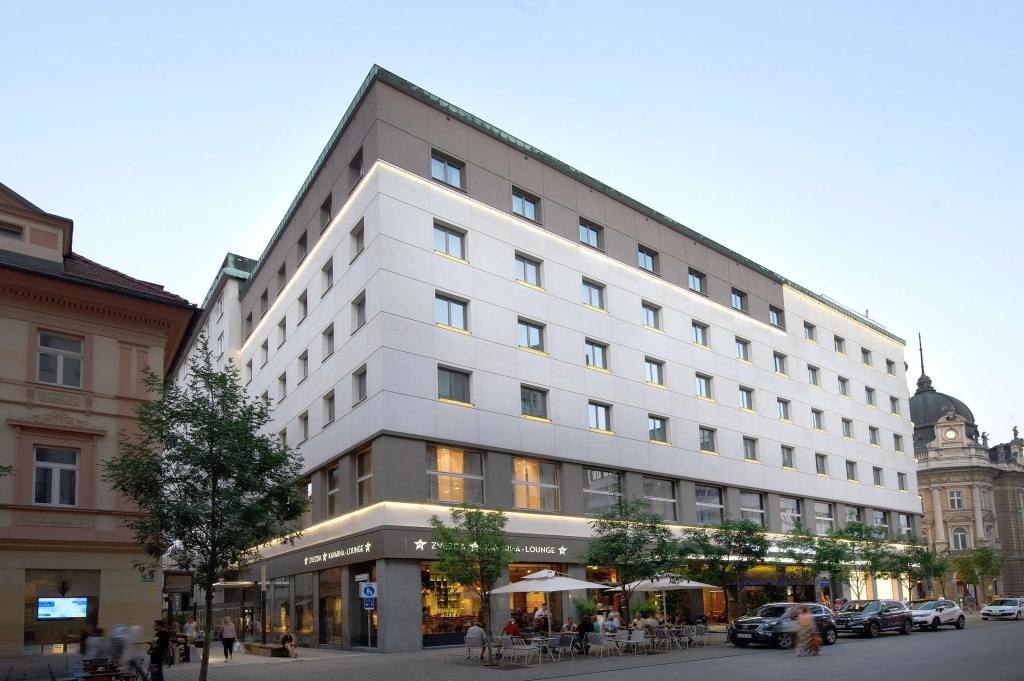
Best Western Premier
On Slovenska cesta, close to Prešeren Square, the Triple Bridge and the Opera House, with a restaurant, a café, a sauna and a spa centre.
View on TRVL ↗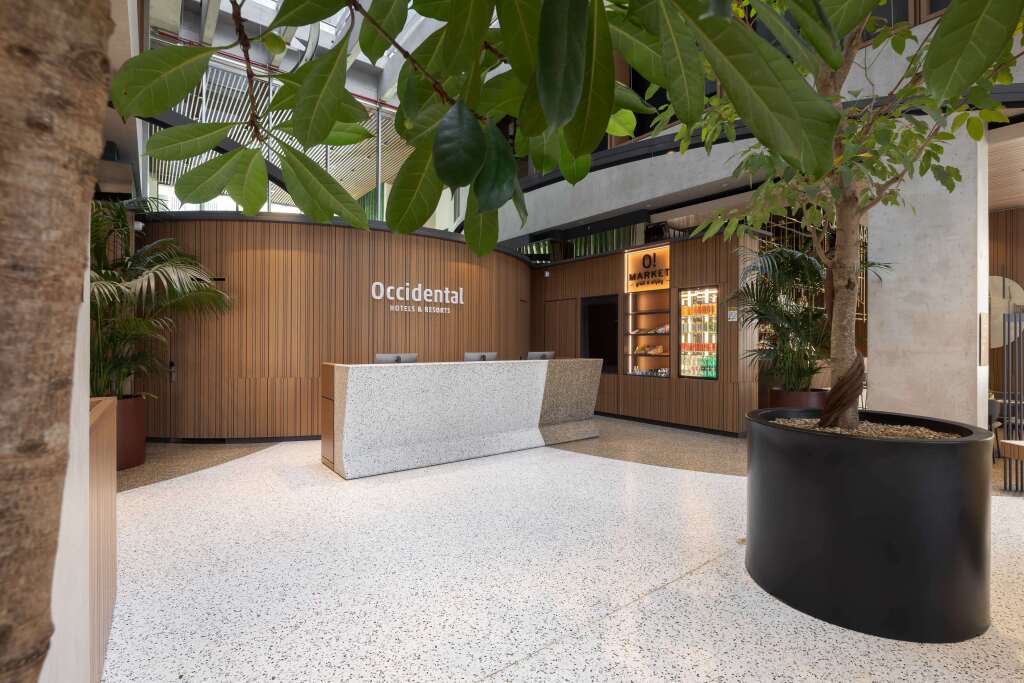
Occidental Ljubljana
A hotel in the centre near Congress Square and the University of Ljubljana, with a bar, a restaurant and a fitness centre.
View on TRVL ↗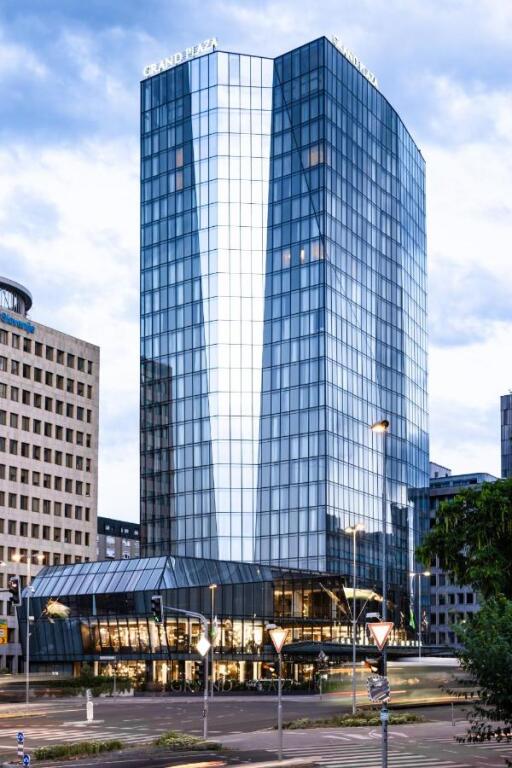
Grand Plaza Hotel
A five-star hotel about a kilometre from the centre, near the Dragon Bridge and Prešeren Square, with a restaurant and a gym.
View on TRVL ↗
B&B Hotel Ljubljana
An eco-friendly hotel a three-minute walk from Metelkova and six minutes from the Dragon Bridge, with 207 air-conditioned rooms, a terrace and a garden.
View on TRVL ↗The Essence
Ljubljana is a city built to the scale of a person on foot. Cross the Triple Bridge in the morning, buy cheese and herbs under Plečnik's colonnade, ride up to the castle for the view and come down for Friday lunch on Pogačarjev trg. Walk the river to Trnovo as the light goes. Then give a day to the lake at Bled, a pletna ride and a slice of cream cake, and come back to a capital small enough to feel like home by the second evening.