
San Francisco packs a great deal into a small, steep peninsula. Cable cars still climb Nob Hill on a system whose first run was in 1873, a bookshop on Columbus Avenue remains a landmark of the Beat generation, a farmers market fills the plaza of the Ferry Building three days a week, and on a clear afternoon the Golden Gate Bridge shows up at the end of streets you did not expect. Walk a few blocks and the weather, the food and the accent of the place all change.
This guide is for planning that kind of trip: which neighbourhood to stay in and who each one suits, how to get onto Alcatraz and across the bridge, what the cable cars and Muni cost, how BART brings you in from SFO, what to eat, and how to dress for the fog. Prices are in US dollars and were checked on 16 October 2026; fares and hours move, so confirm before you go.
The Areas
The city is compact and well served by Muni, cable cars and BART, so choose a base by the mood you want rather than by distance. Wear good shoes: most of these areas sit on or between hills.
- Union Square — the shopping and theatre heart of downtown, with virtually every fashion name on or near the 2.6-acre square and the Curran, a 1922 theatre known for trying out new productions before Broadway, close by. The Powell Street cable cars start a few blocks away. Suits first-timers and anyone who wants transport on the doorstep.
- North Beach — there is no beach, but there is a long Italian-American tradition of cafés and restaurants, City Lights Bookstore on Columbus Avenue, Washington Square and Coit Tower on Telegraph Hill above. Suits food lovers, readers and couples.
- The Mission — murals in Balmy Alley and on the Women's Building, Mission Dolores from 1776, the picnic lawns of Dolores Park, cafés and shops on Valencia Street and Latino bakeries and taquerias on 24th Street. Suits younger travellers and anyone who travels to eat.
- Hayes Valley — boutiques with clothes and homewares you will not find elsewhere, bars and restaurants that fill with theatregoers, and Patricia's Green for an ice cream or a coffee in the sun. The neighbourhood grew up where an old freeway once ran. Suits design lovers and short, relaxed stays.
- The Marina — bars and restaurants along Chestnut and Union streets, the Palace of Fine Arts from the 1915 Panama-Pacific Exposition, and Crissy Field and Fort Mason on the water facing the Golden Gate. Suits runners, families and anyone who wants the bay close.
- Russian Hill — the crooked block of Lombard Street, Macondray Lane with its gardens and Victorian houses, and the Powell-Hyde cable car stopping at the top of Lombard. Polk Street, between Broadway and Union, holds most of the neighbourhood's restaurants and bars. Suits walkers and travellers who like a view from a quiet street.

What to See and Do
Start with the bridge. The Golden Gate Bridge runs 1.7 miles (2,737 m) including its approaches, with 4,200 feet (1,280 m) between the towers, which rise 746 feet above the water. Pedestrians use the east sidewalk, the side facing the city, from 5am to 6.30pm in winter and until 9pm in summer time; cyclists can cross at any hour, with the sidewalk they use changing by time and day, so check the bridge district's alerts before you go. The welcome centre is open daily from 9am to 6pm. For the classic view from the city side, walk the Golden Gate Promenade along Crissy Field, a former Army airfield in the Presidio restored to about 100 acres of shoreline, with picnic spots at West Bluff and East Beach that look straight at the bridge.
Alcatraz can only be reached by the ferry of Alcatraz City Cruises, which operates under contract with the National Park Service and calls itself the only authorised provider with ferry access to the island. Boats leave from Alcatraz Landing at Pier 33 on the Embarcadero, and the Muni F line stops nearby; parking is limited. Book directly with the official operator, plan a few hours on the island, and bring layers and shoes with good grip. No food is sold on the island apart from snacks at the bookstore. Tours that land include the cellhouse audio tour, and there are also night and behind-the-scenes tours.
Then ride a cable car. Three lines run today: Powell-Hyde and Powell-Mason from Powell and Market to the Fisherman's Wharf area, and California from California and Market to Van Ness Avenue. The cable cars were declared a National Historic Landmark in 1964. To see how they work, the Cable Car Museum in the Washington-Mason powerhouse at 1201 Mason Street on Nob Hill shows historic cars, photographs and mechanical displays, and admission is free.
In North Beach, Coit Tower on Telegraph Hill dates from the 1930s and holds murals of California history inside. Down at Broadway and Columbus, Language of the Birds, a permanent art piece by Brian Goggin and Dorka Keehn, hangs illuminated books above the street.

Fog and Microclimates
San Francisco has a Mediterranean climate, but it rarely behaves like one in summer. The fog begins rolling in through the Golden Gate in spring and can linger through the summer, and the Bay Area is known for microclimates that can change dramatically from one neighbourhood to the next. The National Park Service's advice holds for every season: fog and wind can arrive at any time of year, so bring warm layers.
The good news comes in autumn. The warmest months are usually September and October, when the fog tends to retreat; KQED, citing meteorologist Jan Null, puts the city's average warmest day of the year on 2 October. Rain falls mostly from November to March.

What to Eat and Drink
Begin at the Ferry Building, a landmark at the water's edge since 1898, where nearly 50 local food merchants, restaurants and small eateries share the hall. The Ferry Plaza Farmers Market, run by the nonprofit Foodwise, sets up outside on Tuesdays and Thursdays from 10am to 2pm and on Saturdays from 8am to 2pm, when more than 100 vendors spread along the Embarcadero and onto the rear plaza above the bay.
The Mission is the home of the Mission-style burrito; La Taqueria, La Cumbre and El Farolito are local favourites, and 24th Street adds bakeries such as La Victoria Panaderia. In North Beach, Tony's Pizza Napoletana is known for award-winning pizza and Original Joe's has fed the city for more than a century.
For an evening outdoors, Off the Grid at Fort Mason Center bills itself as California's largest weekly food truck night market, with sunset views of the Golden Gate Bridge.
Getting There and Around
From San Francisco International Airport (SFO), BART leaves from a station in the International Terminal, a short walk from Terminals 1 and 3 and linked to all terminals by the free AirTrain. Take a Yellow Line (Antioch) or Red Line (Richmond) train; it is about 30 minutes to downtown. Tap a contactless bank card, Apple Pay or Google Pay at the gate, using the same card to enter and exit, one card per rider; BART no longer sells paper tickets. The first trains from SFO leave at 4.58am on weekdays, 5.47am on Saturdays and 8.08am on Sundays, with service until midnight, so plan another way for an early Sunday flight. Check the fare on BART's calculator before you travel.
In the city, a Muni single ride on buses, light rail and streetcars costs $2.85 with Clipper, the MuniMobile app or a tapped credit or debit card, or $3 in cash, and is valid for 120 minutes. A cable car ride is $9 with no transfers. If you plan more than a couple of cable car trips, a Visitor Passport is better value: $15 for one day, $35 for three and $47 for seven, with unlimited rides including cable cars. At the busy cable car stops at Powell and Market, Bay and Taylor, and Hyde and Beach, buy your fare before boarding between 8am and 8pm.
Day Trips
Sausalito sits just across the Golden Gate, and the most pleasant way there is by water. Golden Gate Ferry runs between the San Francisco Ferry Building and Sausalito; the adult fare is $8.50 one way with Clipper or a contactless bank card, or $14 with a paper ticket, and payment is collected when you get off in San Francisco. You can also cross the bridge by bike and take the ferry back.
Wine country is an easy day out. Sonoma County lies about 40 miles (64 km) north of the city and offers a tasting pass for wineries, breweries and distilleries. Napa Valley has more than 400 wineries spread across five towns: Napa, Yountville, St. Helena, Calistoga and American Canyon. If you drive, choose a designated driver or book a tour.
When to Go
September and October are usually the warmest months and the best bet for clear days on the bay. In spring and summer the fog rolls in through the Golden Gate, so pack a jacket even in July. Most of the rain falls between November and March.
Whatever the month, plan around the microclimates: check the forecast for the bridge and the bay before you set out, and keep an indoor plan, such as the Cable Car Museum or the Ferry Building, for a grey hour.
Good to Know
- ESTA — travellers from Visa Waiver Program countries need an approved ESTA and an e-passport. Apply only on the official site, esta.cbp.dhs.gov, and do it when you start planning, before you buy your flights; approval does not guarantee entry, which is decided by the officer on arrival.
- Tipping — table service in restaurants is normally tipped at around 20 per cent of the subtotal before tax. Many San Francisco restaurants add a service charge or a separate surcharge, so read the bill first; where a service charge is already included, an extra tip is up to you.
- Layers — fog and wind can arrive at any time of year, and the temperature can change from one neighbourhood to the next. Carry a warm layer, especially for Alcatraz and the bridge.
- Cards — tap to pay works on BART, Muni and the Golden Gate Ferry; each rider needs their own card or phone.
- Free things — walking the Golden Gate Bridge, Crissy Field, the Cable Car Museum and the Ferry Plaza Farmers Market cost nothing.
Our Picks
- To walkGolden Gate Bridge
The city-facing sidewalk, open to walkers from 5am.
- To walkCrissy Field
A restored airfield shoreline with the bridge straight ahead.
- To seeAlcatraz
The official Alcatraz City Cruises ferry and the cellhouse audio tour.
- To seeCable Car Museum
Historic cable cars in their old powerhouse, free to enter.
- To seeCity Lights Bookstore
A landmark of the Beat generation.
- To eatFerry Plaza Farmers Market
More than 100 vendors on Saturday mornings.
- To eatLa Taqueria
A local favourite for the Mission-style burrito.
- To eatTony's Pizza Napoletana
Award-winning pizza in the old Italian quarter.
- To eatOff the Grid
A weekly food truck night market with sunset views of the bridge.
Where to Stay
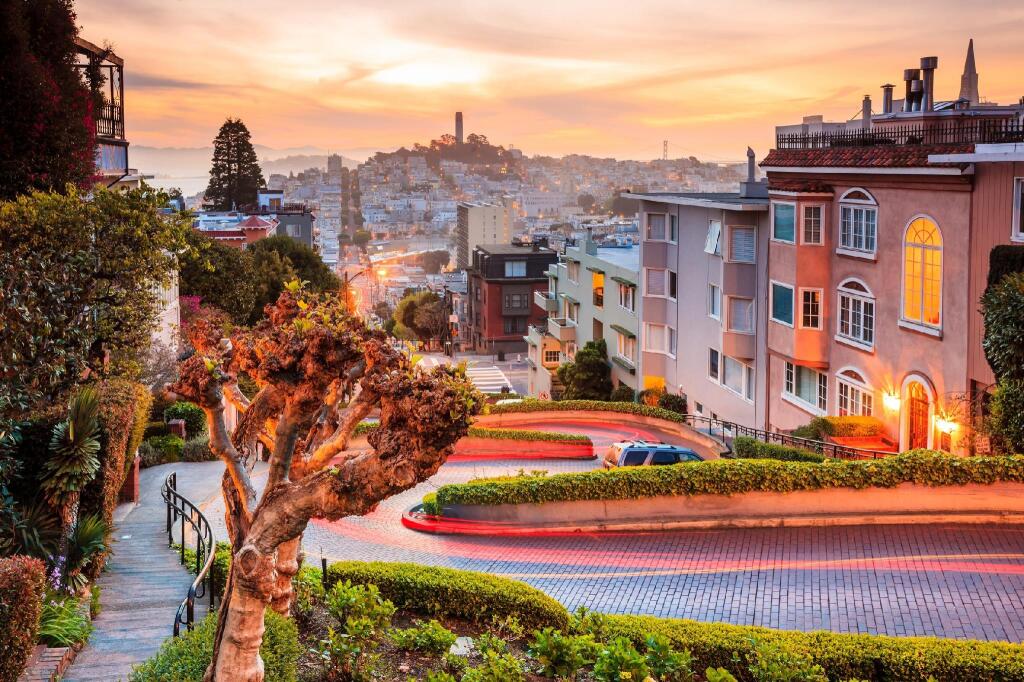
Beacon Grand
Within walking distance of the city centre and Union Square, with a bar, restaurant, café, massage room and fitness centre.
View on TRVL ↗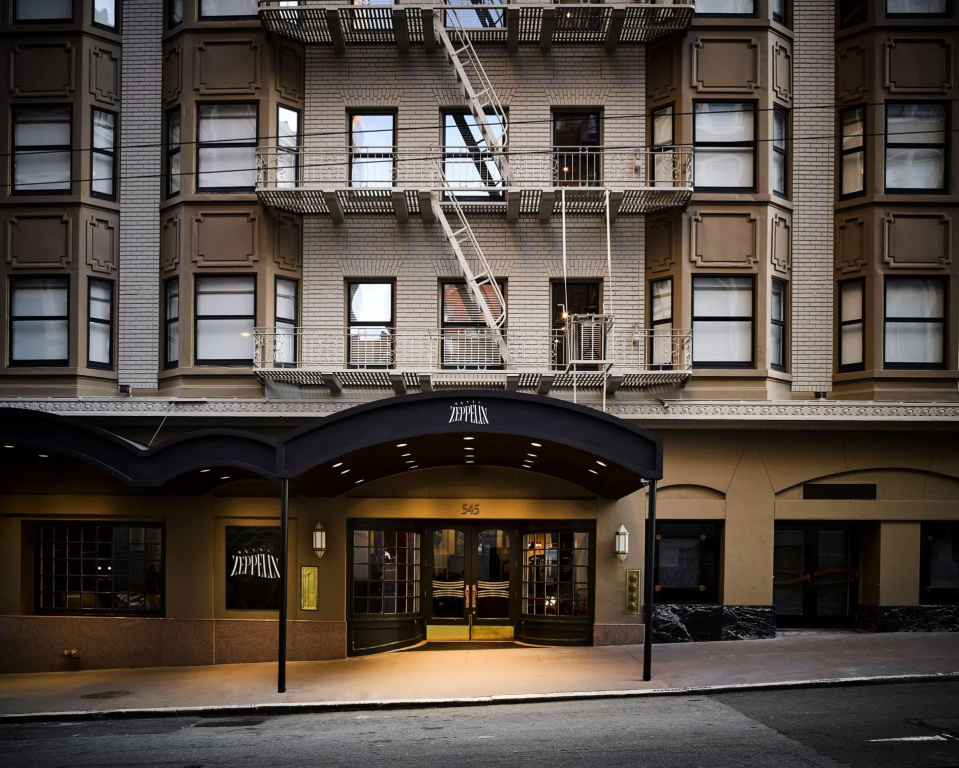
Hotel Zeppelin San
Near Union Square and the Westin St Francis, with a bar, restaurant and fitness centre, and pets allowed.
View on TRVL ↗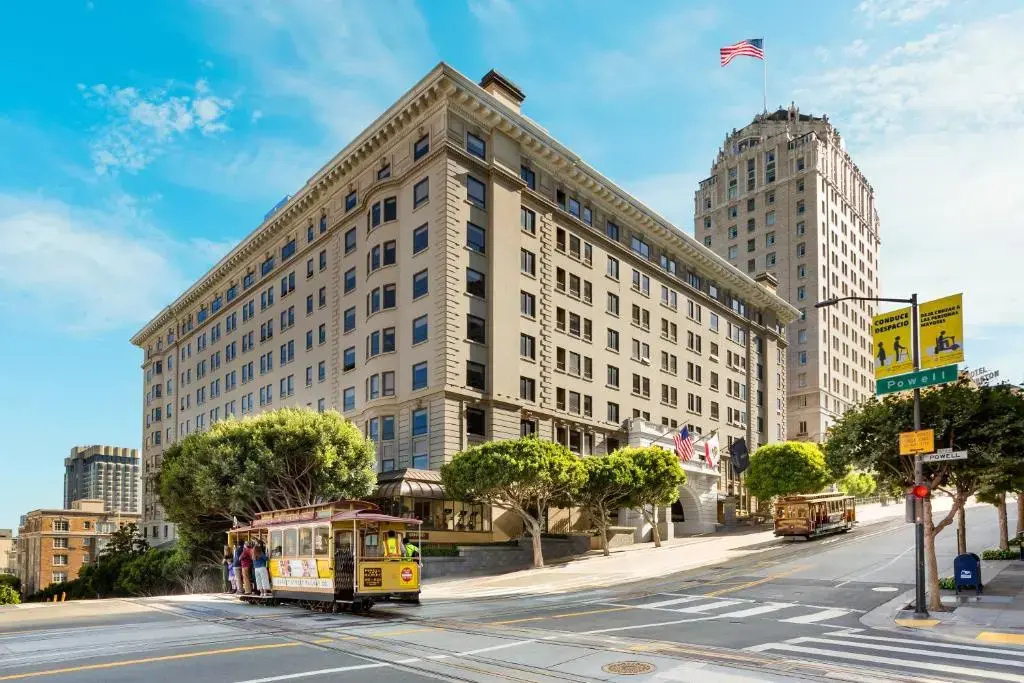
Stanford Court San
Close to the Pacific-Union Club, with a bar, restaurant, café, fitness centre and concierge.
View on TRVL ↗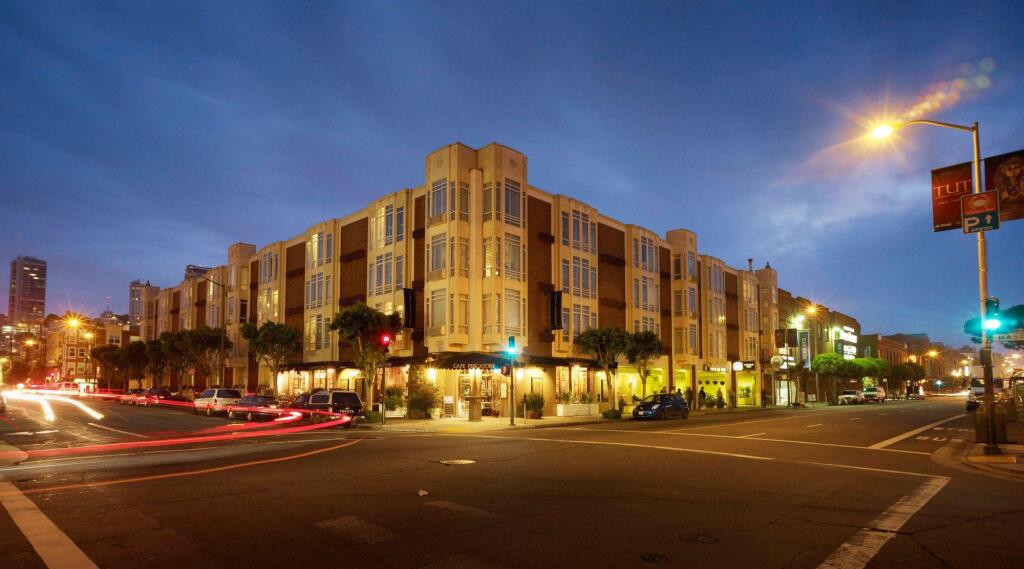
Hotel Zoe Fisherman's
Near the Musée Mécanique and Pier 39, with a bar, restaurant, gym and library.
View on TRVL ↗The Essence
San Francisco rewards the traveller who lets the day follow the weather: a morning walk on the bridge while the fog lifts, a cable car over Nob Hill, a burrito in the Mission sun, a ferry back from Sausalito as the lights come on along the Embarcadero. The city is small enough to cross in an afternoon and varied enough to feel like several. Bring a jacket, choose a hill, and leave room to come back for the neighbourhood you only glimpsed from the top.