
Barcelona is a city you read with your feet. Medieval lanes in the old town open onto squares with café tables; a few streets north, the wide grid of the Eixample lines up some of the most inventive buildings in Europe; and at the bottom of it all lies a long run of city beach, reachable by metro. You can see a Gothic cathedral, a Gaudí façade and the Mediterranean before lunch, and lunch here is late, unhurried and very good.
This guide is for planning that kind of trip: which neighbourhood to base yourself in, what to book ahead, where to eat and drink, and how to move around. 2026 is a fine year to go. It marks a hundred years since Antoni Gaudí's death, and in February the central Tower of Jesus Christ at the Sagrada Família was completed, bringing the basilica to its full height of 172.5 metres.
The Areas
Most of what visitors come for sits within a few kilometres of Plaça de Catalunya, so any of the central districts makes a good base. The question is mostly mood: medieval and lively, grand and orderly, village-like, or by the sea.
- Gothic Quarter (Barri Gòtic) — the medieval core, around the Cathedral, Plaça del Rei, Plaça Sant Jaume and Plaça Reial, with El Call, the old Jewish quarter, a short walk from the cathedral. Busy by day and calmer at night. Suits first-timers who want to walk to most sights.
- El Born (La Ribera) — pedestrian streets inside the line of the thirteenth-century wall, with boutiques, galleries, restored medieval mansions, the Picasso Museum on Carrer de Montcada and the Santa Caterina market. Ciutadella park is on its edge. Suits couples and anyone who likes to wander and graze.
- Eixample — the grid planned by Ildefons Cerdà. The Dreta side holds Passeig de Gràcia and many of the great modernista buildings; the Esquerra is quieter, with Sant Antoni and its bars. Suits those who want space, shops and architecture on the doorstep.
- Gràcia — a former independent town that the city absorbed and that still keeps its own identity, with tree-lined squares such as Plaça del Sol and Plaça de la Virreina, Gaudí's Casa Vicens and Park Güell on its edge. Suits return visitors and anyone after a more local feel.
- Barceloneta — the old fishermen's quarter, laid out in the eighteenth century on a grid of long streets running towards the sea, with the city's most central beach and seafood along Passeig Joan de Borbó. Suits beach lovers and early risers.
- Poble Sec — at the foot of Montjuïc, known for the pintxos bars of Carrer de Blai and for easy access to the hill's museums and gardens. Suits food-first travellers on a budget.

What to See and Do
Start in the old town, on foot. In the Gothic Quarter, the squares around the Cathedral and Plaça Sant Jaume, where the Catalan government and the city hall face each other, set the scene. Cross Via Laietana into El Born and follow Carrer de Montcada to the Picasso Museum, which holds more than 4,250 works by the artist in five connected medieval palaces. It is closed on Mondays, and timed tickets are best booked online.
A few streets away is the Palau de la Música Catalana, built between 1905 and 1908 by Lluís Domènech i Montaner as the home of the Orfeó Català choir, and a UNESCO World Heritage Site since 1997. Mosaic, stained glass and sculpture fill the hall; you can see it on a guided tour of about 55 minutes, or better still, at a concert.
For more of Domènech i Montaner, go north to Sant Pau Recinte Modernista, a former hospital he designed between 1905 and 1930: pavilions, gardens and underground galleries, also on the UNESCO list since 1997. For a wide view of all of it, climb to the Bunkers del Carmel on Turó de la Rovira, a free hilltop viewpoint that opens daily from 9:00 and closes at 17:30 outside the summer months. Arrive before closing time; the site is fenced off at night.
If you have a Sunday, take it slowly the Catalan way, with the hora del vermut: a short glass of vermouth, usually around 1pm, with olives, anchovies or crisps before a long lunch.

Gaudí, Montjuïc and the Beaches
The Sagrada Família is the centrepiece. Building began on 19 March 1882; Gaudí took over a year later and worked on it until his death in 1926, and his Nativity façade and crypt are on the UNESCO list. With the central tower finished in 2026, the exterior is now complete, and the Glory façade is the last major piece of work ahead. Book online: the official site lists a basic ticket at €26, €30 with a guided tour and €36 with a tower visit.
Then walk Passeig de Gràcia, where Casa Batlló, with its façade and courtyard built around colour, light and movement, and Casa Milà, known as La Pedrera, Gaudí's last civil work, stand a few blocks apart. La Pedrera has an Anselm Kiefer exhibition from 2 October 2026 to 24 January 2027. In Gràcia, Casa Vicens, built in 1883–1885 as Gaudí's first major commission, has been open to visitors since 2017. Park Güell, on the edge of Gràcia, covers more than 17 hectares; its monumental zone is a UNESCO site with timed entry, bought online, while the woodland around it is free.
Montjuïc is the green counterweight. The Museu Nacional d'Art de Catalunya fills the Palau Nacional, built for the 1929 International Exhibition, and is best known for its Romanesque murals, including the apse of Sant Climent de Taüll; general admission is €12, and entry is free on Saturdays from 3pm and the first Sunday of the month, with advance booking. Nearby, the Fundació Joan Miró occupies a building by Josep Lluís Sert. A walk from Poble Sec up through the gardens and the Mirador de l'Alcalde to Montjuïc Castle takes a morning; the funicular from Paral·lel shortens the climb.
The city beaches run for about 4.5 km along the coast, all close to metro line L4. Barceloneta is the most central and the busiest; further east, Nova Icària and Bogatell are Blue Flag beaches with more room. The sea is at its warmest from June to September.

What to Eat and Drink
Catalan cooking begins with pa amb tomàquet: bread rubbed with ripe tomato and finished with olive oil and salt, served with almost everything. From there, look for escalivada, roasted aubergine and peppers served warm or cold; esqueixada, a salad of hand-torn salt cod with tomato, onion and olives; botifarra sausage with white beans; and fideuà, which is cooked like paella but with short noodles instead of rice. Crema catalana, made with milk rather than cream and topped with burnt sugar, closes the meal. If you visit between January and March, you will find calçots, long green onions grilled until charred and dipped in romesco sauce.
Barceloneta claims the bomba, a fried ball of potato and meat with a spicy sauce, said to have been created at La Cova Fumada, a bar that opened in 1944. In Poble Sec, Carrer de Blai is lined with bars serving Basque-style pintxos, eaten standing up, a few at each stop. For a small, crowded classic, El Xampanyet on Carrer de Montcada has been run by the same family since the 1930s and serves its house sparkling wine with a saucer of Cantabrian anchovies.
For markets, Santa Caterina in El Born sits under a wave-shaped roof of coloured ceramic tiles, designed by the studio of Enric Miralles and Benedetta Tagliabue and completed in 2005. Sant Antoni market in the Eixample adds a Sunday flea market to its food stalls. Most markets close on Sundays.
Getting There and Around
Barcelona-El Prat airport is well connected to the centre. The Aerobús runs around the clock from both terminals to Plaça de Catalunya in about 35 minutes, via Plaça d'Espanya and Plaça Universitat. The R2 Nord train leaves from Terminal 2 for Sants and Passeig de Gràcia; metro line L9 Sud serves both terminals but needs a change to reach the centre. A taxi takes 20 to 30 minutes in normal traffic. From Madrid, the fastest high-speed trains reach Barcelona Sants in about two and a half hours.
In town, walk as much as you can and use the metro for longer hops. The T-casual card gives ten journeys in zone 1 but is not valid at the airport metro stations; the Hola Barcelona Travel Card covers unlimited travel for up to five days, including the airport metro.
When to Go
May, June and September are the sweet spots: warm days without the peak heat of August, which is the hottest and most humid month. The sea is warm enough for swimming from June to September. October is still mild, with more changeable skies, and the shoulder seasons generally bring a calmer atmosphere and lower prices. In August, Gràcia's Festa Major fills its streets with decorations made by neighbourhood associations, and in September the whole city celebrates its main festival, La Mercè.
Good to Know
Book the big Gaudí sites before you travel: Sagrada Família tickets sell through the official website and app, and Park Güell's monumental zone works on timed slots bought online. The tourist tax is charged per person, per night, on top of your room: since 1 April 2026 it is €12 in a five-star hotel and €8.40 in a four-star. Like any busy city, Barcelona has pickpockets around La Rambla, the metro and the Sagrada Família, so keep your bag zipped in front and your phone off café tables. Meals run late, with lunch from around 1:30pm and dinner from about 9pm. Tipping is optional; rounding up or leaving 5 to 10 per cent for good table service is plenty.
Our Picks
- To seeSagrada Família
Gaudí's basilica at its full height for the first time; book a timed ticket on the official site.
- To seePalau de la Música Catalana
Domènech i Montaner's concert hall of mosaic and stained glass; take the guided tour or catch a concert.
- To seeMuseu Picasso
More than 4,250 works in five medieval palaces; closed on Mondays.
- To seeMuseu Nacional d'Art de Catalunya
Romanesque murals from Pyrenean churches inside the Palau Nacional; free on Saturdays from 3pm with booking.
- To seeSant Pau Recinte Modernista
Pavilions and gardens of a former hospital, one of the great works of Catalan modernisme.
- To walkBunkers del Carmel
A free hilltop with a view over the whole city; go before the gates close.
- To eatEl Xampanyet
House sparkling wine and Cantabrian anchovies in a family bar open since 1929; no reservations, so arrive at opening.
- To eatLa Cova Fumada
The bar credited with the bomba, open mostly at lunchtime; come early and expect a queue.
- To eatQuimet & Quimet
A standing-room bodega for montaditos and vermouth; closed at weekends and in August.
- To shopMercat de Santa Caterina
A neighbourhood market under a roof of coloured ceramic tiles.
Where to Stay

Majestic Hotel & Spa
Minutes from the city centre, close to the Antoni Tàpies Foundation and Casa Batlló, with a spa and both indoor and outdoor pools.
View on TRVL ↗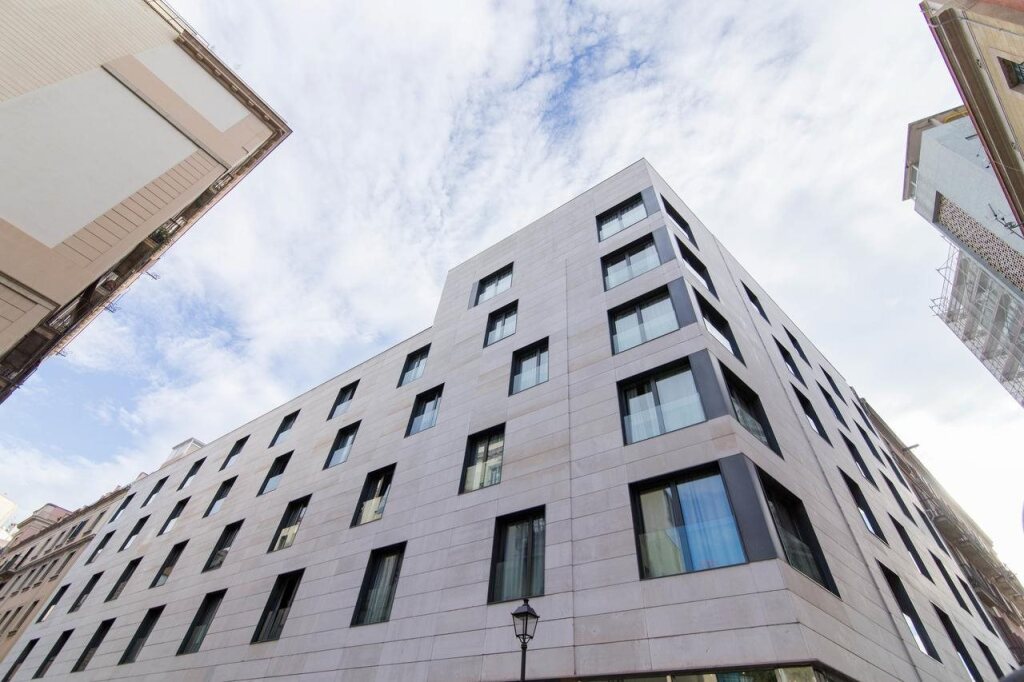
Barcelona Catedral Hotel
In the city centre near Plaça Sant Felip Neri, with an outdoor pool, a restaurant and a bar.
View on TRVL ↗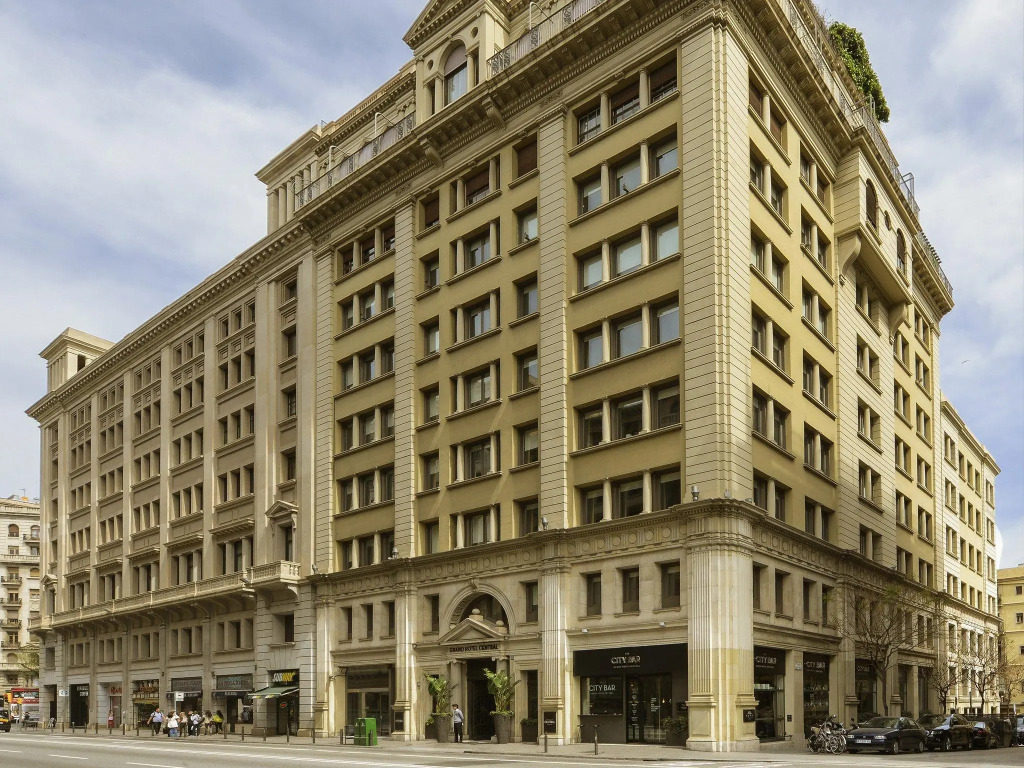
Grand Hotel Central
In the city centre near the Gothic Quarter, with a spa centre, a yoga area and a library.
View on TRVL ↗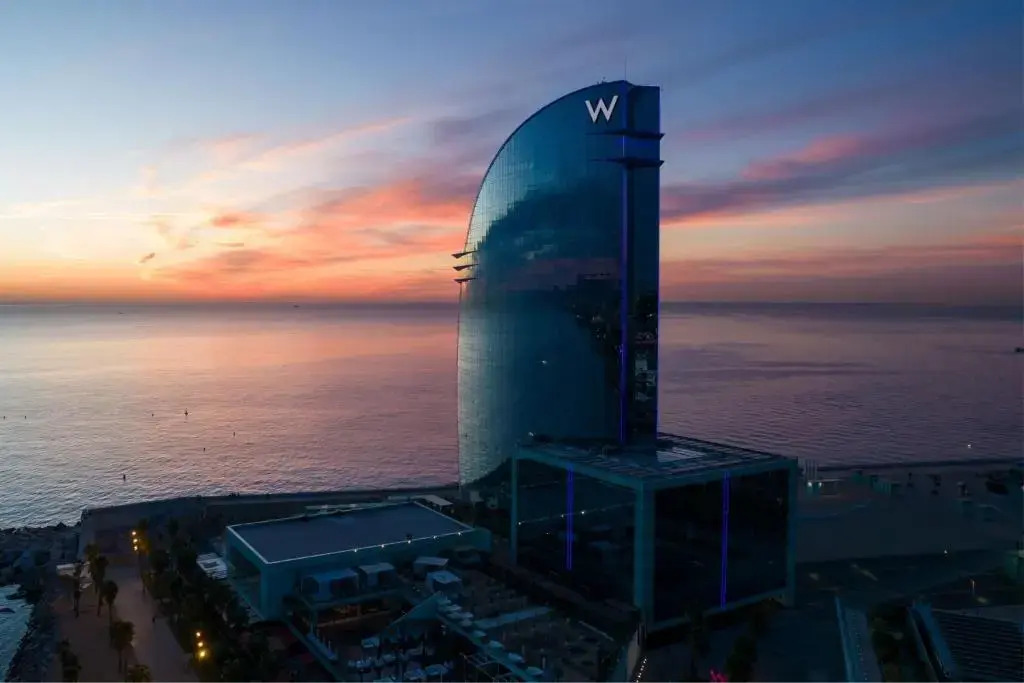
W Barcelona Hotel
In the Nova Bocana area of the port, with direct access to Barceloneta beach and a bar on the 27th floor.
View on TRVL ↗The Essence
Barcelona rewards the visitor who lets the day stretch. See the Sagrada Família in the morning light, by all means, and give Park Güell its hour, but leave room for the rest: a vermouth at one o'clock, an afternoon in the cool of a medieval lane, a swim before dinner, and a table that does not fill up until nine. The city is at its best when you stop rushing between the landmarks and simply walk from one neighbourhood to the next, eating as you go.