
Bruges is a city you can cross on foot in half an hour and still not finish in a week. Canals dug in the 12th century curve between brick houses with stepped gables, a carillon of 47 bells sounds from the Belfry every quarter of an hour, and the two great squares, the Markt and the Burg, sit a few minutes apart. UNESCO lists the entire historic centre as a World Heritage site, and it is very much a living one: the city administration still works from a Gothic town hall begun in 1376.
From the 13th to the 15th century Bruges was one of the great trading ports of northern Europe, and its Golden Age left behind the paintings of Jan van Eyck and Hans Memling, who both lived and worked here. Today the pleasures are close at hand: a boat on the canals, a climb up the Belfry, a beer brewed in the old town, a box of pralines, and a quiet hour in the beguinage. Book the Belfry ahead, bring comfortable shoes, and the rest falls into place.
The Areas
The centre sits inside a ring of green ramparts, and nothing in it is far from anything else. Choose your base by the mood you want.
- Markt and Burg — the two central squares, with the Belfry, the Town Hall and the Basilica of the Holy Blood. The most convenient base for a short stay, and the busiest by day.
- The south: Dijver, Mariastraat and the Beguinage — the museum quarter along the canals, with the Groeninge Museum, the Church of Our Lady, St John's Hospital and the De Halve Maan brewery on Walplein, running down to the Beguinage and the Minnewater. Ideal for art lovers and for evening walks once the day visitors leave.
- The Hanseatic Quarter — north of the Markt around Jan van Eyckplein, the old port where merchants from across Europe once traded, with the medieval Toll House and the 13th-century Florentine Lodge. Quieter canals and a slower pace, a few minutes from the centre.
- Sint-Anna and Langestraat — the eastern side of the old town, home to Café Vlissinghe, the oldest café in Bruges, and a long street of restaurants and bars towards the ramparts. A residential feel, good for those who like to eat well and walk.
- 't Zand — the city's largest square on the western edge, with the Concertgebouw concert hall and a Saturday market, closest to the railway station. Practical if you arrive by train or car.

What to See and Do
The Markt is the heart of the city, framed by colourful stepped gables, the Provincial Court and a statue of the Flemish heroes Jan Breydel and Pieter de Coninck. Above it rises the Belfry, 83 metres tall and part of a group of belfries in Belgium and France listed by UNESCO in 1999. The climb is 366 steps on a single spiral staircase used for both directions, and capacity is limited to roughly 15 to 25 visitors every 20 minutes, so booking a time slot online is recommended, even with a museum card. Tickets cost €16, or €15 on weekdays from 3 November to 31 March; ages 7 to 17 pay €14 or €13, and under-7s go free. There is no lift. Time your visit for Wednesday, Saturday or Sunday between 11:00 and 12:00, when a carillonneur plays live.
Two minutes away, the Burg was for centuries the centre of power. Its Town Hall, built between 1376 and 1421, is one of the oldest in the Low Countries, and the Basilica of the Holy Blood beside it keeps the relic that can be seen there every day. Each Ascension Day the relic is carried through the streets in the Procession of the Holy Blood, held since 1304, with more than 1,800 participants and listed by UNESCO as intangible cultural heritage; the next one is on Thursday 6 May 2027.
For art, the Groeninge Museum on the Dijver gathers six centuries of Belgian painting, from Jan van Eyck, Hans Memling and Gerard David to René Magritte. It closes on 11 January for a four-year refurbishment, after which the highlights move to the BRUSK exhibition centre, so this winter is the last chance to see them in their home. Adults pay €15, and it is closed on Mondays. Nearby, St John's Hospital, dating to the 12th century and one of Europe's oldest preserved hospital buildings, keeps Memling's works in the place they have hung since the late 15th century, along with his Shrine of St Ursula and a 17th-century pharmacy. The Church of Our Lady, whose 115-metre tower is the world's second-highest in brick, holds Michelangelo's marble Madonna and Child, the only one of his works to leave Italy in his lifetime.
The Beguinage, founded in 1245, is a circle of white houses around a quiet convent garden, home for centuries to beguines, lay women who lived pious, single lives. Single women from Bruges live here today, so visitors are asked to keep silence. Entry is free, and the Minnewater, the Lake of Love, lies just beyond.

Canals, Lace and the City on Foot
The canals are the best way to understand the city. Five boat companies run open boats on a 30-minute loop without stops, between Jan van Eyckplein and the Beguinage, from jetties at Huidenvettersplein, Rozenhoedkaai, Wollestraat, Nieuwstraat and Katelijnestraat; you start and finish at the same jetty. Trips are guaranteed daily from March to October, 10:00 to 18:00, and from November to February at least one jetty runs each day on rotation. Tickets cost €15 for adults and €9 for children aged 4 to 11, bought on the spot in cash or by Payconiq; individual visitors cannot book ahead.
Back on land, the Rozenhoedkaai is the classic view of canal, houses and Belfry. Quieter waters are close by: the Augustijnenrei, dug in the 12th century, the boat-lined Coupure, and the Groenerei. The ramparts add 26 hectares of green, with more than 3,000 trees and benches for a picnic.
Lace is part of the city's story. The Lace Centre on Balstraat, in a renovated former lace school, has a museum on the ground floor and a workshop upstairs where lace makers give demonstrations and courses. Adults pay €8, and under-12s go free.

What to Eat and Drink
Beer is the city's great table companion. Belgian beer culture was recognised by UNESCO as intangible cultural heritage in 2016, and Bruges has three breweries you can tour. De Halve Maan on Walplein has been brewed by the same family for six generations, since 1856; it makes Brugse Zot, named after the locals' old nickname, the Bruges fools, and Straffe Hendrik. Since its bottling moved outside the city in 2010, the beer travels through an underground pipeline of about three kilometres. The 45-minute tour costs €16, includes a beer and a 360° rooftop view, and climbs 220 steps. In the centre, Bourgogne des Flandres on Wollestraat practises Flemish blending, mixing young beer with beer aged in oak barrels.
For a glass in a café, 't Brugs Beertje on Kemelstraat pours from a list of around 300 Belgian beers, Le Trappiste occupies a 13th-century cellar on Kuipersstraat, and De Garre hides in one of the city's smallest alleys, in the shadow of the Belfry. Café Vlissinghe, mentioned in writing as early as 1515, has a dark wood interior and a summer terrace.
Chocolate is the other local passion. The Chocolate Line on Simon Stevinplein was named Belgium's best chocolaterie by Gault & Millau in 2023 and is known for adventurous pralines; it even sells a cocoa beer. For dinner, Langestraat alone has a run of well-regarded addresses, from Franco Belge's French-Belgian cooking to Rock-Fort and Sans Cravatte. On Wednesday mornings the Markt fills with a food and flower market, and the Fish Market sells fish and shellfish from Wednesday to Saturday.
Getting There and Around
Trains from Brussels-South run three times an hour to Bruges and take about an hour, continuing to the coast; From Brussels Airport a direct train runs every hour. Get off at the station called Brugge, not Brugge Sint-Pieters.
From the station, the Markt is a 20-minute walk, and buses run to the centre every five minutes; a single ticket costs €3 and is valid for 60 minutes. Inside the old town, walking is best. Much of the centre is a bicycle zone with a 30 km/h limit where cars may not overtake cyclists, and some streets are car-free; drivers should use the peripheral car parks or the underground garages at 't Zand and the station.
A Day in Ghent
Ghent is close enough for an easy day trip, with between one and four direct trains an hour linking it to Bruges. Its great treasure is the Ghent Altarpiece, The Adoration of the Mystic Lamb by the Van Eyck brothers, shown in the visitors' centre of St Bavo's Cathedral; entry to the cathedral is free, the altarpiece has a fee, and booking online avoids the queue. Part of the panels are being restored at the Museum of Fine Arts, where visitors can watch the restorers from Tuesday to Friday.
Then walk the Graslei and Korenlei, the historic quays along the Lys, take in the view from St Michael's Bridge, visit the Gravensteen, the medieval Castle of the Counts, and look up at Ghent's own Belfry, also on the UNESCO list.
When to Go
Spring and summer bring the boats at full strength, the Procession of the Holy Blood on Ascension Day and carillon concerts from June to September. They are also the busiest months, so start early and keep the evenings for walking.
Winter has its own charm. Winter Glow runs from 20 November 2026 to 31 January 2027, with a Christmas market and an ice rink on the Markt and, for the first time, a covered rink in Koning Albert I-park. Some museums and businesses close for a few weeks in January after the holidays, and the public drinking fountains are switched off in winter to avoid freezing.
Good to Know
Book the Belfry slot online before you go. The Musea Brugge Card gives 72 hours of free entry to all open Musea Brugge locations and activates at your first visit, but reserve slots for busy places all the same.
Bruges charges a city tax of €3.75 per person per night, or €4.20 including VAT, for room-based accommodation, shown separately on the bill; under-18s are exempt. Tipping is optional because service is included, though 5 to 10 percent is welcome for good service, and you can round up in cafés. Tap water is safe, with free fountains on the Burg, at Jan van Eyckplein and at the Minnewater park.
Our Picks
- To seeBelfry
366 steps to the city's best view; book a time slot and come for the live carillon on Wednesday, Saturday or Sunday morning.
- To seeGroeninge Museum
Van Eyck, Memling and Magritte in their home before the four-year refurbishment that starts on 11 January.
- To seeSt John's Hospital
Memling's paintings and Shrine of St Ursula in a hospital that dates to the 12th century.
- To walkBeguinage
White houses around a convent garden, visited in silence, with the Minnewater beyond.
- To seeLace Centre
A lace museum in a former lace school, with demonstrations in the upstairs workshop.
- To drinkDe Halve Maan
A family brewery since 1856, with a tour, a beer and a rooftop view.
- To drink't Brugs Beertje
A brown café with around 300 Belgian beers.
- To drinkCafé Vlissinghe
The oldest café in Bruges, recorded in 1515, with a summer terrace.
- To eatThe Chocolate Line
Inventive pralines from Gault & Millau's best chocolaterie in Belgium for 2023.
Where to Stay
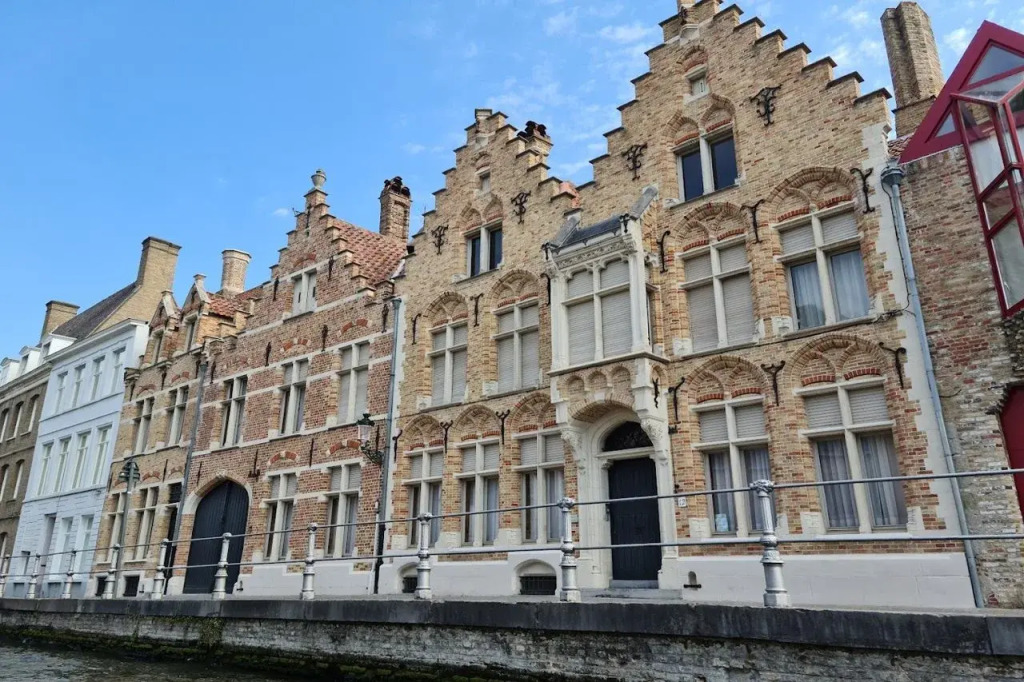
Martin's Brugge
In the city centre near the Belfry and the Basilica of the Holy Blood, with a restaurant, a library and a tour assistance desk.
View on TRVL ↗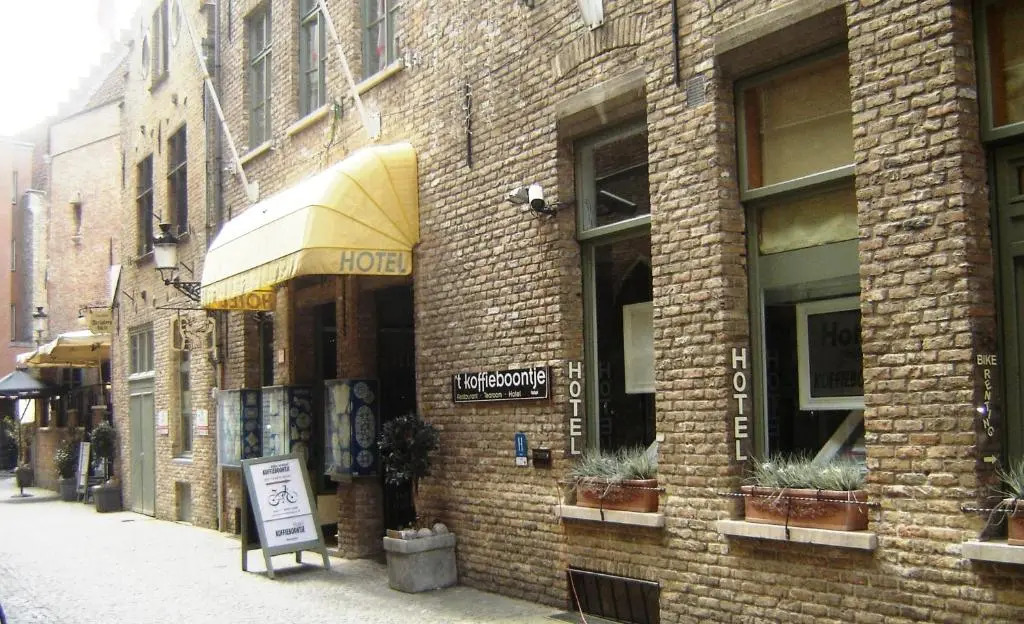
Koffieboontje Hotel
A budget-friendly option in the city centre of Bruges, beside the Belfry, with free coffee and tea in all rooms.
View on TRVL ↗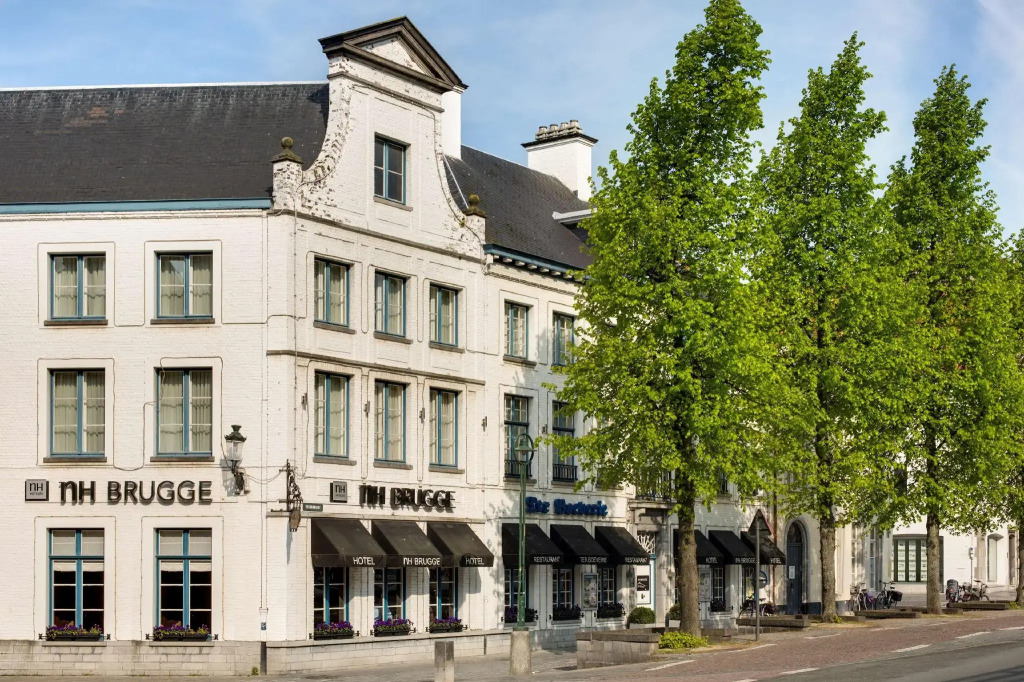
NH Brugge Hotel
Minutes from the city centre near St Salvator's Cathedral and the Church of Our Lady, with a bar, a restaurant and a fitness centre.
View on TRVL ↗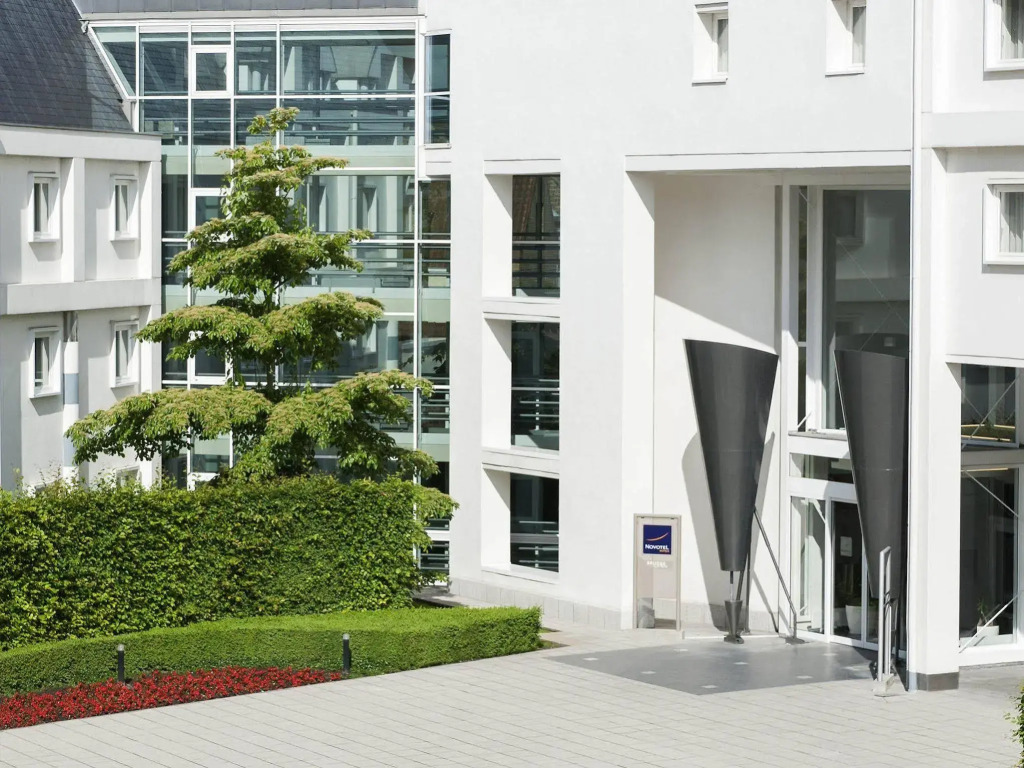
Novotel Brugge Centrum
Close to the Minnewater, the Church of Our Lady and the Gruuthuse Museum, with a restaurant, a pool and playrooms for children.
View on TRVL ↗The Essence
Bruges rewards those who stay the night. Climb the Belfry in the morning, spend the middle of the day with Van Eyck and Memling, take a boat on the canals, then let the evening slow down over a Brugse Zot in an old café while the bells mark the quarter hours. It is a small city with a long memory, and it is at its loveliest when you take it at walking pace.