
Arrive by ferry and Zakynthos Town opens up in front of you: a long seafront, the tall bell tower of Agios Dionysios by the port, and a hill above it with the walls of a Venetian castle among the trees. The Venetians held the island for more than three centuries and called it Fiore di Levante, the Flower of the East, for its plants and flowers. The 1953 earthquake took most of the old town, but it was rebuilt with respect for its character, and its squares, churches and museums still tell the story of an island of poets and music.
Beyond the town, Zakynthos is two islands in one. The south curves around the wide Bay of Laganas, where loggerhead sea turtles come to lay their eggs on sandy beaches inside a National Marine Park. The west and north are higher and wilder, with cliffs that drop straight into the sea, sea caves, small coves and farming villages where life still follows the olive harvest. Plan for both, and the island gives you far more than a beach holiday.
The Areas
Zakynthos is about 405 square kilometres, small enough to cross in an hour but varied enough that your base shapes your trip.
- Zakynthos Town — the capital and main port, on the east coast. Best for anyone without a car, for food and for evenings out: the ferries, the museums and the island's bus station are here, and the leafy area of Bochali, just above, has many of the island's villas and smaller hotels.
- Laganas and Kalamaki — the heart of Laganas Bay, about 9 km and 6 km south of town. Laganas is a long sandy beach with a busy party scene; Kalamaki is quieter, with shallow, warm water. Both beaches are turtle nesting grounds, so the rules of the Marine Park apply.
- Vasilikos peninsula — the green south-east, with sandy beaches such as Gerakas and Banana. Good for families and anyone who wants space and long beach days.
- Keri and Limni Keriou — the south-western tip. Keri is a hill village of stone houses about 15–17 km from town; below it, Limni Keriou is a small harbour with a pebbly beach and boats to Marathonisi and the sea caves. Calm, and close to the island's best sunset.
- Tsilivi and Planos — about 5 km north-west of town, a soft sandy beach with a shallow seabed, sunbeds and water sports. A practical, family-friendly base near the town.
- The north: Agios Nikolaos and Volimes — the far north, about 31–32 km from town. Agios Nikolaos has a small port, a sandy beach and a summer ferry to Kefalonia; Volimes, inland, is a mountain village that keeps its traditional character. Best for those who want quiet and the cliffs on their doorstep.

What to See and Do
Start in Zakynthos Town. Solomos Square, the largest in town, is named after the poet Dionysios Solomos, who wrote the Hymn to Liberty on the island in 1823; it became Greece's national anthem. On the square stand the Post-Byzantine Art Museum, with icons, vestments, frescoes from the 16th to the 19th centuries and photographs of the town before 1953, and the Church of Agios Nikolaos Molos, a Venetian-style church rebuilt after the earthquake. A short walk away, on St Mark's Square, the Solomos Museum keeps the mausoleum of Solomos and of the poet Andreas Kalvos, along with manuscripts and portraits of notable Zakynthians. Near the port, the Church of Agios Dionysios, with its 40-metre bell tower, holds the relics of the island's patron saint and came through the 1953 earthquake intact.
Then climb to Bochali. The Venetian castle sits on the hill above town, on the site of an ancient acropolis and a Byzantine fortress; the Winged Lion of Saint Mark still stands over the entrance, and the walk from the centre takes about 20 minutes.
In the south, drive to the lighthouse of Keri. It is only 7 metres tall and was built in 1925, but it stands on cliffs that rise more than 300 metres from the sea, and it is the island's classic place to watch the sun go down. In the north, the Blue Caves are sea caves around Cape Skinari, carved by the waves and reachable only by small boat; boat trips leave from the main port in town, and the water is at its brightest in the morning light.
Navagio, the Shipwreck, is the cove everyone wants to see: a strip of white sand below tall cliffs on the north-west coast, with the rusting coaster Panagiotis, which ran aground in 1980. Since a series of rockfalls the beach itself has been closed. A ministerial decision published in the Government Gazette (FEK) bans all landing on the beach, bans swimming within the cove and keeps every boat at least 50 metres from the shore, so check the current status before you book a boat trip. On land, the only place visitors may go is the upper viewpoint above the cliffs, reached from the existing platform near Volimes, so check locally that it is open before you drive out.

Laganas Bay and the Turtles
The Bay of Laganas is the reason Zakynthos has Greece's first National Marine Park, set up in 1999. Its beaches hold around a quarter of all loggerhead turtle (Caretta caretta) nests in the Mediterranean. Females come ashore from mid-May to early August to lay about 120 eggs at a time, three or four times a summer, and the eggs take 42 to 70 days to hatch. The nesting beaches are Laganas, Kalamaki, Marathonisi, Sekania, Dafni, Gerakas and the coast of Vasilikos.
The rules are simple, and following them is what keeps the turtles coming back. On nesting beaches, use the sand only from 07:00 until sunset, then leave the beach to the turtles. Stay within about 5 metres of the waterline, because the nests are further up. Keep away from the marked cages that protect nests close to people, and stay at least 15 metres from any turtle you meet. Umbrellas are not allowed on Gerakas, Dafni and Marathonisi, except fixed ones the Park has approved. No cars, motorbikes, bicycles, horses or dogs on the sand, no fires or camping, and take your rubbish with you. Sekania, the most important nesting beach, is closed to visitors. If you see a hatchling, do not touch it; tell a Park Ranger.
At sea, the bay is divided into zones. In Zone A no boats may move at all. In Zones B and C boats must stay under 6 knots, and mooring is banned in Zone B; these slower zones are where gentle turtle watching is allowed. Recreational fishing is not permitted in the protected area. If you take a boat trip, choose one that follows these limits. The Park runs an information and research station at Gerakas, and for a nest or an injured turtle you can call its line on 697 333 0783.

What to Eat and Drink
Zakynthian food is generous with garlic. The island's best-loved dish is melitzanes skordostoumbi, slices of fried aubergine cooked in a sauce of garlic, tomato and vinegar and finished with oregano; the same garlic-and-vinegar sauce goes with meat and eggs, while a garlic and lemon dressing comes with fried potatoes and salads. Look for ladotyri, a sharp goat's cheese that matures for months in Zakynthian olive oil, and for fritoures, the traditional fried sweet, sold at a kiosk in front of Agios Dionysios.
The island's farms produce olive oil, thyme honey, citrus and currants; the Zante currant is native to the island. Wine is made at several family estates, among them Solomos Winery at the foot of the Venetian castle, Grampsa, Oinolpi near Machairado and the Gouma Estate near Maries, whose land has been in the same family since the 18th century. In Zakynthos Town, Kantouni on Agios Ioannou Logotheton is a small cookhouse serving home-style Zakynthian dishes that change by the day, open year-round from 11:00 to 19:00.
Music is part of the meal here. Zakynthos is known for its kantades, serenades for three or four male voices with guitar and mandolin, born in the Venetian centuries when Greek song met Italian melody. The island is also home to the first philharmonic band in Greece, which played in the streets at Christmas, Easter and on feast days.
Getting There and Around
Zakynthos International Airport, Dionysios Solomos (ZTH), is about 4 km from the town. Flights from Athens take around an hour, and in summer there are direct flights from many European countries, among them the UK, Germany, France and Italy. Taxis wait outside the terminal, but in high season it is wise to book your pick-up in advance.
By sea, the island's link to the mainland is the port of Kyllini, about 287 km from central Athens. Levante Ferries run conventional car ferries several times a day, and the crossing takes about 1 hour 15 minutes. In summer, usually from late May to late September, Ionion Pelagos Lines also sails twice a day between Agios Nikolaos in the north and Pessada on Kefalonia, in about 1 hour 20 minutes. Timetables change each year, so check them before you book.
On the island, KTEL buses connect the town with the main resorts, but services can be infrequent. A hire car, or at least a few days of one, is the easiest way to see Keri, the west coast and the north.
When to Go
June to August is the sunniest time, with highs around 30°C and the sea warming from about 22°C. But the shoulder seasons are the best time for most visitors. May brings highs around 25°C, about four rainy days and a sea near 19°C, with the island green and in flower. September is the sweet spot: highs around 28°C, the warmest sea of the year at about 25°C, and fewer crowds than August. October is still mild, with highs around 24°C and the sea at about 23°C, though rain becomes more frequent.
The feast of Agios Dionysios on 17 December is the island's great religious celebration, a good reason to see the town in winter.
Good to Know
Expect big crowds in Laganas in July and August, and quieter days in the north, the west and on Vasilikos. On turtle beaches, set up close to the water and be off the sand by sunset. Landing and swimming at Navagio are banned, so treat any trip that promises a landing with suspicion and check the current rules before you book.
Our Picks
- To seeSolomos Museum
Manuscripts and portraits of the island's poets, with the mausoleum of Dionysios Solomos and Andreas Kalvos.
- To seePost-Byzantine Art Museum
Icons and frescoes rescued from the island's churches, and photographs of the town before 1953.
- To walkVenetian castle
A 20-minute climb from the centre to walls topped by the Lion of Saint Mark and wide views over the town.
- To seeKeri lighthouse
A 1925 lighthouse on cliffs over 300 metres high, and the island's favourite sunset.
- To swimBlue Caves
Sea caves and arches carved by the waves; go in the morning for the brightest water.
- To swimGerakas
A sandy turtle nesting beach with shallow water; arrive after 07:00, stay near the water and leave by sunset.
- To swimPorto Limnionas
A rocky cove with clear water and rocks to dive from, about 30 km from town.
- To eatKantouni
A small cookhouse with home-style Zakynthian dishes that change daily, open year-round from 11:00 to 19:00.
Where to Stay
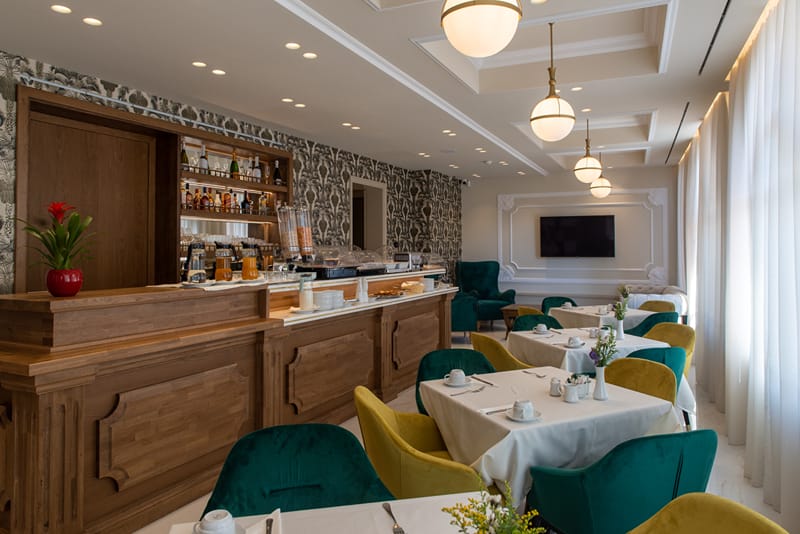
Capolavoro Suites
Six suites near the historic square of Agios Markos that combine classical and contemporary Zakynthian design with art deco elements.
View on TRVL ↗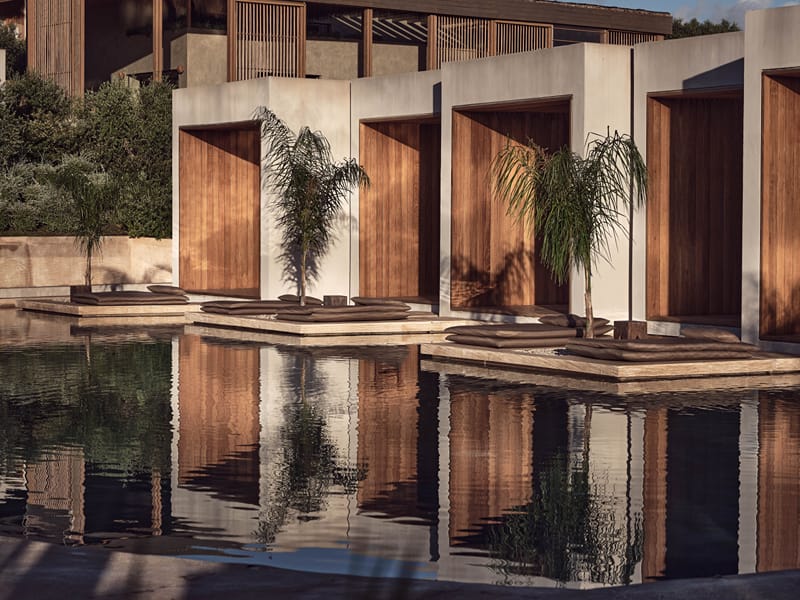
Olea All Suite Hotel
A member of Design Hotels set in an ancient olive grove, with 89 suites built from natural materials around a 4,000-square-metre lake-like pool, for guests aged 12 and over.
View on TRVL ↗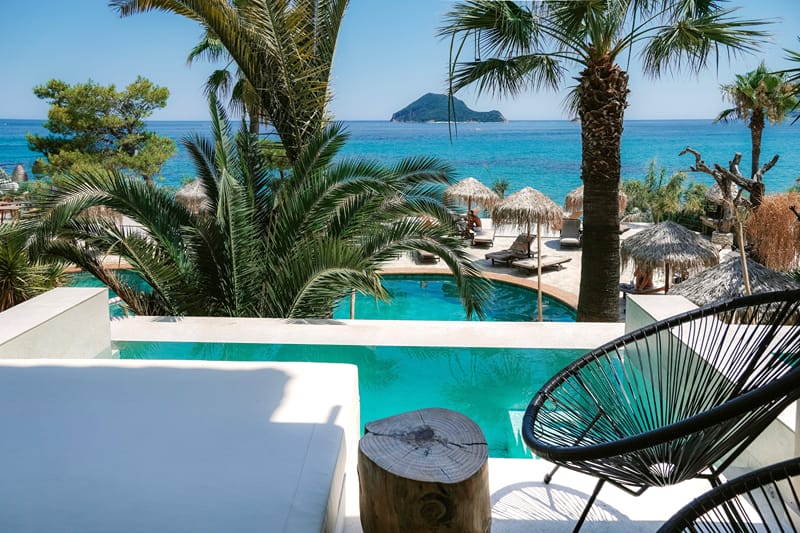
Gloria Maris Hotel
A quiet hotel in a small resort between Agios Sostis and Keri Lake on the Bay of Laganas, with views of Marathonisi and boat trips to Marathonisi and the Keri caves.
View on TRVL ↗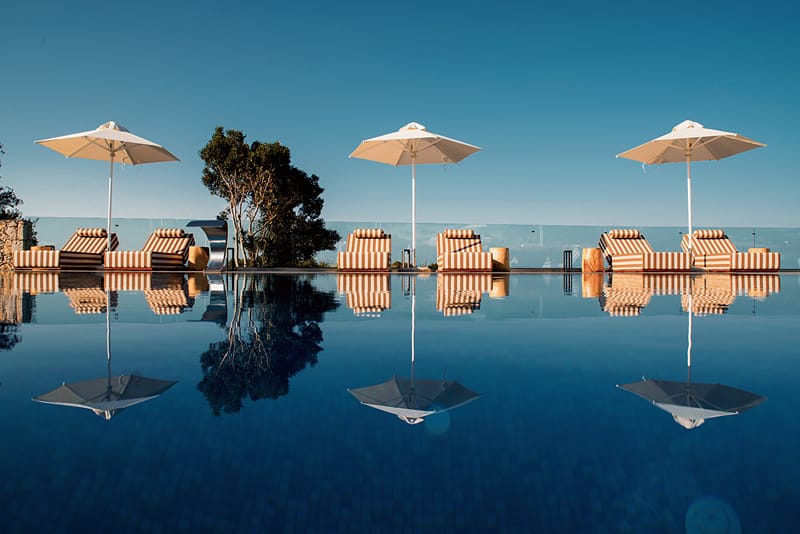
Aliv Stone Suites
Suites in earth colours and stone overlooking the Ionian Sea, combining the island's architectural tradition with modern design, each with a private balcony.
View on TRVL ↗The Essence
Zakynthos rewards the traveller who looks past its most famous photograph. Spend a morning among the squares and museums of a town of poets, an afternoon on a turtle beach in Laganas Bay, and an evening on the cliffs at Keri as the sun goes into the Ionian. Order the aubergines with all the garlic, and listen for a kantada. The Venetians named it the Flower of the East, and in May or September, it still lives up to the name.