
Step off the ferry in Tinos and the island's main street points straight uphill: Megalocharis Avenue runs from the marble square at the harbour to the church of Panagia Evangelistria, and along its right-hand side a narrow carpeted runway climbs with it. That runway is there for pilgrims who make the ascent on their knees. Devotion and everyday island life share the same street, and that is the first thing to understand about Tinos.
The second is marble. Tinos is the fourth largest island in the Cyclades, with dozens of villages joined by old paved paths, and in many of them the stone is the story: carved fanlights over doors, fountains, church bell towers, whole squares. Tinian marble craftsmanship was inscribed on UNESCO's list of Intangible Cultural Heritage in 2015, and the workshops of Pyrgos still teach it. Add more than 600 decorated dovecotes, beaches on both coasts, and a kitchen built on artichokes, cured pork and local cheese, and you have an island that rewards a slow week far more than a day trip.
The Areas
Chora, the port town, is the practical base: ferries, buses, car hire, museums, and the most choice of tavernas and rooms. Megalocharis Avenue is the spine; the pedestrian, cobbled Evangelistrias Street runs parallel to it, lined with shops, a textile school and galleries of local artists. North of the outer harbour, the Pallada quarter has Cycladic lanes, tavernas and the Catholic church of Saint Anthony. Stay here if you will not have a car.
Pyrgos, in the north-west, is the marble village par excellence: marble-paved lanes, a square with an old plane tree and a carved fountain, workshops, a School of Fine Arts and three museums. Below it, the fishing bay of Panormos has small beaches and waterfront tavernas. It suits travellers who want art, quiet evenings and the sea within a short drive.
Isternia and Kardiani sit along the western slopes. Isternia was one of the island's major centres of marble art, and its own museum shows the work of its sculptors; the bay below is one of the island's good beaches. Kardiani, about 15 km from Chora, is an amphitheatrical village on Mount Pateles, recognised by the Ministry of Culture as a traditional settlement, with springs, fountains and Orthodox and Catholic churches side by side. Both suit couples who want views and stillness.
In the centre of the island, Volax is a small village set among huge rounded granite boulders, known for its basket makers, its outdoor summer theatre and its bouldering. Tarambados and the valleys around it, in the centre too, hold some of the densest groups of dovecotes. The central villages, below the hill of Exomvourgo, are the place for walkers and for anyone who would rather wake up inland.

What to See and Do
Panagia Evangelistria is the reason many Greeks come to Tinos, and a visit is welcome for anyone who comes with respect. The church at the top of Megalocharis Avenue keeps an icon of the Virgin Mary, found in 1823 after the vision of Pelagia, who is linked to the women's monastery of Kechrovouni above the town. The marble church complex also houses the museums of the foundation that runs it. Dress modestly: sleeveless tops and shorts are not allowed. Walk up on the left side of the avenue and leave the runway to the pilgrims, keep your voice low inside, and do not photograph people at prayer.
The Museum of Marble Crafts in Pyrgos, run by the Piraeus Bank Group Cultural Foundation and inaugurated in 2008, is the best introduction to the island's stone. It follows marble from the quarry to the workshop, with tools, a reconstructed quarry and workshop, master craftsmen's sketches, archive material and old machinery outside. From 1 March to 15 October it opens daily except Tuesday, 10:00 to 18:00, and from 16 October to the end of February, 10:00 to 17:00. A full ticket is 8 euros, reduced 4 euros, and under-18s go free. In the same village you can see the house of the sculptor Yannoulis Chalepas, kept as he left it, the Museum of Panormos Artists, and the cemetery beside the Church of the Saviour, a gallery of fine marble work in its own right.
Dovecotes are the island's other architecture. More than 600 of them, stone towers with geometric openings, stand in valleys such as Tarambados, Agapi, Livada, Potamia and Kardiani. Many date from the Venetian period. The best way to see them is on foot: Tinos has a network of old paved paths linking its villages, and the national tourism board counts about 40 traditional villages along them.
For a view over most of the island, climb Exomvourgo, the 640-metre granite hill above the central villages, crowned by the ruins of a Venetian fortress. Carry water and avoid the midday heat. Back in Chora, the Archaeological Museum on Megalocharis Avenue holds finds from the island, including an ancient marble sundial from Kionia, where the remains of the sanctuary of Poseidon and Amphitrite sit just behind the beach. In ancient times pilgrims came there for purification before going on to Delos.

Beaches and Villages by Wind
Tinos is a windy island, and the choice of beach usually follows the wind. Agios Fokas, next to Chora, is the longest beach near town, with shade from pines and tamarisks in places and cafés along it. Kionia is sandy and pebbly with tavernas, water sports and the ancient sanctuary behind it, good for families. Porto, or Agios Ioannis, about 6 km from town, is a sheltered, shallow bay with tavernas, and Agios Sostis next to it is a long sandy beach with few facilities.
On the north coast, Kolymbithra has two sandy beaches in one bay, good for water sports; conditions change with the wind, so check before you swim. Livada, in the north-east, is wild, with boulders, big waves and strong currents, popular with surfers and for experienced swimmers only. On the south coast, Pachia Ammos has golden sand and dunes, a view towards Mykonos and very little shade. Below Pyrgos, Panormos and Rochari are gentler bays close to tavernas, a good way to end a day among the marble villages.
Volax is worth a separate afternoon. Its boulders draw climbers from around the world, and the basket makers still work in small workshops where you can watch and buy.

What to Eat and Drink
Tinian cooking starts in the fields. Komi, on Livadi, the largest and most fertile plain of the island, grows artichokes in large quantities, and in early May the village holds the Feast of the Artichoke, when visitors eat them cooked in many ways, about 10,000 in one day. Through the season look for artichokes with rice and artichoke dishes on taverna menus, and for the fourtalia, the island's omelette.
Louza, the cured pork fillet sometimes called Tinian prosciutto, appears on almost every meze platter, along with local sausage and syglina. The cheeses are a reason to visit on their own: the small tiniako tyraki, the spicy kopanisti, which has protected designation of origin, and the island's graviera. Sweets include tsimbites, small cheese pies, and psarakia, fish-shaped pancakes.
To drink, there is strofylia, the local raki flavoured with fennel, and wine from Tinian grapes such as Koumariano and Aspropotamisi. The Nissos microbrewery in Vagia offers tours and tastings. Sun-dried tomatoes and figs complete the island's larder.
Getting There and Around
There is no airport on Tinos; everyone arrives by sea. From Piraeus, Blue Star Ferries sails daily, leaving from gates E6 and E7, and the trip takes about 5 hours 20 minutes. From Rafina, closer to Athens airport, Golden Star Ferries runs daily sailings; its high-speed Super Express takes about 1 hour 50 minutes and the conventional ferries Andros King and Andros Queen nearly four hours. Fast Ferries also sails Rafina to Tinos. Check the operators' own timetables before you book, since schedules change by season.
You can also fly to Mykonos, about 45 minutes from Athens, or to Syros, about 25 minutes, and take a ferry to Tinos: the crossing from Mykonos is 15 to 30 minutes, from Syros 20 to 40. Boats also link Tinos with Andros, Paros, Naxos, Ios and Santorini.
On the island, a car or scooter gives you the villages and the north coast; buses and taxis are also available. The marble villages are on the far side of the island from the port, so if you plan to stay in Pyrgos or Kardiani without a car, arrange transfers in advance.
When to Go
Late May, June and September are the sweet spots: the sea is warm enough, the paths are pleasant and the island is busy without being full. Early May brings the artichoke feast in Komi, and spring is the season for walking among the dovecotes. October is still good for walking and for the museums, which keep long hours until 15 October.
The great date in the island's calendar is 15 August, the Dormition of the Virgin Mary, which draws thousands of pilgrims to Panagia Evangelistria. If you come for it, book ferries and rooms many months ahead and expect the town to be full. If you want a quiet holiday, avoid the days around it. Other feasts linked to the church are 30 January, which marks the finding of the icon, and 23 July, for the vision of Saint Pelagia.
Good to Know
Pack long trousers or a skirt and a shirt with sleeves for the church and the monasteries; men need full-length trousers. The Museum of Marble Crafts closes on Tuesdays and on 15 August, among other holidays. Wind matters: on a strong north wind, choose a south-coast beach such as Agios Fokas or Pachia Ammos, and keep away from Livada and Kolymbithra if you are not a strong swimmer. Village roads are narrow and parking is usually at the edge of each village, so be ready to walk the last stretch, often up steps.
Our Picks
- To seePanagia Evangelistria
The island's heart; go early in the morning, dressed for church, and walk up beside the pilgrims' runway, not on it.
- To seeMuseum of Marble Crafts
The whole craft from quarry to sculpture; open daily except Tuesday, 10:00 to 18:00 until 15 October and 10:00 to 17:00 in winter.
- To seeHouse of Yannoulis Chalepas
The sculptor's home kept as he left it, a short walk from the marble square with its plane tree and fountain.
- To seeIsternia
A marble village with the Glynos square of 1927, a museum of its own artists and listed windmills.
- To walkExomvourgo
A climb to the ruins of the Venetian fortress at 640 metres for a view over the island; take water and go early or late.
- To walkTarambados dovecotes
A valley path among some of the island's densest groups of dovecotes.
- To seeVolax
Granite boulders, basket workshops and an outdoor summer theatre; the folklore museum opens from Easter to the end of October.
- To swimAgios Ioannis (Porto)
A sheltered, shallow bay with tavernas, the easy choice on a windy day.
- To swimPachia Ammos
Golden sand and dunes with Mykonos on the horizon; bring shade.
- To eatFeast of the Artichoke
Early May, a day of artichokes cooked every way on the island's most fertile plain.
Where to Stay
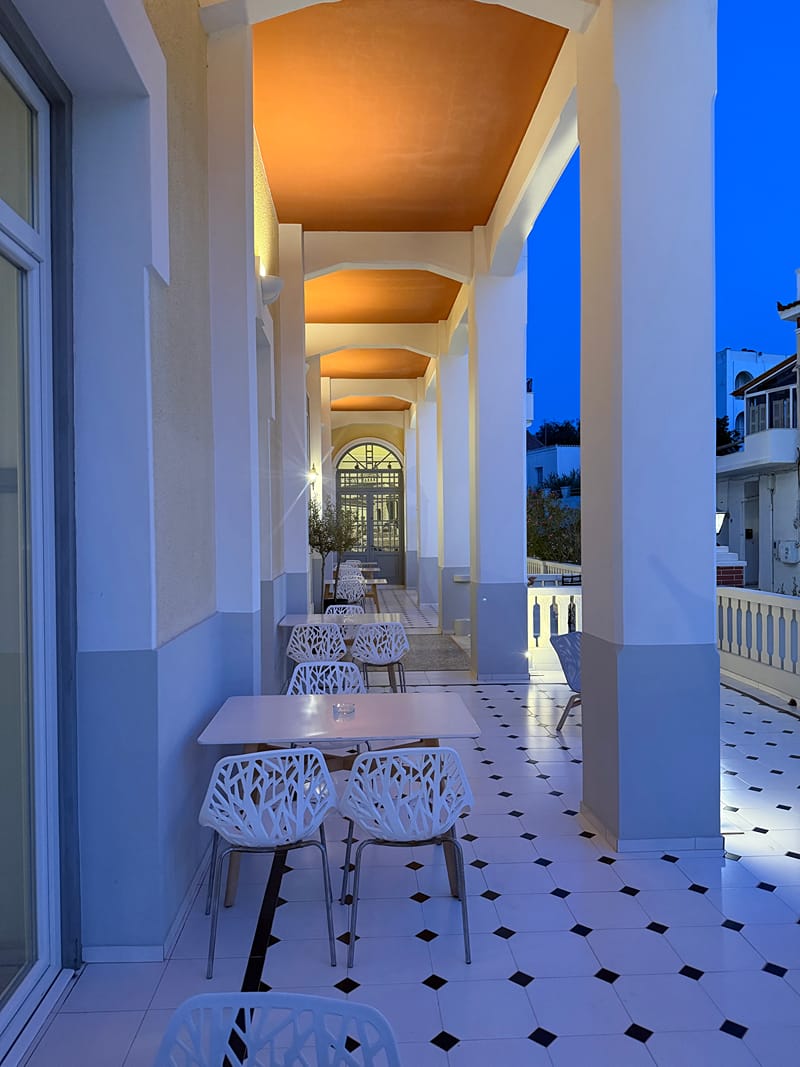
Tinion Urban Hotel
A hotel welcoming guests in Tinos since 1923, renovated under new management, with its own Bistro 1923 serving local wines and beers.
View on TRVL ↗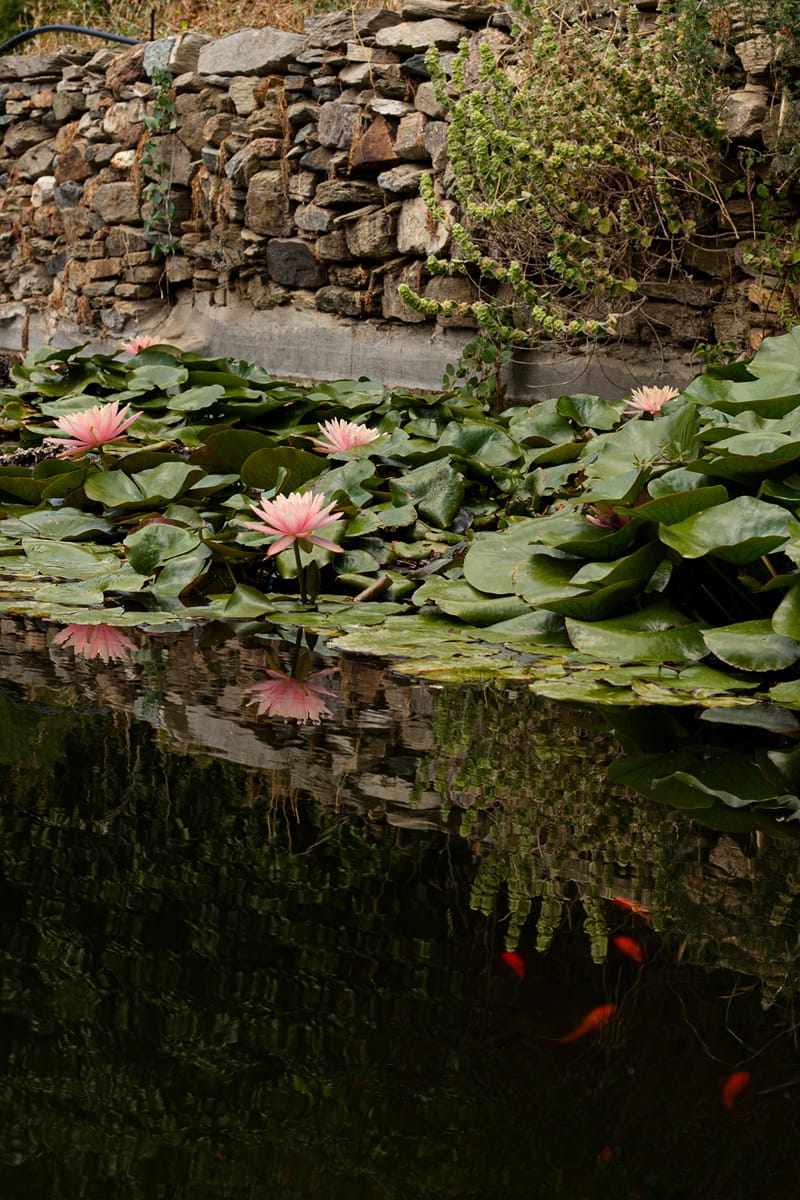
Under the Linden
Five renovated, independent houses on an old agricultural estate with vineyards, an olive grove and an orange grove, ten minutes by car from the port.
View on TRVL ↗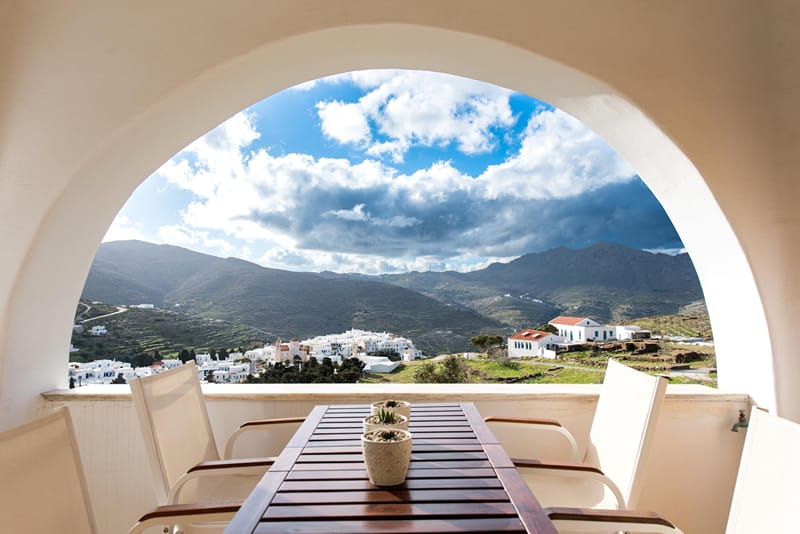
Pirgos Suites
Apartments in the marble village that gave Greece artists such as Yannoulis Chalepas and Nikiforos Lytras, 3 km from the coast.
View on TRVL ↗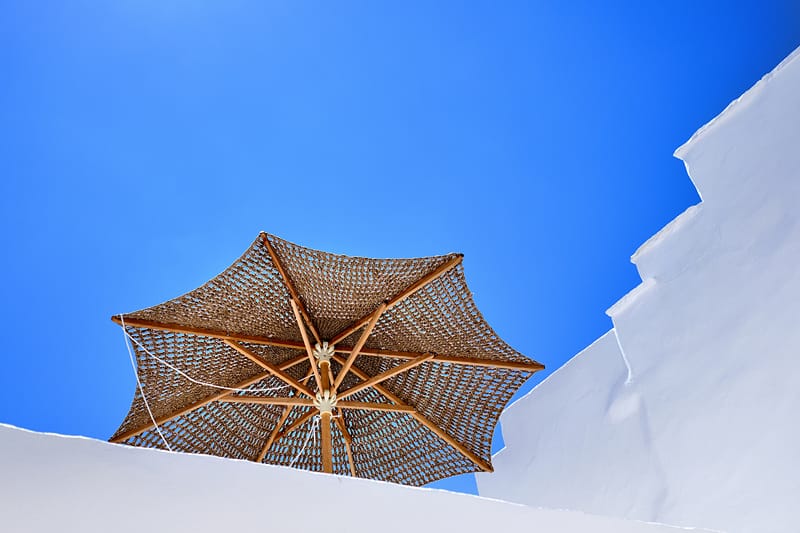
Living Theros Luxury
Rooms and suites of 17 to 40 square metres with handcrafted details, about 50 steps from free parking at the village entrance.
View on TRVL ↗The Essence
Tinos asks for a little time and gives back a great deal. Begin with the walk up Megalocharis Avenue in the morning, spend a day among the marble squares of Pyrgos and Isternia, follow a stone path through a valley of dovecotes, and let the wind choose your beach. Come in May for the artichokes or in September for the light, take home a piece of louza and a small cheese, and you will understand why so many visitors return to this island year after year.