
Seville is a city you take in on foot and at the bar counter. Orange trees line the squares, tiled courtyards open off narrow lanes, and the evening starts late, with a glass of manzanilla and a small plate, then another bar and another plate. The city's own tourism office counts more than 3,000 bars and restaurants, roughly one for every 230 residents.
Most of what visitors come for, from the Real Alcázar and the Cathedral to the Plaza de España and the river, sits within walking distance of the old centre. This guide covers the neighbourhoods and who each suits, how to book the two big monuments, where to find flamenco and tapas, how to arrive by air or high-speed train, and when the weather and the festival calendar work in your favour.
The Areas
Seville is compact, and the choice of base is mostly about mood: monumental and quiet at night, close to the river, across the water in Triana, or up north among the locals.
- Santa Cruz — the medieval Jewish quarter beside the Alcázar and the Cathedral, with lanes such as Callejón del Agua and small squares like Doña Elvira and Los Venerables. Suits first-timers who want to walk to the big sights; it is one of the most visited parts of the city, so the tourism office asks visitors to follow its good-practice guide.
- El Arenal — the old river port, with the Torre del Oro, the Maestranza bullring and the Teatro de la Maestranza, plus historic taverns and tapas bars on narrow streets. Suits anyone who wants the river and the centre in the same walk.
- Triana — across the Isabel II Bridge, better known as the Triana Bridge, the neighbourhood the city credits as a source of its ceramics and flamenco. It has the Triana Market and the ceramics centre. Suits travellers who like a neighbourhood with its own identity, a short walk from the monuments.
- Alameda de Hércules — a long tree-lined promenade from 1574, which the city calls the oldest public promenade in Europe, now lined with terraces, music venues and independent theatres, and the centre of the city's LGBTQ+ life. Suits night owls and anyone who prefers bars to monuments.
- La Macarena — a working neighbourhood in the north, with the Basilica of the Macarena, one of the best-preserved stretches of the 12th-century Almohad walls, the Feria market and the Thursday flea market known as El Jueves. Suits repeat visitors and anyone looking for everyday Seville.

What to See and Do
Real Alcázar. The royal palace and its gardens are the centrepiece of any first visit. Buy tickets online on alcazarsevilla.org, which the palace describes as its only official sales site, or at the Patio de Banderas ticket office from 09:00, card only. General admission is €15.50; the Cuarto Real Alto, the upper royal rooms, is an extra €5.50; a reduced €8 ticket applies to over-65s and to students and European Youth Card holders aged 14 to 30, now regardless of nationality. Children up to 13 with an adult go free. From October to March it opens 09:30 to 17:00, and from April to September 09:30 to 19:00. The general ticket also covers the city-run museums managed by the ICAS, including the Triana ceramics museum. From June to September the gardens host the Noches en los Jardines concert season.
Cathedral and Giralda. From 1 January 2026 general admission is €13 online or €14 at the ticket office, with a reduced €7 or €8 for over-65s and students up to 25; children up to 13 with an adult go free. The visit begins with the climb up the Giralda, the bell tower, and the ticket also includes the Church of El Salvador. Hours are Monday to Saturday 10:45 to 19:00 and Sunday 14:30 to 19:00, with the ticket office closing at 18:00. On Sundays, depending on the liturgical calendar, a limited number of free tickets are handed out in person from 17:00 at the Puerta del Príncipe office. Guided tours, including one on the roofs, cost €20 online.
Between the two stands the Archivo de Indias, the 16th-century merchants' exchange that became the archive of Spain's American empire in 1785. Its display cases hold documents signed by Columbus, Magellan and Pizarro, and admission is free. The Cathedral, the Alcázar and the archive were declared a UNESCO World Heritage Site together in 1987.
North of the centre, the Setas de Sevilla, officially the Metropol Parasol, is a wooden structure about 26 metres high designed by the Berlin architect Jürgen Mayer, with a panoramic walkway on top, the Encarnación market at street level and the Antiquarium, with the Roman remains found on the site, in the basement.

Plaza de España, Flamenco and the River
Plaza de España was designed by Aníbal González and built between 1914 and 1928 for the 1929 Ibero-American Exposition. The semicircular building, with two towers, faces a canal you can explore by rented boat, crossed by four bridges named for the old kingdoms of Castile, León, Aragon and Navarre. Along the base run tiled benches, one for each Spanish province. The tourism office suggests early morning or sunset for the light, then a walk into María Luisa Park, whose gardens took much of their present form for the same exposition.
Flamenco is part of daily life here. Seville's first cafés cantantes, the singing cafés where flamenco left private parties for the stage, opened around 1885, and today it lives on in tablaos, neighbourhood peñas and certain bars. The Museo del Baile Flamenco, founded by the dancer Cristina Hoyos and opened in 2006 in an 18th-century building between the Alfalfa and the Cathedral, is the easiest way in: museum hours are 10:00 to 18:00, and shows are at 17:00, 19:00 and 20:45. In even years the city hosts the Bienal de Flamenco; the 2026 edition ran from 9 September to 3 October.
The Guadalquivir ties it together. The Torre del Oro, built in the 13th century as part of the Almohad defences, still watches the El Arenal bank. Cross the iron Triana Bridge, opened in the 19th century and modelled on the Pont du Carrousel in Paris, for the Triana Market on Plaza del Altozano and the Centro Cerámica Triana, set in a former pottery factory with its original kilns, open Tuesday to Sunday from 10:00 to 19:00.

What to Eat and Drink
Tapas are the way Seville eats: stand at the bar, order one or two dishes, move on. The tourism office lists the classics: espinacas con garbanzos (spinach with chickpeas), carrillada (braised pork cheek), adobo (marinated fried fish), menudo, croquettes, the montadito de pringá, a small roll filled with the meats left over from the stew, and solomillo al whisky. In summer, gazpacho is the dish of the season.
Manzanilla is the wine of the Feria, and the local speciality is the orange wine of the Aljarafe, the hills just west of the city, which has its own designation of origin. For a sense of how far back the bar habit goes, El Rinconcillo has been serving since 1670 and calls itself the oldest bar in the city.
The markets are as good as the bars. The Triana Market, dating from 1823 and built over the remains of the San Jorge castle, has around 100 stalls with fish, meat, bread and fruit, along with tapas bars and cafés, and an interpretation centre for the castle remains. The Encarnación market under the Setas and the Feria market in La Macarena are the other two to know.
Getting There and Around
Seville Airport, also called San Pablo, is about 8 kilometres from the centre. The TUSSAM Airport Special Bus (EA) links it with Plaza de Armas in about 35 minutes, stopping at both Santa Justa and San Bernardo stations; local press puts the 2026 fare at €6 single or €8 return, payable in cash or by card on board or at the machines in arrivals.
By train, high-speed services reach Santa Justa station, about a kilometre from the centre, from Madrid, Córdoba, Zaragoza and Barcelona, and from Málaga on AVANT trains. From Madrid the journey takes from about two and a half hours, with some trains stopping at Ciudad Real, Puertollano and Córdoba. Renfe, Iryo and Avlo all run high-speed services to the city. Seville was the first destination of Spain's high-speed network, in 1992. Medium-distance trains to Cádiz and Málaga leave from San Bernardo.
Once in the city, walk. The old centre, the river, Triana and the Plaza de España are all within reach on foot.
When to Go
Spring and autumn are the easy seasons. Average highs at the airport weather station are 23.4°C in April, 27.2°C in May and 26.0°C in October, according to Spain's state weather agency, AEMET. Summer is hot: July averages a high of 36.0°C and August 35.5°C, with almost no rain. Winter is mild, with average highs of 16.0°C in January and lows around 5.7°C, though December and November are the wettest months.
Holy Week (Semana Santa) runs from 21 to 28 March in 2027. Brotherhoods carry Baroque processional images from churches across the city to the Cathedral, along a shared route, the Carrera Oficial, from Plaza de la Campana. The Madrugá, from midnight on Maundy Thursday into Good Friday morning, is the high point.
The Feria de Abril follows, from Tuesday 13 to Sunday 18 April in 2027. It opens with the alumbrao, when the lights of the fairground are switched on, and closes with fireworks over the Guadalquivir. Many casetas, the fair tents, are private, but the tourism board runs a public one, the Caseta de Sevilla, where tables must be booked in advance through its tourist offices.
Good to Know
- Book the Alcázar online before you travel, and buy only through alcazarsevilla.org.
- The Cathedral is cheaper online (€13) than at the door (€14), and the same ticket gets you into El Salvador.
- Hours at both monuments can change for services, events and holidays, so check the official sites the week you travel.
- In July and August, plan sights for the morning, rest through the hottest hours, and go out again after dark.
- Santa Cruz is a residential neighbourhood as well as a sight; keep voices down in the lanes at night.
- The Hospital de la Caridad in El Arenal is temporarily closed for renovation.
- During Holy Week and the Feria the whole city is out on the streets; book your room well ahead.
Our Picks
- To seeReal Alcázar
Palaces and gardens at the heart of the city; €15.50, booked on the official site, and add the Cuarto Real Alto for €5.50.
- To seeCathedral and Giralda
Climb the bell tower first; the €13 online ticket also covers the Church of El Salvador.
- To seeArchivo de Indias
Free entry to documents signed by Columbus, Magellan and Pizarro.
- To walkPlaza de España and María Luisa Park
The tiled benches of the provinces, a boat on the canal, then shade in the park.
- To seeMuseo del Baile Flamenco
Cristina Hoyos's museum of flamenco dance, with shows at 17:00, 19:00 and 20:45.
- To seeCentro Cerámica Triana
Original kilns in a former tile factory, the craft behind the Plaza de España benches.
- To seeSetas de Sevilla
A walkway across the top of the wooden parasols, with Roman remains in the basement.
- To eatEl Rinconcillo
Serving since 1670 and still the city's reference for traditional Andalusian tapas.
- To eatMercado de Triana
Market stalls and tapas bars over the remains of the San Jorge castle; go on a weekday morning.
- To drinkAlameda de Hércules
Terraces and music bars under the poplars; come at sunset.
Where to Stay

Becquer Hotel
In the very centre of the city, near the Magdalena church and the Lonja del Barranco market, with a bar, a restaurant and an outdoor pool.
View on TRVL ↗
Alcazar Hotel
Within walking distance of the centre, beside the Murillo Gardens and the Alcázar, with a bar and a library.
View on TRVL ↗
Hotel Zenit Sevilla
Within walking distance of the centre, close to the Triana ceramics centre and the Triana Bridge, with a restaurant, a fitness centre and an outdoor pool.
View on TRVL ↗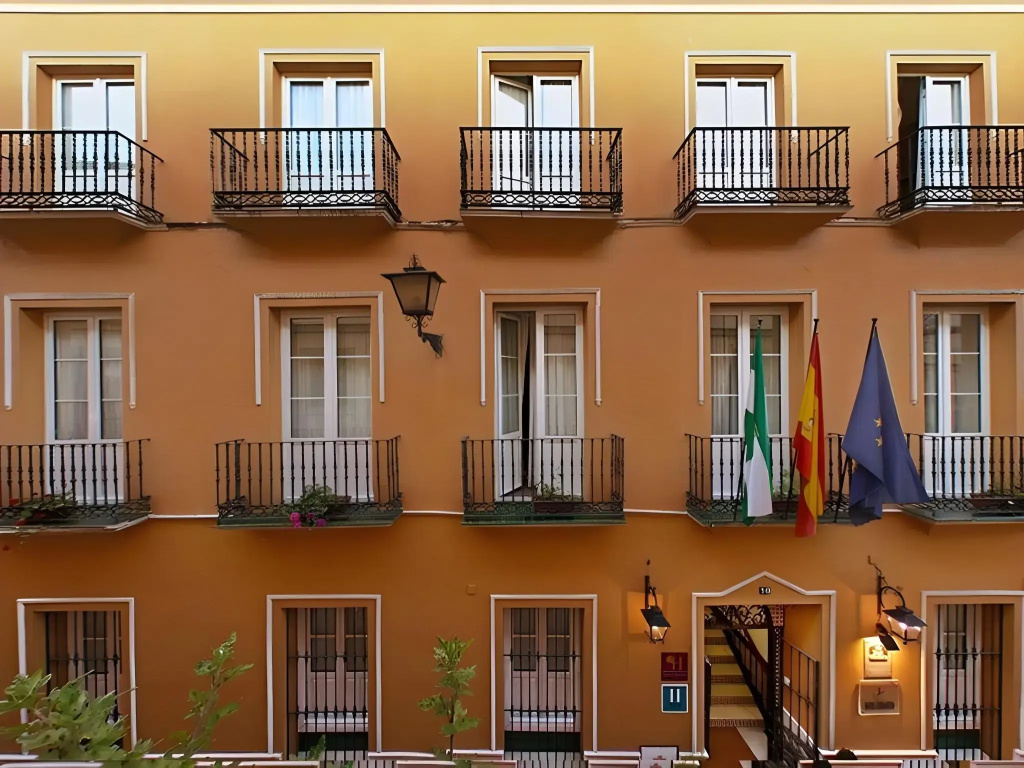
Hotel Cervantes
About a kilometre from the centre, near the Metropol Parasol, with a restaurant and a concierge.
View on TRVL ↗The Essence
Seville rewards slowness. See the Alcázar in the cool of the morning, climb the Giralda, cross the river for lunch at the market in Triana, and come back at dusk for flamenco or a long string of tapas bars. Come in spring for the orange blossom and the festivals, or in late autumn and winter for mild days and easy queues. Whenever you go, leave time in the evening, because that is when the city is most itself.