
Every hour, a five-note trumpet call sounds from the tower of St Mary's Basilica. Below it, Kraków's Main Market Square fills with the smell of warm obwarzanki, the ring-shaped breads sold from small blue stalls on street corners, and the Renaissance Cloth Hall sits in the middle of it all, still trading in amber, sheepskin and souvenirs. This is a city that keeps its rituals and uses its old buildings every day.
Kraków rewards slow walking. The Old Town is ringed by the Planty, a park that circles it completely; the Royal Way runs from St Florian's Gate down to Wawel Hill; and across a few streets lie Kazimierz, with its synagogues and late-night food stalls, and Podgórze on the far bank of the Vistula. Further out, Nowa Huta shows a completely different Kraków, planned from scratch in 1949.
The Areas
Most of what you will want to see is within walking distance of the Main Market Square, with Kazimierz and Podgórze a short walk or tram ride south. Nowa Huta is a tram trip east.
- Old Town (Stare Miasto) — the Main Market Square, St Mary's Basilica, the Cloth Hall and Floriańska Street, enclosed by the green ring of the Planty. Best for first-time visitors who want to walk everywhere, though it is the busiest part of the city.
- Wawel — the hill at the southern end of the Royal Way, with the castle, the cathedral and the fire-breathing dragon statue at its foot. A good base for anyone who wants the river and the castle on the doorstep.
- Kazimierz — the old Jewish quarter, centred on Szeroka Street with the Remuh Synagogue and its old cemetery, and on Plac Nowy, with its Sunday-morning flea market and zapiekanka stalls that stay busy late on weekend nights. Suits food lovers and anyone who likes an evening out.
- Podgórze — across the Vistula, reached from Kazimierz by the Bernatka footbridge. Home to Oskar Schindler's Enamel Factory and the Eagle Pharmacy, and calmer than the centre.
- Nowa Huta — begun in 1949 as a planned 'ideal city' for the workers of a new steelworks, and part of Kraków since 1951. Wide avenues, large residential blocks around green courtyards and Plac Centralny at its heart; a half-day trip rather than a base for most visitors.

What to See and Do
Start on the Main Market Square. St Mary's Basilica is open to visitors from Monday to Saturday between 11:30 and 18:00, and on Sundays and holidays from 14:00 (20 PLN, as a donation); the doors of Veit Stoss's great altarpiece open at 11:50. The trumpet call, the hejnał, is played on the hour from the tower, five notes over the square. From May to October you can climb the Bugle Tower, entered from Floriańska Street; it is closed from November to April. Beneath the square, Rynek Underground, a branch of the Museum of Kraków, takes you below the cobbles into the medieval market; admission is 45 PLN, and Tuesday is a free day with a limited number of tickets at the box office.
Then walk the Royal Way to Wawel. The castle exhibitions are open from Tuesday to Sunday, 9:00 to 17:00, and each one has its own ticket: the State Rooms and the Royal Private Apartments cost 57 PLN each, the Crown Treasury and the Armoury 47 PLN. November is a good month to come: Wawel's 15th 'Free November' opens the State Rooms, the Lost Wawel underground and other exhibitions free of charge from Tuesday to Sunday, with free passes from the ticket office on the day or online up to a week ahead. From 6 November the second floor also shows 'Ecstasies. Bernini at Wawel', and from 27 to 30 November Vermeer's Woman with a Pearl Necklace is on display. Wawel Cathedral is visited separately: one ticket (26 PLN) covers the cathedral, the Sigismund Bell, the royal tombs and the Cathedral Museum, and it is open Monday to Saturday from 9:00 to 16:30 and on Sundays from 12:30. The Dragon's Den, the cave below the hill, is seasonal and closes for the winter after 31 October.
In Kazimierz, the Old Synagogue on Szeroka Street holds the Museum of Kraków's permanent exhibition on the history and culture of the city's Jews (22 PLN), and the Galicia Jewish Museum on Dajwór Street, open daily from 10:00 to 18:00, looks at the Jewish past in Poland through contemporary photography. Cross the Bernatka footbridge to Podgórze for Oskar Schindler's Enamel Factory on Lipowa Street, home to the exhibition 'Kraków under Nazi Occupation 1939–1945'. Tickets (60 PLN) are timed and limited, go on sale online 90 days ahead, and also admit you within seven days to the Eagle Pharmacy on Plac Bohaterów Getta, which Tadeusz Pankiewicz ran inside the wartime ghetto.

Day Trips: Wieliczka, Auschwitz-Birkenau and Nowa Huta
The Wieliczka Salt Mine, a UNESCO World Heritage Site about 17 km from the centre, is the easiest day out. The SKA1 train from Kraków Główny reaches Wieliczka Rynek-Kopalnia in about 25 minutes (7 PLN), a few minutes' walk from the mine. The Tourist Route runs for 3.5 km, descends to 135 metres and involves more than 800 steps; allow two to three hours, including the Cracow Saltworks Museum, and bring a layer, since it stays at 17–18°C underground. St Kinga's Chapel, carved inside the salt, is on the route. Tours in languages other than Polish and English must be bought online in advance.
Many visitors to Kraków also travel to the Auschwitz-Birkenau State Museum in Oświęcim, about 65 km away, the memorial on the site of the former German Nazi concentration and extermination camp. Admission to the grounds is free, but entry is only with a personal entry pass booked online at visit.auschwitz.org, and passes are limited, so book as early as you can; passes are not sold at the entrance. A guided tour with a Memorial educator lasts about three and a half hours, and the Memorial advises allowing at least 90 minutes for each of the two parts, Auschwitz I and Auschwitz II-Birkenau, both of which it considers essential. Arrive at least 30 minutes early for security checks; bags may not exceed 35 x 25 x 15 cm. The Memorial is open every day except 1 January, 25 December and Easter Sunday, and last entry varies by month, from 14:00 in December to 19:00 in summer. Plan it as a day of its own, without other sightseeing.
Nowa Huta makes a striking contrast. Built from 1949 around the steelworks that opened in 1954 as the Lenin Steelworks, it was declared a Historic Monument of Poland in 2023. Walk out from Plac Centralny, officially renamed after Ronald Reagan in 2004 though locals still use the old name, to the Lord's Ark church, consecrated in 1977 by Karol Wojtyła, and on to the Cistercian abbey at Mogiła, founded in 1222. The Nowa Huta Museum's building is being renovated, so its branch is temporarily closed.

What to Eat and Drink
Pierogi are everywhere, from plain plates in cheap canteens to gourmet versions; pierogi ruskie are the most popular, meat fillings are common, fruit-filled ones come as dessert, and the usual finish is oil and chopped onion. In winter, order żurek, a sour soup that smarter places serve in a hollowed-out loaf. On the street, buy an obwarzanek, best eaten warm, and in Kazimierz join the queue for a zapiekanka, a half-baguette baked with toppings, at the stalls around Plac Nowy. From late April to October, look out for oscypek, the smoked sheep's cheese of the Tatras; cow's-milk imitations are sold all year.
For lunch, try a milk bar (bar mleczny). These plain, partly subsidised canteens date from the communist era, serve no alcohol and remain the cheapest way to eat a full meal in the city. Bar Mleczny Centralny on Plac Centralny in Nowa Huta has been open since the district was built in the early 1950s; its hours change, so check its Facebook page before you go. Several well-loved milk bars have closed in recent years, so confirm that any you pick is still open.
Getting There and Around
Kraków Airport is linked to the main station, Kraków Główny, by the SKA1 train, run by Koleje Małopolskie; the trip takes about 20 minutes and a single ticket costs 20 PLN. The same line continues to Wieliczka. City buses 209 and 300 also serve the airport by day, and the 902 at night; buy a ticket from the machines in the arrivals hall or at the stop, and validate it when you board.
In the city, trams and buses share one ticket system. A 30-minute ticket costs 6 PLN, 60 minutes 8 PLN and 90 minutes 9 PLN; a 24-hour ticket for zone I is 20 PLN, and 72 hours across all zones 55 PLN. Paper tickets must be validated on boarding. A combined 70-minute ticket for trains and city transport costs 10 PLN. The Old Town, Wawel and Kazimierz are best on foot, and the Planty make a pleasant way round.
When to Go
Summer is warm, with average highs of about 25°C. Winters are cold and often snowy, with average lows of about −3 to −4°C, but they bring the city's best traditions.
The Christmas market around the Cloth Hall is planned for 27 November 2026 to 6 January 2027, with smaller markets outside Galeria Krakowska and on Plac Wolnica in Kazimierz; the city confirms exact dates nearer the time. Expect hand-painted glass decorations, carved toys, ceramics and amber, alongside pierogi, oscypek and mulled wine. On the first Thursday of December, 3 December in 2026, the city's szopki, glittering nativity scenes built with Kraków's landmarks as their backdrop, are shown beside the Adam Mickiewicz monument on the square. The competition has run since 1937, the tradition joined UNESCO's Intangible Cultural Heritage list in 2018, and the best entries go on show at the Krzysztofory Palace.
Good to Know
Poland uses the złoty (PLN), not the euro. Cards are widely accepted, including on the airport train. If you change money, use a bank or a large exchange office rather than the station counters, and check the buying rate in writing first.
Book the timed sights in advance: Schindler's Factory, Wawel in November and, above all, Auschwitz-Birkenau. Bring your original ID if your Schindler's Factory ticket is personal. In winter, coal stoves and traffic can affect air quality. The EU emergency number, 112, works throughout the country.
Our Picks
- To seeSt Mary's Basilica
Veit Stoss's altarpiece opens at 11:50, and the hejnał sounds from the tower every hour.
- To seeWawel Royal Castle
Free November opens the State Rooms and the Lost Wawel without charge, with Bernini from 6 November and Vermeer from 27 to 30 November.
- To seeWawel Cathedral
One ticket for the cathedral, the Sigismund Bell and the royal tombs.
- To seeRynek Underground
The medieval market beneath the cobbles; free on Tuesdays with limited tickets.
- To seeGalicia Jewish Museum
Contemporary photography of the Jewish past in Poland, open daily from 10:00 to 18:00.
- To seeOskar Schindler's Enamel Factory
The story of Kraków under occupation, on a timed ticket that also covers the Eagle Pharmacy.
- To seeWieliczka Salt Mine
3.5 km of chambers and St Kinga's Chapel, 25 minutes by train from the main station.
- To walkThe Planty
A ring of park around the Old Town, and the pleasantest way between its gates and Wawel.
- To eatBar Mleczny Centralny
A milk bar on Plac Centralny since the early 1950s; check the hours before you go.
Where to Stay
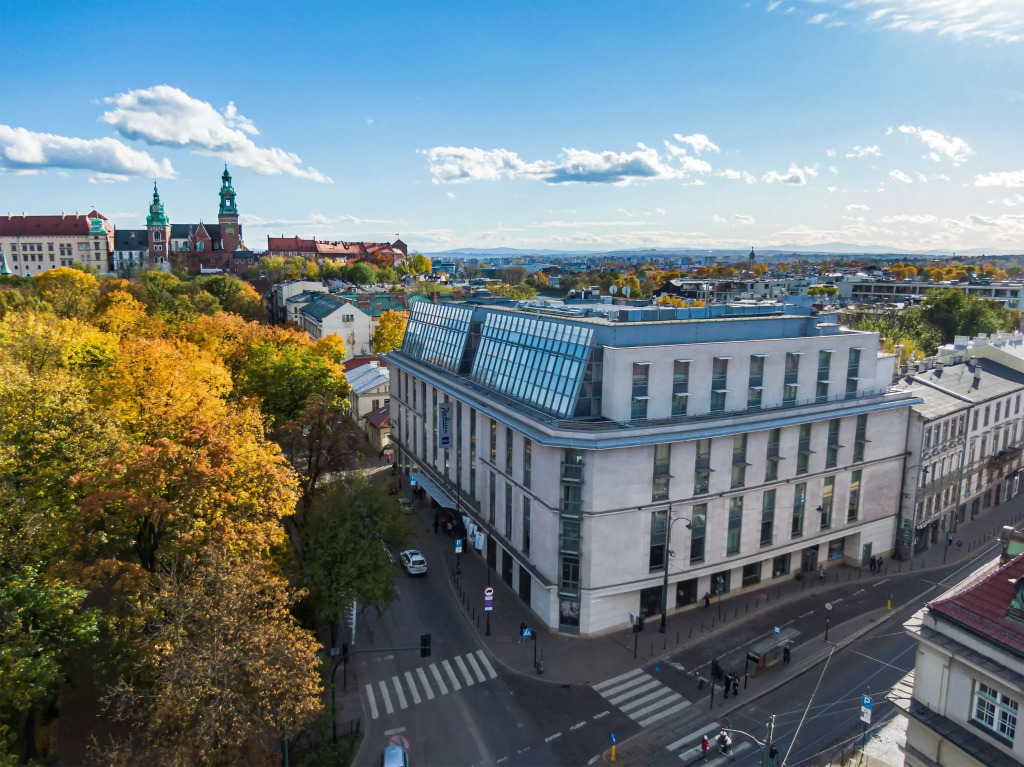
Radisson Blu Hotel
In the city centre near the Planty, the Town Hall Tower and the Cloth Hall, with a bar, restaurant, sauna and spa centre.
View on TRVL ↗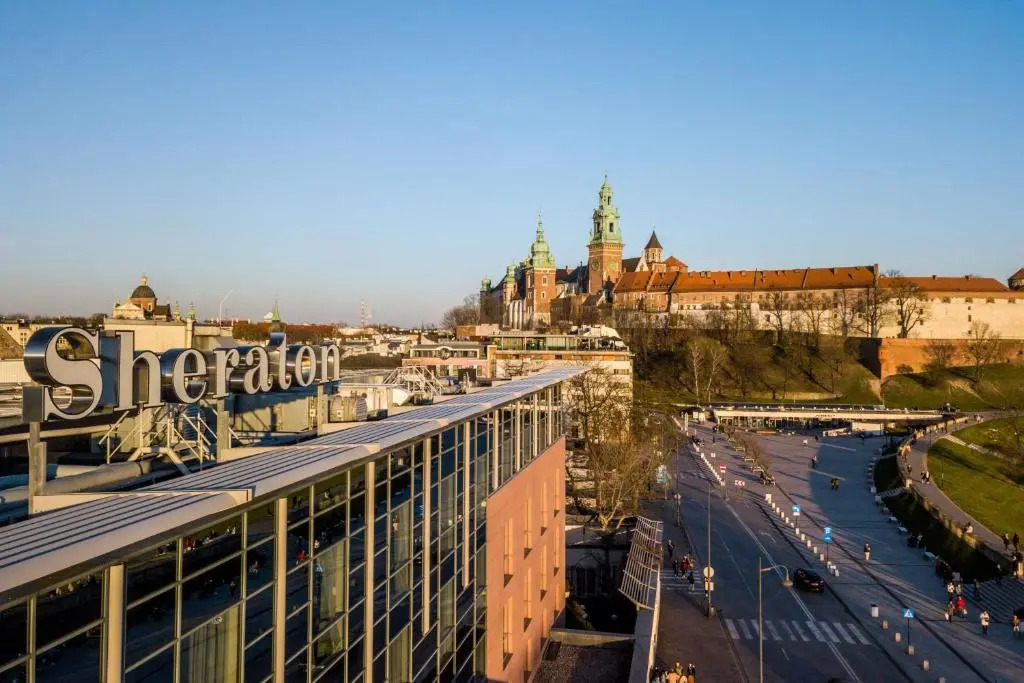
Sheraton Grand Krakow
Within walking distance of the centre, near Wawel Castle and the Planty, with a restaurant, spa centre and indoor pool.
View on TRVL ↗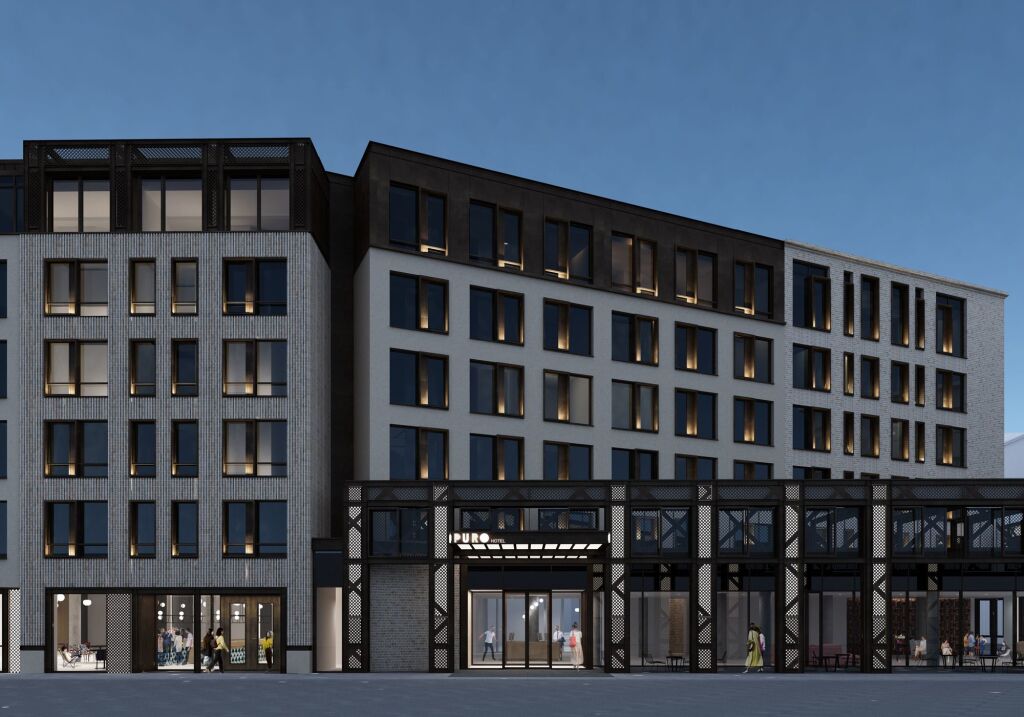
PURO Kraków Kazimierz
Within walking distance of the centre, near the Old Synagogue, Oskar Schindler's Factory and Wawel Castle, with a bar, restaurant, sauna and spa centre.
View on TRVL ↗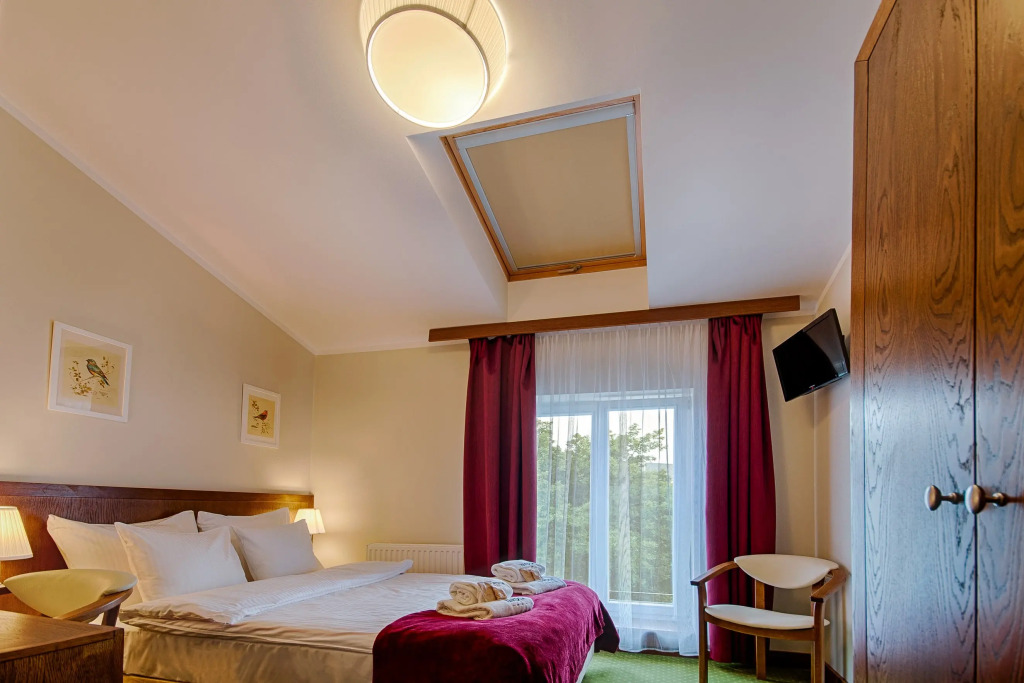
Yarden Hotel by Artery
An apartment hotel near the centre, close to the Barbican, St Florian's Gate and the Historical Museum of Krakow, with a café.
View on TRVL ↗The Essence
Kraków keeps time in its own way: a trumpet call on the hour, nativity scenes on the first Thursday of December, a castle that opens its rooms for free every November. Come for the square and the hill, stay for the late nights in Kazimierz, the walk across the river to Podgórze and the wide avenues of Nowa Huta, and leave room for a plate of pierogi in a milk bar. It is a city small enough to learn in a few days and rich enough to bring you back.