
Copenhagen is a city that lives on the water and moves by bike. Swimmers dive into free harbour baths in the middle of town, cyclists stream over the bridges at rush hour, and painted 17th-century houses line the old merchant harbour at Nyhavn. It is compact, easy to read and built for everyday pleasure: a long lunch of open sandwiches, an evening in Tivoli, a morning with Danish design.
It also changes character with the seasons. Summer means swimming and late light; winter brings Christmas markets, lit-up gardens and the Danish idea of hygge, which Wikivoyage translates roughly as cosiness, the local way of getting through short, dark days. Either way, the city rewards a slow pace and a good pair of gloves on the handlebars.
The Areas
Distances are short and the metro runs around the clock, so choose a base by mood rather than by map.
- Indre By, the city centre — the historic core, with Christiansborg Palace, Rosenborg Castle and the King's Garden, and the museum district Parkmuseerne: six museums in and around three historic parks. The obvious first-timer's base.
- Nyhavn — the old harbour of brightly painted 17th-century houses, where Hans Christian Andersen lived at three different addresses. Canal tours leave from the quay; in December a Christmas market fills the cobbles.
- Christianshavn — coloured houses and canals that the city's tourist board counts among its most picturesque, with the free town of Christiania, started in the 1970s, and the naval island of Holmen, home to the Opera. Calm, watery and close to everything.
- Vesterbro — just west of the Central Station. Istedgade is its main street of boutiques, restaurants and bars; Kødbyen, the former Meatpacking District, is now a cluster of galleries, nightlife and restaurants; Værnedamsvej is a small, busy shopping street on the Frederiksberg side. Best for food and evenings out.
- Nørrebro — described by Visit Copenhagen as the city's most culturally diverse neighbourhood. Jægersborggade is lined with shops, cafés and restaurants, Assistens Cemetery doubles as a city park, and Dronning Louises Bro, the bridge from the centre, is one of the busiest bike routes in town.
- Østerbro — elegant and family-friendly, around Fælledparken, the city's second-largest park, laid out between 1908 and 1914 as a park for the people, and close to the Lakes. Good for longer, quieter stays.

What to See and Do
Tivoli, founded in 1843 and a two-minute walk from the Central Station, is one of the oldest amusement parks in the world, and it is not only a summer place. It opens in seasons: Halloween runs from 2 October to 1 November, and Christmas in Tivoli from 13 November to 3 January, with thousands of lights, a Christmas market, Santa and the Elf Train, and all the rides running. The summer season next year runs from 30 March to 26 September 2027. Check the park's opening-hours page before you go, as hours vary by day.
For art, start at SMK, the National Gallery of Denmark, on Sølvgade by the parks. It opens Tuesday to Sunday 10:00–18:00, until 20:00 on Wednesdays; adults pay 140 DKK, 18–27-year-olds 95 DKK, and under-18s go free. Designmuseum Denmark on Bredgade tells the story of Danish design from the 1920s to the 1970s in its Danish Modern exhibition, has a showcase of Verner Panton classics for the designer's centenary, and until 21 February 2027 hosts a large exhibition on the designer Henrik Vibskov. It opens Tuesday to Sunday 10:00–18:00, Thursdays until 20:00; adults pay DKK 140, under-27s and students DKK 90, and under-18s are free.
Two climbs give the city from above. The Round Tower, built by Christian IV and finished in 1642 as an observatory for the university, has no stairs: a ramp winds seven and a half times around its hollow core. Adults pay 60 DKK. Across the water in Christianshavn, the tower of the Church of Our Saviour takes 400 steps, the last 150 on the outside of the spire. It opens daily 09:00–20:00, costs 70 DKK for adults in 2026, closes in January and shuts temporarily in rain, snow or strong wind.
Rosenborg Castle, built between 1606 and 1634 by Christian IV as a pleasure palace, keeps the Danish crown jewels in its basement vaults, and sits in the King's Garden.

Louisiana, Harbour Baths and the Bike
The best day trip from the city is to the Louisiana Museum of Modern Art at Humlebæk, on the coast north of Copenhagen. Direct trains run several times an hour from the Central Station and take about 40 minutes, followed by a 10–15 minute walk. The museum has a sculpture park, with three works by Alexander Calder in front of the café, which looks out over the Sound. It opens Tuesday to Friday 11:00–22:00 and weekends 11:00–18:00, and is closed on Mondays. Adults pay DKK 145, students DKK 130, under-18s go free, and there is no need to book a time slot.
In summer, Copenhagen swims in its own harbour. The harbour baths are free public pools in the water, staffed by lifeguards in the season from June to September. Islands Brygge, across the bridge from the centre, is one of the most visited and has a diving tower; Fisketorvet has children's, diving and fitness pools; the Coral Bath at Sluseholmen has children's pools, a dive area and a deeper swimming zone. In winter, Amager Helgoland, at the northern end of Amager Beach Park, stays open for winter swimmers.
Cycling is the easiest way to get around. Rental shops are found throughout the city, and the network of dedicated bike lanes is extensive. Use hand signals when turning or stopping, keep to your lane, pull to the side before you stop for a photo, and fit lights after dark. Rush-hour traffic moves fast, so if you are not confident, ride outside the busiest morning and afternoon hours.

What to Eat and Drink
Smørrebrød is the dish to plan a day around. It is an open sandwich, invariably on rye bread, with toppings that range from herring to raw beef, seafood and egg, and it is mostly eaten at lunch. Schønnemann on Hauser Plads has served smørrebrød, herring and chilled schnapps since 1877 and is open for lunch only. Aamanns 1921 on Niels Hemmingsens Gade, the flagship of smørrebrød chef Adam Aamann, serves it in a modern style alongside dinner dishes; Restaurant Palægade, opened in 2016, set out to be the best lunch restaurant in the city.
The Nordic side of the city's cooking is easy to taste without a special-occasion budget. Höst, near the Lakes, serves affordable Nordic fine dining; Marv & Ben, on cobbled Snaregade, holds a Bib Gourmand; Barr, in Christianshavn, explores Nordic food and beer. Holmen, next to Christianshavn, is home to noma.
For something casual, Reffen on Refshaleøen is a waterside street-food market, with stalls open every day 11:30–20:30 and bars until 21:30 through October. Broens Street Food sits by the Inner Harbour Bridge between Christianshavn and Nyhavn. In December, the Nyhavn Christmas market sells gløgg, mulled wine, and æbleskiver, small round pancake puffs.
Getting There and Around
From Copenhagen Airport, the M2 metro leaves Terminal 3 and reaches Nørreport in around 15 minutes, with a stop at Kongens Nytorv for Nyhavn; the train to Copenhagen Central Station also takes around 15 minutes. The metro runs 24/7, about every 2–3 minutes by day and every 8–20 minutes overnight. A single ticket from the airport to the centre covers 3 zones, costs 30 kr and is valid for 1 hour 30 minutes; buy it before you board, at the station machines or in the Rejsebillet app.
In town, the metro has four lines, M1 to M4, and harbour buses use the same tickets, stopping at Islands Brygge, Refshaleøen and Nordhavn. A 24-hour City Pass costs 100 kr and covers zones 1–4, including the airport. An adult can bring two children under 12 free, and 12–15-year-olds pay half price. Ticket inspections are regular.
When to Go
July and August are the warmest months and the time for harbour swimming, with lifeguards at the baths from June to September. In October, Tivoli opens for its Halloween season.
Winter is a real reason to come. From mid-November to early January Tivoli becomes a Christmas garden of lights and market stalls, and Nyhavn has its own Christmas market in December. February is the coldest month and snow is not guaranteed, but Tivoli also opens a winter season in February. Pack layers and plan days around warm interiors: museums, long lunches, cafés.
Good to Know
The currency is the Danish krone (DKK). Euros are widely accepted, but the exchange rate will not be in your favour, so pay in kroner or by card. The 1,000-krone note has not been in use since May 2025.
Buy a ticket before you board a metro or train. For emergencies call 112; for non-urgent medical help call 1813. Travel insurance is recommended for everyone, as treatment can cost money for visitors from outside the Schengen area.
At Christiania, follow the signs and do not take photos or videos, especially around Pusher Street. Several museums close on Mondays, Louisiana among them, so plan that day for walking, swimming or Tivoli.
Our Picks
- To seeLouisiana Museum of Modern Art
Art, a sculpture park and Calder on the terrace above the Sound, about 40 minutes by train; open until 22:00 Tuesday to Friday.
- To seeDesignmuseum Denmark
Danish Modern from the 1920s to the 1970s, plus Panton classics and the Henrik Vibskov exhibition until 21 February 2027.
- To seeSMK, National Gallery of Denmark
The national collection by the parks, open until 20:00 on Wednesdays and free for under-18s.
- To walkChurch of Our Saviour tower
400 steps, the last 150 outside the spire; closed in January and in bad weather.
- To walkThe Round Tower
A ramp instead of stairs, winding seven and a half times up to an observatory from 1642.
- To eatSchønnemann
Smørrebrød, herring and schnapps since 1877, at lunch only.
- To eatAamanns 1921
Modern smørrebrød from chef Adam Aamann in the centre.
- To eatReffen
Street food and bars by the water, open daily through October.
- To swimIslands Brygge Harbour Bath
A free pool in the harbour with a diving tower, lifeguarded June to September.
Where to Stay
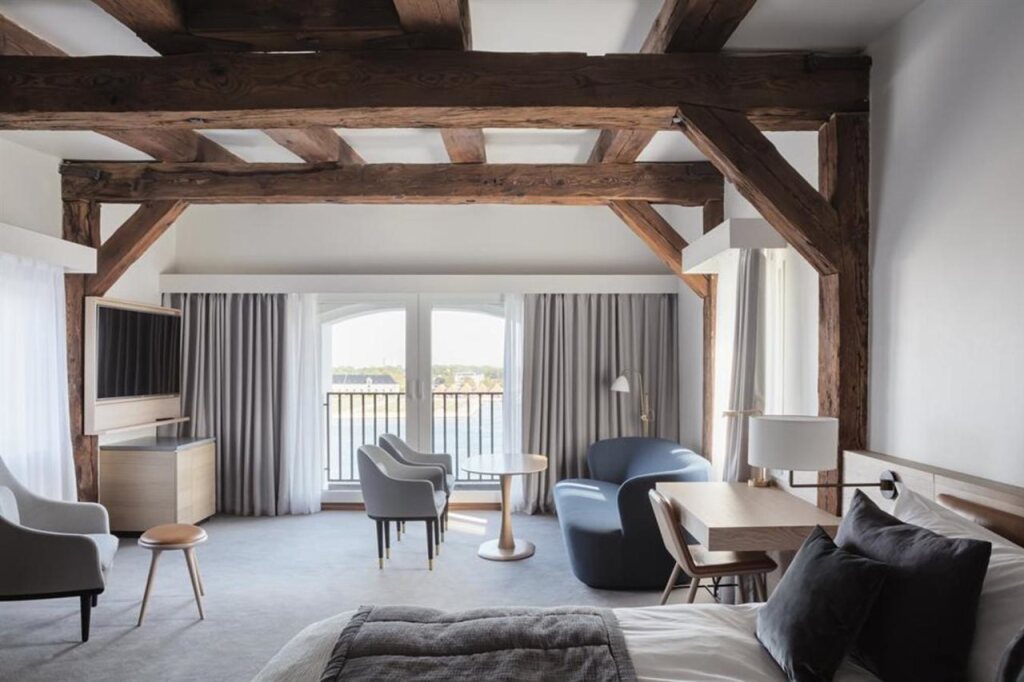
Admiral Hotel Copenhagen
Within 2 km of the historic centre, with a restaurant serving international and local dishes, a sauna and a spa.
View on TRVL ↗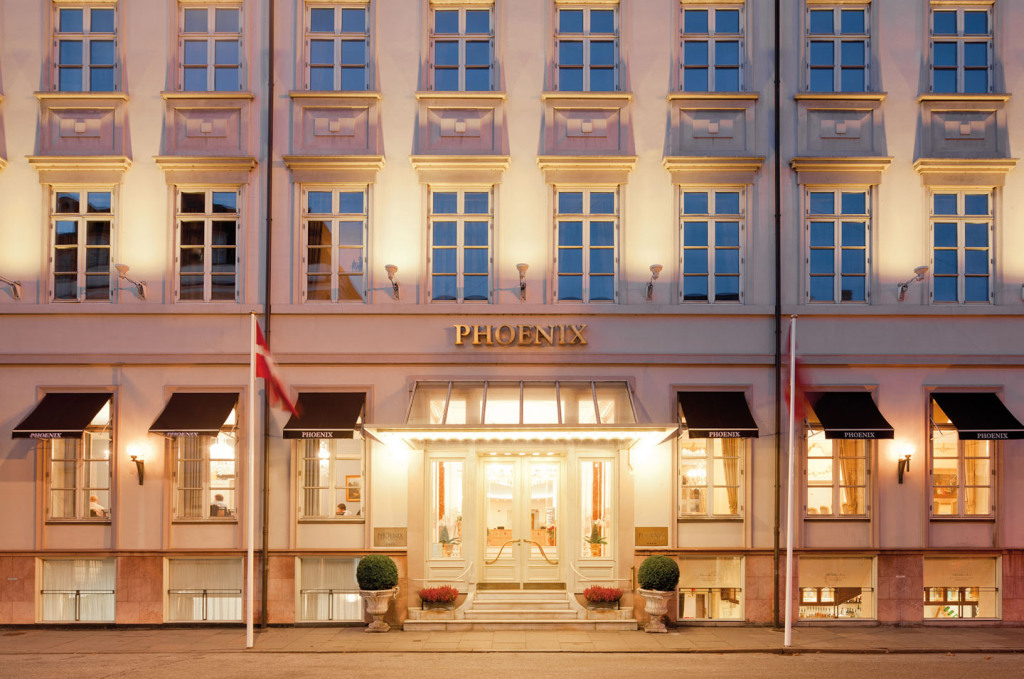
Phoenix Copenhagen
About 1 km from the city centre, close to the Marble Church, Amalienborg Palace and Kongens Nytorv.
View on TRVL ↗
NH Collection Copenhagen
Minutes from the city centre, near the port, Christianshavn and the Church of Our Saviour.
View on TRVL ↗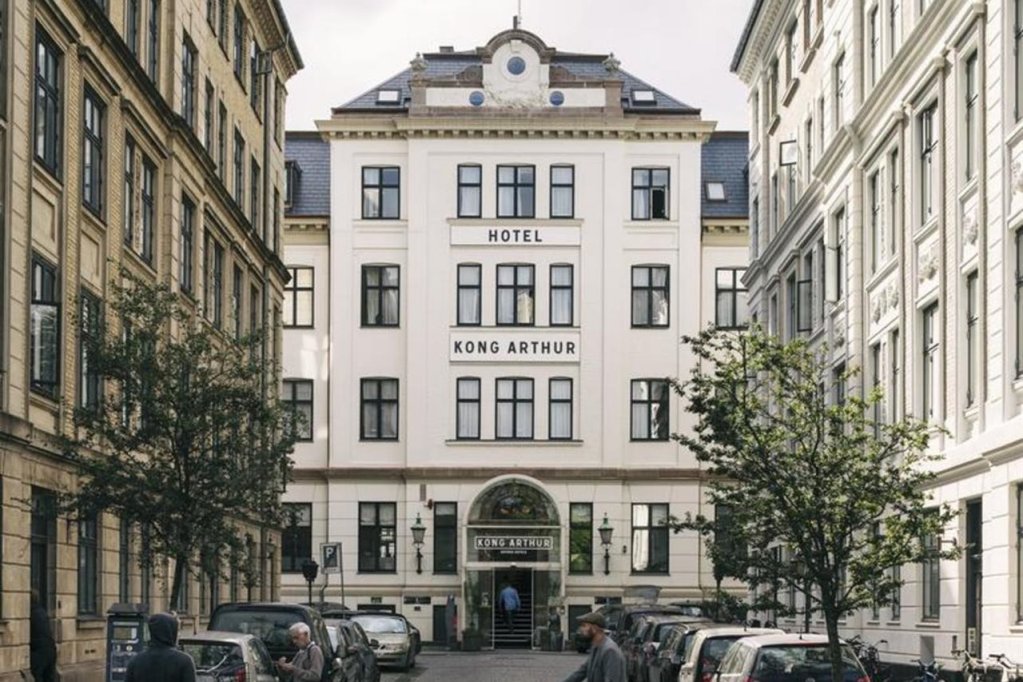
Hotel Kong Arthur
In the city centre near Nørreport, the Round Tower and Rosenborg Castle, with a sauna, steam bath and spa.
View on TRVL ↗The Essence
Copenhagen is at its best when you live it the local way. Ride a bike over the bridges, take a long rye-bread lunch with a glass of schnapps, give a whole day to Louisiana and the Sound, jump into the harbour in July or walk through Tivoli's lights in December. It is a small city with a generous rhythm, and it makes a strong case for coming back in the other season.