
Munich runs on a clock you can hear. At 11:00 and noon the figures of the Glockenspiel turn above Marienplatz, a few streets away the market traders at the Viktualienmarkt are setting out cheese, game and flowers, and by early afternoon the long tables of the beer gardens are filling up. It is a capital that keeps a village habit: everyone goes outside.
It is also a city of serious art and grand rooms. Within a short walk of the beer halls stand Germany's largest inner-city palace, a district built around museums and a vast park where surfers ride a standing wave. Add the Alps on the horizon, Salzburg an hour and a half away by train and Christmas markets that open in November, and Munich makes an easy case for a long weekend or a week.
The Areas
Central Munich is compact, and the U-Bahn, S-Bahn and trams tie the quarters together. Pick your base by the kind of evening you want.
- Altstadt — the old town around Marienplatz and its 11-metre Mariensäule, with the Frauenkirche, the Viktualienmarkt, the Hofbräuhaus on Platzl and the three surviving medieval gates, Isartor, Sendlinger Tor and Karlstor. Best for first-timers who want everything on foot.
- Maxvorstadt — the museum and university quarter: Königsplatz with the Propyläen, Glyptothek and Antikensammlung, the Pinakotheken and the Lenbachhaus, and the Ludwig-Maximilians-Universität. Most residents are in their twenties, and small cafés, galleries and bars cluster around the university and Josephsplatz. Good for art lovers and anyone who likes a student neighbourhood.
- Schwabing — north of the Siegestor, along the Leopoldstraße with its shops, restaurants and cafés. Around 1900 it was home to the painters of the Blue Rider and to Thomas Mann, and Altschwabing, between Münchner Freiheit and the English Garden, is still known for pubs, cafés and small stages. The southern and middle English Garden, Chinese Tower included, belongs to it.
- Glockenbach and Gärtnerplatz — in Isarvorstadt, the city's best-known nightlife quarter and the centre of its LGBTQ scene, with bars, traditional Wirtshäuser and shops for fashion, art and antiques. The round Gärtnerplatz, with its theatre and flowerbeds, is a ten-minute walk from Marienplatz, and the Isar's riverbanks are close by. Suits night owls and couples.
- Haidhausen — across the Isar on the high bank, with the Wiener Platz market (on the square since 1889), the Hofbräukeller beer garden and the Franzosenviertel, whose streets were laid out on French lines and named after battles of 1870 and 1871. About two thirds of its houses date from before 1914. Calmer and residential, with the Art Nouveau Müller'sches Volksbad nearby.

What to See and Do
Start at Marienplatz, where the Glockenspiel on the New Town Hall plays at 11:00 and 12:00, and again at 17:00 from March to October; arrive ten minutes early. The Frauenkirche, the city's 15th-century cathedral with twin towers of almost 100 metres, is free to enter, and its South Tower takes you up about 90 steps and a lift to a glass-walled room at 80 metres; tickets, €7.50, are sold only on site. St Peter's 56-metre tower has about 300 steps and no lift, for €5.
The Residenz, seat of the Bavarian rulers from 1508 to 1918, is the largest inner-city palace in Germany. Its Antiquarium, completed in 1571, is called the first museum north of the Alps, the Treasury holds the Bavarian royal crown, and the red-and-gold Cuvilliés Theatre of 1753 still hosts concerts and small operas. Combined tickets cover the museum, the Treasury and the theatre, and under-18s go free. From April to mid-October it is open daily from 9:00 to 18:00, and in winter from 10:00 to 17:00. Allow three hours, then step into the free Hofgarten.
In Maxvorstadt, the Kunstareal packs 18 museums and exhibition spaces into about 500 by 500 metres. The Alte Pinakothek, €9, is open from 10:00 to 18:00 and until 20:00 on Tuesdays and Wednesdays; the Pinakothek der Moderne, €10, and Museum Brandhorst, €7, stay open until 20:00 on Thursdays. All are closed on Mondays, and on Sundays the state museums cost €1. The Neue Pinakothek is closed for renovation, with reopening planned for 2029; some of its 19th-century works hang in the Alte Pinakothek and the Sammlung Schack meanwhile.
South of the old town, the Deutsches Museum on its island in the Isar describes itself as the world's largest museum of science and technology. Only the finished half is open while the rest is rebuilt, with completion expected in 2028; adults pay €16.

The English Garden, the Eisbach and the Beer Gardens
Laid out from 1789, when Elector Karl Theodor decided to give the city a public park, the English Garden covers 376 hectares and is free. Walk up to the Monopteros, a small temple of 1836–37 on an artificial hill, for a view over the city; hire a rowing boat on the Kleinhesseloher See; or find the Japanese Tea House, built for the 1972 Olympics, on its island in the Schwabinger Bach.
At the park's southern edge, by the Haus der Kunst on Prinzregentenstraße, the Eisbach forms a standing wave where river surfers have ridden since surfing was legalised there in 2010 for experienced surfers. In summer they wear swimming trunks, in winter wetsuits, and watching from the bank costs nothing. Swimming is not allowed.
Then do as Munich does and sit down outside. The beer garden at the Chinese Tower has about 7,000 seats under a 25-metre wooden pagoda and hosts the Kocherlball dance in July. West of the centre, the Augustinerkeller on Arnulfstraße, first mentioned in 1812, has about 5,000 seats, and the Königlicher Hirschgarten, with about 8,000, calls itself the largest in Bavaria and grills Steckerlfisch, whole fish on a stick. In Haidhausen, the Hofbräukeller's shady garden borders the green banks of the Isar.

What to Eat and Drink
Bavarian food is made for long tables. Weißwurst, a white veal and pork sausage, comes with sweet mustard and a pretzel, and tradition says it should be eaten before noon, though many places now serve it all day. Obatzda is a spread of soft cheese such as Camembert mixed with butter, cream and onions; Leberkäs, a baked meatloaf, is eaten as a Leberkassemmel in a roll; Schweinshaxe, pork knuckle in gravy, comes with dumplings or potato salad. For dessert there are Dampfnudeln with vanilla sauce and Kaiserschmarrn, torn pancake with raisins, an import from Austria.
The Viktualienmarkt is where the city shops. On the site since 1807, it has more than 100 stalls selling fruit and vegetables, cheese, meat and game, fish, bread, honey and flowers, and is open Monday to Saturday; individual stalls set their own hours. In its beer garden you may bring food bought at the stalls, but drinks come from the counter, and the beer rotates every five to six weeks between Munich's six big breweries.
The most famous beer hall is the Hofbräuhaus on Platzl, where beer has been brewed on the site since 1607. The ground-floor Schwemme has about 1,000 seats at long wooden tables, a band plays every day, and more than 125 Stammtische, the regulars' tables, still meet here. It is open daily from 11:00 to midnight. For wheat beer, the Schneider Bräuhaus at Tal 7 is a few minutes' walk away.
Getting There and Around
Munich Airport lies about 28 kilometres north-east of the centre. S-Bahn lines S1 and S8 run from the airport to the city, alternating so that a train leaves about every ten minutes, and the ride takes roughly 35 to 45 minutes depending on the line and your stop. You need a ticket for zones M to 5, or the Airport-City-Day-Ticket, which covers the airport and the city area until 6:00 the following morning; the Deutschlandticket is also valid. The Lufthansa Express Bus runs every 20 minutes between the airport, the Hauptbahnhof and Schwabing.
In town, U-Bahn, S-Bahn, trams and buses share one fare system, and the whole city is zone M. Since 1 January 2026 a single ticket for zone M costs €4.20, a short-trip ticket €2.10 and a single day ticket for zone M €10.10. Paper single, stripe and day tickets must be stamped before you travel.
When to Go
Summer is beer garden season, with July averaging highs of about 25°C; June to August are also the wettest months, often in short showers. Winter is cold, with January between about −2°C and 4°C, and it is when the markets light up.
Oktoberfest runs from the Saturday after 15 September to the first Sunday in October, on the Theresienwiese. The 2026 festival is over; the 190th runs from 18 September to 3 October 2027. Entry to the grounds and tents is free, the Oide Wiesn section charged €4 in 2026, and a litre of beer cost between €14.80 and €15.90. Book hotels early, and reserve a table directly with the tents if you want one.
The Christmas season starts earlier this year: the Christkindlmarkt on Marienplatz opens on Friday 20 November 2026 and runs to Christmas Eve, closing only on Totensonntag, 22 November.
Day Trips
Neuschwanstein, Ludwig II's castle above Schwangau and part of a UNESCO World Heritage listing with Linderhof, Herrenchiemsee and the King's House on the Schachen, takes about three hours by train to Füssen and bus 73 or 78 to Hohenschwangau, or about two hours by car. Rooms can be seen only on a guided tour: tickets cost €15, under-18s go free, and you buy them online or at the Ticket Center in Hohenschwangau before walking up, about 30 to 40 minutes. From 16 October to March the castle opens from 10:00 to 16:00.
Salzburg is about an hour and a half by train. For the mountains, regional trains reach Garmisch-Partenkirchen in about 90 minutes; from there the cog railway, running since 1930, climbs to the Zugspitzplatt, and a cable car from the Eibsee reaches the 2,962-metre summit of Germany's highest mountain in about ten minutes. The Deutschlandticket is valid as far as Garmisch, but not on the mountain railways.
Good to Know
Most state museums close on Mondays, so keep Monday for the English Garden, the markets and the churches, and use Sunday's €1 admission at the Pinakotheken. The Viktualienmarkt and the Wiener Platz market are closed on Sundays. On 17 October 2026 the Pinakotheken close at 16:00 and reopen from 18:00 to 1:00 for the Long Night of Museums.
The Eisbach wave forms only on some days, and whether surfing is allowed has changed several times since 2025, so check the city's site, muenchen.de, before planning around it. The Olympic Tower is closed for renovation until early 2027. The Frauenkirche tower sells tickets only on the spot.
Our Picks
- To seeResidenz
Germany's largest inner-city palace, with the Treasury, the Antiquarium and the Rococo Cuvilliés Theatre under one ticket.
- To seeAlte Pinakothek
Old masters for €9, or €1 on Sundays, and open until 20:00 on Tuesdays and Wednesdays.
- To seeFrauenkirche South Tower
A lift and 90 steps to a glass room at 80 metres above the old town.
- To walkEnglish Garden
376 free hectares, from the Monopteros view to the surfers at the Eisbach.
- To eatViktualienmarkt
More than 100 stalls since 1807; build a picnic and take it into the beer garden.
- To drinkChinesischer Turm
About 7,000 seats under the wooden pagoda, the classic Munich beer garden.
- To drinkAugustinerkeller
Said to be the city's oldest beer garden, first mentioned in 1812, with about 5,000 seats.
- To drinkHofbräuhaus
Beer brewed on the spot since 1607 and a band in the Schwemme every day; go at lunchtime for a seat.
- To walkWiener Platz
A market square since 1889 with a maypole and the Hofbräukeller garden on the corner.
Where to Stay
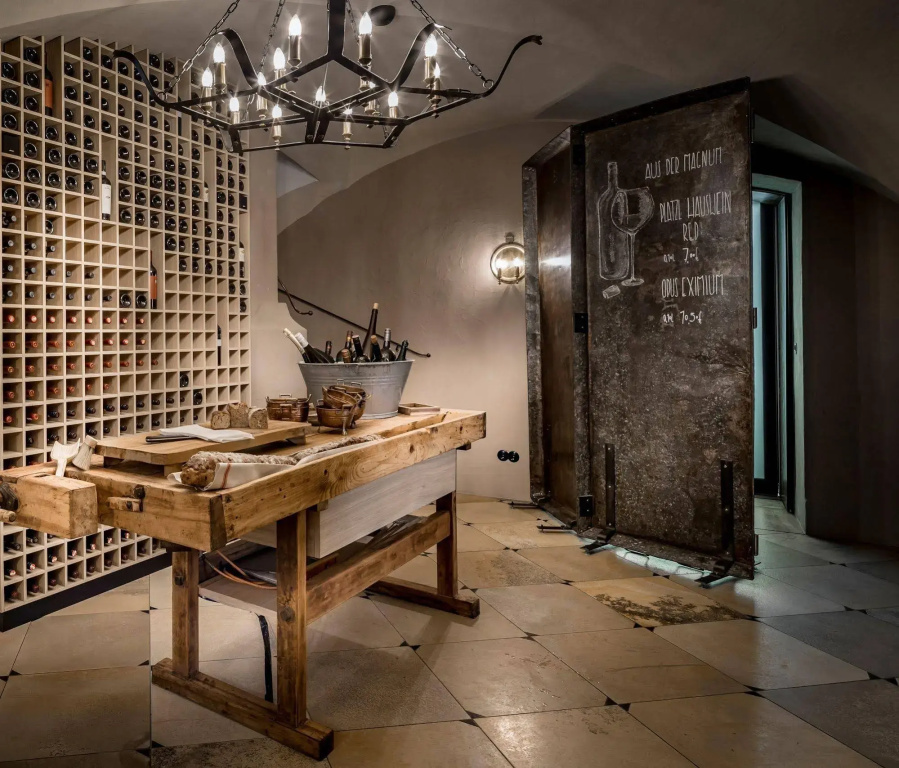
Platzl Hotel
In the very centre near the Alter Hof and the Bavarian State Opera, with a restaurant, bar, sauna, steam bath and spa centre.
View on TRVL ↗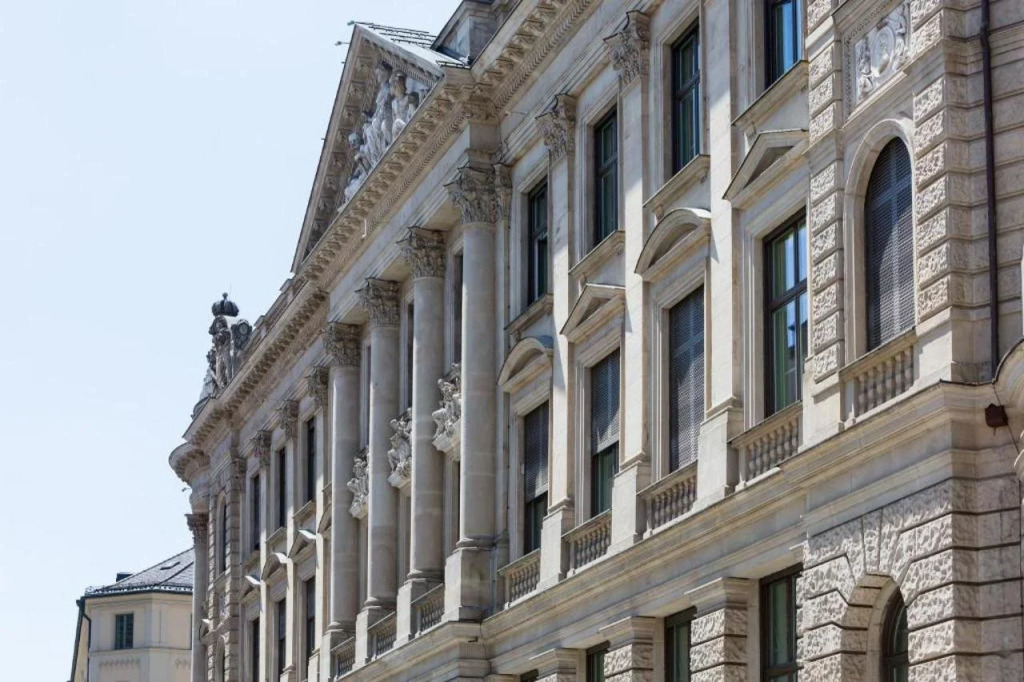
Rosewood Munich
A first-class hotel in the city centre near the Frauenkirche, the Bavarian State Opera and the Residenz, with a restaurant, bar, massage room, sauna and spa centre.
View on TRVL ↗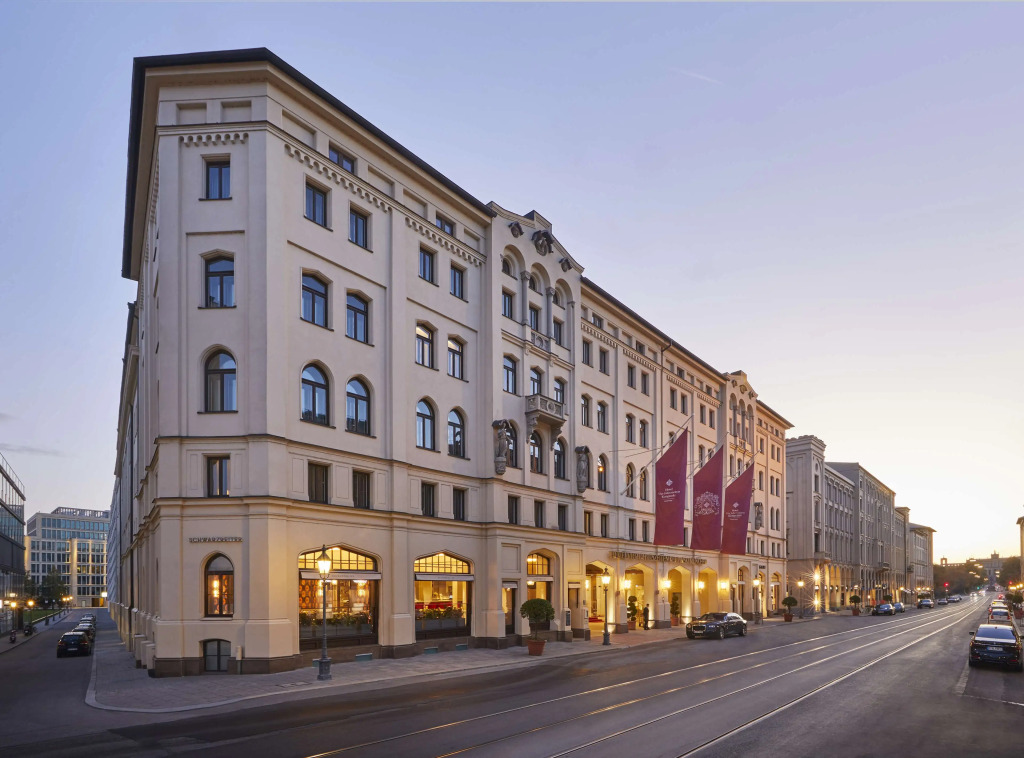
Hotel Vier Jahreszeiten
Sophisticated but very comfortable, near the Residenz, with a restaurant, café, bar, indoor pool, sauna and spa centre.
View on TRVL ↗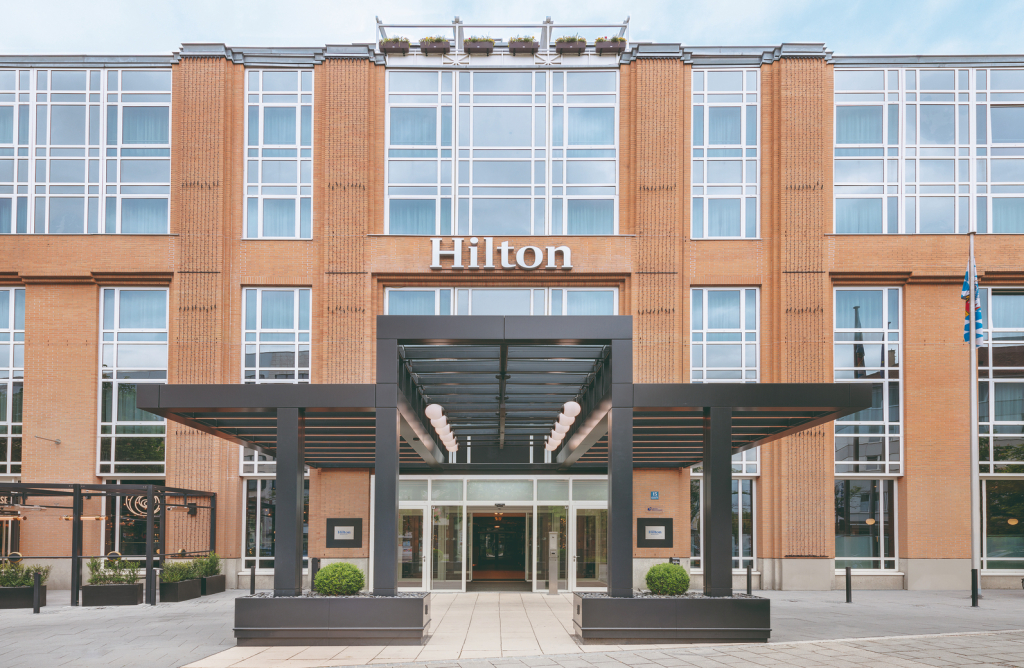
Hilton Munich City
On Rosenheimer Straße about 2 km from the centre near the Munich Philharmonic, with a restaurant, café, bar and fitness centre.
View on TRVL ↗The Essence
Munich is at its best when you let the day keep its own rhythm: a palace or a gallery in the morning, a market lunch at the Viktualienmarkt, the afternoon in the English Garden watching the surfers, and the evening at a beer garden table or in a Glockenbach bar. Come in September for the Wiesn, in December for mulled wine on Marienplatz, or in summer for the beer gardens, and keep one day for the castles and the mountains on the horizon.