
Climb the steps to the Upper Barrakka Gardens at noon and the whole Grand Harbour opens beneath you: the bastions of Birgu and Senglea across the water, ferries crossing, and on the ramparts just below, the Saluting Battery firing its midday gun as it has since the 1820s, when ship masters set their chronometers by it. Valletta was built to a plan after 1565, a grid of straight streets dropping steeply to the sea, small enough to cross on foot.
Malta is a small country with a long memory. Within an hour of the capital you can stand inside temples older than the pyramids of Giza, walk the lamplit lanes of Mdina, eat fish landed that morning at Marsaxlokk and take a ferry to Gozo, where the pace drops another notch. The winters are mild, the sea stays swimmable well into autumn, and everything is close enough that one base can carry a whole trip.
The Areas
The main island is compact, and buses and harbour ferries link most of the places below. Choose by the mood you want at the end of the day.
- Valletta — the walled capital, a UNESCO World Heritage City laid out on a grid by Francesco Laparelli and finished by the Maltese architect Gerolamo Cassar. Best for first-timers and anyone who wants churches, museums and harbour views outside the door; it is hilly, and many steep streets turn into steps.
- The Three Cities — Birgu (Vittoriosa), Senglea (L-Isla) and Cospicua (Bormla), across the Grand Harbour. The Knights lived here first, from 1530, so the palaces, churches and forts are older than Valletta's. Quieter, lived-in and linked to the capital by ferry.
- Sliema and St Julian's — the modern seafront north of Valletta, with a long promenade, most of the big hotels, and Spinola Bay, where fishing boats still sit below the restaurants. Paceville, on the hill above, is Malta's main nightlife district. Good for a lively base with a ferry ride to the capital.
- Mdina and Rabat — the old walled capital in the centre of the island, known as the silent city, with Rabat spread outside its walls. Mdina has palaces of Malta's noble families and a mix of medieval and Baroque streets; Rabat has catacombs, the Roman villa known as the Domus Romana, and St Paul's Grotto.
- Marsaxlokk — the main fishing harbour in the south-east, on Malta's second-largest natural harbour, full of brightly painted luzzu boats with an eye on the prow. Best on a Sunday morning for the market, and for a long fish lunch.
- Gozo and Comino — the sister islands to the north-west. Gozo is greener and slower, with Victoria (also called Rabat) at its centre; Comino, only 3.5 square kilometres, is car-free and almost uninhabited, with the Blue Lagoon as its draw.

What to See and Do
In Valletta, start at St John's Co-Cathedral, the conventual church of the Knights of St John, designed by Gerolamo Cassar and built in the 1570s. Mattia Preti painted the vaulted ceiling with scenes from the life of John the Baptist, and the floor is a carpet of inlaid marble tombstones for some 400 knights and officers. In the oratory hangs Caravaggio's Beheading of Saint John the Baptist (1608), his largest canvas and the only one he signed. The cathedral is open Monday to Saturday from 09:00 to 16:45, with last admission at 16:00, and is closed on Sundays and public holidays; adult tickets cost €15. From the Upper Barrakka Gardens, a private garden of the Italian knights from 1661 and public since 1824, the Barrakka lifts drop 58 metres to the waterfront in about 25 seconds.
Cross to Birgu for Fort St Angelo at the tip of the peninsula, the Inquisitor's Palace and the Church of St Lawrence by Lorenzo Gafà. In Senglea, walk out to the Safe Haven Gardens at the point, where the stone lookout called Il-Gardjola, carved with an eye and an ear for vigilance, looks straight across to Valletta. Out in the centre of the island, walk the walls and quiet streets of Mdina, then step into Rabat for its catacombs and the Domus Romana.
Then go further south and further back in time. The Ħaġar Qim and Mnajdra Archaeological Park, on the cliffs at Qrendi, holds two megalithic temple sites more than 5,000 years old, linked by a 500-metre footpath and protected by shelters since 2008; adult entry is €10. At Mnajdra's Lower Temple, the rising sun passes through the doorway at the equinoxes. These temples, with Tarxien and Ġgantija on Gozo, are part of a UNESCO-listed group built between about 3600 and 2500 BC. The National Museum of Archaeology in Valletta keeps the figurine known as the Sleeping Lady.

The Hypogeum, Gozo and Comino
The Ħal Saflieni Hypogeum in Paola is an underground burial complex cut into the rock on three levels, its deepest chamber 10.6 metres below the road. It was in use from about 4000 to 1500 BC and was found by chance in 1902 by a stonemason laying foundations; it entered the UNESCO list in 1981. To protect its climate, Heritage Malta admits only 10 people at a time, so plan well ahead. Regular tickets are sold online through Heritage Malta and at its sites: €35 for adults, €20 for ages 12 to 17 and over-60s, €15 for children aged 6 to 11, and children under 6 are not admitted. Each person can buy up to four tickets. Last-minute tickets at €50 go on sale only the day before, first come first served, at selected Heritage Malta sites and, after 12:00, at the Hypogeum itself. Photography is not allowed. Your ticket also gets you half price at the Tarxien temples nearby, if you buy that ticket at the door.
Gozo makes a good day trip and a better overnight stay. Every road leads to Victoria, where the Citadel stands on a hill settled since Neolithic times; until 1637 Gozitans were required by law to sleep inside its walls for safety. On the Xagħra plateau, the Ġgantija temples, built roughly between 3800 and 2000 BC, are among the oldest free-standing monuments in the world; the entrance is an interpretation centre with Neolithic finds from the island, and a combined ticket with Ta' Kola Windmill costs €10 for adults. At Dwejra, the Inland Sea is a shallow lagoon joined to the open sea through a 100-metre cave, and on calm days small fishing boats carry visitors through it to see Fungus Rock and the cliffs.
Comino lies between the two islands. In summer the Blue Lagoon is busy with day-trippers, and Visit Malta links to an official booking page for visiting it; in winter the island is good for walkers, with the smell of wild thyme and no cars at all.

What to Eat and Drink
Maltese food is rustic and seasonal, shaped by Sicily and North Africa. The first thing to eat is a pastizz, a flaky pastry parcel filled with ricotta or mushy peas, ideally hot with a coffee. In summer the beach snack is ħobż biż-żejt, crusty bread rubbed with tomato, soaked in olive oil and topped with tuna, capers or anchovies. A village bar plate brings olives, ġbejniet (small sheep's cheeses), coriander-scented zalzett sausage, galletti crackers and bigilla, a broad bean paste with garlic.
The dish families cook for a long Sunday is rabbit, stewed, or served after a first course of timpana, pasta baked in a pastry case, or imqarrun, baked macaroni. Look also for bragioli (beef olives), kapunata, Malta's version of ratatouille, aljotta, a garlicky fish soup, and in autumn, lampuki pie, made with the dolphin fish that arrives late in the season. Village festas bring imqaret, date pastries, and qubbajt, nougat. Drink local wine from the island's own grapes, Ġellewża for reds and Għirgħentina for whites, a Ċisk lager, or Kinnie, the bitter-orange soft drink.
Getting There and Around
Malta International Airport lies between Luqa and Gudja, about 10 kilometres from Valletta. Airport Direct buses run every 30 minutes to Valletta and the Gozo fast ferry (TD4) and to Sliema and St Julian's (TD2, TD3), with TD1 running hourly via Rabat to Ċirkewwa; they cost €3, or €3.50 on TD1, payable in cash or by contactless card. Taxis from the airport charge fixed fares.
Malta Public Transport runs the tallinja buses on both islands. A single day-route fare is €2.50 in summer and €2 in the winter season, valid for two hours with free transfers; night routes cost €3. For a longer stay, the 12 Single Day Journeys card costs €19 and can be shared, and the Explore Flex card gives four days of unlimited travel for €21, including the airport buses. The tallinja app has live arrival times.
Ferries are part of daily life. Valletta Ferry Services crosses from Sliema to Valletta and from Valletta to the Three Cities; a daytime single costs €3 and a return €5. The Gozo Channel ferry carries cars and foot passengers from Ċirkewwa to Mġarr in about 20 minutes, and tickets are bought online or at the booths and checked only at the Gozo end, on the way back. A fast ferry also runs from Valletta to Gozo. Driving is on the left, with limits of 80 km/h on open roads and 50 km/h in built-up areas, and plugs are the three-pin British type. Parking in Valletta is limited; use the park-and-ride in Floriana.
When to Go
Summers are hot, dry and very sunny, softened by sea breezes, and from the end of May to September almost every weekend some town or village celebrates its patron saint's festa, with decorated streets, processions, street food and fireworks.
Malta's winters are mild, with only short cold spells, and rainfall is low, around 568 millimetres a year. The beach season can last until mid- to late October, and swimming is possible well into the winter months. Even in mid-winter there are five to six hours of sun a day.
Good to Know
- Book the Hypogeum as early as you can; with only 10 visitors allowed at a time, tickets go quickly.
- Since 1 July 2026, the eco-contribution is €1.50 per night for each guest aged 18 or over, capped at €22.50 per person per visit. It is charged by your accommodation.
- St John's Co-Cathedral is closed on Sundays and public holidays; plan Valletta's museums for weekdays.
- Ferry tickets to Gozo are paid at the Gozo end. Child tickets (ages 3 to 12) are sold only at the Mġarr booths.
- Bus passengers without a valid ticket can be fined €50; keep your ticket for the two hours it is valid.
- If you rent a car, take out comprehensive insurance.
Our Picks
- To seeSt John's Co-Cathedral
Mattia Preti's ceiling, a floor of knights' tombstones and Caravaggio's only signed painting; go when it opens, Monday to Saturday.
- To seeSaluting Battery
The guns on the ramparts below the Upper Barrakka Gardens that still mark midday over the Grand Harbour.
- To walkSafe Haven Gardens
The point of the peninsula and Il-Gardjola lookout, with Valletta straight across the water.
- To seeĦal Saflieni Hypogeum
Three levels of rock-cut chambers used for 2,500 years, seen ten people at a time.
- To walkĦaġar Qim and Mnajdra
Two temple sites on the southern cliffs joined by a 500-metre footpath, with the islet of Filfla offshore.
- To eatMarsaxlokk Sunday Market
The morning's catch on the quay, then fish for lunch around the bay.
- To seeĠgantija Temples
Among the oldest free-standing monuments in the world, entered through a museum of Gozo's Neolithic finds.
- To walkThe Citadel
The walls above Gozo's capital, with It-Tokk square and its market below.
- To swimInland Sea
A shallow lagoon joined to the open sea by a 100-metre cave, used by bathers, divers and fishermen.
Where to Stay
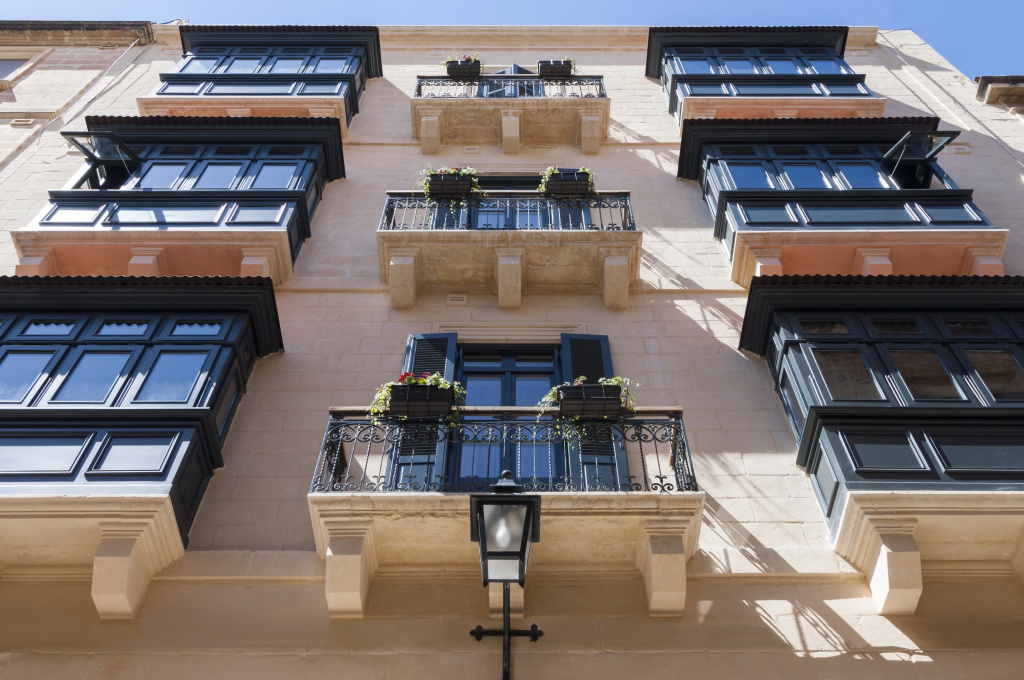
La Falconeria Hotel
In the city centre on Melita Street, with a bar, restaurant, fitness centre and a library.
View on TRVL ↗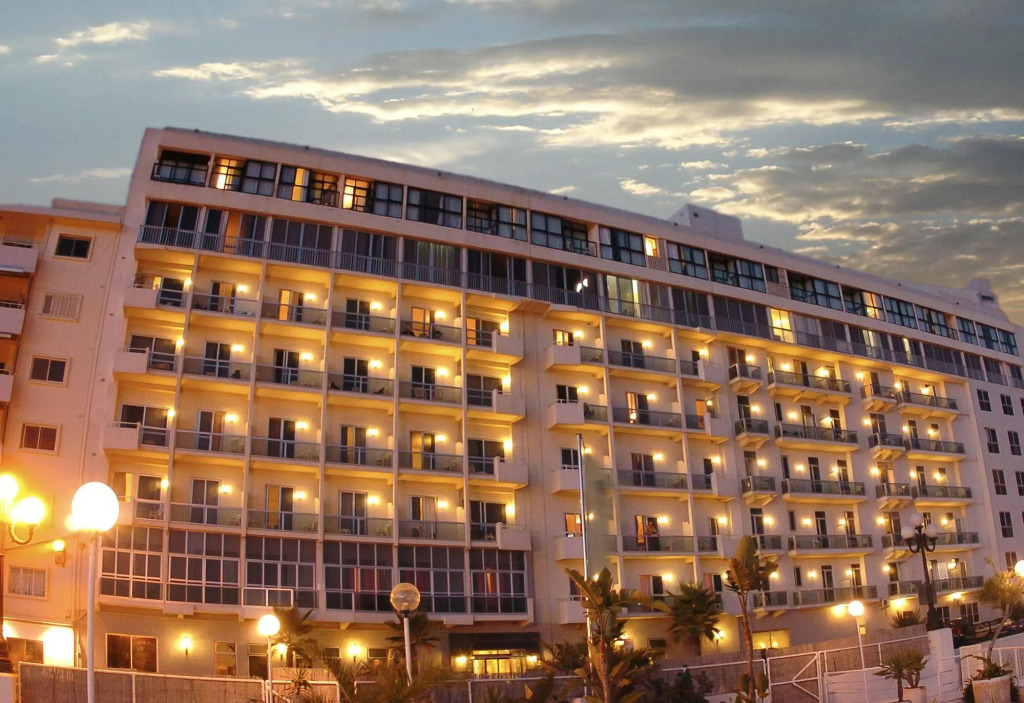
Barceló Fortina Malta
A hotel 1 km from the centre with a bar, restaurant, sauna, steam bath and spa.
View on TRVL ↗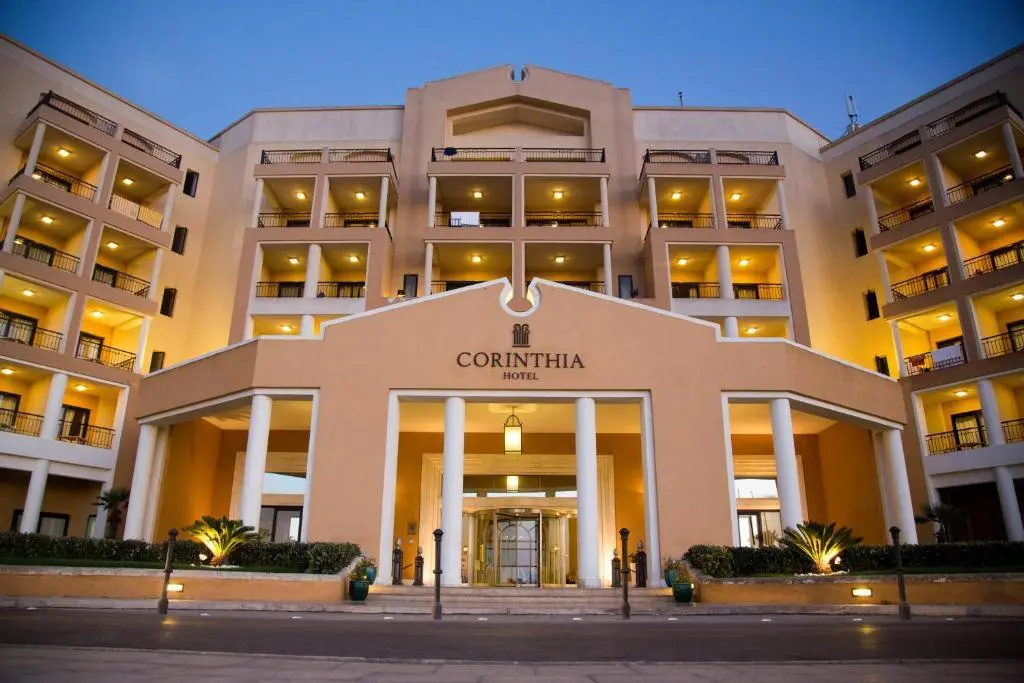
Corinthia St George's
Within walking distance of the centre and near St George's Beach, with indoor and outdoor pools, a spa and a diving club.
View on TRVL ↗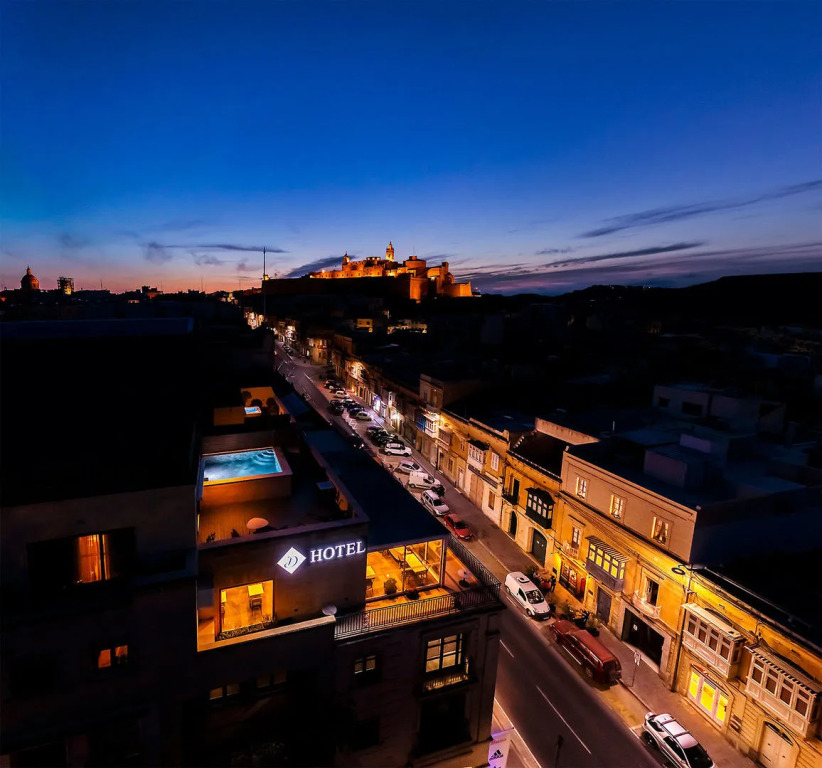
The Duke Boutique
A boutique hotel in the very centre of the town near St George's Basilica, with a restaurant, café, spa and a library.
View on TRVL ↗The Essence
Malta packs more than five thousand years of building into a small archipelago. Spend the mornings in Valletta's churches and the Three Cities' lanes, give an afternoon to the temples on the southern cliffs, a Sunday to Marsaxlokk and a slow day or two to Gozo. Come in winter for the soft light and the empty ramparts, or in summer for the festas and the sea, and either way finish with a warm pastizz and the noon gun echoing across the harbour.