
Porto is best understood from the water's edge. Stand on the Ribeira quay in the late afternoon and the city rises in front of you in steep layers of tiled façades and church towers, while across the river the port lodges of Vila Nova de Gaia catch the last of the sun. Between the two banks the iron arch of the Dom Luís I bridge carries the metro on its upper deck and walkers on both.
It is a city of climbs and rewards: a Baroque tower at the top of one hill, a bookshop with a carved staircase at the foot of another, a café founded in 1959 that is known for its francesinha, and cellars where port has aged for some 300 years. Porto is compact enough for a long weekend, and the Douro valley, the wine country that made its name, is a scenic train ride upriver.
The Areas
Ribeira is the riverfront at the heart of the old city, and part of the UNESCO World Heritage Site inscribed in 1996 as the Historic Centre of Porto, Luís I Bridge and Monastery of Serra do Pilar. It suits first-time visitors who want to step out of the door onto the quay; expect stairs, cobbles and crowds on summer evenings.
Baixa, the downtown above it, is the city's working centre: São Bento station, Avenida dos Aliados, Rua de Santa Catarina and the Bolhão market. It is the most practical base, flat in places and well served by the metro.
Cedofeita and Miguel Bombarda lie just west of the centre. Rua de Miguel Bombarda, a short street of around 650 metres, holds Porto's main cluster of contemporary art galleries, and its pedestrian stretch meets Rua de Cedofeita. Stay here if you like independent shops and a quieter, residential feel within walking distance of everything.
Foz, where the Douro meets the Atlantic, is the city's seaside: the old quarter of Foz Velha and Cantareira, the Pérgola da Foz, beaches and seafront promenades, and the Parque da Cidade, which the tourist board describes as the largest urban park in the country at more than 85 hectares. It suits slower trips and anyone who wants the sea within reach.
Vila Nova de Gaia, across the river, is technically a separate city. Its historic centre shares the UNESCO listing with Porto's, and its riverside is lined with the port wine lodges. Staying in Gaia gives you the best view of Porto itself.

What to See and Do
Start with the Torre dos Clérigos, which has dominated the skyline since 1763 and belongs to the church designed by the Italian architect Nicolau Nasoni. The climb is 226 steps and the view takes in the whole city and the river; the tower opens daily from 09:00 to 19:00.
Down the hill, Livraria Lello on Rua das Carmelitas has been dedicated to books since 1906. Entry is by ticket, and each ticket works as a voucher towards a book bought in the shop; it opens daily from 09:00 to 19:30. Go early, or late, to have the staircase with fewer people on it.
São Bento station, designed by José Marques da Silva on the site of a former Benedictine convent, has an entrance hall lined with roughly 20,000 azulejo tiles by Jorge Colaço, showing scenes from Portuguese history. It is free to walk in, and it is also where trains leave for the Douro.
The Sé, Porto's cathedral, sits on the hill above Ribeira; Wikivoyage lists entry at about €3, or €6 combined with the bishop's palace. From there, walk down through the old streets to the river and cross the Dom Luís I bridge. It opened in 1886, designed by Théophile Seyrig, a former partner of Gustave Eiffel; the upper deck carries pedestrians and metro line D, the lower deck traffic and walkers. On the Gaia side, climb to the Serra do Pilar monastery for the classic view back over Porto.
For something modern, the Fundação de Serralves combines a museum of contemporary art, a park, the Casa de Serralves and the Casa do Cinema Manoel de Oliveira; Wikivoyage gives €8.50 for museum and park, or €4 for the park alone. Check opening hours on the foundation's site before you go.
In Cedofeita, the Miguel Bombarda galleries hold simultaneous openings, the Inaugurações Simultâneas, roughly every two months, with galleries opening their doors at the same time, often with performances and workshops in the street. Check the city's Agenda Porto for the next date.

Port, Gaia and the Douro
Port wine comes from the Douro, which the Port and Douro Wines Institute calls the oldest demarcated and regulated wine region in the world, defined in 1756. The wine travelled downriver to age in the lodges of Vila Nova de Gaia, and many of the great houses still keep their cellars there. Cross the lower deck of the bridge and you are among them.
Taylor's, on Rua do Choupelo, has cellars around 300 years old and runs a self-guided audio tour in 13 languages, with a tasting of Chip Dry, a Late Bottled Vintage and a 10-Year-Old Tawny; the cellar is open daily from 10:00 to 18:15. Graham's has aged its wines in its 1890 Lodge since that year, with guided tours, tastings and the Vinum restaurant next door looking over the river. Book either online, especially in summer.
For the vineyards themselves, take the train. The Douro line runs about 172 km from Porto to Pocinho, much of it beside the river, past terraced vineyards and quintas; the Alto Douro wine region has been a UNESCO World Heritage Site since 2001. CP runs Regional and InterRegional trains from São Bento and Campanhã to Régua, Pinhão and Pocinho. CP counts Pinhão's station among the most beautiful in Portugal. A day trip to Régua or Pinhão is easy to do on your own; check current times and fares on cp.pt before you go.

What to Eat and Drink
The francesinha is Porto's signature: toasted bread layered with cured and fresh meats and steak, covered in melted cheese and a spiced sauce, often with an egg on top and fries alongside. Café Santiago on Rua Passos Manuel, officially founded in 1959, builds its version with mortadella, fresh sausage, linguiça, steak and ham under its own family-recipe sauce; it opens Monday to Saturday from 12:00 to 22:45, with two more branches nearby when the queue is long. Drink beer with it, not wine.
People from Porto are nicknamed tripeiros, and tripas à moda do Porto, a slow-cooked tripe and bean stew, is the dish behind the name. For produce and a lunch counter, the Mercado do Bolhão reopened in September 2022 after a major renovation; the market runs Monday to Friday 08:00–20:00 and Saturday 08:00–18:00, and its restaurants stay open until midnight. It is closed on Sundays.
For a coffee with history, the Majestic Café on Rua de Santa Catarina is a Belle Époque room with a winter garden, open Monday to Saturday from 09:00 to 23:00.
Getting There and Around
Francisco Sá Carneiro airport is about 15 km from the centre, and metro line E (Trindade–Aeroporto) runs straight into the city. A single Andante Azul ticket is zone Z4 for the airport trip: €2.30 from 1 January 2026, plus €0.60 for the rechargeable card; a 24-hour Z4 pass costs €8.55. Validate your ticket before every ride. Wikivoyage notes that contactless Visa and Mastercard also work on line E.
In the city, walk, and use the metro for the longer hops; the Andante Tour card costs €7.75 for one day or €16.55 for three. The historic trams are a pleasure in themselves: line 1 runs along the Douro from the historic centre to the Passeio Alegre garden in Foz about every 20 minutes, and line 18 links Carmo to Passeio Alegre. Tram tickets are sold on board, and the standard Andante card does not cover them. For the Douro, trains leave from São Bento and Campanhã.
When to Go
Porto has a mild climate shaped by the Atlantic. Summer days usually run in the mid-20s °C, with July and August the driest months and the beaches cooler and windier than the city. Rain falls mostly from October to January, and Porto is one of the wetter cities in Europe, but winters are mild, with afternoons around 14–15 °C and frost rare.
Spring and early autumn are the easiest seasons for walking the hills. If you can, come for São João on the night of 23 June: the party starts in the afternoon and many keep going until sunrise, with grilled sardines, soft plastic hammers, fireworks over the river at midnight and illuminated balloons in the sky. Book well ahead for that week.
Good to Know
- Porto charges a municipal tourist tax of €3 per person per night, up to seven consecutive nights; children up to 13 are exempt.
- The city is steep. Bring shoes with grip, since the cobbles get slippery in the rain, and plan routes downhill where you can.
- Validate metro tickets every time; inspectors fine passengers who have not.
- Ribeira and the bridge get crowded on summer evenings; the same views are calmer early in the morning.
- The Bolhão market, Café Santiago and the Majestic Café are all closed on Sundays, so plan that day around Gaia, Serralves or Foz.
- Watch your bag in crowded spots and on busy trams and buses, as in any popular city.
Our Picks
- To seeTorre dos Clérigos
Nasoni's tower, standing over the city since 1763, with 226 steps up to the best overview of Porto.
- To seeSão Bento Station
Some 20,000 azulejo tiles by Jorge Colaço in the hall, and the departure point for the Douro trains.
- To seeLivraria Lello
A bookshop since 1906, where your entry ticket counts towards a book.
- To seeSerralves
Contemporary art, a large park and the Casa do Cinema Manoel de Oliveira in one foundation.
- To walkMiguel Bombarda
Porto's gallery street, at its best on the days of the simultaneous openings.
- To eatCafé Santiago
A francesinha house officially founded in 1959, with its own family-recipe sauce.
- To eatMercado do Bolhão
The renovated city market, with produce stalls by day and restaurants open until midnight; closed Sundays.
- To drinkMajestic Café
A Belle Époque café with a winter garden and a century of history.
- To drinkTaylor's Port Cellars
Cellars around 300 years old, with a self-guided tour and three ports to taste.
Where to Stay
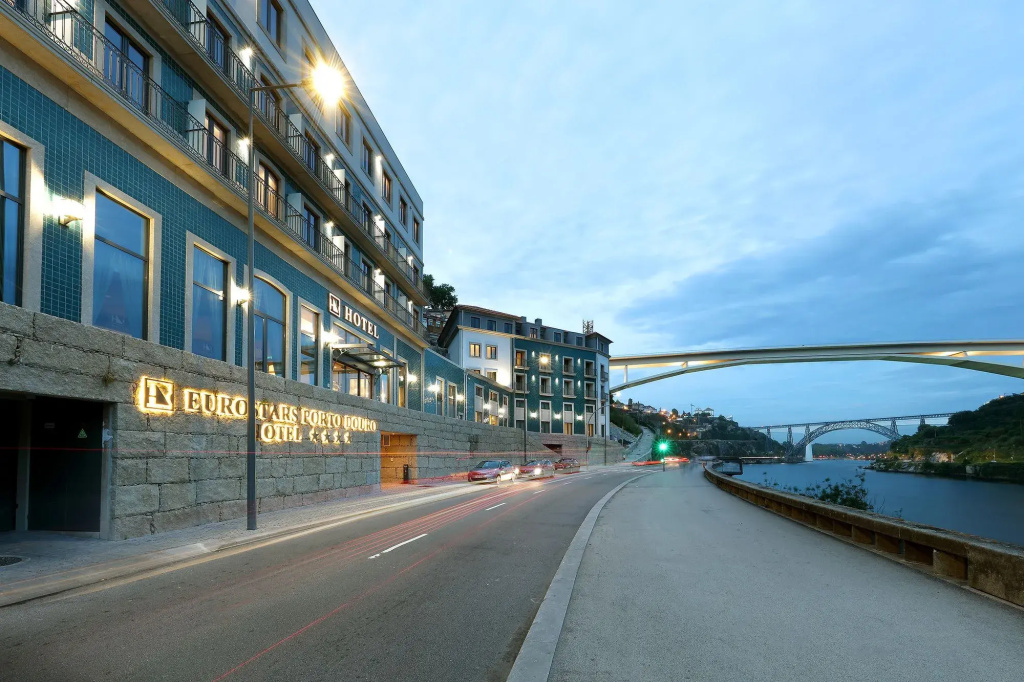
Eurostars Porto Douro
Minutes from the city centre, near the Fernandine Wall, Santa Clara Church and the Infante D. Henrique bridge, with a restaurant, bar, café and spa centre.
View on TRVL ↗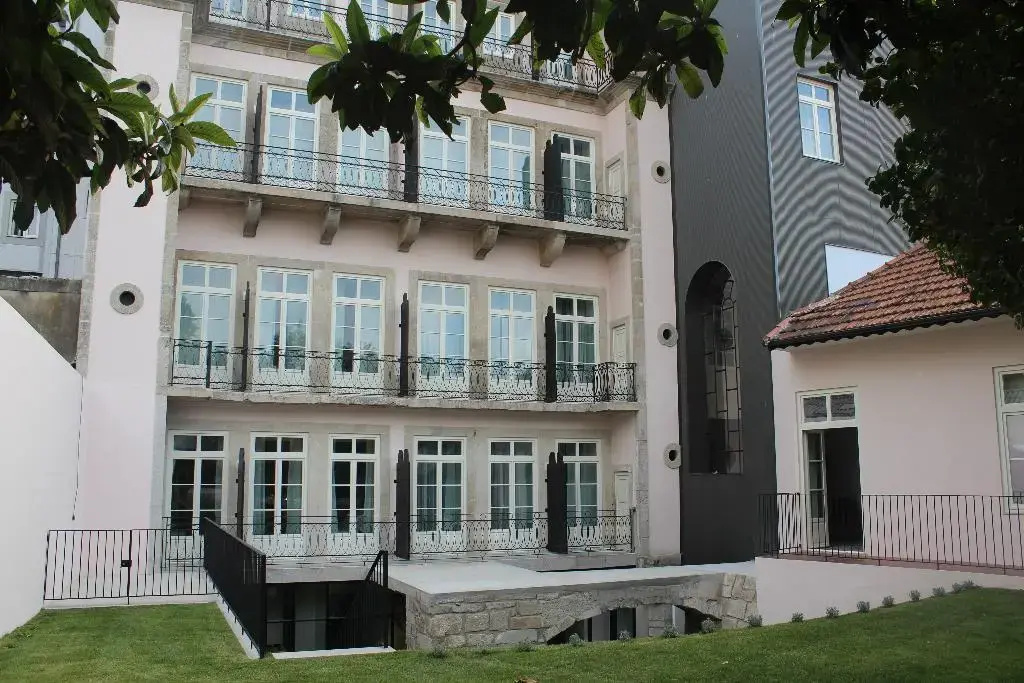
GRANDE HOTEL PARIS
In the city centre on Rua da Fábrica, near the Dom Pedro monument and Livraria Lello, with a bar, restaurant and café.
View on TRVL ↗
Eurostars Das Artes
About 1 km from the centre on Rua do Rosário, close to Rua de Miguel Bombarda, the Museu Nacional Soares dos Reis and the University of Porto, with a restaurant, bar and spa centre.
View on TRVL ↗
Virtudes City Lofts
An apartment hotel about 1 km from the centre, near the Parque das Virtudes and the church of São João Novo, with a restaurant and café.
View on TRVL ↗The Essence
Porto gives back whatever effort you put into it. Climb a hill and you get a view; cross a bridge and you get a glass of port in a cellar some 300 years old; take a train and you are among the vineyards by lunchtime. Come hungry, bring good shoes, and leave room for an evening on the quay, when the light turns the river gold and the city seems to lean in to watch it.