
Zurich is a city built around water. The Limmat runs out of the lake and through the old town, and in summer people swim in both: in wooden lake baths that have stood for generations, and in the river itself, where the current carries you past the city. Above it all rise the two towers of the Grossmünster, the skyline nobody in Zurich would trade.
The rest comes in small, precise doses. Chagall's stained glass in the Fraumünster, one of the most important art collections in Switzerland at the Kunsthaus, veal in cream sauce in a dining room hung with Picassos, a box of tiny Luxemburgerli from a confectioner that has been on Paradeplatz since 1859. In late November the squares fill with Christmas markets. This guide is about how to do all of it well.
The Areas
Zurich is compact, and its best-known quarters sit either side of the Limmat or along the shore of the lake. Four of them cover most of what a visitor needs.
- Altstadt and Niederdorf — the old town on both banks of the Limmat. On the right bank, the Niederdorf, which locals call the Dörfli or little village, is a tangle of winding, car-free lanes with restaurants, small boutiques, used-book shops and courtyards; on the left bank are the Lindenhof, the Fraumünster and St Peter. Best for a first visit and for anyone who wants to walk everywhere.
- Zurich West — a former industrial district that has become the city's nightlife quarter. Shops and a market hall fill the railway arches of Im Viadukt, Frau Gerolds Garten serves drinks and food in an open-air garden, the Clouds bar on the 35th floor of the Prime Tower looks out over the whole district, and the Schiffbau complex houses the Moods jazz club. Suits repeat visitors and evenings out.
- Seefeld — the right shore of the lake beyond Bellevue, with the lakeside promenade of the Seefeldquai, the Johann Jacobs Museum at Seefeldquai 17 and the historic wooden lake bath at Utoquai. Good for walkers and anyone who wants the lake on their doorstep.
- Enge — the left shore south of the centre, home to the Museum Rietberg on Gablerstrasse and the Seebad Enge, a lake bath that is a popular local meeting place all year round. A calmer base within easy reach of Paradeplatz.

What to See and Do
Start at the Lindenhof, the hill on the left bank where a Roman fort stood in the 4th century. A Roman tombstone from the year 180, found here and bearing the first mention of Turicum, the city's ancient name, still marks one of the stairways up. Zurich Tourism calls the view the most beautiful over the old town, and the square is a meeting place for chess players. Below it, Augustinergasse is a lane of old coloured houses with bay windows, lanterns and arches, and the Schipfe on the riverbank was a trading point for goods in the Middle Ages.
Nearby, St Peter is the oldest church in Zurich and has the largest church-tower clock face in Europe. Across the Münsterhof, the Fraumünster, once a convent, holds Marc Chagall's five-part window cycle in the chancel and his rosette in the south transept; the windows in the north transept are by Augusto Giacometti. From March to October it opens Monday to Saturday 10:00–18:00, from November to February until 17:00, and on Sundays after the service. Admission is CHF 5, free for children up to 16 and students, and photography is not allowed inside.
On the right bank, the Grossmünster's Karlsturm is a climb of 187 steps to a platform with six large panoramic windows over the old town, the Limmat and the lake; it costs CHF 5 for adults and CHF 2 for children and students. The church also has choir windows by Augusto Giacometti and stained glass by Sigmar Polke. Restoration work runs from January 2025 to 2029, so check access before you climb.
The Kunsthaus on Heimplatz holds one of the most important art collections in Switzerland, from the Middle Ages to the present day. David Chipperfield's extension, opened in autumn 2021, roughly doubled the number of works on permanent display to about 700 and houses the Emil Bührle Collection. It opens Tuesday to Sunday 10:00–18:00, until 20:00 on Thursdays, and is closed on Mondays. The collection costs CHF 24 and is free for everyone on Wednesdays; under-14s always enter free. Maria Lassnig and Edvard Munch are on show until 21 February 2027.
For the view from above, take the S10 from the main station to the Uetliberg, the 871-metre hill on the city's doorstep. From the top, the Planetenweg leads along the ridge to Felsenegg through a scale model of the solar system in about two hours. Construction work is restricting the S10 until 12 December 2026, so check the timetable before you set off.

The Badi and the Christmas Markets
In summer, a Badi is where Zurich goes to cool off. Seebad Utoquai is a historic wooden lake bath that Zurich Tourism calls an absolute historic gem among the city's lidos. The Frauenbad at Stadthausquai, an art nouveau wooden bathhouse on the Limmat, is reserved for women during the day, and the Männerbad Schanzengraben, in the centre, exclusively for men. On the river, Oberer Letten is one of the most popular open-air baths in the city, while Unterer Letten suits strong swimmers who can handle the current. On the left shore, Strandbad Mythenquai has a sandy beach and Seebad Enge is busy all year round. The summer season is over for 2026: Utoquai is the last to close, on 25 October.
From late November the city turns to its Christmas markets. The 2026 dates published by Zurich Tourism:
- Zurich Main Station — in the station concourse, 19 November to 24 December.
- Münsterhof — on the square in front of the Fraumünster, 19 November to 24 December.
- Old Town (Niederdorf) — 19 November to 23 December.
- Werdmühleplatz — 19 November to 23 December.
- Bellevue Noël — in front of the Opera House, 19 November to 23 December.
- Zürcher Weihnachtsallee — on Europaallee, 19 November to 23 December.
- Uetliberg Winter Wonderland — on the hill above the city, 6 November 2026 to 31 January 2027.

What to Eat and Drink
The city's dish is Zürcher Geschnetzeltes: thinly sliced strips of pan-fried veal in a creamy sauce, served with rösti, a cake of coarsely grated potato. Some restaurants still offer the old version with kidneys; at the Zunfthaus zur Waag you can have it either way. The Kronenhalle on Rämistrasse, open since 1924, serves it beneath original paintings by Chagall, Picasso and Miró, many of them given by artists who paid their bills with their work.
For something heartier, the Zeughauskeller on Bahnhofstrasse serves sausages, stews and rösti in a building from 1487. And Zurich has a claim in the other direction too: Hiltl, founded in 1898, is thought to be the world's oldest vegetarian restaurant.
For something sweet, go to Sprüngli. The confectioner began in 1836 as a small Zurich shop run by David Sprüngli, moved to the edge of Paradeplatz in 1859, and in 1957 launched the Luxemburgerli, the small, light macarons sold only in its own shops. The upstairs room at Paradeplatz is popular for breakfast, lunch and afternoon tea. In Zurich West, Frau Gerolds Garten on Geroldstrasse runs a winter garden and a warm Winterstube from 9 October 2026 to 5 March 2027.
Getting There and Around
Zurich Airport is close to the city. Trains run to Zurich Main Station every 5 to 10 minutes between 05:00 and midnight and take about 10 minutes; from the city, the first trains leave at 04:45. A single ticket costs CHF 7 (children CHF 3.50) and a 24-hour pass CHF 14. Tram 10 takes about 35 minutes on the same ticket, passing ETH Zurich and the University. A taxi costs around CHF 50 to 70, with ranks in front of Arrivals 1 and 2.
In town, trams, buses, S-Bahn trains, boats and the funiculars are all part of the ZVV network, with single tickets, 24-hour tickets and cheaper 9 o'clock day passes for travel after 09:00. Use the fare finder on zvv.ch or the SBB app for exact prices. The Zürich Card bundles it all: unlimited second-class travel in the city and region, the airport transfer, a trip up the Uetliberg and short lake and Limmat cruises, plus free entry to many museums. It costs CHF 29 for 24 hours and CHF 56 for 72 hours (children CHF 19 and CHF 37), with new prices from 13 December 2026.
For day trips, the Rhine Falls near Schaffhausen are about an hour away by S-Bahn: the mightiest falls in Central Europe, 150 metres wide and 23 metres high, with boats out to the rock in the middle of the river. Trains to Lucerne leave every half hour; there, the 14th-century Chapel Bridge with its cycle of paintings is the city's landmark, and Lake Lucerne is best explored by boat.
When to Go
Zurich has two seasons that define it. In summer, life moves to the water: the lake and river baths open and swimming in the Limmat is part of daily life. From late November to Christmas the markets light up the squares, the station concourse and the Uetliberg, which carries its winter market on to the end of January. Autumn and winter are good for museums: at the Kunsthaus, Maria Lassnig and Edvard Munch run until 21 February 2027.
Good to Know
- Prices are in Swiss francs (CHF); Switzerland does not use the euro.
- Most museums are closed on Mondays; the Kunsthaus collection is free for everyone on Wednesdays.
- The Zürich Card includes the airport train, the Uetliberg and free entry to the Kunsthaus collection, the National Museum and the Fraumünster. Children under 6 travel free.
- Construction work is restricting the S10 to the Uetliberg until 12 December 2026.
- Strandbad Tiefenbrunnen is closed for renovation during the 2026/27 winter season.
- Photography is not allowed inside the Fraumünster.
- Visitor Information in the main station opens Monday to Saturday 08:30–19:00 and Sunday 09:00–18:00.
Our Picks
- To seeFraumünster
Chagall's five-part window cycle in the chancel, for CHF 5.
- To seeKunsthaus Zürich
Old masters to the present, and the collection is free on Wednesdays.
- To seeKarlsturm, Grossmünster
187 steps to six panoramic windows over the old town, the river and the lake.
- To walkLindenhof
The best view over the old town, on the site of a Roman fort.
- To walkUetliberg to Felsenegg
The Planetenweg ridge walk, about two hours from the 871-metre summit.
- To eatKronenhalle
Zürcher Geschnetzeltes under paintings by Chagall, Picasso and Miró.
- To eatHiltl
The restaurant thought to be the world's oldest vegetarian, open since 1898.
- To drinkSprüngli
Coffee upstairs and a box of Luxemburgerli to take away.
- To drinkFrau Gerolds Garten
The winter garden and Winterstube, open until 5 March 2027.
Where to Stay
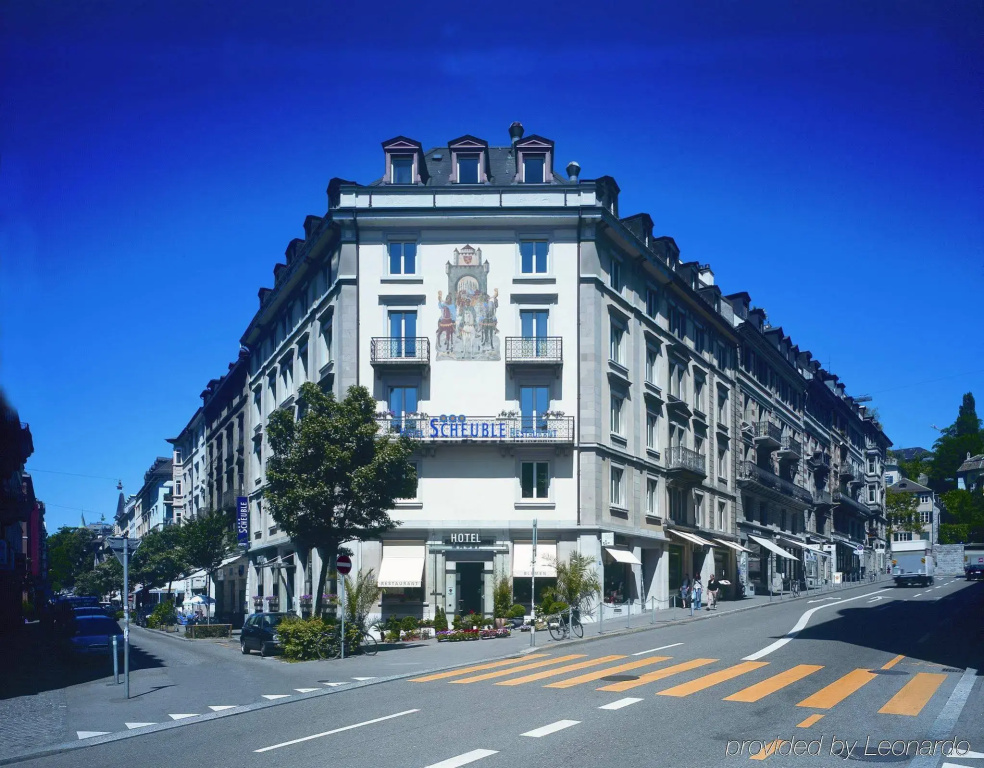
Hotel Scheuble
Close to the city centre on Mühlegasse, within walking distance of the Lindenhof, the Zurich Zoological Museum and the Town Hall, with a bar and a library.
View on TRVL ↗
Baur au Lac
A first-class hotel on Talstrasse near Paradeplatz, the Fraumünster and Bellevue, with a spa centre, a fitness centre and a library.
View on TRVL ↗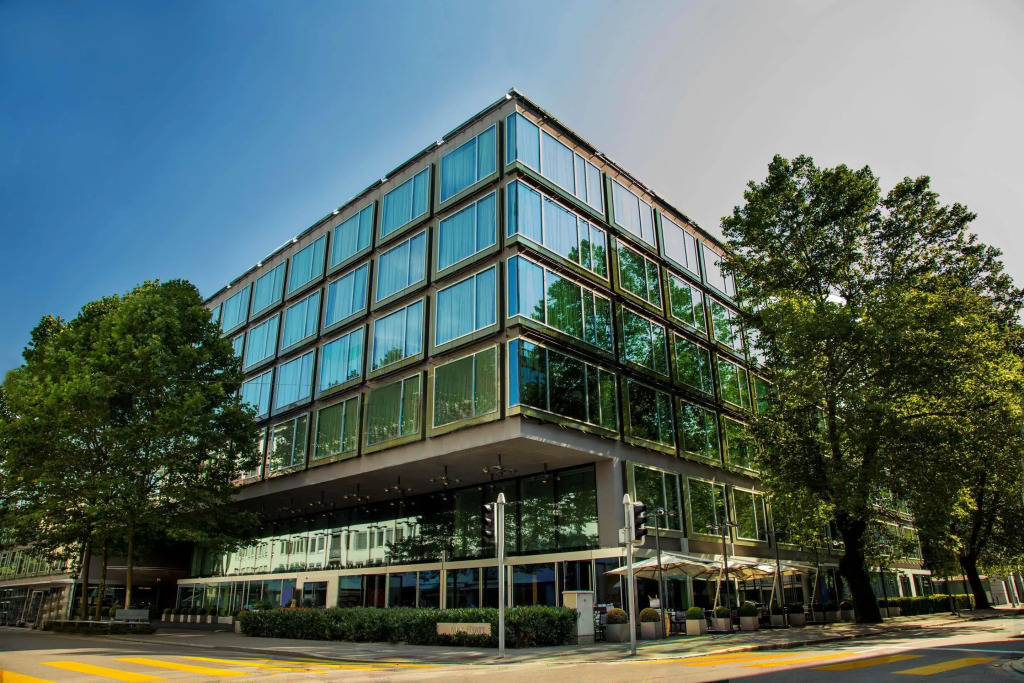
Park Hyatt Zurich
On Beethoven-Strasse in the city centre near Paradeplatz and the Fraumünster, with a spa centre, sauna, steam bath and gym.
View on TRVL ↗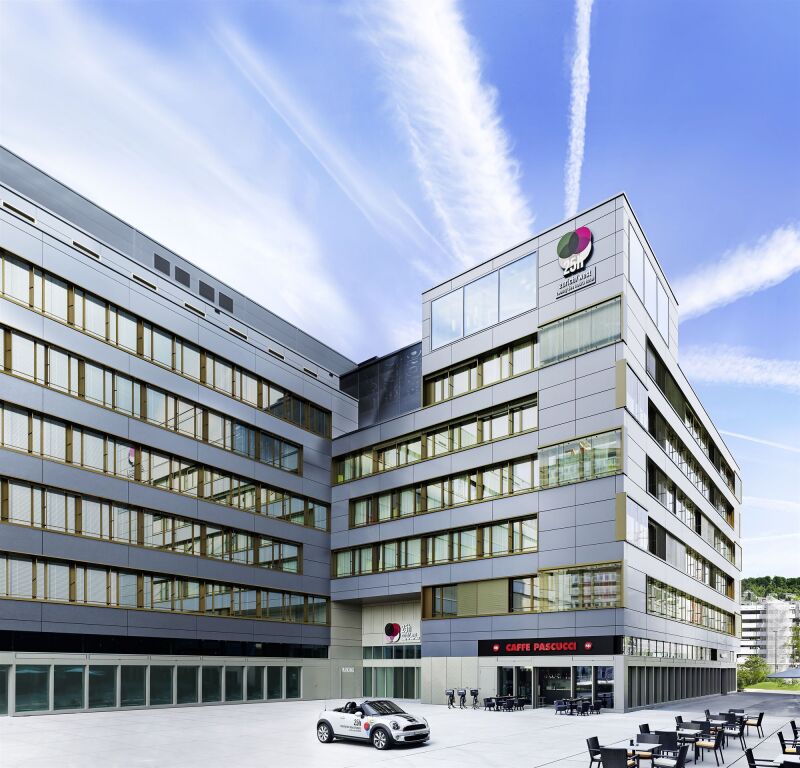
25hours Hotel Zurich
On Pfingstweidstrasse, 3 km from the city centre, with a restaurant, a bar, a sauna, a steam bath and a fitness centre.
View on TRVL ↗The Essence
Zurich rewards the traveller who follows the water. Give it a morning on the Lindenhof and among Chagall's blues in the Fraumünster, an afternoon at the Kunsthaus, a plate of Geschnetzeltes and rösti for dinner. In summer, step off a wooden deck into the lake; in December, warm your hands at a market stall in front of the Opera House. Then take the train up the Uetliberg, look back over the city and the lake, and understand why it all fits together so well.