
Tallinn keeps one of the most complete medieval towns in Europe. Its Old Town, inscribed on the UNESCO World Heritage List in 1997, still follows an exceptionally intact 13th-century plan inside its walls, and most of its buildings date from the 13th to the 16th centuries. Above it rises Toompea, a limestone hill where the Danes built a castle in 1219 and where Estonia's parliament meets today.
Step outside the walls and the city changes pace: wooden houses in Kalamaja, a former railway works turned creative quarter at Telliskivi, a baroque palace and a striking national art museum in Kadriorg, and seaplane hangars full of ships by the bay. It is compact, easy to walk, and only a ferry ride from Helsinki.
The Areas
Most of what a first-time visitor wants lies within a short walk or tram ride of the Old Town. Each area has its own character.
- The lower Old Town — the merchants' town around Raekoja plats, Town Hall Square, enclosed by the city walls, with the Town Hall, St Olaf's Church and the Town Hall Pharmacy. The obvious base for a first visit and for the Christmas market.
- Toompea, the upper town — a hill of about 7 hectares rising 20–30 metres above its surroundings, with Toompea Castle and its Pikk Hermann tower, the Lutheran St Mary's Cathedral, the Orthodox Alexander Nevsky Cathedral and viewpoints over the roofs below. Quiet in the evening and good for walkers.
- Kalamaja — northwest of the centre on the bay, its name means Fish House, and it was the city's fishing harbour for centuries. Its old working-class wooden houses make it one of the best-preserved wooden quarters in Estonia. Suits travellers who want cafés and a neighbourhood feel.
- Telliskivi — the Telliskivi Creative City occupies the former Baltic Railway Company works, where locomotives were once repaired; today it says it is home to 1,500 people at 250 companies, with shops, studios, restaurants and Fotografiska. Best for an afternoon and an evening out.
- Rotermann — a downtown quarter between the Viru Keskus shopping centre, the port and the Old Town, mixing architecture, Estonian fashion design, wine bars, coffee spots and restaurants listed in the Michelin Guide Estonia. Handy for the ferry terminals.
- Kadriorg — a green district east of the centre around the park and palace Peter the Great built for his wife Catherine, with Kumu at its edge. Calm and leafy, it suits museum lovers and families.

What to See and Do
Begin on Town Hall Square. The Town Hall was completed in 1404, on a site where a stone building stood by 1250, and is described as the oldest town hall in the Baltic Sea region and Scandinavia. On top of its spire stands Old Thomas, a weathervane in the shape of a 16th-century city guard, first placed there in 1530 and one of the symbols of Tallinn; the original is kept in the basement.
From the square, walk up to Toompea. Toompea Castle, home of the Riigikogu, Estonia's parliament, is crowned by the Pikk Hermann tower. Across the square, the Alexander Nevsky Cathedral was built between 1894 and 1900, and nearby St Mary's Cathedral, the Toomkirik, is the seat of the Estonian Evangelical Lutheran Church. The hill takes its name from the German Domberg, Cathedral Hill, and in Estonian legend it is the burial mound of the hero Kalev.
Then head east to Kadriorg. Construction of Kadriorg Palace began on 25 July 1718 for Peter the Great, to designs by Nicola Michetti, and it now houses the Kadriorg Art Museum, with foreign art from the 16th to the 20th centuries. It opens Tuesday and Thursday to Sunday 10:00–18:00 and Wednesday until 20:00; adults pay €15. A short walk away, Kumu, the main building of the Art Museum of Estonia, surveys Estonian art from the Academic style to Soviet Pop Art and contemporary work, and marks its 20th anniversary in 2026. It opens Tuesday to Sunday 10:00–18:00, Thursday until 20:00, and adults pay €16. Expedition: Finno-Ugrians and the Power of Images runs until 21 February 2027.

Kalamaja, Telliskivi and the Sea
The walk north from the Old Town follows the Culture Kilometre, a former railway embankment that became a walking trail in 2011. It passes the Patarei Prison and Sea Fortress on its way to the Seaplane Harbour, where the Estonian Maritime Museum fills seaplane hangars built in 1916–1917. The museum opened in spring 2012, and its centrepiece is the submarine Lembit, launched in 1936. Outside, eight museum ships are moored at the pier, among them the icebreaker Suur Tõll, completed in 1914, which the museum calls Estonia's oldest and most valuable museum ship.
From October to April the Seaplane Harbour opens Tuesday to Sunday 10:00–18:00, and from May to September daily until 19:00. Adults pay €22, and a combined ticket with Fat Margaret, the Maritime Museum's tower in the Old Town walls, costs €30.
Inland, Telliskivi is a short tram ride away on lines 1 or 2 towards Kopli. Its shopping streets open Monday to Friday 11:00–19:00 and Saturday 11:00–17:00. Fotografiska Tallinn, at Telliskivi 60a/8, opened in 2019; Vivian Maier: Unseen Work runs until 17 January 2027, and on Fridays the exhibitions stay open until midnight. Its sixth-floor restaurant, which received a green Michelin star in 2022, and the rooftop bar look out over the city.

What to Eat and Drink
Start with black bread. Rye bread, rukkileib, accompanies the main course and almost every savoury dish in Estonia, and it has been baked here for about a thousand years. Try it with kiluvõileib, the open sandwich of spiced, salted sprats and a slice of boiled egg that is a distinctly Estonian appetiser. For something older still, look for kama, a mix of milled, roasted pea, barley, rye and oat flours stirred into milk or buttermilk, often served as a dessert.
In winter, blood sausage and sauerkraut with oven-roasted potatoes appear on the Christmas table, and at the Town Hall Square market you will find gingerbread, cinnamon and cardamom buns and glögi, mulled wine, in alcoholic and alcohol-free versions. Kali, a drink similar to kvass, is still around too.
For the newer Nordic-Estonian kitchen, Rotermann has restaurants listed in the Michelin Guide Estonia, and Fotografiska's restaurant in Telliskivi holds a green Michelin star. In the Old Town, Wikivoyage recommends kama for dessert at Vanaema Juures on Rataskaevu, where booking is essential in high season.
Getting There and Around
From Tallinn Airport, tram T4 runs from the public transport centre at the city end of the terminal towards the centre and on to Tondi; the airport extension opened on 1 September 2017. A single QR ticket costs €2 and is valid for one hour, and you can also tap a contactless bank card on the validator inside the tram. A taxi to the Old Town costs about €7–10, and Bolt is widely used.
Tallinn is known for free public transport, but the free ride is for registered residents of the city, who have travelled free since 1 January 2013. Visitors pay. The simplest way is to tap a contactless Visa or Mastercard on the orange validator at the front door of the bus, trolleybus or tram, which buys a one-hour ticket; whatever the number of trips, you never pay more in a day than the price of a one-day ticket. Tickets are also sold at machines, at tallinn.pilet.ee and in the pilet.ee app, and the Tallinn Card includes unlimited public transport. Cash is no longer accepted on board, and riding without a valid ticket can cost a fine of up to €40. Routes and timetables are on the city's official site, transport.tallinn.ee.
From Helsinki, more than 20 ferries a day cross the Gulf of Finland, taking roughly two to two and a half hours. Tallink runs six daily departures with its shuttle ships, among them MyStar; Eckerö Line sails MS Finlandia from West Terminal T2 in Helsinki to the A-Terminal in Tallinn's Passenger Harbour; and Viking Line also serves the route. The harbour is a short walk from Rotermann and the Old Town.
When to Go
Summer is warm and light, with temperatures of 20–30°C in July and August; midsummer nights never get fully dark. In July, Medieval Days fill Town Hall Square, and from May to September the Seaplane Harbour opens every day. Spring is the driest season, while autumn tends to be rainy.
Winter is the season for the Christmas market. In 2026 it runs on Town Hall Square from 20 November to 6 January 2027, daily 10:00–20:00, with hot drinks until 22:00, and until 23:00 on Fridays and Saturdays. The lights of the main Christmas tree go on at 18:00 on 20 November, there are stalls of knitwear, socks, candles and Estonian design, carousels for children and music and folk dance at weekends. Tradition holds that the Brotherhood of Blackheads raised a Christmas tree on the square in 1441. Snow usually arrives in early December, days are short and dark, and temperatures can drop below −20°C, so pack proper layers.
Good to Know
Estonia uses the euro. Hotels, shops and restaurants widely accept Visa and Mastercard, but carry a little cash for markets and very small businesses. Mugs at the Christmas market carry a €2 deposit, refunded when you return them.
The Tallinn Card gives free entry to more than 50 museums and attractions as well as free public transport. The Tourist Information Centre is at Niguliste 2 in the Old Town, phone +372 645 7777.
Many museums close on Mondays, including Kumu, the Kadriorg Art Museum and, from October to April, the Seaplane Harbour, so plan the Old Town for that day.
Our Picks
- To seeTown Hall Square
The 1404 Town Hall with Old Thomas on its spire, and the Christmas market from 20 November 2026 to 6 January 2027.
- To walkToompea
Up the hill to the castle, the Pikk Hermann tower, two cathedrals and views over the red roofs.
- To seeKumu
Estonian art from the Academic style to today in the museum's 20th-anniversary year, open until 20:00 on Thursdays.
- To seeKadriorg Palace
Peter the Great's baroque palace of 1718, now home to foreign art from the 16th to the 20th centuries.
- To seeSeaplane Harbour
The 1936 submarine Lembit inside the hangars and the 1914 icebreaker Suur Tõll at the pier.
- To walkCulture Kilometre
The old railway embankment from the centre past Patarei Sea Fortress to the Seaplane Harbour.
- To seeFotografiska Tallinn
Vivian Maier: Unseen Work until 17 January 2027, and exhibitions open until midnight on Fridays.
- To eatFotografiska restaurant
A green Michelin star and city views from the sixth floor, with a rooftop bar alongside.
- To drinkGlögi at the Christmas market
Mulled wine, alcoholic or not, served until 22:00, and until 23:00 on Fridays and Saturdays.
Where to Stay
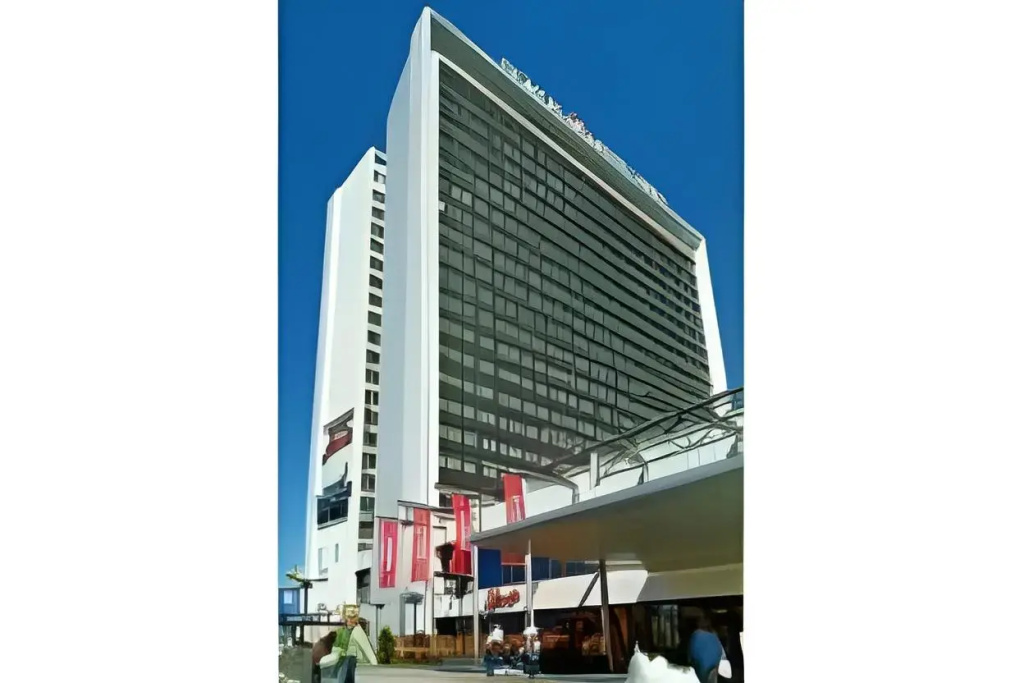
Original Sokos Hotel
Centrally located, steps from Viru Keskus and Kaubamaja, with two restaurants, three bars and spa treatments.
View on TRVL ↗
Nordic Hotel Forum
Minutes from the centre, near the Estonian National Opera and St Catherine's Passage, with an indoor pool, a sauna and a spa centre.
View on TRVL ↗
Hyatt Place Tallinn
Within walking distance of the centre, near the Port of Tallinn, the Estonian Maritime Museum and St Olaf's Church, with a bar, a restaurant and a gym.
View on TRVL ↗
Go Hotel Shnelli
About 1 km from the centre, near Tallinn Cathedral, the Alexander Nevsky Cathedral and the Danish King's Garden, with a restaurant, a café and a sauna.
View on TRVL ↗The Essence
Tallinn rewards slow walking. Climb from Town Hall Square to Toompea for the view, follow the old railway line to the seaplane hangars, spend an afternoon among the workshops of Telliskivi and a morning in the park at Kadriorg, and finish with black bread, sprats and a mug of glögi under Old Thomas. It is small enough to know in a weekend, and full enough to bring you back.