
In City Park, the outdoor pools of the Széchenyi baths stay open all winter, and have done since 1963. The baths opened in 1913, drawing on an artesian well drilled in the park in the 1870s, and on any day of the year you can swim outdoors in warm water in the middle of a capital city. That a capital city treats a hot soak as part of an ordinary week tells you a lot about Budapest.
The rest of the city is just as easy to enjoy. Buda, on the west bank of the Danube, carries the castle district and its museums; Pest, on the east bank, has the Parliament, the grand avenues, the market halls and the courtyards of the old Jewish Quarter where the ruin bars began. Spend a few days crossing the river between the two, and leave time in each day for the water.
The Areas
Budapest is divided into numbered districts, and almost everything a visitor needs sits in a handful of them close to the river. Public transport links them well, so choose by mood rather than by distance.
- District I, Buda Castle — the historic castle area on the Buda side, with Matthias Church, Fisherman's Bastion and the Hungarian National Gallery. Quiet in the evening, with views across the Danube; suits couples and anyone who likes an early start.
- District V, Belváros-Lipótváros — the downtown core on the Pest side, home to the Parliament, St Stephen's Basilica and the Danube Promenade. The most central base, and the easiest for a first visit.
- District VI, Terézváros — Andrássy Avenue and the Hungarian State Opera House. Good for theatre-goers and for anyone who wants to walk to City Park and the Széchenyi baths.
- District VII, Erzsébetváros — the old Jewish Quarter and the city's densest district, with the Dohány Street Synagogue, Gozsdu Courtyard and the ruin bars. Lively late into the night; ideal for people who want to go out, less so for light sleepers.
- District VIII, Józsefváros — larger and more residential, around the Hungarian National Museum and the Botanic Garden, with the Great Market Hall a short walk away. Good value, close to everything.
- District XIII and Margaret Island — a riverside residential district on the Pest side, and the green island in the Danube that is free to walk and reached from Margaret Bridge or Árpád Bridge. Suits families and anyone who wants green space.

What to See and Do
Start on Castle Hill. The lower terraces, balconies and stairways of Fisherman's Bastion are free at every hour of the year; only the upper towers are ticketed, at 1,700 Ft for an adult in 2026, and they too are free outside the charging hours (09:00–19:00 from October to May, 09:00–21:00 in summer). Next door, Matthias Church is a separate ticketed visit. A few minutes' walk away, the Hungarian National Gallery fills the palace at Szent György tér with Hungarian art, from late Gothic winged altarpieces to the 19th and 20th centuries. It opens Tuesday to Sunday, 10:00–18:00, with last entry at 17:00, and from 21 October 2026 to 14 February 2027 it shows Elhivatottak, an exhibition of Hungarian women artists from the first half of the 20th century.
Across the river, the Parliament on Kossuth Lajos tér can be visited only on a tour, which takes about 45 minutes including a 15-minute security check. The highlight is the Central Dome Hall, where the Holy Crown and the Hungarian crown jewels are kept under guard; photography is not allowed there. Tickets are priced differently for EU and non-EU visitors and often sell out one to three weeks ahead, so book online before you travel. From there, walk the Danube Promenade south towards the Chain Bridge, then cross it on foot to Buda.
In District VII, the Dohány Street Synagogue, consecrated in 1859 and designed by Ludwig Förster, is the largest synagogue in Europe, with nearly 3,000 seats. The ticket includes a 45-minute guided tour of the sanctuary, the Hungarian Jewish Museum, the garden and the Raoul Wallenberg Memorial Park with its Tree of Life. In November and December 2026 it opens Sunday to Thursday 10:00–16:00 and Friday 10:00–14:00, with last entry an hour before closing; it is closed on Saturdays and Jewish holidays.
For a view of the whole city, climb Gellért Hill: the park within the walls of the Citadella is free, open until midnight from April to October and until 22:00 in winter.

The Baths and the Ruin Bars
Budapest has two great ways to spend an evening, and they suit different moods. The first is the thermal baths. Széchenyi, designed by Győző Czigler and opened on 13 June 1913, calls itself the largest bath complex in Europe; its 1927 extension added a 50-metre swimming pool and two more outdoor pools. It opens daily, Monday to Thursday 7:00–20:00, Friday until 22:00, and weekends 8:00–20:00. A standard 2026 day ticket with a locker costs 13,200 Ft Monday to Thursday and 14,800 Ft from Friday to Sunday; an early ticket before 9:00 is cheaper, and an evening ticket for the last two hours costs 6,600 Ft on weekdays. A Fast Track ticket is sold online only.
On the Buda bank, Rudas has been a bath for some 450 years and still keeps a Turkish bath, alongside a wellness area and the Rudas Sky Terrace on the roof. A 2026 day ticket for all zones costs 12,000 Ft Monday to Thursday and 15,000 Ft Friday to Sunday. On Friday and Saturday nights it opens for night bathing from 22:00 to 03:00, with tickets at 15,000 Ft sold online only. The Turkish bath is single-sex on some weekdays (women on Tuesday, men on Wednesday), so check before you go.
The Gellért baths, with their Art Nouveau interiors, closed on 1 October 2025 for a long restoration and are expected to reopen in 2028. Széchenyi and Rudas are open in the meantime.
The second is the ruin bar, a format born in District VII. Szimpla Kert, at Kazinczy utca 14, started in 2002 and moved into a derelict building due for demolition in 2004, filling it with mismatched rooms, a courtyard and a gutted Trabant. Entry is free and the bar stays open until 04:00, but it is calmest in the afternoon, before about 20:00. On Sunday mornings, from 09:00 to 14:00, its courtyard becomes a producers' market, the Szimplakerti Háztáji Piac, with cheese, honey, jams, vegetables and live music.

What to Eat and Drink
The place to understand Hungarian food is the Great Market Hall on Fővám tér, at the Pest end of Liberty Bridge, which opened on 15 February 1897. Downstairs is a working market: fruit and vegetables, butchers and charcuterie, ground paprika, salami and sausages, preserves and honey, with fish, game and pickle stalls in the basement. Upstairs, the gallery has folk-art stalls and lunch counters. It opens Monday to Friday 06:00–18:00 and Saturday 06:00–16:00; Sunday hours have varied, and it is closed on public holidays, including 23 October and 1 November 2026. Entry is free.
For a snack, look for lángos and chimney cakes, both at their best in winter at the Christmas markets with a cup of mulled wine. Take home a bag of paprika from the market hall and you will cook with Budapest for months.
Getting There and Around
Flights land at Liszt Ferenc International Airport. The 100E Airport Express bus runs around the clock to Deák Ferenc tér in the centre, stopping at Kálvin tér on the way; the journey takes about 40 minutes, and buses leave every 6 to 10 minutes during the day and roughly every 30 to 40 minutes at night. The 100E needs its own airport shuttle ticket, 2,500 Ft, which you can buy and validate on board with a bank card at the Budapest Pay&GO device, in the BudapestGO app, or at ticket machines and offices. Holders of a Budapest pass can buy a 1,000 Ft add-on in the app instead. Boarding is by the front door.
In the city, metro, trams and buses run under BKK. A single ticket costs 500 Ft, a 24-hour Budapest travelcard 2,750 Ft and a 72-hour travelcard 5,750 Ft. The centre is compact, and the walk along the river or across the Chain Bridge is often the nicest way between Buda and Pest.
When to Go
Spring and autumn are the most comfortable seasons, with mild weather and fewer crowds than in July and August, when the city is hot and busy. Winter is cold, with snow possible from November to March, but it is also when the outdoor thermal pools feel best. From mid-November the Christmas markets open: the Advent Bazilika fair on Szent István tér runs from 13 November 2026 to 1 January 2027, with nearly a hundred Hungarian artisans, and last season the Vörösmarty tér market ran from mid-November to New Year's Eve. Other districts, including the Castle District and Óbuda, hold their own Advent programmes.
Good to Know
The currency is the Hungarian forint (HUF, Ft). A few places accept euros, but paying in forints is better, and most international cards are accepted for shopping and cash withdrawals. Book the Parliament tour ahead; the Széchenyi Fast Track ticket and the Rudas night bathing tickets are sold online only. Plan around the closures: the Dohány Street Synagogue shuts on Saturdays, the National Gallery on Mondays, and many places close on the national holiday of 23 October, when BKK also changes some services. The Jewish Quarter is loud at night at weekends; if you sleep lightly, stay in District V or on the Buda side and come over for the evening.
Our Picks
- To swimSzéchenyi Thermal Bath
The great bath of 1913, with outdoor pools open all winter; the evening ticket for the last two hours is the bargain.
- To swimRudas Baths
A Turkish bath some 450 years old, a rooftop terrace and night bathing on Friday and Saturday.
- To seeHungarian National Gallery
Gothic altarpieces to 20th-century painting; closed Mondays, last entry 17:00.
- To seeFisherman's Bastion
Free on the lower terraces at any hour; come early or after 19:00 and the upper towers are free too.
- To seeDohány Street Synagogue
Europe's largest synagogue, with a guided tour included in the ticket; closed on Saturdays.
- To walkGellért Hill and the Citadella park
The free viewpoint over both banks, open into the evening.
- To eatGreat Market Hall
Paprika, salami and pickles downstairs, lunch counters on the gallery; go on a weekday morning.
- To drinkSzimpla Kert
The original ruin bar; go in the afternoon, or on Sunday morning for the producers' market.
- To seeAdvent Bazilika
The Christmas fair in front of St Stephen's Basilica, 13 November 2026 to 1 January 2027.
Where to Stay
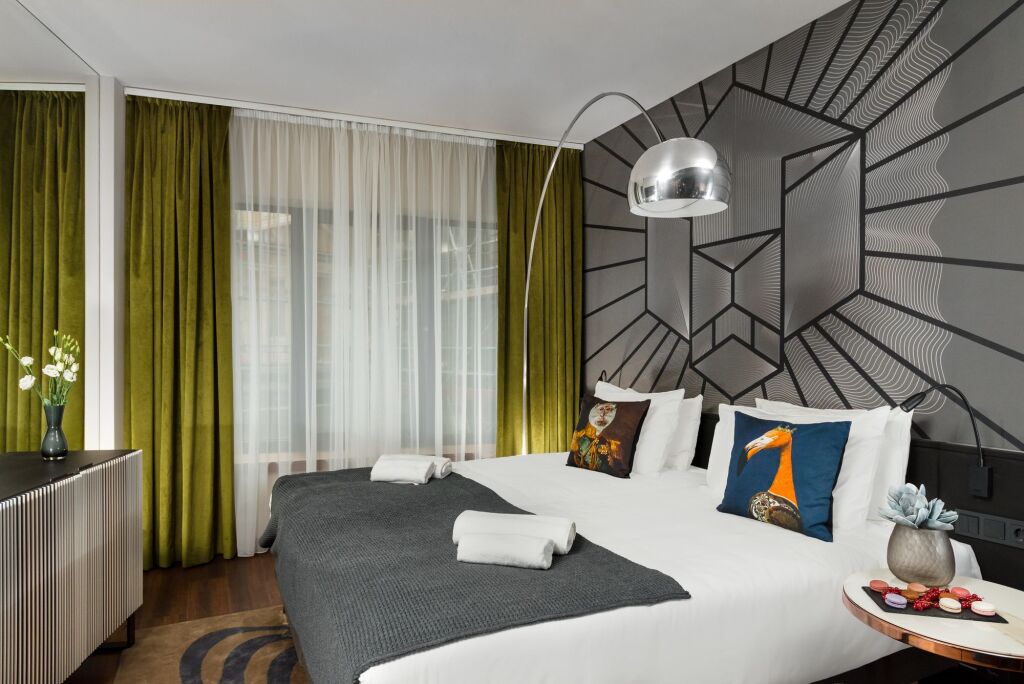
Hotel Clark Budapest
In the city centre, within a walk of Buda Castle, the Chain Bridge and Matthias Church, with a bar, a restaurant, a sauna and a gym.
View on TRVL ↗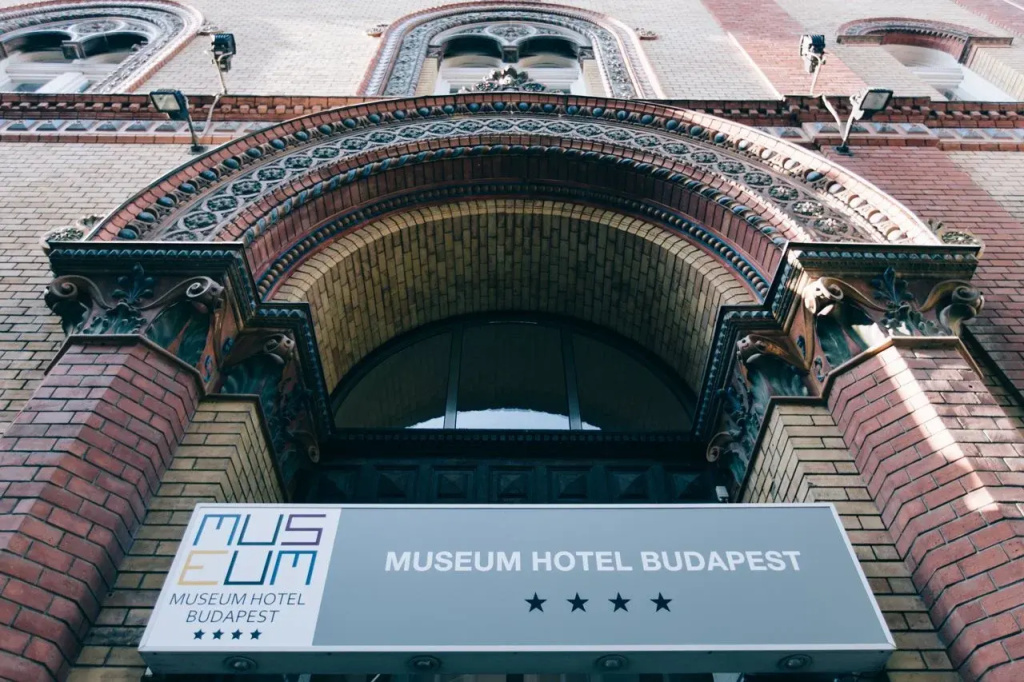
Hotel Museum Budapest
Within walking distance of the centre, near Astoria, the Hungarian National Museum and the Dohány Street Synagogue, with a spa centre, sauna and steam bath.
View on TRVL ↗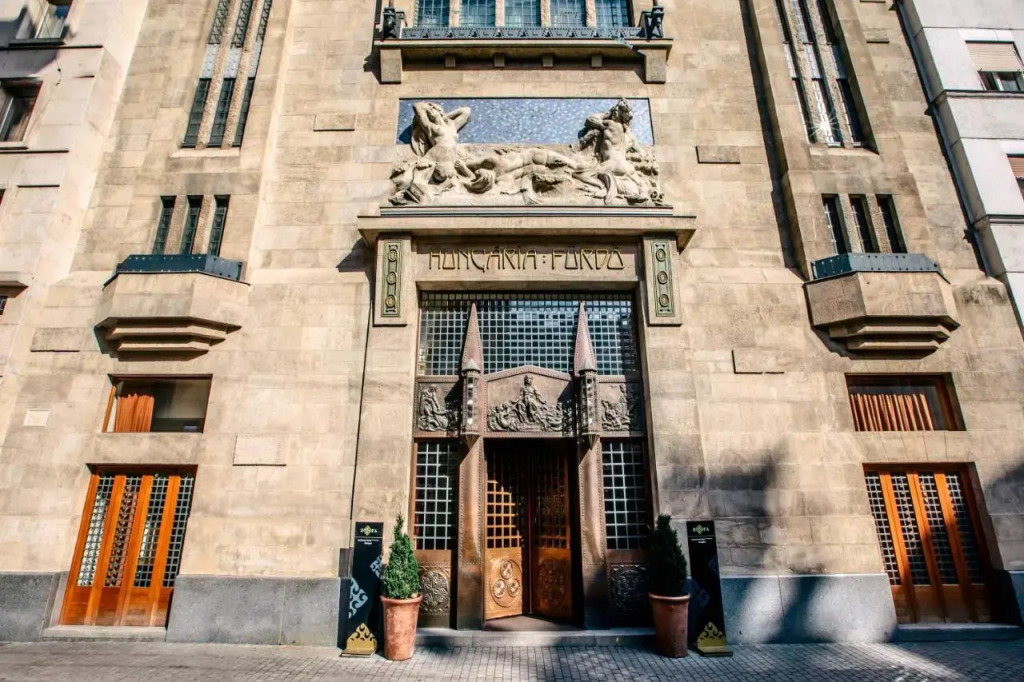
Continental Hotel Budapest
An Art Deco hotel with 272 air-conditioned rooms, a health club and a sauna, within a 15-minute walk of the Opera House and the National Museum.
View on TRVL ↗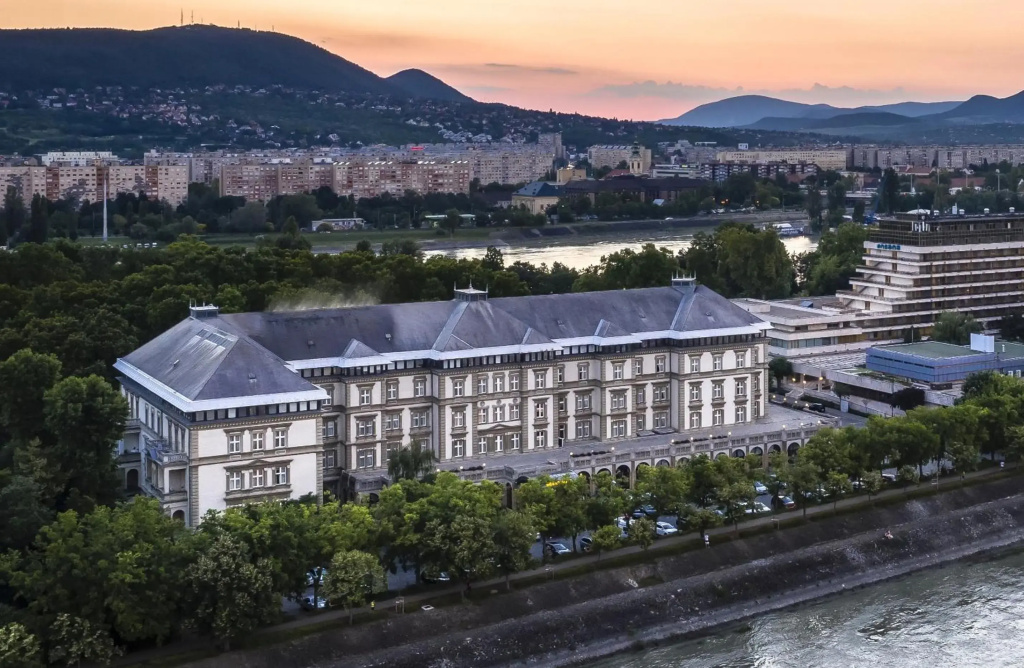
Ensana Grand Margaret
A spa hotel with 164 rooms and three indoor pools, within a 15-minute drive of the Parliament and the Széchenyi baths.
View on TRVL ↗The Essence
Budapest is a city that knows how to take its time. Climb the castle hill in the morning light, cross the river on foot, eat paprika-red sausage from a market stall, and by evening sink into warm water under an open sky, before ending the night in a ruin-bar courtyard of mismatched rooms. Few capitals make pleasure feel so ordinary, and so easy to share.