
Sifnos is a small island with a big table. Greece's tourism board singles it out for its cooking and pastry-making and for pottery that it calls an art with a living presence of centuries, and the municipality sums the place up in four words: an island of gastronomy and potters. It was the birthplace of Nikolaos Tselementes, the chef whose name became the Greek word for a cookbook, and on Sunday mornings across the island chickpeas that have cooked all night in clay pots come out of wood-fired ovens.
The island covers about 74 square kilometres and had 2,777 residents at the 2021 census, which makes it easy to know well in a week. Old stone paths tie the villages to each other and to the sea, 237 churches and monasteries are scattered over the hills, and the ferry from Piraeus runs all year. This guide is for planning a trip built around walking, swimming and eating well, ideally in spring or early autumn, when the paths are at their best.
The Areas
Apollonia, the capital, sits in the middle of the island and is the most practical base without a car. It is a protected traditional settlement with banks, pharmacies, the post office and a health clinic, and its main path, the Alley, runs through the village to Katavati past old churches, shops and places to eat and drink. It is at its liveliest on summer evenings, so it suits travellers who like to step out of the door into village life.
Artemonas, about a mile northwest of Apollonia, is the island's largest village and the terminus of every bus route. Its neoclassical houses and flower-filled courtyards line the central path, the windmills on its eastern edge are known as Bella Vista, and it has traditional bakeries, pastry shops and pottery workshops. It is a quieter, more elegant alternative to Apollonia and a fine base for anyone who wants to walk to dinner.
Kastro, on a hill above the east coast, was the island's capital from antiquity until the 19th century, and it is still lived in today. Kamares, the port on the west coast and the largest coastal settlement, about 5 km from Apollonia, has a long beach, hotels and restaurants, and is where several walking routes begin; it suits those who want everything close to the ferry.
For a beach holiday, look south. Platis Gialos has one of the largest sandy beaches on the island and plenty of rooms, restaurants and shops. Vathi, 10 km from Apollonia, is a sheltered bay with tamarisk trees, popular with families and sailors. Faros, 7 km from Apollonia, is a fishing village around a sheltered harbour, the gateway to Chrysopigi, and the quietest of the three.

What to See and Do
Give Kastro a slow morning. The village is laid out in an ellipse, with two defensive rings of houses: the wealthier families lived in the inner ring, the poorer ones formed the outer wall, and six low gateways marked the way in. Ancient columns are built into later walls and Roman sarcophagi stand in the lanes, and the ruins of the 6th-century BC acropolis crown the hill. Kastro alone has 22 churches. Below the village to the west is Seralia, the island's ancient harbour, now a small pebble beach with a few tavernas; to the east, steps lead down to the chapel of the Seven Martyrs on a rock above the sea, a favourite place to watch the sun go down.
The Archaeological Museum of Sifnos, in the centre of Kastro, holds sculpture from the Archaic to the Roman era, pottery from Kastro and coins, including a marble kouros head from the mid-6th century BC. It opens daily except Tuesdays and public holidays. South of Apollonia, the Mycenaean citadel of Agios Andreas, whose outer wall dates to the 12th century BC, won a Europa Nostra award in 2012; its small museum opens daily from 08:30 to 15:00, except Tuesdays and public holidays.
Chrysopigi, the island's patron monastery, stands on a rock split by a fissure and joined to the shore by a small bridge, with sandy Apokofto beach just east of it. It was built in the 17th century and is the focus of the biggest festival of the year (see below). On the way, the Monastery of Vrysi in Exambela, the largest on the island, from the 17th century, houses a Museum of Ecclesiastical Art. In Apollonia, the Folklore Museum on Plateia Iroon opens in the summer season.
Look out, too, for the island's ancient round towers. They were built between the 6th and 3rd centuries BC, and Blue Star Ferries counts 76 of them across the island, among them the White Tower near Platis Gialos and the Black Tower at Exambela.

Walking and the Potter's Wheel
Sifnos is one of the great walking islands of the Aegean. The municipality counts about 200 km of footpaths, the oldest dating back to the 3rd millennium BC, linking villages, churches, monasteries and beaches. They are waymarked and mapped, maintained by the municipality, the South Aegean Region, local associations and volunteers. The Sifnos Trails website sets out ten numbered routes: Route 1, The Eternal Capitals, runs 8.6 km in about three hours; Route 6, Sifnos Insiders, is the longest at 15 km and about seven hours; and Route 9, The Wuthering North, is a 45-minute stroll of 2.4 km. Printed hiking maps covering all the trails are sold at many points on the island.
One short walk sums up the south coast: from Glyfo beach beside Faros, a paved path, lit at night, runs to Apokofto and the monastery of Chrysopigi. Vathi is another good starting point, with paths over the hills from Fykiada and Platis Gialos.
The same clay underfoot made Sifnos a pottery island. Potters have worked here since the early Cycladic period, using the refractory clay that forms from the island's schist, rainwater, plentiful fuel and a mild climate. At its height the craft had its own trades, from the clay collector and mule driver to the master potter and his assistant, and Sifnian potters settled across the Cyclades and in Attica. The pots still shape the cooking: the tsikali, the mastelo dish and the skepastaria in which chickpeas are baked, and the flaros, the clay chimney pot that is the island's most characteristic piece.
The municipality lists 15 workshops, in Kamares, Artemonas and Agia Anna, Platis Gialos, Vathi, Kato Petali and on the road to Cheronisos, and many sell directly from the studio, from ovenware to decorative pieces. Buying a clay pot from the person who made it is one of the best souvenirs the Cyclades offer.

What to Eat and Drink
Revithada is the dish to plan a Sunday around. Chickpeas are baked for many hours, usually overnight, in a covered clay pot, the skepastaria, in an oven heated with branches, and the result is the centre of the Sunday table. Mastelo is the festive counterpart: lamb or goat cooked with red wine and dill in the clay dish that gives it its name, baked in a wood-fired oven and traditionally eaten at Easter. Both are served in most of the island's restaurants.
Around them come chickpea fritters, caper salad and caper dip, and local cheeses: mizithra and xinomizithra, and manoura, a hard yellow cheese matured in red wine lees. For something sweet, look for melopita, amygdalota almond sweets, anise and butter cookies, and halvadopita from the bakeries and patisseries. If you want to learn, cooking lessons in traditional Sifnian food are offered on the island.
Then there is the Tselementes legacy. Nikolaos Tselementes was born in Exambela in 1878, launched the magazine Cooking Guide in 1910 and published what is described as the first complete cookbook in Greek; his name is credited with the modern versions of moussaka and pastitsio. The island honours him with the Nikolaos Tselementes Festival of Cycladic Cuisine, held every September in Artemonas.
Getting There and Around
There is no airport, and the ferry is part of the pleasure. Boats run from Piraeus all year: conventional ferries take five to six hours and high-speed boats two to three, with more sailings in summer and seasonal links to Milos, Serifos, Paros, Naxos, Mykonos and Lavrio. The island lies about 80 nautical miles from Piraeus. Fast boats can sell out on summer weekends and holidays, so book ahead. You arrive at Kamares on the west coast.
The bus network links Kamares and Artemonas with Apollonia, Kastro, Platis Gialos, Vathi, Faros and Cheronisos. In 2026, fares are €2.20 from Artemonas to most of the island and €3.50 from Kamares to the beaches, Kastro and Faros; check the timetable at sifnosbus.gr. Taxis usually meet the ferries but can run out. Many villages are close enough to walk between, with water and a hat in summer.
When to Go
For walking, the Sifnos Trails team recommends spring and autumn; summer is too hot for long hikes, and if you do walk then, avoid the hours from noon to 4pm. Winter is possible, but expect showers, cold wind and muddy paths.
The shoulder seasons also have the best of the island's calendar. Chrysopigi's festival falls on Ascension Day, in May or June: the icon is taken by boat around the coast, then carried in procession through the villages to Apollonia. September brings the Tselementes festival in Artemonas and village feast days on 7 and 13 September, and most of the island's panigyria, the feasts held for each church's saint, take place between autumn and spring. July and August are for swimming and long evenings in Apollonia.
Good to Know
- Bring proper walking shoes: the paths are stony and much of the island is best seen on foot.
- On the trails in summer, start early, carry water and stop between noon and 4pm.
- The Archaeological Museum in Kastro and the Agios Andreas site are closed on Tuesdays.
- Revithada is a Sunday dish, so plan one lunch around it.
- At a panigyri, the meal of chickpeas, braised meat, wine and violin and lute music is shared at long tables until everyone has eaten.
- There is no airport: plan around the Piraeus ferry, and book fast boats ahead in summer.
- Leave room in your bag for a clay pot.
Our Picks
- To seeKastro
The old capital in two rings of houses, with ancient columns in the walls and Roman sarcophagi in the lanes.
- To seeArchaeological Museum of Sifnos
Archaic to Roman sculpture, Kastro pottery and a 6th-century BC kouros head; closed Tuesdays.
- To seeAgios Andreas
A Mycenaean citadel with a 12th-century BC wall and a small museum, open 08:30 to 15:00 except Tuesdays.
- To seePanagia Chrysopigi
The 17th-century monastery on a split rock, joined to the shore by a small bridge.
- To walkGlyfo to Chrysopigi
A paved coastal path, lit at night, to Apokofto beach and the monastery.
- To walkRoute 1, The Eternal Capitals
8.6 km and about three hours, one of the ten numbered routes on the official network.
- To swimVathi
A sheltered sandy bay with tamarisks and pottery workshops, 10 km from Apollonia.
- To swimApokofto
Fine sand in a quiet bay looking towards the monastery.
- To eatSeralia
The ancient harbour, now a pebble cove with a few seafood tavernas.
Where to Stay
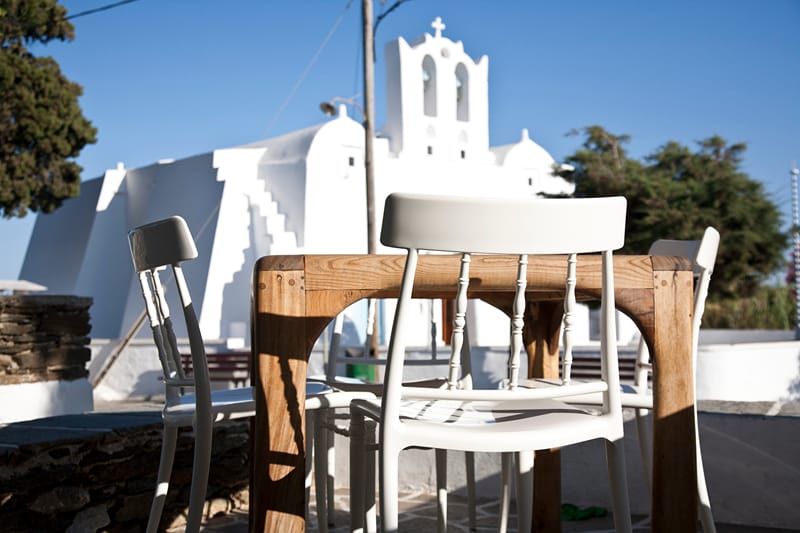
Smaragdi Hotel Sifnos
A boutique stay on the main square of Artemonas, designed with a refined Cycladic aesthetic, with breakfast of fresh local flavours and its own restaurant.
View on TRVL ↗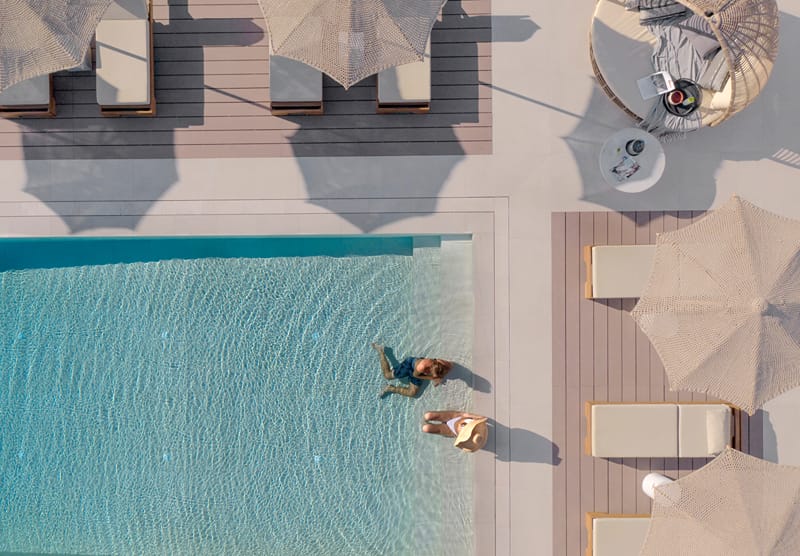
Nival Boutique Hotel
A newly built hotel with minimal decoration, earthy colours and natural materials, close to the village centre, with a pool and views of Apollonia.
View on TRVL ↗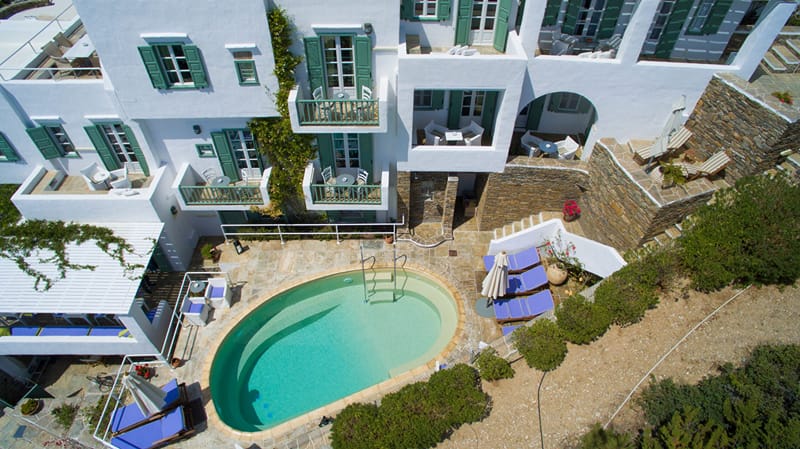
Niriedes Hotel Sifnos
A small hotel built in a romantic style on the left side of the Platis Gialos bay, with Aegean views from the private veranda of each suite.
View on TRVL ↗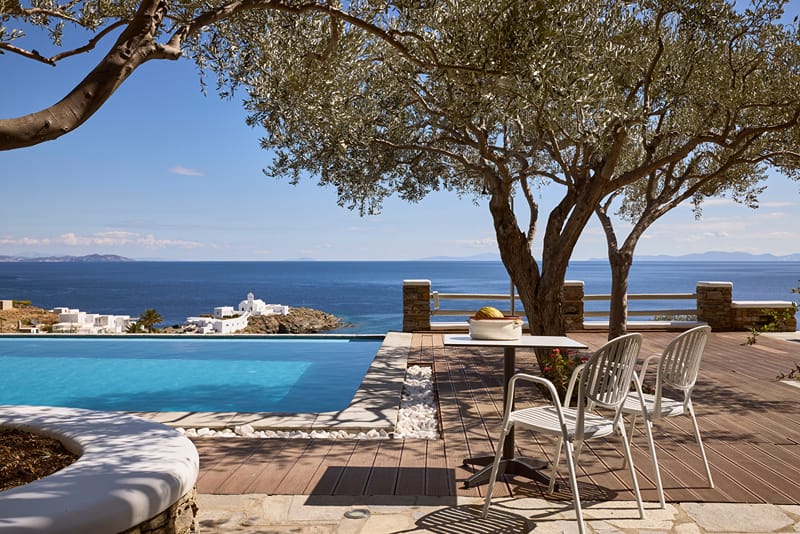
Selana Suites Sifnos
A stone-built boutique hotel in an olive grove with a seawater infinity pool and a view of the Aegean framed by the Monastery of Chrysopigi.
View on TRVL ↗The Essence
Sifnos rewards the traveller who likes to earn lunch. Walk the old paths from Apollonia to Kastro, swim at Vathi or below Chrysopigi, buy a pot from the potter who threw it, and sit down on a Sunday to a revithada that has been in the oven since the night before. Come in May, when the paths are green and Chrysopigi's icon goes to sea, or in September, when Artemonas cooks in Tselementes' honour, and you will see why a small island gave Greece its best-known cookbook.