
Salzburg is a city that performs. Every summer since 1920, Hugo von Hofmannsthal's Jedermann has been played in the open air on Cathedral Square in front of more than 2,500 people, and the festival's founders described the place in one phrase: the whole city is a stage. The Baroque Old Town on both banks of the Salzach has been a UNESCO World Heritage Site since 1996, and it holds around 1,000 historic buildings in about 236 hectares.
Mozart was born here, in a house on Getreidegasse, and the city still keeps time with him. But Salzburg is just as good at the smaller pleasures: a Melange at a marble table, a stone mug of beer drawn from a wooden barrel, a Salzburger Nockerl big enough to share, an Advent market under the fortress. This guide is about how to enjoy all of it well.
The Areas
The Salzach divides the centre in two. The Old Town proper sits on the left bank under the Mönchsberg and the fortress; the right bank has its own old streets at the foot of the Kapuzinerberg. Almost everything is walkable.
- Altstadt (left bank) — Getreidegasse, Mozart's Birthplace, the Cathedral, Residenzplatz and the Christmas market, with the fortress above. Best for a first visit and short stays, when you want to step straight out into the sights.
- Right bank: Linzergasse and Steingasse — Linzergasse runs from the Platzl by the Staatsbrücke towards Schallmoos with boutiques and restaurants, while Steingasse, one of the oldest streets on this side, follows the river under the Kapuzinerberg. Good for repeat visitors and anyone who likes a walk up a hill before breakfast.
- Mirabell and the Neustadt — the area between Mirabell Gardens, Makartplatz and the station, with the Mozart Residence, St Andrew's Church and its Thursday market. Practical for arrivals by train and for travellers who want the Old Town within walking distance.
- Nonntal and Mülln — two quieter quarters close to the centre: Nonntal, just south of the Old Town, and Mülln, at the northern end of the Mönchsberg, with the Augustiner brewery. Suits travellers who like a neighbourhood feel close to the centre.

What to See and Do
Start at Hohensalzburg Fortress, begun in 1077 under Archbishop Gebhard and described by the tourist board as the largest fully preserved castle in Central Europe. The fortress railway has run up from Festungsgasse since 1892. Inside are the Fortress Museum and the Prince's Rooms, furnished in 1501/02. An All-Inclusive ticket with the railway was €19.20 for adults in the most recent published prices.
Mozart's two houses tell two chapters of his life. He was born on 27 January 1756 at Getreidegasse 9, where the family lived on the third floor from 1747 to 1773; the museum holds his violin and clavichord as well as letters and portraits, and opens daily 09:00–17:30. In 1773 the family moved across the river to the Mozart Residence at Makartplatz 8, with Mozart's pianoforte and, in the courtyard, the small wooden house in which he is said to have composed The Magic Flute. A combined ticket for both costs €25.
Getreidegasse itself is worth slowing down for. Wrought-iron guild signs hang over the shopfronts, and the Wieber metalworkers still make them by hand. Look for the through-houses, passages to the next street; the Schatz House runs from No. 3 to Universitätsplatz.
Salzburg Cathedral, consecrated in 1628, was the first early Baroque church north of the Alps, designed by Santino Solari. Mozart and Joseph Mohr, who wrote the words of Silent Night, were both baptised in its bronze font of 1311; admission is charged. Next door, St Peter's Abbey is considered the oldest monastery still in existence in the German-speaking world.
Across the river, Mirabell Palace was built in 1606 by Prince-Archbishop Wolf Dietrich for Salome Alt. Its Marble Hall, where the young Mozart and his sister Nannerl performed, is now a wedding hall, and the gardens, with the Pegasus fountain from The Sound of Music, are free and open daily from early morning. For views, take the Mönchsberg lift up to the Museum der Moderne.
Keep a day for the mountains and lakes. The Untersbergbahn, about 10 kilometres south and reached by bus 25, climbs to 1,776 metres in under ten minutes. In the Salzkammergut, the Schafberg cog railway has run from St. Wolfgang to the summit since 1893, a 40-minute ride. Hallstatt, on its fjord-like lake, is part of the Hallstatt Dachstein Salzkammergut World Heritage landscape: see the painted skulls in the charnel house and the Skywalk 360 metres above the rooftops. Guided bus tours from the city go via Fuschl, St. Gilgen and Bad Ischl.

The Festival and Advent
The Salzburg Festival was founded by Max Reinhardt, Hugo von Hofmannsthal and Richard Strauss and has run every July and August since 1920. Jedermann on Cathedral Square sells out every year. You do not need a ticket to feel it: the free Fest>Spiel>Nächte screenings on Kapitelplatz show selected productions on a large outdoor screen. The 2027 summer festival runs from 16 July to 29 August, with the Whitsun festival from 14 to 17 May.
In winter the city turns to Advent. Salzburg Advent Singing began in 1946, when the musician Tobias Reiser invited friends to a carol concert, and it has been held in the Grosses Festspielhaus since 1960. Silent Night was first performed on 24 December 1818 in Oberndorf near Salzburg. The 2026 market dates published by the organisers and the tourist board:
- Salzburger Christkindlmarkt, Domplatz and Residenzplatz — 19 November 2026 to 1 January 2027, Monday to Thursday 10:00–20:30, Friday until 21:00, Saturday 09:00–21:00, Sundays and holidays 09:00–20:30; in its current form since 1974.
- Hellbrunner Adventzauber, Hellbrunn Palace — 19 November to 24 December, Tuesday to Friday 13:00–20:00, weekends and 8 December from 10:00; €8 until 19:00 with a hot drink included, free after 19:00.
- Fortress Advent, Hohensalzburg — 27 November to 20 December, on Advent Fridays, Saturdays and Sundays plus 7 and 8 December; free if you walk up and mention the Advent market at the ticket desk.
- Mirabellplatz — 19 November to 31 December, Sunday to Thursday 10:00–20:00, Friday and Saturday until 21:00.
- Sternadvent, Sternbräu courtyard between Getreidegasse and Griesgasse — 19 November 2026 to 6 January 2027, carrying on after Christmas as a winter market.

What to Eat and Drink
Café Tomaselli on the Alter Markt, which the tourist board calls the oldest coffee house in Austria, has been run by the Tomaselli family for more than 150 years; order an Einspänner or a Melange. Hofmannsthal and Reinhardt are said to have sketched the idea for the Festival at its tables. On the same square, the Fürst confectionery has been making the Original Salzburger Mozartkugel to Paul Fürst's 1890 recipe: a marzipan and pistachio centre wrapped in nougat and dipped in dark chocolate. Café Bazar on the right bank, open since 1882, has a terrace looking across the river to the fortress.
The Salzburger Nockerl is the city's dessert, a sweet egg-white soufflé baked in three peaks said to stand for the Mönchsberg, the Kapuzinerberg and the Gaisberg. It should stay soft inside and often comes with raspberry sauce or lingonberry jam. The tourist board lists the St Peter Stiftskulinarium, Gasthof Goldgasse, the Bärenwirt, Café Mozart and the Sternbräu among the places that serve it, and Café Sacher on the right bank brings it out on a serving trolley. For something quicker, try a Bosna, Salzburg's street-food classic: two grilled sausages in a white roll with mustard, onions and curry powder.
Then there is beer. The Augustiner Bräustübl in Mülln is Austria's largest beer inn, with five halls and a big garden under chestnut trees. Take a half-litre or litre stone mug from the shelf, rinse it at the fountain, pay at the till and hand over your voucher at the counter, where the beer is drawn from wooden barrels. The lights go out at 23:00.
For markets, the Grünmarkt on Universitätsplatz opens Monday to Saturday, and the Schranne, held in front of St Andrew's Church every Thursday morning since 1906, has about 190 stalls.
Getting There and Around
Salzburg Airport is close to town. Bus 2 runs daily to the Hauptbahnhof every 15 to 20 minutes and takes about 23 minutes; bus 10 runs Monday to Saturday every 15 minutes to the city centre in about 15 minutes.
By rail, the Western Railway links Salzburg with Linz and Vienna, and the line through Rosenheim connects it with Munich. From Vienna Airport there are direct trains to Salzburg in just under three hours; from Munich Airport, allow about two and a half hours by train via München Ost.
If you stay overnight anywhere in the province of Salzburg, you will be given the Guest Mobility Ticket at check-in: free travel on all public transport in the province, trains included, for the length of your stay. It is paid for by a mobility fee of €0.50 per person per night for guests aged 15 and over, rising to €1.10 from 1 May 2027. The Mönchsberg lift is not included. Since 1 July 2026 the Old Town has been largely closed to regular traffic, so leave the car at a Park & Ride.
When to Go
Salzburg has two high seasons. July and August belong to the Festival, when the city is full and the stages are lit every night; book early. From the second half of November until early January the Advent markets fill the squares and the Advent Singing fills the Grosses Festspielhaus. Spring and early autumn suit the outdoors: the Hellbrunn trick fountains and the Schafberg railway run from April.
Good to Know
- The Salzburg Card gives one free entry to most sights, including the fortress, both Mozart museums, the Mönchsberg lift, Hellbrunn and the Untersberg cable car, plus city public transport (not the S-Bahn). In 2026 it costs €35, €41 or €44 for 24, 48 or 72 hours from November to March, and €38, €45 or €49 from April to October; children aged 6 to 15 pay half.
- Salzburg Cathedral cannot be visited during services or the midday music.
- The Untersbergbahn is closed for maintenance from 2 November to about 13 December 2026, then opens 09:00–16:00 from 14 December. A return ticket costs €34 for adults.
Our Picks
- To seeHohensalzburg Fortress
The Golden Hall and the view from the keep; on Advent weekends it stays open until 18:00.
- To seeMozart Residence
Mozart's pianoforte and the Magic Flute house in the courtyard; allow an hour and a half.
- To seeSt Peter's Cemetery and Catacombs
Rock-cut early Christian chambers in the fortress hill, open daily.
- To walkKapuzinerberg
A short climb past the little church of St Johann am Imberg to one of the best views of the fortress.
- To drinkCafé Tomaselli
A Melange and a slice from the cake lady's tray, in the oldest coffee house in Austria.
- To drinkCafé Bazar
Breakfast with two eggs in a glass and the fortress across the water.
- To drinkAugustiner Bräustübl
Beer from wooden barrels in stone mugs, with food from the stalls of the Schmankerlgang.
- To eatSt Peter Stiftskulinarium
It traces its history back to 803, and it is one of the places to order a Salzburger Nockerl.
- To eatStiftsbäckerei St. Peter
Sourdough bread still baked in the wood-fired oven, beside the mill wheel on the Almkanal.
- To shopCafé-Konditorei Fürst
The Original Salzburger Mozartkugel, made to Paul Fürst's 1890 recipe.
Where to Stay
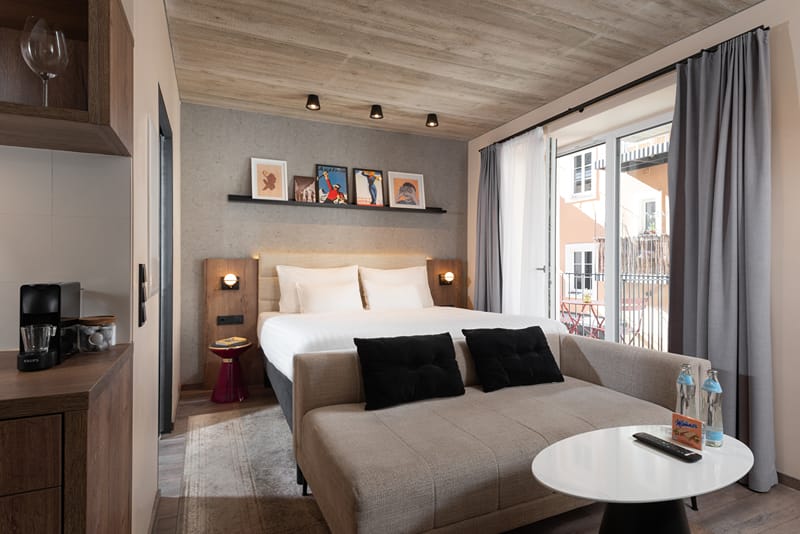
master Linzergasse Salzburg
Serviced apartments at the entrance to the old city, with 21 rooms for two to four guests, each with a coffee machine.
View on TRVL ↗
NH Collection Salzburg
A hotel near the city centre, close to St Sebastian's Church, the Kapuzinerberg and Mirabell Palace, with a sauna, spa centre and fitness centre.
View on TRVL ↗
The Cloud One
A five-star hotel on Rainerstrasse, about a kilometre from the centre and near Mirabell Palace and the Mozart Residence, with a bar, a restaurant and a concierge.
View on TRVL ↗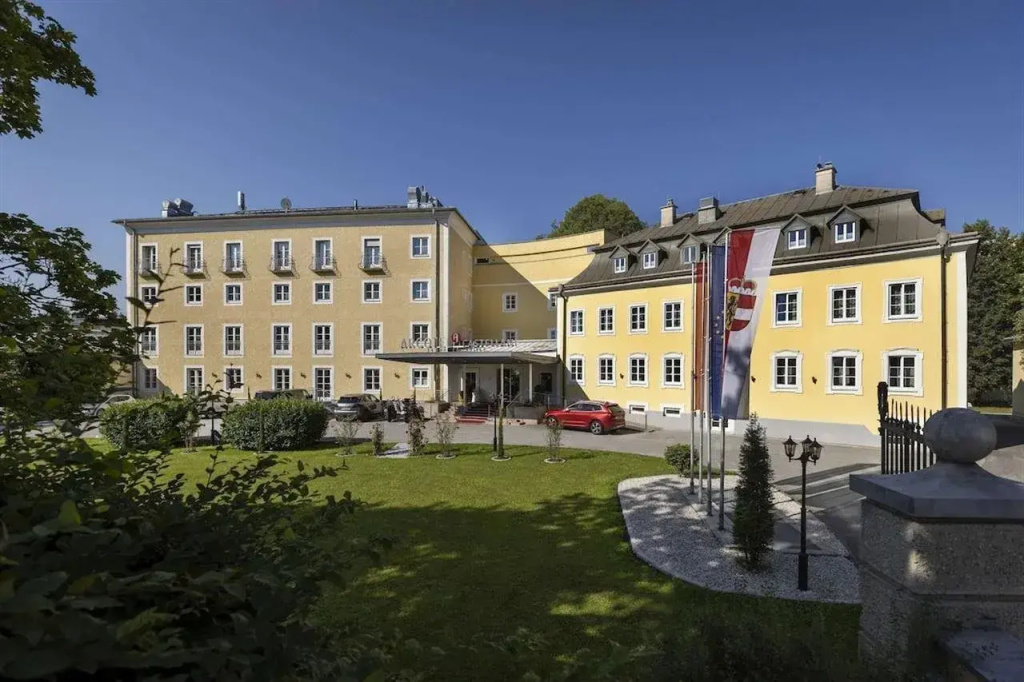
ARCOTEL Castellani Salzburg
Near the city centre, within walking distance of Nonnberg Abbey, Hohensalzburg Castle and Mozartplatz, with a restaurant, a bar, a steam bath and a library.
View on TRVL ↗The Essence
Salzburg rewards the traveller who lets it set the rhythm. Ride up to the fortress in the morning, take a Melange at Tomaselli at noon and a Nockerl in the evening, and end the day in Mülln with a stone mug in your hand. Come in summer for Jedermann on the square, or in December for the markets under the cathedral, and keep a day for the lakes and the mountains beyond.