
Cartagena starts the day with an arepa de huevo, a corn arepa split open, filled with an egg and fried, and ends it on top of its own walls, with the Caribbean turning dark beyond the stone. In between are balconied streets inside some 11 kilometres of fortifications, a 17th-century fortress riddled with tunnels, and a string of coral islands about 20 kilometres offshore that most boats reach in an hour or less.
The old town has been a UNESCO World Heritage Site since 1984, and it is compact enough to learn on foot in a day or two. The rest of a trip is about rhythm: early mornings for walking, long lunches out of the sun, a day on the water, and evenings when the heat finally eases. This guide covers where to base yourself, what to see, how to get in from the airport, and the paperwork and common sense that make a visit easy.
The Areas
The Ciudad Amurallada, the walled city, is where most visitors want to be, and where most of the restaurants, bars and small hotels are. It takes in several neighbourhoods, each with its own pace.
Centro is the formal heart, entered through the Puerta del Reloj, the Baroque clock gate built between 1704 and 1738. Inside are the Plaza de Bolívar, the Palace of the Inquisition and the church of San Pedro Claver, with colonial, republican and Italianate buildings side by side. It suits first-time visitors who want to step out of the door and be among the sights.
San Diego takes its name from a former convent that now houses a fine arts university, and it is home to Santo Toribio, the last church built inside the walls. It is a little quieter than Centro and still a short walk from everything, which makes it a good base for couples and anyone who likes to wander back for an afternoon rest.
Getsemaní lies just south of the old walled core. Once known for crime, it has become one of the city's most popular neighbourhoods, with small hotels, reclaimed plazas and street art that is now the subject of graffiti tours. It suits travellers who want evenings out and a more local feel, though a street-smart approach after dark is wise.
Bocagrande is the other Cartagena: a peninsula of towers between Cartagena Bay and the Caribbean, with most of the city's large hotels, shops, restaurants and nightclubs, and Avenida San Martín as its main street. It suits families and anyone who wants a pool, a beach on the doorstep and a short taxi ride into the old town.

What to See and Do
Start with the walls themselves. Built between 1614 and 1796, they wrap around the historic centre for about 11 kilometres, and walking a stretch of them in the late afternoon is the simplest way to understand how the city fits together, with the sea on one side and the rooftops on the other. Las Bóvedas, a row of vaults attached to the walls by the Santa Catalina fortress, is a good place to end up, with views over the Caribbean from the top.
Inside the walls, the Palace of the Inquisition on the Plaza de Bolívar was completed in 1770 and is now the Museo Histórico de Cartagena; the museum describes the building as the finest example of 18th-century civil architecture in the city. A few streets away, the church of San Pedro Claver was built between 1580 and 1654, and the body of the saint lies beneath its main altar.
Outside the walls, the Castillo San Felipe de Barajas rises on the hill of San Lázaro, around 41 metres above sea level and about a 20-minute walk from the centre. Its main construction dates from 1639 to 1657, it was expanded in the 18th century, and it was built by enslaved African labour under Spanish direction. It is one of the largest Spanish fortresses in the Americas, and part of its maze of tunnels is open to visitors.
Higher still, the Convento de la Popa crowns the hill of the same name. The first chapel went up in 1607, and the convent of Nuestra Señora de la Candelaria followed soon after. Take a taxi up and agree the round-trip price before you set off rather than walking the road.

The Islands and Barú
Cartagena's beaches in the city are fine for a swim, but the water trips are what people remember. The Islas del Rosario lie about 20 kilometres off the coast, a scatter of small islands with names like Tesoro, Rosario, Múcura and Maravilla, set within the Corales del Rosario national natural park, which protects a large coral reef and was founded in 1988. Isla Rosario has an aquarium and an open-sea oceanarium that many day trips include.
Most of the islands can be reached in an hour or less from the city docks. The Muelle de la Bodeguita is the main departure point for boats to the islands and to Playa Blanca, the beach on Barú, often called the best near Cartagena. Larger tour boats are cheaper but slower, partly because they stop at the aquarium first.
Two things to check before you pay. Harbour tax and national park entry are often not included in the advertised tour price, so ask what the total is. And on Playa Blanca, politely decline the free oyster tasting from beach vendors, which can arrive with a bill attached. Bring cash, a hat and more water than you think you need.

What to Eat and Drink
Breakfast on the coast means the arepa de huevo, a Caribbean speciality in which a cooked arepa is split open, filled with raw egg and fried again.
For lunch, look for a corriente, the set meal of the region: fried fish or meat with coconut rice, patacones (fried green plantain) and a little salad. Coconut also flavours much of the rice on the coast, and the national tourism board points to arroz con chipi chipi, made with small clams, pork loin in tamarind sauce and shrimp cream as dishes to try.
Ceviche suits the heat perfectly; La Cevichería on Calle Stuart in San Diego is built around it. To drink, start with fresh fruit juices, which Colombians order at home and in restaurants alike and which cost little. Ask for lulo or guanábana if you have not had them before.
Getting There and Around
Rafael Núñez International Airport sits in the Crespo neighbourhood in the north of the city, about 3 kilometres from the old town and around ten minutes by car. Take a taxi from the official rank outside arrivals, use an app or ride arranged through your hotel; the UK government advises against hailing taxis on the street in Colombia.
Cartagena's taxis do not use meters, so agree the fare before you get in; night and air-conditioning surcharges can apply. Within the walled city and Getsemaní, walking is the best way around. The Transcaribe bus system, running since 2015, links the wider city, but most visitors rarely need it.
Boats to the islands and Barú leave from the Muelle de la Bodeguita, and Barú can also be reached overland via Pasacaballos.
When to Go
Cartagena is hot all year, with average temperatures around 27 to 30°C, afternoon highs around 32°C and humidity of about 80 percent. What changes is the rain. The dry season runs from December to April, and Colombia's tourism board names late November to late April as the best time to visit, when sea breezes make the air feel fresher. September and October are usually the wettest months.
Two dates fill the calendar: the Cartagena International Film Festival in March, and the independence celebrations around 11 November. Whenever you go, plan walking for early morning and late afternoon and keep the middle of the day for shade, lunch and a swim. Hurricanes and tropical storms can affect Colombia's Caribbean coast, so check local weather reports if you travel in the wetter months.
Good to Know
- Entry — Citizens of Spain and the UK, among others, do not need a visa for tourism and can usually stay up to 90 days, extendable to a maximum of 180 days a year; check the rules for your own passport with the Colombian foreign ministry or your government's travel advice before booking.
- Documents — Carry a return or onward ticket; Colombian immigration recommends at least six months' validity on your passport, and a yellow fever certificate if you arrive from a country with transmission risk.
- Check-Mig — The online migration form can be filled in between 72 hours and one hour before travel and can speed up arrival.
- Safety — The UK's advice against all but essential travel covers only the southern part of Bolívar department, not Cartagena; in the city, keep valuables out of sight, use ATMs inside banks or shopping centres during the day, and never accept drinks or food from strangers.
- Money — The currency is the Colombian peso (COP), in notes from 2,000 to 100,000 pesos and coins up to 1,000; keep small notes for taxis, juices and boat extras.
- Tipping — In restaurants the propina is voluntary by law and the bill must say so; many add a suggested 10 percent, which you may accept or decline.
- Emergencies — Dial 123 for the national emergency line.
- Heat — Drink plenty of water, wear a hat and high-factor sun cream on boat days, and pace sightseeing around the midday sun.
Our Picks
- To seeCastillo San Felipe de Barajas
The largest of the city's fortresses, with tunnels you can walk; go early, before the heat builds.
- To seeMuseo Histórico de Cartagena
The city's story in its finest 18th-century civil building; Monday to Saturday 9am to 6pm, Sundays and holidays 10am to 4pm.
- To seeIglesia de San Pedro Claver
A church built between 1580 and 1654, with the saint's body beneath the main altar.
- To seeConvento de la Popa
A convent founded in the early 1600s on the hill above the city; go by taxi and agree the fare first.
- To walkThe city walls and Las Bóvedas
About 11 kilometres of ramparts; walk a stretch at sunset and finish at the vaults by Santa Catalina.
- To eatLa Cevichería
Ceviche in the old town, open daily from noon to 11pm.
- To swimIslas del Rosario
Coral islands about 20 kilometres offshore, most within an hour by boat; check that park entry is in the price.
- To swimPlaya Blanca
The beach on Barú often called the best near the city; skip the free oysters.
Where to Stay
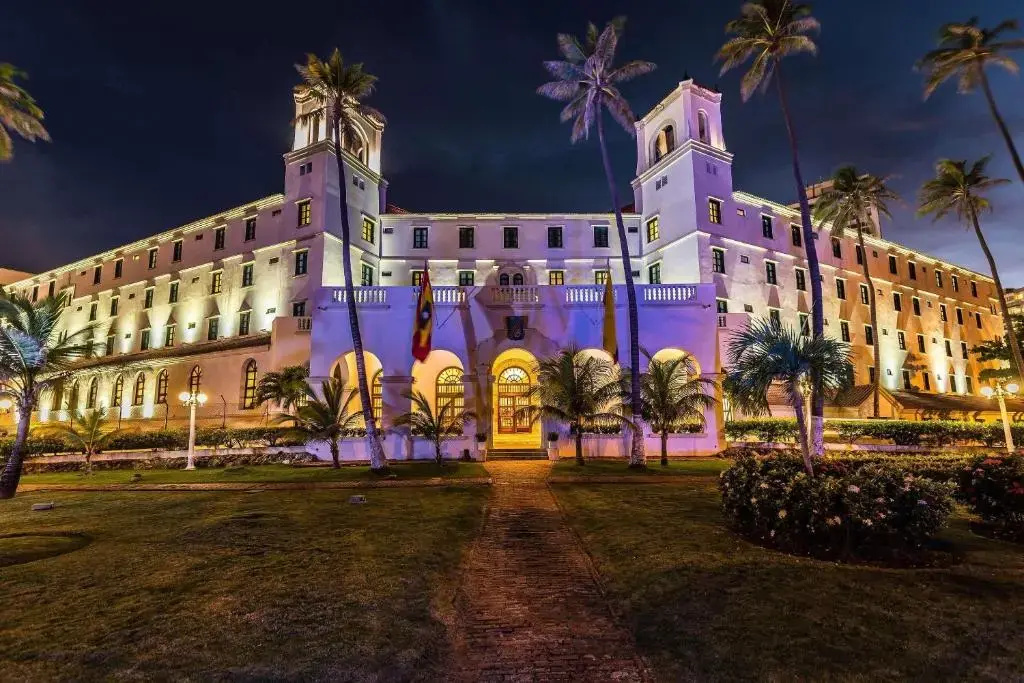
Hotel Caribe Cartagena
Near Bocagrande and Castillo Grande beaches, with a spa and hammam, an outdoor pool, a restaurant, a bar and a tour desk for booking excursions.
View on TRVL ↗
Capilla del Mar
Close to Bocagrande Beach, with a restaurant of international dishes, Colombian coffee at the bar, a spa with sauna and an outdoor pool.
View on TRVL ↗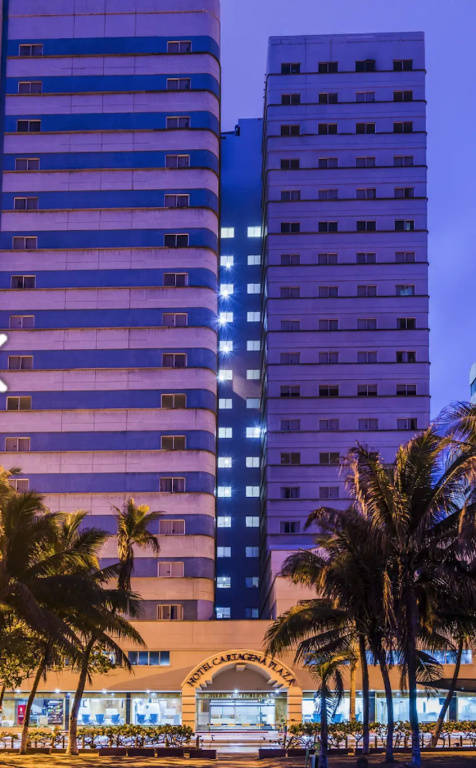
Hotel Cartagena Plaza
By Bocagrande Beach, with indoor and outdoor pools, a sauna and spa, a gym, a children's playroom and a tour desk.
View on TRVL ↗
Estelar Cartagena de Indias
Near Bocagrande and Castillo Grande beaches, with a spa, a fitness centre, an outdoor pool, a restaurant and a bar.
View on TRVL ↗The Essence
Cartagena rewards the traveller who keeps its hours: an arepa de huevo before the heat, the cool of a church or a museum at midday, a glass of lulo juice in the shade, a morning boat to the Rosario Islands, and a slow walk along the walls as the light goes. Come in the dry months, give it four or five days, and the city and its sea will keep you busy for every one of them.