
Oslo sits at the head of a long fjord, with forest on the hills behind it and islands scattered in the water in front. Over the last two decades the city has turned its old docks and container quays into a waterfront you can walk for kilometres: the Fjord City project runs from Bygdøy in the west to Ormøya in the east, taking in Aker Brygge, Tjuvholmen, Bjørvika and the area around the central station. Along that line you will find an opera house you can climb, two major art museums, floating saunas and swimming spots a few minutes from the office towers.
It is a city that rewards an easy pace. Take the metro up to Holmenkollen for the view, catch a ferry to an island for an afternoon, spend a morning with Munch and an evening on the harbour. Summer brings light until close to midnight; winter brings snow on the hills, Christmas fairs and long, warm evenings indoors. Either way, bring a good jacket and a bathing suit.
The Areas
Most of what a visitor needs lies within a short walk or tram ride of the harbour. Each district has its own character.
- Sentrum — the downtown core, with the main sights, restaurants and hotels and the harbour from City Hall to the Opera House. Karl Johans gate, planned as the avenue linking the Royal Palace and the city, runs through it, and the medieval Akershus Fortress stands above the water. The most practical base, especially near Oslo S, the central station.
- Aker Brygge and Tjuvholmen — the former shipyard quays west of City Hall, now a district of restaurants, bars and apartments a short walk from Karl Johan. Tjuvholmen, a peninsula reaching out from Aker Brygge, takes its name from the thieves who were once executed there; today it holds the Astrup Fearnley Museum, a sculpture park created by Renzo Piano and an outdoor bathing area at its tip. Good for evenings by the water.
- Bjørvika — the new waterfront east of the station, home to the Opera House and MUNCH, and to floating saunas on the harbour. Ideal if culture and the fjord are the point of your trip.
- Grünerløkka — a traditionally working-class district along the Akerselva river, where factories once used the river's power. It has been steadily gentrified since the late 20th century and is now the nightlife and creative hub of the inner east, with Olaf Ryes plass, a pedestrian park square, at its heart. Best for cafés, bars and a younger crowd.
- Frogner — the elegant west, with Vigeland's sculptures in Frogner Park, high-end shopping and dining, and easy access to the museums of Bygdøy. Calm, residential and good for families.

What to See and Do
Begin in Bjørvika at the Opera House. Designed by the Norwegian firm Snøhetta, which won a competition with 350 entries, it opened with a gala on 12 April 2008. Its sloping roof of white granite and Italian Carrara marble runs down to ground level, so you can simply walk up it for a view across the city and the fjord.
Next door, MUNCH, at Edvard Munchs plass 1, spreads its exhibitions over floors 3 to 11. It opens 10:00–18:00 from Sunday to Tuesday and 10:00–21:00 from Wednesday to Saturday. Alongside the Munch collection shows, Katharina Grosse's Black Bed runs until 3 January 2027 and Edvard Munch: Connect the Lines until 29 November 2026.
On the other side of the centre, the National Museum opened its new building at the old Vestbanen station in June 2022. It holds more than 400,000 works, among them Munch's first version of The Scream, from 1893. Adrián Villar Rojas: The End of Imagination opens there on 19 November 2026 and runs until 7 March 2027. A few steps away on Tjuvholmen, the Astrup Fearnley Museum, at Strandpromenaden 2, opens a Pushwagner exhibition on 28 November 2026; it is closed on Mondays.
In Frogner Park, the Vigeland installation brings together 212 bronze and granite sculptures, all designed by Gustav Vigeland. At its highest point stands the Monolith, 14.12 metres tall and carved from a single piece of stone, with 121 human figures climbing towards the top. The park is open to the public at all times.
Then cross to the Bygdøy peninsula, home to five museums. The Fram Museum, at Bygdøynesveien 39, displays the polar ship Fram, which it calls the world's strongest wooden ship, and Gjøa, the first ship to sail the whole Northwest Passage; it is open every day 10:00–17:00 and adults pay 180 NOK. The Kon-Tiki Museum shows Thor Heyerdahl's original balsa raft and the reed boat Ra II, open 10:00–17:00 from September to April. The Norwegian Museum of Cultural History, Norsk Folkemuseum, is an open-air museum whose highlights include a stave church from Gol dated to around 1200; it opens Tuesday to Sunday 11:00–16:00. Note that the Viking Ship Museum is closed for renovation until 2027.
For the view from above, take metro line 1 up to Holmenkollen. The ski jump, demolished and rebuilt between 2008 and 2010, has hosted the Holmenkollen Ski Festival since 1892. At its foot, the Holmenkollen Ski Museum, open since 1923, calls itself the world's oldest ski museum; one ticket covers the museum and the jump tower, and from October to April it opens 10:00–16:00.

Fjord Ferries and Harbour Saunas
The fjord is part of daily life here. In summer, ferries leave from the dock by City Hall for the islands of Hovedøya, Langøyene, Bleikøya, Nakkholmen and Gressholmen, and regular Ruter tickets are valid; some islands are served all year, with fewer departures in winter. Pack a picnic and spend an afternoon swimming from the rocks.
The seasonal Bygdøy ferry, which runs from spring to October, leaves from the harbour front for the museum peninsula. Ruter tickets are not valid on it, although the Oslo Pass is; outside the season, bus 30 does the trip. On Bygdøy, the Huk beaches are a summer favourite.
Then warm up the Norwegian way. Oslo Badstuforening runs floating saunas at seven locations, including Sukkerbiten and Langkaia on the harbour, open from 07:00 to 23:00 in all weathers. You can book a single ticket for a shared sauna or hire a private one, and between sessions a cold dip in the fjord is the whole idea.

What to Eat and Drink
Start at breakfast with brunost, the brown cheese that is not technically cheese at all: it is made from whey, milk and cream, boiled until the milk sugars caramelise, which gives it its colour and sweet taste. Norwegians slice it very thin onto bread or crispbread; the most popular kind, Gudbrandsdalsost, mixes cow's and goat's milk. For a traditional dinner, look for meat cakes with brown gravy or, in a few places in season, lutefisk.
Mathallen, the food hall in the Vulkan area between Grünerløkka and St. Hanshaugen, gathers meat, fish, cheese, bakeries, coffee, desserts, eateries and bars under one roof. It opens Tuesday to Saturday 10:00–20:00 and Sunday 11:00–18:00, closes on Mondays, and some of its restaurants stay open later.
Alcohol is tightly regulated. Wine, spirits and beer above 4.75 per cent are sold only at Vinmonopolet, the state shops, which close at 18:00 on weekdays and 16:00 on Saturdays and stay shut on Sundays. Supermarkets stop selling beer at 20:00, or 18:00 on Saturdays, and not at all on Sundays.
Getting There and Around
Oslo Airport, Gardermoen, has two rail options. Flytoget, the Airport Express Train, takes 19 minutes to the city and leaves every 10 minutes. An adult one-way ticket to Oslo S costs 276 NOK; students, seniors and young people pay 138 NOK, and children under 16 travel free with an adult. Vy's regional trains are the cheaper choice: they take about 23 minutes to central Oslo, with more than 60 departures on weekdays, the first from Oslo at 04:54 and the last at 00:24. A Ruter ticket is valid on Vy trains within Oslo and Akershus, and Ruter adult tickets run from 46 to 134 NOK depending on the number of zones, the airport trip being at the top of that range.
In the city, Ruter runs the buses, trams, metro and local ferries. A single adult ticket for one zone costs 46 NOK and is valid for 60 minutes, with transfers, plus 30 minutes for each extra zone. Buy it in advance in the Ruter app or on a travel card, since tickets bought on board carry a 20 NOK surcharge for adults. Period tickets last 24 hours or 7, 30 or 365 days. Ticket inspectors fine passengers without a valid ticket at least 1,200 NOK.
When to Go
Summer is the season of the fjord. Around midsummer there are more than 18 hours of daylight, with the sun rising at about 04:00 and setting at about 23:00, and July brings average highs of 22.7°C. The island ferries run at full frequency, the bathing spots fill up, and the Bygdøy ferry is back in service.
Winter is shorter on light, with around six hours of daylight in midwinter, and January averages a high of just 0.1°C. Snow is part of the picture: Oslo averages 138.6 cm a year, with January the snowiest month, and line 1 takes you straight up to the ski slopes and forest trails above the city. In December, Norsk Folkemuseum holds its Christmas fair on 5–6 and 12–13 December, and the floating saunas stay open in all weathers.
Good to Know
The currency is the Norwegian krone (NOK). Visa and Mastercard are accepted almost everywhere, including taxis, and most terminals take contactless payment, so you will rarely need cash.
Oslo is generally a safe city. For emergencies call 112; 110 is the fire service and 113 the ambulance. For non-emergency medical help, Oslo's emergency clinic answers on 116 117.
Several museums close on Mondays, including Norsk Folkemuseum and the Astrup Fearnley Museum, and Mathallen is closed then too, so plan Monday for Bygdøy's Fram and Kon-Tiki museums, MUNCH or a walk in Frogner Park.
Our Picks
- To seeOslo Opera House
Snøhetta's marble and granite building, opened in 2008, with a roof you can walk up for a view of the city and fjord.
- To seeMUNCH
Munch across several floors, open until 21:00 from Wednesday to Saturday, with Katharina Grosse's Black Bed until 3 January 2027.
- To seeNational Museum
The new building of 2022, with Munch's first Scream of 1893 among more than 400,000 works.
- To walkVigeland installation
212 sculptures by Gustav Vigeland and the 14-metre Monolith, open at all times.
- To seeFram Museum
The polar ship Fram and Gjøa, open every day of the year.
- To seeHolmenkollen Ski Museum and jump tower
The world's oldest ski museum, open since 1923, and the city's finest view from the top of the jump.
- To swimOslo Badstuforening floating saunas
Sauna and a cold dip in the fjord, from 07:00 to 23:00 in all weathers.
- To swimThe fjord islands
Summer ferries from the dock by City Hall, on an ordinary Ruter ticket.
- To eatMathallen
The food hall for cheese, fish, bakeries and bars, open until 20:00 from Tuesday to Saturday.
Where to Stay

Thon Hotel Opera
About 1 km from the city centre, near the Oslo Opera House, Jernbanetorget and Oslo Cathedral, with a bar, a restaurant, a sauna and a fitness centre.
View on TRVL ↗
Comfort Hotel Grand
Within walking distance of the city centre, near Jernbanetorget, Oslo Cathedral and the Oslo Opera House, with a bar, a restaurant serving local cuisine and a fitness centre.
View on TRVL ↗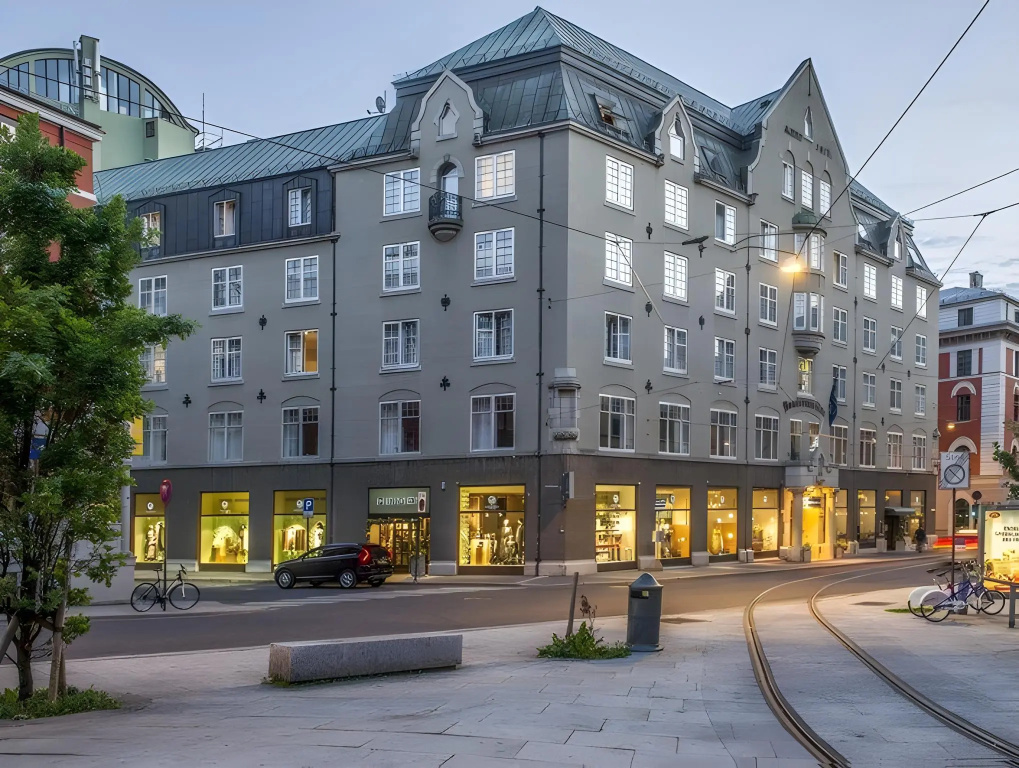
Hotell Bondeheimen
In the city centre, near the Parliament and the National Gallery, with a bar, a restaurant and a café.
View on TRVL ↗
Oslo Guldsmeden
About 1 km from the city centre, near the Henrik Ibsen Museum, the Nobel Peace Center and the Royal Palace, with a bar, a restaurant, a sauna and a spa centre.
View on TRVL ↗The Essence
Oslo is at its best when you treat the fjord as part of the city. Climb the Opera House roof in the morning, spend the afternoon with Munch or on a ferry to Bygdøy, and finish with a sauna and a cold swim as the light goes. Come in summer for long evenings on the islands, or in winter for snow on Holmenkollen and Christmas fairs, and you will leave planning the other season.