
Montreal is a city you can read through its food counters. Bagels are still rolled by hand and baked in wood-fired ovens in Mile End, smoked meat has been sliced on Boulevard Saint-Laurent since 1928, and the stalls of the Jean-Talon Market in Little Italy change with the seasons, from maple syrup in spring to strawberries in summer and McIntosh apples in autumn. Above it all rises Mount Royal, a park on a mountain in the middle of the city, and around it runs a city that speaks French first and switches to English with ease.
This guide is for planning that kind of trip: which neighbourhood suits you, what to see between Old Montreal and the mountain, what to eat, how to get in from the airport and around on the metro, and when the big festivals happen. Prices are in Canadian dollars and were checked on 16 October 2026; fares and opening hours change, so confirm before you go.
The Areas
The metro has four lines and links most of the areas below, so choose by mood rather than distance.
- Old Montreal — the riverside old town, with architecture going back to 1685, Notre-Dame Basilica, and Place Jacques-Cartier with its street performers and outdoor terraces. Suits first-timers, couples and anyone who likes to wander old streets at night.
- Downtown — Sainte-Catherine Street, about 11 km long and one of Canada’s longest shopping streets, the Montreal Museum of Fine Arts on Sherbrooke Street and most of the underground city. Suits shoppers, museum lovers and winter visitors who want to stay warm between sights.
- Plateau Mont-Royal — colourful houses with spiral outdoor staircases, Mont-Royal Avenue and Parc La Fontaine, with Schwartz’s on Boulevard Saint-Laurent for smoked meat. Suits walkers, food lovers and travellers who want to live like a local for a few days.
- Mile End — just north of the Plateau, home to the city’s two famous bagel bakeries, Fairmount and St-Viateur, plus cafés and boutiques. Suits repeat visitors and anyone who plans their day around breakfast.
- Little Italy — the neighbourhood around the Jean-Talon Market, the largest and most diverse of the city’s markets. Suits cooks, market lovers and those renting a place with a kitchen.
- Mount Royal and around — the park itself, Saint Joseph’s Oratory on its western slope and the residential streets of Outremont and Westmount. Suits runners, families and anyone who wants green space on the doorstep.

What to See and Do
Start in Old Montreal at Notre-Dame Basilica, 110 Notre-Dame Street West. The current church was built between 1824 and 1829 to designs by James O’Donnell, a New York architect, and the basilica describes it as the first Gothic Revival church in Canada; the towers followed in 1841 and 1843 and the interior decoration in the 1870s. It became a minor basilica in 1982. In the evening it hosts AURA, a light and sound show, and a package covering both the visit and the show starts from $43.50. A major restoration began in 2020 and is expected to continue until around 2040.
Then climb the mountain. Mount Royal Park was designed by Frederick Law Olmsted, who also designed Central Park in New York, and it marks its 150th anniversary in 2026. The Kondiaronk Belvedere by the summit chalet gives the classic view over downtown; allow at least two hours for the walk up and back. On the western slope, Saint Joseph’s Oratory has a 97-metre dome; take the metro to Côte-des-Neiges and climb the grand staircase.
For museums, the Montreal Museum of Fine Arts at 1380 Sherbrooke Street West is open Tuesday to Sunday from 10am to 5pm, with late opening to 9pm on Wednesdays, and closed on Mondays. Adult admission is $32 for those aged 26 and over, half price on Wednesday evenings, and free for visitors aged 25 and under. Pointe-à-Callière in Old Montreal shows the city’s history through ruins underground, and the Musée d’art contemporain and the McCord Stewart Museum are both downtown.
In the east of the city, the Olympic Stadium built for the 1976 Summer Games marks its 50th anniversary in 2026, and the Biodôme beside it has five ecosystems and more than 250 animal species. The Botanical Garden nearby is known for its autumn Chinese lantern festival.

Winter and the Underground City
Montreal does not hide from winter; it builds around it. The underground city, known as RÉSO, is a climate-controlled network of about 32 km of pedestrian walkways that links metro stations, shopping centres such as Complexe Desjardins and Place Montréal Trust, ten major hotels and the convention centre. On a cold day you can cross much of downtown without a coat.
Above ground, Mount Royal Park offers skating, cross-country skiing, snowshoeing and snow tubing in winter. In January and February, Igloofest brings outdoor DJ sets to Old Montreal on winter nights; the 2027 edition runs from mid-January to early February. Pack properly: Tourisme Montréal advises an insulated jacket, warm waterproof boots, a hat, scarf and gloves, and January lows average around minus 14°C.

What to Eat and Drink
Begin with bagels. Fairmount Bagel, at 74 Fairmount Street West, traces its history to 1919, when Isadore Shlafman opened the first bagel bakery in Montreal; the bagels were rolled by hand and baked in a wood-fired oven. A few streets away, St-Viateur Bagel’s flagship bakery at 263 Saint-Viateur Street West is open daily from 6am to midnight. Both boil their bagels in honey water, which gives them their sweet crust.
For lunch, Schwartz’s at 3895 Boulevard Saint-Laurent has served Montreal smoked meat since 1928. For poutine, La Banquise is open 24 hours and lists more than 28 kinds. To shop for a picnic, the Jean-Talon Market at 7070 Henri-Julien Avenue in Little Italy, open since 1933, sells local fruit and vegetables, cheese, charcuterie, fish, bread and prepared dishes, from 8am to 6pm Monday to Saturday and until 5pm on Sunday. The Atwater Market, by the Lachine Canal, is the Art Deco alternative with specialty delis.
For a beer, Dieu du Ciel, a brewpub, is on Tourisme Montréal’s list of places to eat and drink.
Getting There and Around
Montréal-Trudeau Airport (YUL) is linked to downtown by STM bus 747, which uses a reserved lane to get round traffic. You need at least a 24-hour pass to ride it: the 24-hour pass costs $11.25 and is sold at kiosks on the arrivals level, and the same amount can be paid in coins on board. The 3-day pass ($21.75) and the weekend pass ($17, Friday 4pm to Monday 5am) are also valid on the 747. A rail link to the airport on the REM network is planned, with the airport station targeted for 2027.
In the city, a single trip on the metro or bus costs $3.75 and two trips $7. An unlimited evening pass, valid from 6pm to 5am, costs $6.75. Children aged 11 and under ride free, including on the 747. Metro tickets are sold at machines and ticket counters; buses take cash, but drivers cannot give change. A rechargeable OPUS card costs $6, worthwhile for longer stays. For short hops in warmer months, BIXI is the city’s bike-share system, with an app that shows bikes and docks in real time.
Fares are set by the regional transit authority (ARTM); check stm.info before you travel for the latest prices and service changes.
When to Go
Summer is festival season and warm enough for short sleeves, though early and late summer evenings can be cool, so bring a light layer. The Montreal International Jazz Festival is the highlight: its 47th edition runs from 25 June to 4 July 2027. Autumn brings markets full of apples and the lantern festival at the Botanical Garden.
Winter is long and properly cold, with around two metres of snow a season, but it has its own pleasures: skating on the mountain, Igloofest from mid-January to early February, and the underground city for bad days. Spring is maple syrup season at the markets.
Good to Know
- eTA — visitors from visa-exempt countries need an Electronic Travel Authorization to board a flight to Canada. Apply on the Government of Canada site, canada.ca; the official fee is CA$7. You need a valid passport, a card and an email address. US citizens are exempt, and in most cases an eTA is not needed when arriving by land or sea.
- Language — Montreal is a French-speaking city, but English works in hotels, restaurants and the main sights. A “Bonjour” first is appreciated; most people switch to English when they hear you need it.
- Tipping — about 15 per cent of the bill before taxes for restaurant service, taxis and hairdressers; at least $2 a bag or service for porters; $1 to $2 a day for housekeeping. Card terminals usually offer a tip option.
- Money — the Canadian dollar; cards, including tap to pay, are accepted almost everywhere.
- Shops — most open at 10am and close at 6pm on weekdays and 5pm at weekends, staying open until 9pm on Thursdays and Fridays.
- Water — tap water is safe to drink, and the city has about 125 public fountains and refill stations.
Our Picks
- To seeNotre-Dame Basilica
Canada’s first Gothic Revival church, with the AURA light show in the evening.
- To walkMount Royal Park
Olmsted’s park, 150 years old in 2026, with the classic view over downtown.
- To seeMontreal Museum of Fine Arts
Free for visitors aged 25 and under, open late on Wednesdays.
- To seeSaint Joseph’s Oratory
A 97-metre dome on the slope of the mountain.
- To eatFairmount Bagel
Hand-rolled, wood-fired bagels from a bakery founded in 1919.
- To eatSt-Viateur Bagel
The flagship bakery, open daily from 6am to midnight.
- To eatSchwartz’s
Montreal smoked meat since 1928.
- To eatJean-Talon Market
The city’s largest market, open daily since 1933.
Where to Stay
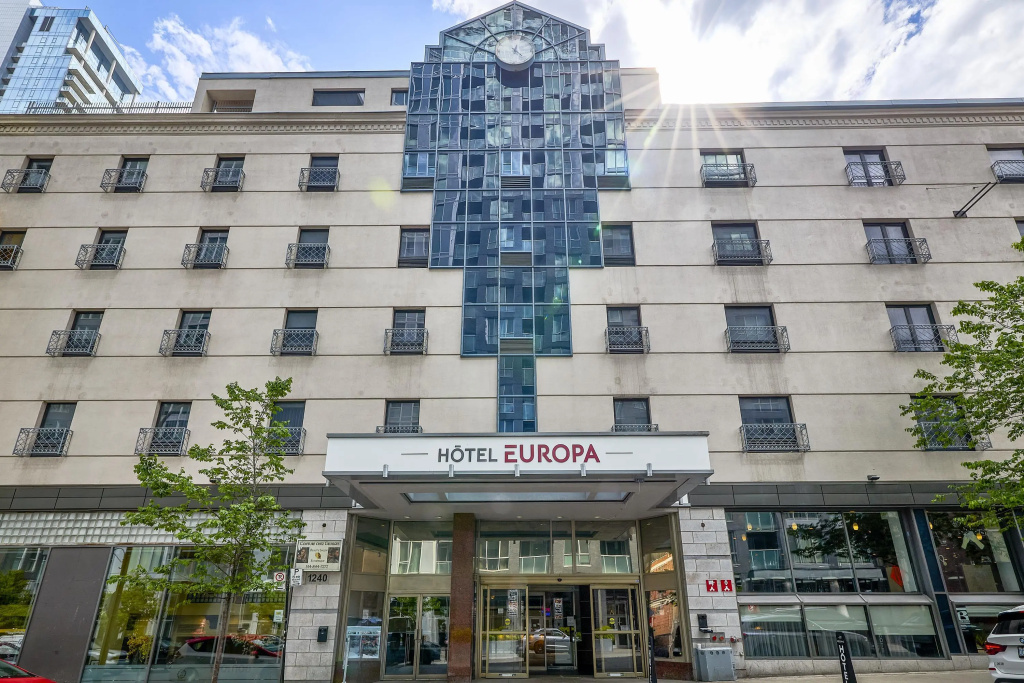
Hotel Europa
Near Dorchester Square, the Cathedral-Basilica of Mary Queen of the World and the Montreal Museum of Fine Arts, with a bar, restaurant and fitness centre.
View on TRVL ↗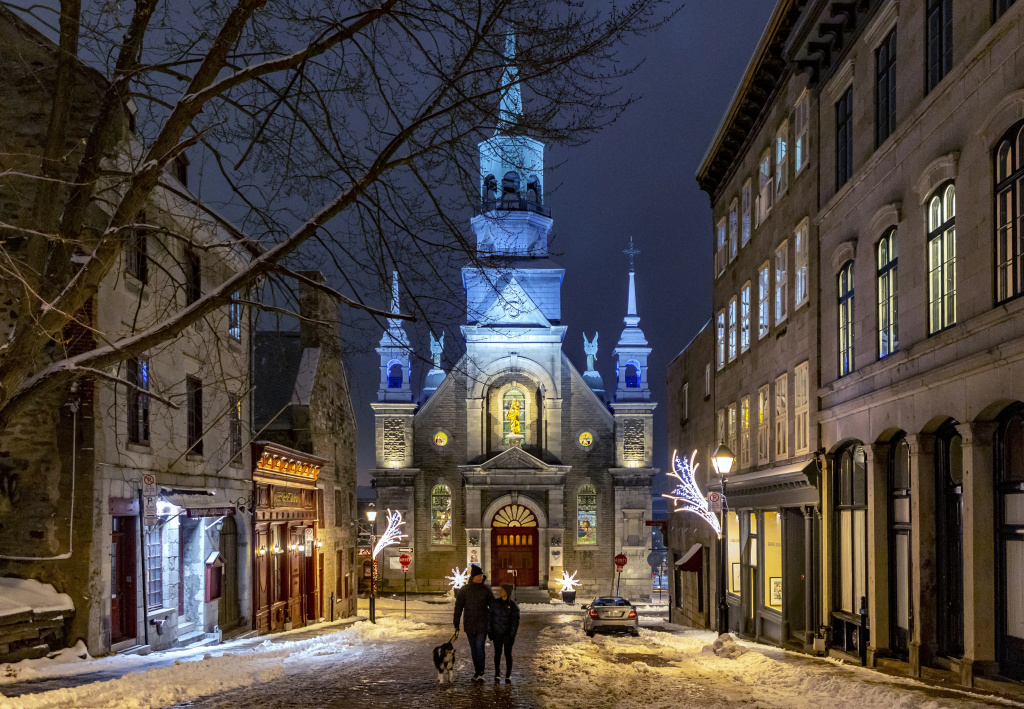
Holiday Inn Montréal
Near Complexe Desjardins, the Montreal Convention Centre and Notre-Dame Basilica, with an indoor pool, sauna, bar and restaurant.
View on TRVL ↗The Essence
Montreal rewards the traveller who eats their way across it and walks it at an easy pace: a warm bagel in Mile End in the morning, an hour on the mountain at the Kondiaronk Belvedere, smoked meat on Saint-Laurent, an evening in the basilica in Old Montreal. It is a city that lives well in every season, in French and in English, and it leaves you planning the next visit for the festival or the snow you missed.