
Vienna is a city that sits down. In a coffee house you order a Melange, an espresso with extra hot water topped with hot milk and foam, and nobody hurries you out; UNESCO added Viennese coffee house culture to its list of intangible cultural heritage in 2011, and the reasoning it is credited with is the city's whole character in one line: the coffee house is a place where you consume time and space, but only the coffee appears on the bill.
The rest follows at the same pace. Klimt's gold in the Belvedere, Bruegel at the Kunsthistorisches Museum, an evening at the State Opera for the price of a standing place, a glass of new wine under a pine branch at the edge of the vineyards. Come in late autumn and the squares fill with Christmas markets. This guide is about how to do all of it well.
The Areas
Vienna is divided into numbered districts, and the postcode tells you where you are: 1010 is the 1st, 1070 the 7th. Most visitors need only four or five of them.
- Innere Stadt (1st district) — the old centre around St Stephen's Cathedral and the Kunsthistorisches Museum, with the classic coffee houses and the Christmas market on Rathausplatz. Best for a first visit and short stays, when you want to walk everywhere.
- Leopoldstadt (2nd district) — across the Danube Canal, with the Prater and its Giant Ferris Wheel, the Baroque Augarten park and the Karmeliterviertel, a relaxed quarter of Gründerzeit buildings and the centre of Jewish life in Vienna, with kosher bakeries and butchers alongside natural-wine bars. Suits repeat visitors and anyone who likes markets.
- Neubau (7th district) — the MuseumsQuartier, the restored Biedermeier lanes of Spittelberg with their restaurants and galleries, and independent shops along Neubaugasse. Good for design lovers and evenings out.
- Wieden and Mariahilf (4th and 6th) — either side of the Naschmarkt. On the Wieden side, the Freihausviertel around Schleifmühlgasse has galleries, wine bars and the Third Man Museum; on the Mariahilf side sits Café Sperl. For food lovers and travellers who want to be close to Karlsplatz and the opera.

What to See and Do
Start with St Stephen's Cathedral, open to worshippers from early morning until 22:00; guided sightseeing hours are Monday to Saturday 09:00–11:30 and 13:00–16:30, Sundays and holidays 13:00–16:30, subject to services. From there the Innere Stadt is an easy walk in any direction.
Schönbrunn needs half a day. The palace, a UNESCO World Heritage Site, opens daily at 08:30 and the gardens from 06:30, across 160 hectares. The Palace Ticket is an audio-guided tour of the entire piano nobile of about 75 minutes; the shorter State Apartments tour takes about 40. Book online in advance, and only through the official seller: the palace itself warns about unofficial ticket sites. Climb to the Gloriette, the colonnade built on the crest of the hill in 1775, for the view back over the palace.
At the Upper Belvedere, open daily 09:00–18:00, the museum's highlight is Klimt's The Kiss, dated 1907/08 and made with gold leaf, oils and flakes of silver and platinum. Admission is €23 online, free under 19, and entry is by time slot. The Kunsthistorisches Museum on Maria-Theresien-Platz holds a unique collection of paintings by Pieter Bruegel the Elder; it stays open until 21:00 on Thursdays, its café sits under the Cupola Hall, and since 8 September 2026 admission is by reserved time slot (€22 online, €24 at the door).
The MuseumsQuartier in Neubau groups the Leopold Museum, mumok, Kunsthalle Wien and the Architekturzentrum Wien around open courtyards furnished with the Enzis, the big outdoor loungers that have become the quarter's emblem. Across the canal, the Giant Ferris Wheel in the Prater was built in 1897 for Emperor Franz Joseph's golden jubilee, stands almost 65 metres tall and turns daily from 09:00 to 23:45.

Coffee Houses, Opera and Christmas Markets
Pick a coffee house the way you would pick a restaurant. Café Sperl on Gumpendorfer Straße has been open since 1880, with billiard tables, its own Sperl Torte and piano music on Sunday afternoons. Café Hawelka on Dorotheergasse is known for Buchteln, the sweet baked buns, and for the artists who used to sit there. Café Schwarzenberg on Kärntner Ring is the oldest café on the Ringstrasse, and Café Korb on Brandstätte, open since 1904, serves breakfast all day. Café Central in Palais Ferstel, the most famous of all, has been closed for renovation until autumn 2026, with a pop-up called Decentral at Palais Harrach, Freyung 3, in the meantime; check before you go.
The State Opera sells standing places, the cheapest way into the house. In the 2025/26 season they cost €13 to €18 depending on the level, are sold for the same day's performance online and at the Bundestheater box offices from 10:00, and a further quota goes on sale at the standing-room box office 80 minutes before curtain. If you go often, a Bundestheater card with the StehplatzPLUS option (a one-off €28 fee) brings standing places down to €4–7 and lets you book from 10:00 the day before. Buy from the opera's own site; resellers add a mark-up.
From November the squares turn into Christmas markets. The 2026 dates published by Vienna Tourism:
- Wiener Christkindlmarkt, Rathausplatz — 13 November to 26 December, daily 10:00–22:00 (24 December until 18:30); the ice rink alongside stays open until 6 January 2027.
- Schönbrunn Palace — 6 November 2026 to 6 January 2027, daily 10:00–21:00, with shorter hours from 24 December.
- Spittelberg — 13 November to 23 December, weekdays from 14:00, weekends and holidays from 11:00, until 21:30.
- Belvedere — 20 November to 31 December, Monday to Friday from 11:00, weekends from 10:00, until 21:00.
- Art Advent on Karlsplatz — 13 November to 23 December, daily 12:00–20:00, arts and crafts with food until 21:00.
- Am Hof — 13 November to 23 December, from 11:00 on weekdays and 10:00 Friday to Sunday.

What to Eat and Drink
The Wiener Schnitzel is the city's dish, and Figlmüller has been serving its own version since 1905, when Johann Figlmüller opened a wine tavern on Wollzeile. The Sacher-Torte dates to 1832, when a 16-year-old apprentice named Franz Sacher made a dessert for Prince Metternich's court; it is still made by hand to his recipe and best eaten with unsweetened whipped cream.
For something quicker, the Würstelstand is an institution. Order a Käsekrainer, a lightly smoked pork sausage with cheese inside, and you will be asked süss or scharf: sweet Kremser mustard or spicy tarragon. Bitzinger, next to the Albertina, and Zum scharfen René on Schwarzenbergplatz are two of the best known.
For markets, the Naschmarkt runs along the Wienzeile between Getreidemarkt and Kettenbrücke, with stalls open Monday to Friday 06:00–21:00 and Saturday until 18:00; restaurants also open on Sundays. On Saturdays a flea market sets up next to it from 06:30. The Karmelitermarkt in Leopoldstadt, open Monday to Saturday, adds a farmers' market on Fridays and Saturdays.
Vienna also makes wine inside its city limits. A Heuriger is a wine tavern that serves wine from its own vineyards; look for a bunch of pine branches and the sign Ausg'steckt, which means it is open. The classic ones are in Grinzing, Nussdorf, Neustift, Sievering and Heiligenstadt, with quieter options in Stammersdorf and Mauer. Many keep seasonal hours, so check before you set off.
Getting There and Around
Vienna Airport is a short ride from the centre, but until the end of October 2027 the S-Bahn core line between Praterstern and the Hauptbahnhof is closed for modernisation, so the usual routes have changed. The fastest option is now the ÖBB Railjet or Intercity, twice an hour, non-stop to Wien Hauptbahnhof in about 15 minutes. The City Airport Train runs as CAT by bus, premium coaches to Wien Mitte/Landstraße in about 21 minutes, every 12 minutes between 07:00 and 19:00 and every 15 minutes otherwise. The S7 now runs only as far as St. Marx, where trams 18 and 71 continue into town. The Vienna Airport Bus has lines to the Hauptbahnhof, Schwedenplatz, Karlsplatz and, since September 2026, Praterstern.
In town, Wiener Linien runs the U-Bahn, trams and buses. A single ticket costs €3.20 and is valid for 80 minutes in one direction, with changes. The 24-hour ticket costs €10.20, and the 7-day ticket €28.90 on paper or €25.20 in digital form; the 48- and 72-hour tickets were withdrawn in January 2026. City tickets cover the core zone only, so the airport leg needs an extra ticket. Validate paper tickets at the blue machines before you board. Children under 6 travel free, and under-15s ride free on Sundays, public holidays and during Vienna school holidays. On Friday and Saturday nights and before public holidays the U-Bahn runs all night, every 15 minutes.
When to Go
Vienna works all year, but it has two high points. From mid-November to Christmas the markets light up the squares and the city has a festive glow; the Schönbrunn market and the Rathausplatz ice rink carry it on into early January. Autumn is the other: the new wine is poured in the Heurigen, and by tradition it may be called Heuriger until 11 November. Spring and early summer are good for the Prater, the Augarten and the palace gardens. If you are coming for the opera, check the State Opera calendar before booking your dates.
Good to Know
- Book time slots for Schönbrunn, the Belvedere and the Kunsthistorisches Museum online, especially at weekends and in December.
- The Vienna City Card, from €19 for 24 hours, combines public transport with discounts at museums and attractions.
- Vienna charges a local accommodation tax, the Ortstaxe: since 1 July 2026 it is 5% of the room price net of VAT and breakfast, roughly 4.35% of the room price without breakfast, and it is due to rise to 8% in July 2027.
- Regular market stalls at the Naschmarkt close on Sundays; plan a weekday or Saturday visit.
- On trams you can buy a single ticket on board, but it costs €3.40 instead of €3.20.
Our Picks
- To seeUpper Belvedere
Klimt's The Kiss and the gold of his best years; book a time slot.
- To seeKunsthistorisches Museum
The Bruegel room alone justifies the visit; go on a Thursday evening, when it is open until 21:00.
- To walkSchönbrunn gardens and the Gloriette
The gardens open at 06:30; climb to the 1775 colonnade for the view back over the palace.
- To seeGiant Ferris Wheel
Turning since 1897, open daily until 23:45, so you can ride it after dark.
- To drinkCafé Sperl
Billiard tables, newspapers and a Sperl Torte, in a coffee house open since 1880.
- To drinkCafé Hawelka
A Melange and the house Buchteln in the old centre.
- To eatFiglmüller
The house schnitzel, served on this street since 1905; book a table.
- To eatBitzinger
A Käsekrainer with sweet or spicy mustard, at the sausage stand beside the Albertina.
- To drinkSzigeti Sektcomptoir
A bar and shop that pours nothing but sparkling wine.
- To shopNaschmarkt
Stalls Monday to Saturday, and on Saturday mornings the flea market next door.
Where to Stay
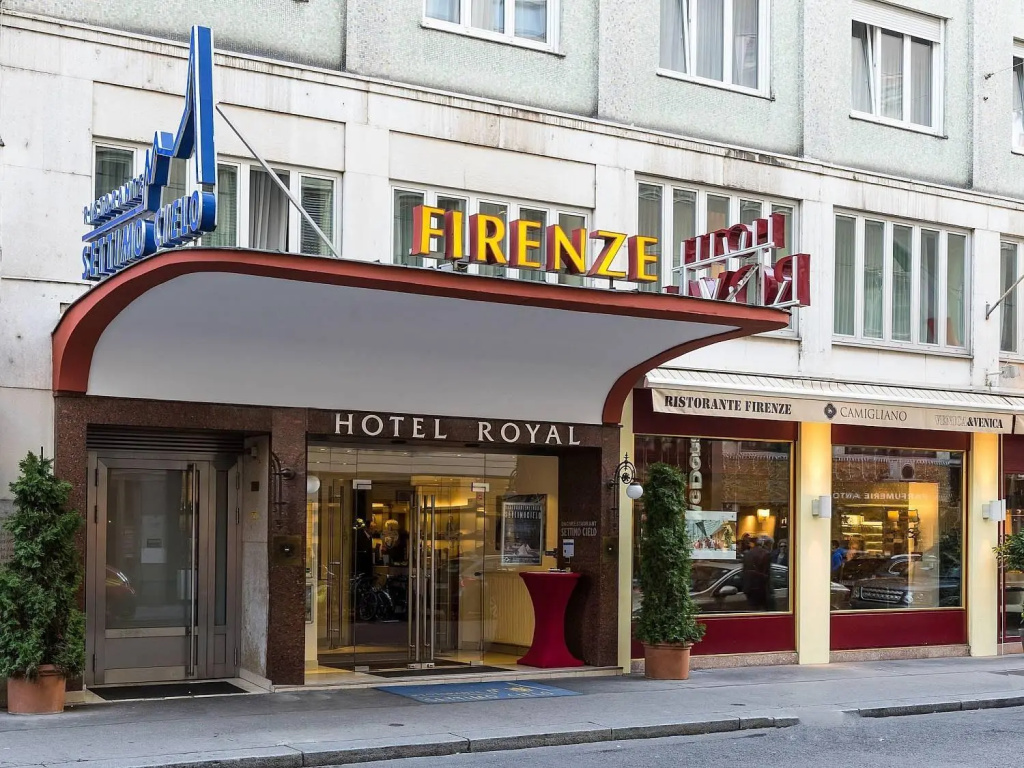
Hotel Royal
In the city centre on Singerstrasse, close to Stephansplatz, St Stephen's Cathedral and St Peter's Church.
View on TRVL ↗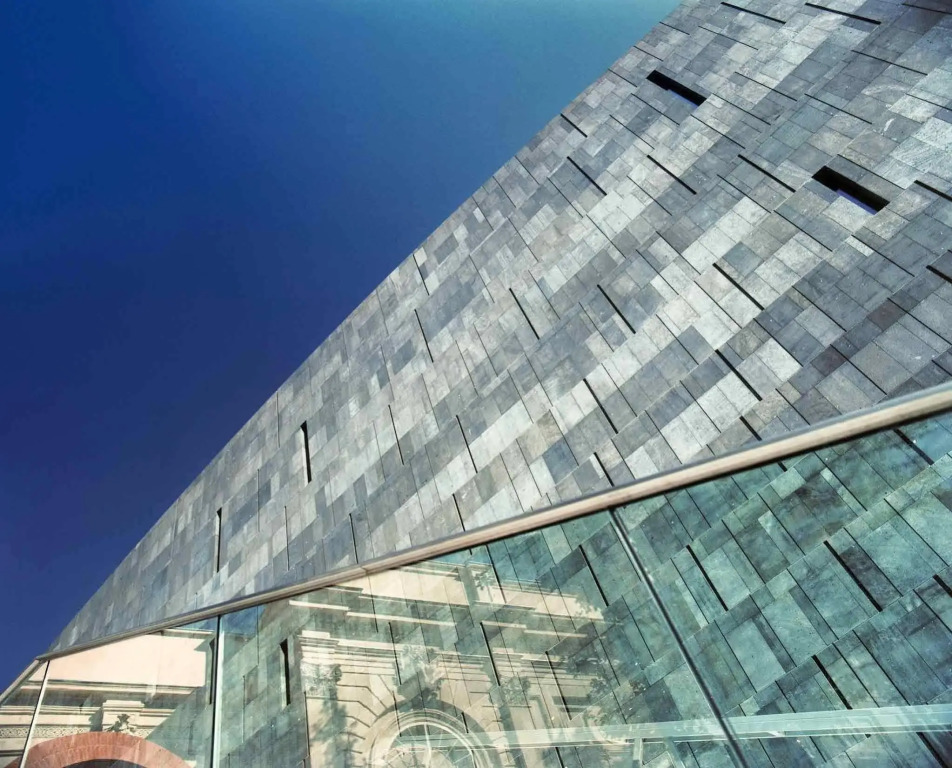
SO/ Vienna
On Praterstrasse near Schwedenplatz, with a spa centre, sauna, steam bath and a library.
View on TRVL ↗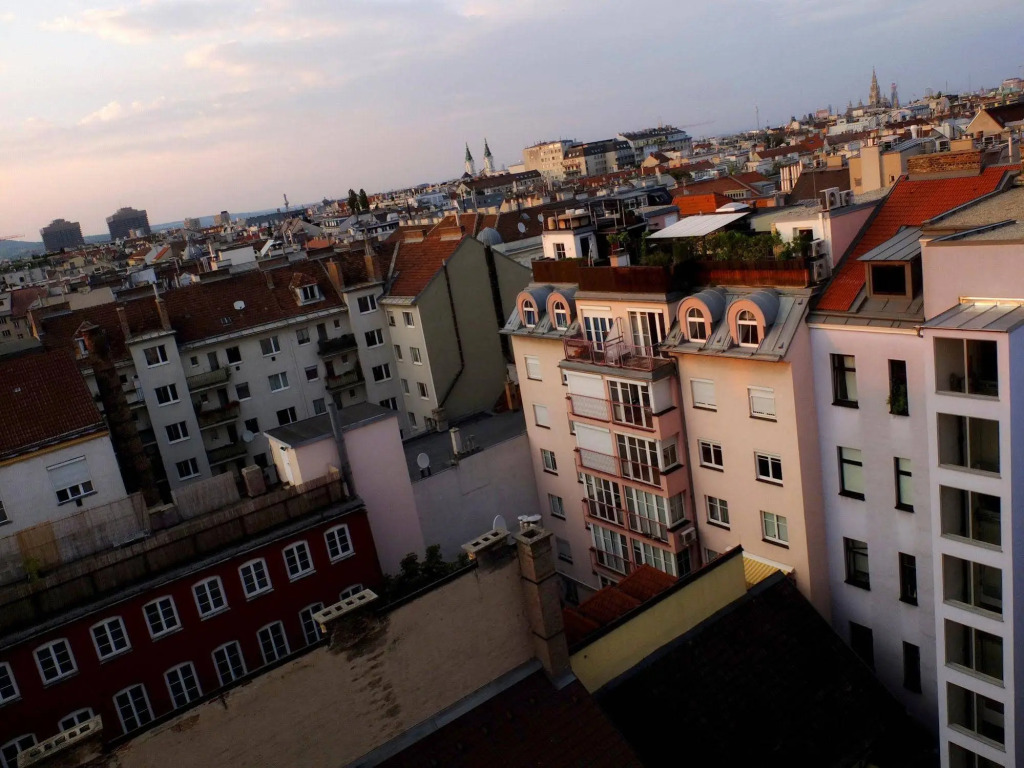
Hotel Max Brown
An Art Deco hotel on Schottenfeldgasse with 144 air-conditioned rooms, a sauna and a fitness centre.
View on TRVL ↗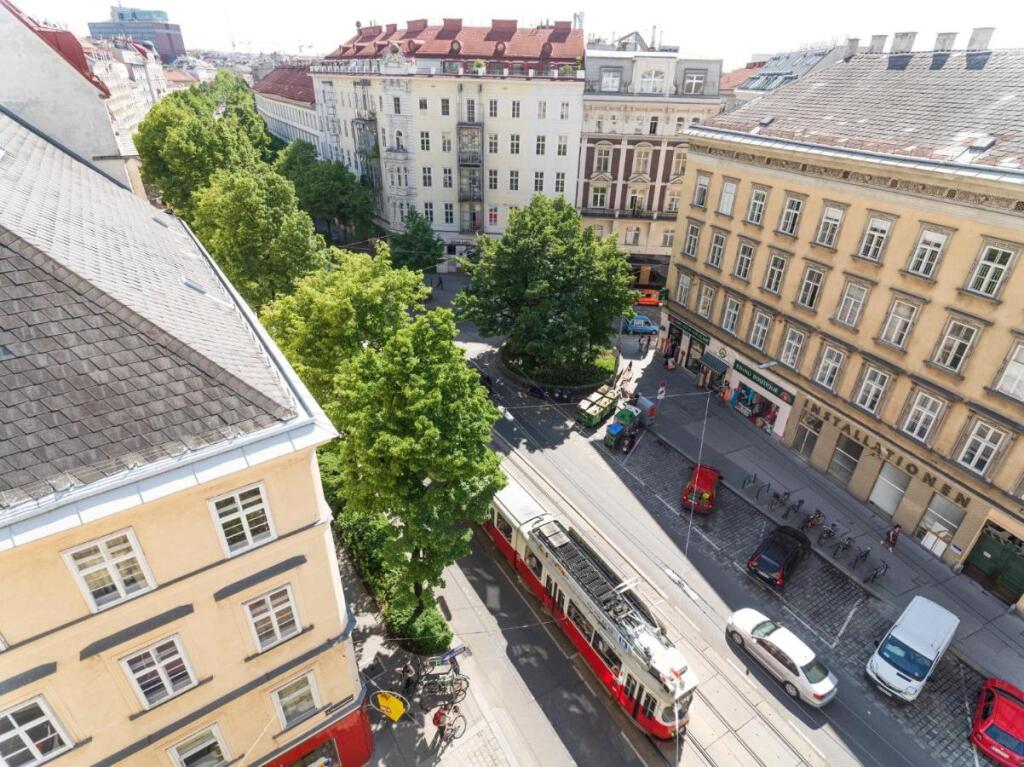
Hotel Erzherzog Rainer
Within walking distance of the centre on Wiedner Hauptstrasse, near Taubstummengasse, the Naschmarkt and the Vienna State Opera.
View on TRVL ↗The Essence
Vienna rewards the traveller who slows down. Give it a morning at the Belvedere and an afternoon at a marble table with a Melange and the newspapers, a schnitzel at lunch and an evening on your feet in the gallery of the State Opera. Then head out to the vineyards, find a pine branch over a door, and order a glass of the new wine. The city has had centuries to perfect the art of spending time well, and it is happy to share it.