
Lisbon is a city you take in from above. Climb a lane in Alfama and the roofs fall away to the Tagus; stand at a terrace in Príncipe Real and the castle sits across the valley on its own hill. Down by the water, a yellow tram rattles past, and in Belém a queue forms for warm custard tarts that have been baked to the same recipe since 1837.
This guide is for planning a first or second visit: which neighbourhood to stay in, what to see, how the trams, lifts and metro work, and two easy day trips by train, to the palaces of Sintra and the beaches of Cascais.
The Areas
Lisbon is compact, but it is steep, so where you sleep shapes your days. The historic centre runs from the castle hill down to the river and up again to Bairro Alto; Belém lies west along the water, and Alcântara sits in between.
- Alfama — the oldest and most traditional quarter, a tangle of cobbled lanes below the castle with the cathedral, the Santa Luzia viewpoint and many fado houses. Best for walkers who like evenings with music; expect climbs.
- Baixa and Chiado — the centre in the middle, between Rossio, where the Sintra trains leave, and the river. Chiado's Rua Garrett has the statue of Fernando Pessoa and the Bertrand bookshop. Good for first-timers who want everything within walking distance.
- Bairro Alto — one of the city's oldest neighbourhoods, with alternative shops by day and many bars and restaurants by night; a classic evening starts here, drops down to Bica and ends in Cais do Sodré. Suits night owls more than light sleepers.
- Príncipe Real — between the São Pedro de Alcântara viewpoint and São Bento, with restaurants, grand mansions, small antique shops, Moorish kiosks and the Príncipe Real garden. A calmer, residential base close to the action.
- Belém — the riverside district of the Age of Discoveries, with the Jerónimos Monastery, the Belém Tower, green lawns, marinas and a cycle lane. Good for a quiet stay and early starts at the monuments.
- Alcântara and LX Factory — a former industrial district west of the centre, where an 1846 textile complex now holds shops, cafés and restaurants. For travellers who like design, books and a more local feel.

What to See and Do
Start high. Castelo de São Jorge, above Alfama, is open every day from 9:00, until 21:00 from March to October and until 18:00 from November to February, and is closed on 1 January, 1 May and 24, 25 and 31 December. Inside are the remains of the royal palace, the walls and an archaeological site. On the way down, stop at the Miradouro de Santa Luzia for the view over Alfama and the river, and at the Sé, the cathedral founded in 1147, where the treasury and Roman ruins can be visited.
Give Belém a full morning. King Manuel I founded the Jerónimos Monastery in 1496; it is a UNESCO World Heritage Site and holds the tombs of Vasco da Gama and the poet Luís de Camões. It opens 9:30 to 17:30, with last entry at 17:00, and is closed on Mondays. The Belém Tower, also on the UNESCO list, the Padrão dos Descobrimentos, the Centro Cultural de Belém and MAAT, the museum of art, architecture and technology, are all along the same stretch of river.
In the afternoon, head to LX Factory in Alcântara, where the buildings of the Companhia de Fiação e Tecidos Lisbonense, first set up in 1846, reopened around 2008 as a creative quarter of some 50 shops, cafés and restaurants. In the evening, Bairro Alto and the bars of Cais do Sodré, including the colourful Pink Street, take over.

Trams, Lifts and Two Day Trips
The old trams are part of the pleasure of Lisbon. Tram 28E runs about 7 km from Martim Moniz to Campo de Ourique, through Graça, Alfama, Baixa, Chiado and Estrela, and takes 40 to 50 minutes end to end; it gets very crowded in summer, so ride early or late. The Santa Justa lift is run by Carris, and its ticket includes the viewpoint at the top.
The funiculars are in a period of change, and it is worth knowing before you plan a route. The Glória funicular has not run since its derailment on 3 September 2025. Carris plans a completely new installation rather than a rebuild, with an international tender for its design and construction set for January to March 2027 and service expected in 2029. Carris set 30 April 2026 for the Graça funicular to return to service, while the Bica and Lavra funiculars remained suspended under technical review in reports from spring 2026. Check carris.pt before you go.
Sintra is the classic day trip. Trains on the CP Sintra line leave from Rossio, Oriente and Entrecampos; from Sintra station, Scotturb bus 434 climbs to the Park and National Palace of Pena. Private cars are not allowed up to the palace. The park opens 9:00 to 19:00 and the palace 9:30 to 18:30, and palace tickets are sold only for a specific date and time, so book ahead.
Cascais is the easy beach day. Trains from Cais do Sodré run along the river and the coast, about an hour to Cascais, with the larger family beaches of Santo Amaro, Oeiras and Carcavelos on the way; Carcavelos suits beginner surfers. Past Cascais, Guincho, about 6 km from the centre, draws windsurfers and kitesurfers with its strong winds and its view of Cabo da Roca.

What to Eat and Drink
The city's most famous pastry is the custard tart, and the place to try it is Pastéis de Belém, next to the Jerónimos Monastery, which has made it since 1837 from an old recipe from the monastery, still by hand. From October to June it is open every day from 8:00 to 21:00, and until 22:00 from July to September.
In June, Lisbon eats in the street. During the city festivities, grilled sardines are the centre of the neighbourhood parties, served with caldo verde, the kale soup, bread with sausage, beer and red wine.
For a first evening, Time Out Market in the Mercado da Ribeira at Cais do Sodré gathers 26 restaurants and 8 bars under one roof, open from 10:00 until midnight from Sunday to Wednesday and until 2:00 from Thursday to Saturday. In Alfama and Bairro Alto, dinner often comes with fado, especially in the evening.
Getting There and Around
Lisbon Airport has its own metro station, Aeroporto, at the end of the Red line, which opened there in 2012. The line runs to São Sebastião, and at Saldanha and São Sebastião you can change to the Yellow and Blue lines. The metro runs every day from 6:30 to 1:00, and on weekdays the Red line comes every 6 to 10 minutes.
Buy a reusable navegante occasional card for €0.50; a single Carris/Metro ticket on it costs €1.90 and is valid for an hour across the whole network. A 24-hour Carris/Metro ticket is €7.25, and €11.40 with CP trains included. You can also tap a contactless bank card at the metro gates, at €1.92 a journey. Paying on board costs more: €3.30 for a tram, €4.30 for a funicular ticket (up to two journeys) and €6.20 for the Santa Justa lift, including its viewpoint.
For Belém, take a stopping train on the Cais do Sodré to Oeiras line, or tram 15E. Otherwise, the centre is best on foot, with comfortable shoes for the hills.
When to Go
June is the city's festival month. On the night of 12 to 13 June, for Saint Anthony, costumed marchas from the neighbourhoods parade down Avenida da Liberdade, and street parties fill Alfama, Bairro Alto and the castle quarter, with free entry.
From March to October the castle stays open until 21:00, which makes long evenings for viewpoints; from November its hours shorten to 18:00. The Cascais beaches are busy in summer and in winter, and the larger beaches on the line, such as Carcavelos, keep the surfers coming year round.
Good to Know
Lisbon charges a municipal tourist tax of €4 per person per night, for up to seven nights, since September 2024; children up to 13 are exempt.
The navegante occasional card can be used by only one person per journey, so each traveller needs their own.
Several museums are closed for renovation at the moment, including the National Museum of Ancient Art, the National Tile Museum and the Lisboa Story Centre; check before you plan a day around them.
The Jerónimos Monastery is closed on Mondays, and the Pena Palace sells timed tickets only; booking ahead saves a wasted trip.
Our Picks
- To seeJerónimos Monastery
Founded in 1496, with the tombs of Vasco da Gama and Camões; closed on Mondays, so plan Belém for another day.
- To eatPastéis de Belém
Custard tarts made by hand since 1837, open every day from 8:00.
- To seeCastelo de São Jorge
The palace remains, walls and views over the city, open until 21:00 through October and until 18:00 from November.
- To walkMiradouro de Santa Luzia
A terrace over the roofs of Alfama and the Tagus, best on a clear morning.
- To seeSé de Lisboa
The cathedral of 1147, with its treasury and the Roman ruins beneath it.
- To eatTime Out Market
26 restaurants and 8 bars under one roof, open from 10:00.
- To seeLX Factory
An 1846 textile complex reborn as shops, cafés and restaurants.
- To walkPark and National Palace of Pena
Gardens open from 9:00; book a timed palace ticket in advance.
- To swimCarcavelos
One of the largest family beaches on the coast, and a good place for a first surf lesson.
Where to Stay

The Emerald House Lisbon
A hotel near the National Museum of Ancient Art, with a bar, a restaurant and a fitness centre.
View on TRVL ↗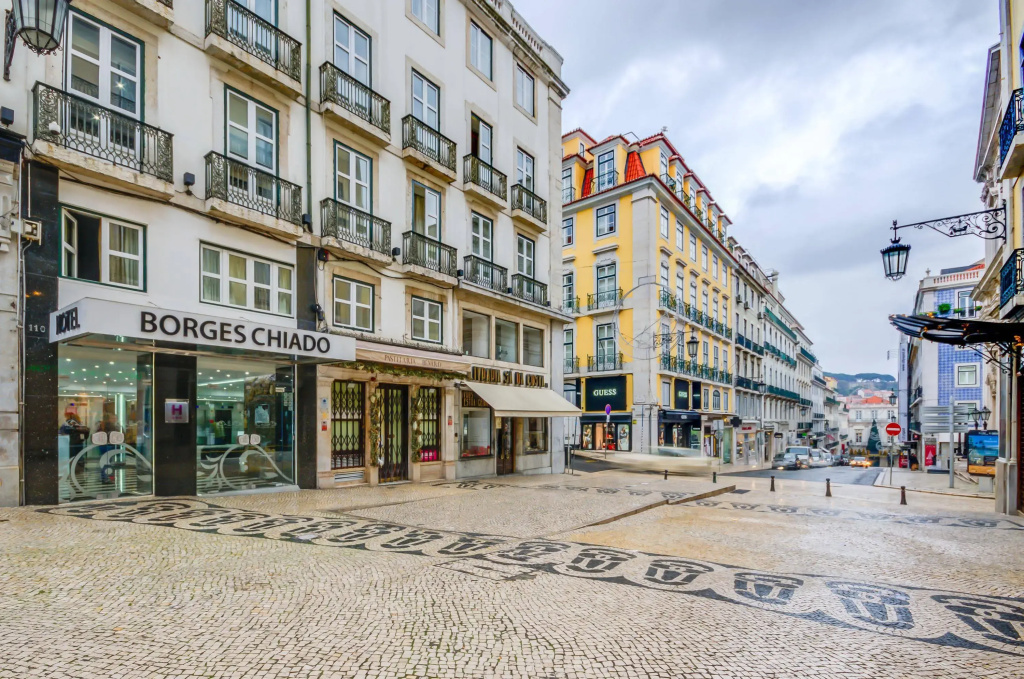
Hotel Borges Chiado
In the very centre of the city, near the Fernando Pessoa statue and the Bertrand bookshop, with a restaurant and a gym.
View on TRVL ↗
9Hotel Mercy
In the city centre near the Trindade Theatre, with a bar, a restaurant and a library.
View on TRVL ↗
Hotel Jerónimos 8
Steps from the Jerónimos Monastery and the Berardo Collection Museum, with a bar and a restaurant.
View on TRVL ↗The Essence
Lisbon rewards the unhurried. Walk up to a viewpoint in the morning, eat a custard tart warm in Belém, take a tram across the hills in the afternoon and let the evening find you in Alfama or Bairro Alto. Add a train to the palaces of Sintra or the beaches of Cascais, and a few days here feel like more than one city, all of it within reach of the river.