
Venice is a city you learn on foot and by boat. The streets are lanes called calli, the squares are campi, the buses are vaporetti, and the bar counter comes with a row of small snacks called cicchetti and a glass of wine Venetians call an ombra. Get the rhythm of it, walk in the morning, ride the water in the afternoon, stand at a bacaro counter in the early evening, and the city opens up quickly.
This guide covers the six sestieri and who each suits, the lagoon islands of Murano, Burano, Torcello and the Lido, how the vaporetto passes and airport boats work, the day-tripper access fee, high water, and why winter and Carnival are a fine time to come.
The Areas
The historic city is divided into six districts, the sestieri. They are all within walking distance of one another, but each has its own pace, and choosing the right one changes the trip.
- San Marco — the main sights are packed around Piazza San Marco, including St Mark's Basilica and the Doge's Palace. Busy by day and convenient for first-timers; come out at dawn or in winter for room to breathe.
- San Polo — one of the oldest parts of the city, home to the Rialto Bridge, the Rialto food markets and several museums and churches. Good for food lovers and anyone who wants to be in the middle of things.
- Dorsoduro — split in two by the Giudecca Canal, with the Peggy Guggenheim Collection and the Gallerie dell'Accademia. Many students live here, so it suits art lovers and those looking for slightly easier prices.
- Cannaregio — more residential, with the historic Jewish ghetto and the Santa Lucia railway station on its northern edge. It gets fewer visitors, which makes it a good base for longer stays.
- Castello — palaces, a basilica and museums in what is sometimes called the tail of the fish, reached from San Marco past the Bridge of Sighs. Quieter the further east you go.
- Santa Croce — the transit end of the city, where buses, cars and trams arrive at Piazzale Roma, with a park and several churches. Practical for early departures and late arrivals.

What to See and Do
Start with the Doge's Palace on Piazza San Marco, run by the city's civic museums foundation. Beyond the standard ticket there are two small-group visits, the Secret Itinerary and The Doge's Hidden Treasures, which are by reservation only, so book them before you travel.
Cross to Dorsoduro for two very different collections. The Gallerie dell'Accademia, on Campo della Carità beside the Accademia stop, holds Venetian painting from the 14th to the 19th century, including Giorgione's The Tempest, Tintoretto's Saint Mark Freeing the Slave and Veronese's Feast in the House of Levi. A short walk along the Grand Canal, the Peggy Guggenheim Collection fills Palazzo Venier dei Leoni with twentieth-century art. It opens daily from 10am to 6pm but closes on Tuesdays.
In San Polo, the Scuola Grande di San Rocco keeps more than 60 paintings in the setting they were made for, with Tintoretto's cycle of Old and New Testament scenes as the main decoration. The confraternity was founded in 1478, and the building opens daily from 9:30am to 5:30pm.
Then simply walk. Get lost between the campi of Cannaregio, cross the Grand Canal on a traghetto, the stand-up gondola ferry that costs €2 one way, and end the day near Rialto, where the evening counters fill up.

The Islands of the Lagoon
Venice does not end at the Grand Canal. The lagoon islands make easy half-day trips by vaporetto, and they are not covered by the day-tripper access fee.
Murano is the glassmaking island. The Murano Glass Museum, open since 1861 in the former residence of the bishops of Torcello, holds the most extensive historical collection of Murano glass, from ancient blown-glass urns to pieces made with the murrine, or millefiori, technique.
Burano is the island of small, brightly painted houses and of lace. The Lace Museum sits on Piazza Galuppi in the old Palace of the Podestà of Torcello, which housed the Burano Lace School from 1872 to 1970, and shows Venetian lace from the 16th to the 20th century alongside the story of the women who passed the craft down.
Torcello, close by, is sparsely populated and has a 7th-century basilica. The Lido, about ten minutes by boat from San Marco, is Venice's long, narrow beach island and a calmer, cheaper break from the centre.

What to Eat and Drink
The Venetian way to eat is standing up. A bacaro is a wine bar with a counter of cicchetti, small bites eaten with a glass of wine, an ombra. Most bars and restaurants serve some version of them, and at lunchtime the spread often includes tramezzini, soft triangular sandwiches on white bread.
Look for sarde in saor, fried sardines with onions, raisins, pine nuts and vinegar; white polenta with whipped salt cod; meatballs of meat, tuna or aubergine; and fegato alla veneziana, liver cooked with onions, at the table. The local aperitivo is the spritz, made with a bitter liqueur, Prosecco and sparkling water.
Two counters to start with: Cantina Do Mori in San Polo, near Rialto, known for its francobolli, tiny square sandwiches, and a list of about twenty whites and twenty reds by the glass; and Cantinone già Schiavi on Fondamenta Nani in Dorsoduro, a historic bacaro with more than 500 wine labels and cicchetti made fresh every day. Both are closed on Sundays.
Getting There and Around
Marco Polo Airport is on the mainland near Mestre. ACTV's Aerobus line 5 reaches Piazzale Roma in about 23 minutes for €10 one way or €18 return, and there is an €18 ticket that combines the Aerobus with 90 minutes of travel on the city network. ATVO's express bus 35 takes about 20 minutes to Piazzale Roma at the same prices.
If you would rather arrive by water, Alilaguna boats run from the airport straight into the city: the Blue line calls at Murano, the Lido, San Marco, the station and more, and the Orange line goes up the Grand Canal by way of Rialto. A single costs €18 and a return €32, with one large bag and one piece of hand luggage included. Allow around 90 minutes on the Blue line. A water taxi takes about 30 minutes and was quoted at roughly €150 in 2025.
By train, you arrive at Venezia Santa Lucia, the terminus on the northern edge of Cannaregio, with vaporetti and water taxis leaving from the quay outside. Trains between Mestre and Santa Lucia are very frequent.
In the city, the vaporetto is your bus. A standard 75-minute ticket costs €9.50, so a pass soon pays for itself: €25 for one day, €35 for two, €45 for three and €65 for seven. Travellers aged 6 to 29 with a Rolling Venice card can buy a discounted 72-hour ticket. Validate your ticket at the start of every journey and every change.
When to Go
Spring and early summer bring long evenings on the fondamenta, but they are also the busiest months and the season of the access fee. Autumn and winter are quieter, and the piazza has room in it, especially early in the day.
Winter is also the season of acqua alta, the high water that floods parts of the city several times a year, usually in the colder months, for a few hours around high tide. Sirens give warning, raised walkways go out in the busiest lanes, a tide gauge sits by the Rialto vaporetto stops, and the tourist offices at the station and St Mark's Square hand out acqua alta maps. Most of the time it simply means planning a walk around the tide.
Carnival is the great winter event, with costumes, masks, water processions and street shows. The 2027 edition runs from 23 January to 9 February. Book rooms well ahead for the final weekends.
Good to Know
- The access fee. On peak days, day visitors aged 14 and over pay to enter the historic city between 8:30am and 4pm. In 2026 it applied on 60 days between 3 April and 26 July and cost €5 if booked at least four days ahead or €10 later, through the city's online platform, which issues a QR code. The 2027 calendar was not published when we checked, so look it up at cda.ve.it.
- Staying the night exempts you. Overnight guests in Venice accommodation, whether in the historic city, on the islands or in Mestre, do not pay the fee, nor do children under 14 or residents of the Veneto. Most exempt visitors still need to register for an exemption on the same platform.
- The fee covers the main island only. Murano, Burano and the Lido are outside it.
- Luggage. Bridges mean steps; pack light, and remember that Alilaguna charges €4 for each extra bag.
- Bacaro manners. There is often no seating at the counter: order, eat, drink and move along. Cantina Do Mori stops pouring at 7:30pm.
Our Picks
- To seeGallerie dell'Accademia
Six centuries of Venetian painting in one building, from Paolo Veneziano to Giorgione's The Tempest.
- To seePeggy Guggenheim Collection
Twentieth-century art in a palazzo on the Grand Canal; remember it is closed on Tuesdays.
- To seeScuola Grande di San Rocco
Tintoretto's great cycle of paintings still in the rooms it was painted for.
- To seeDoge's Palace
Book the Secret Itinerary in advance for the rooms the standard route leaves out.
- To seeMurano Glass Museum
The largest historical collection of Murano glass, in the former palace of the bishops of Torcello.
- To seeLace Museum
Venetian lace from the 16th to the 20th century, in the building that was the island's lace school until 1970.
- To drinkCantina Do Mori
A counter near Rialto with francobolli sandwiches and some forty wines by the glass; open Monday to Saturday.
- To drinkCantinone già Schiavi
A standing-room bacaro with more than 500 labels and fresh cicchetti, open Monday to Saturday from 8:30am.
Where to Stay
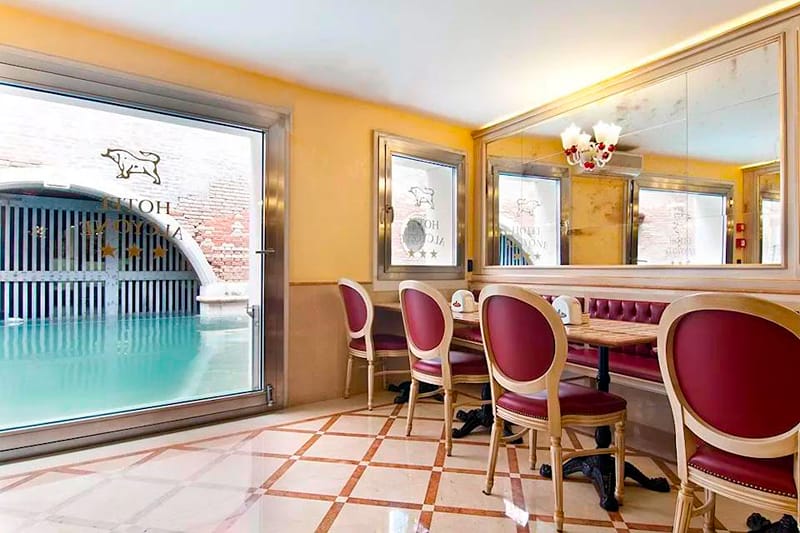
Alcyone Hotel Venice
Housed in an elegant 18th-century building on Calle dei Fabbri, halfway between St Mark's Square and the Rialto Bridge, with Murano glass lamps and breakfast served in a room with a view of the passing gondolas.
View on TRVL ↗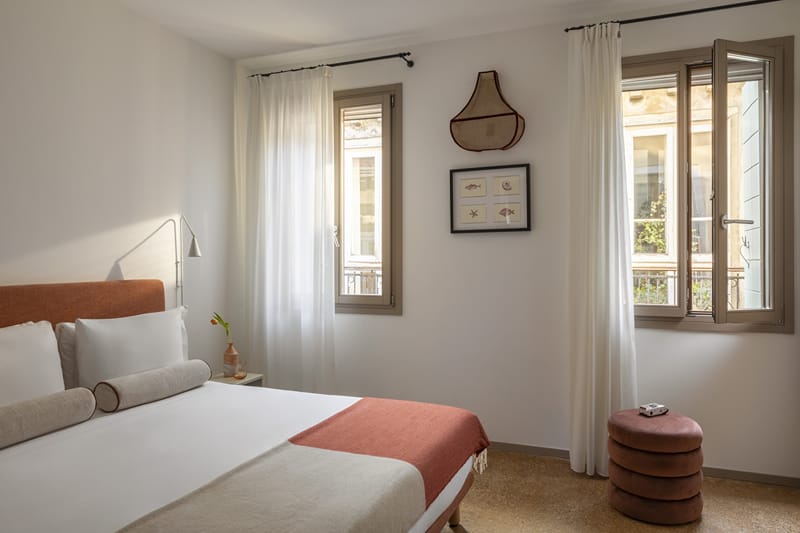
Ca' La Stampa
A short walk from the Ducal Palace, the Rialto Bridge and La Fenice Theatre, with co-working spaces, a laundry service and a pet-friendly policy.
View on TRVL ↗
Hotel Messner
Close to Santa Maria della Salute, the Peggy Guggenheim Collection and the Accademia, with a bar, restaurant and café.
View on TRVL ↗
Hotel Indigo Venice
Housed in a former 1930s monastery close to the Giardini della Biennale, with 75 rooms, an internal cloister and a private garden.
View on TRVL ↗The Essence
Venice rewards the visitor who slows down to its pace. Take the boat instead of the map, stand at a counter with an ombra and a plate of sarde in saor, cross to an island for the afternoon and walk back through a quiet campo after dark. Stay the night, and the city that the day-trippers miss is all yours.