
Istanbul is the city where you cross from Europe to Asia for lunch and think nothing of it. A ferry leaves Eminönü and about twenty minutes later you step off in Kadıköy on the Asian shore. The Bosphorus runs through the middle of everything, and much of the pleasure of a visit lies in simply moving across it.
On the European side, the old peninsula holds Hagia Sophia, Topkapı Palace and the Grand Bazaar within walking distance of one another. Across the Golden Horn, Galata and Karaköy climb steeply towards İstiklal Avenue. Treat the city as a set of neighbourhoods joined by water rather than a list of monuments, and it becomes very easy to love.
The Areas
Most visitors split their time between the historic peninsula and the streets around Galata, then add a day on the Asian side. Choose a base by mood: monuments on the doorstep, or cafés and evenings out.
- Sultanahmet — the heart of the old peninsula, with Hagia Sophia, the Basilica Cistern and Topkapı Palace a few minutes apart. Best for first-timers who want the great sights within walking distance.
- Beyoğlu, Galata and Karaköy — across the Golden Horn, the city's commercial and entertainment centre, from İstiklal Avenue and Taksim Square down through Galata, the old name of Karaköy, to the water. Suits couples and anyone who wants restaurants and bars close by.
- Cihangir — a quieter corner of Beyoğlu within walking distance of İstiklal Avenue, Taksim and the Galataport waterfront. Good for a slower stay close to the evening life.
- Kadıköy and Moda — on the Asian side, a ferry ride from Eminönü. Moda sits on a small peninsula south of central Kadıköy, with its own pier, theatres, old churches and seafood restaurants. Suits repeat visitors and anyone who likes to live like a local.
- Beşiktaş — on the European shore of the Bosphorus, home to Dolmabahçe Palace and, within the district, the waterside village of Ortaköy. Handy for the Bosphorus shore and its ferries.

What to See and Do
Hagia Sophia was completed in 537 for the emperor Justinian, designed by the Greek geometers Isidore of Miletus and Anthemius of Tralles. It became a mosque after 1453, a museum from 1935, and was reclassified as a mosque in 2020. Since 15 January 2024 foreign visitors pay an entrance fee, reported at €25 by recent visitor guides; most of the ground floor is kept for worshippers, while visitors see the building from the upper galleries, which reopened in 2024, outside prayer times.
A few steps away, the Basilica Cistern was built under Justinian in the sixth century: 336 marble columns, each about nine metres high, set in twelve rows of twenty-eight. Look for the two Medusa heads reused as column bases in the north-west corner. A restoration finished in 2022 added a new walkway and lighting, and very little water is now kept inside.
Topkapı Palace, begun in 1459 under Mehmed II, was the main residence of the Ottoman sultans until the court moved to Dolmabahçe in the mid-nineteenth century, and has been a museum since 1924. Walk through its four courtyards, see the Harem, of whose more than 400 rooms only a few are open, and the Treasury with the Topkapı Dagger and the Spoonmaker's Diamond.
Save an afternoon for the Süleymaniye Mosque on the Third Hill, built by Mimar Sinan for Suleiman the Magnificent and inaugurated in 1557. Behind it lie the tombs of Suleiman and Hürrem Sultan, and from its terraces there is a wide view over the Golden Horn. Then walk down to the Grand Bazaar, whose core dates from the 1450s: 61 covered streets and some 3,000 to 4,000 shops, open every day except Sundays and bank holidays, from 9:00 to 19:00.

The Bosphorus and the Ferries
The ferries are the best way to see Istanbul and the cheapest way to cross it. The classic hop is Eminönü to Kadıköy, about twenty minutes from one continent to the other. You pay with the same Istanbulkart you use on the tram and the metro.
For a longer look, the state operator Şehir Hatları runs the Long Bosphorus Tour (Uzun Boğaz Turu) up the strait, and private boats offer shorter cruises. Tickets for the public tour go on sale about an hour before departure, and the morning sailing is popular, so arrive early. The public boat has no commentary and simple facilities; the private ones cost more. A regular ferry from Eminönü to Sarıyer and Rumeli Kavağı is a cheaper way to sail up the European shore.
On the Asian side, walk from the Kadıköy quays through the fish market streets to Moda, where the pier dates from 1917 and was restored in 2022. A nostalgic tram has run through Kadıköy and Moda since 2003.

What to Eat and Drink
Start with the street. A simit is a ring of bread crusted with sesame, lighter and crunchier than a bagel and usually eaten with tea. Balık ekmek is grilled fish, often mackerel, in a roll with onion and lettuce, best eaten by the water.
For lunch, look for an esnaf lokantası, the old-school canteens that serve soups, stews and puddings from trays in the window. In the evening, the meyhane is the place to be: taverns dating back to Ottoman times, found mostly near the sea, where meze come to the table and the night goes on at its own pace.
In Kadıköy, Çiya grew from a small kebab and lahmacun shop into three places a few metres apart near the fish market, cooking dishes drawn from Anatolian, Ottoman, Balkan, Caucasian and Arab traditions. Spices and nuts are on sale everywhere; the stalls of the Spice Bazaar are the most famous, though prices there can run well above the rest of the city.
Getting There and Around
Istanbul Airport (IST) is linked to the city by the M11 metro, which runs from Gayrettepe to the airport and on to Halkalı; the final section opened to passengers on 20 June 2026, and the full end-to-end trip takes around an hour. Buy an Istanbulkart at the airport station. Havaist buses run from the airport to Taksim and Sultanahmet among other stops, and accept credit cards on board. If you take a taxi, use the official rank and insist on the meter.
Sabiha Gökçen (SAW), on the Asian side, is linked to Kadıköy by the M4 metro, a journey of about an hour.
In the city, the Istanbulkart works on buses, trams, the metro, suburban trains and the ferries. Buy and top it up at station machines or small corner shops; ticket kiosks take only Turkish lira in cash. The T1 tram runs from Kabataş on the Bosphorus through Karaköy, Eminönü and Sultanahmet, with a funicular up to Taksim at Kabataş and the historic Tünel up from Karaköy.
When to Go
Spring is a lovely time to come: tulips flower in the parks from late March to early May, with April the best month to see them. Summer is warm, with average daytime temperatures around 28 °C and high humidity in July and August. Winter days run at 5 to 10 °C with frequent rain, and snow settles on the city in most winters.
Good to Know
The currency is the Turkish lira (TRY). Exchange offices in town give better rates than those at the airport, and some attractions accept only lira, so keep some cash.
In mosques, take off your shoes, cover shoulders and knees, and women cover their hair; scarves are usually available at the door. Avoid visiting at prayer times, especially around Friday midday, keep your voice low and do not photograph people praying.
Ask the price before you order wherever it is not displayed, and use official taxi ranks.
Citizens of most EU countries, including Greece, Germany, France and Italy, can visit Türkiye without a visa for up to 90 days on an ordinary passport; Cypriot passport holders need an e-visa from evisa.gov.tr. Check the rules for your own passport on the Turkish Ministry of Foreign Affairs website before you travel.
Our Picks
- To seeHagia Sophia
Justinian's sixth-century dome, seen from the upper galleries outside prayer times.
- To seeBasilica Cistern
336 marble columns in soft light, and the two Medusa heads in the north-west corner.
- To seeTopkapı Palace
Four courtyards, the Harem and the Treasury with the Spoonmaker's Diamond.
- To seeSüleymaniye Mosque
Sinan's masterpiece for Suleiman, with a wide view over the Golden Horn.
- To shopGrand Bazaar
61 covered streets to wander; open Monday to Saturday, 9:00 to 19:00.
- To eatÇiya
Regional cooking from across Anatolia and beyond, in three places a few metres apart.
- To rideEminönü–Kadıköy ferry
About twenty minutes from Europe to Asia, and the best-value view in the city.
- To walkModa seafront
From the 1917 Moda Pier along the small peninsula, past old churches and seafood restaurants.
Where to Stay

Ottoman Hotel Imperial
Close to the city centre, with Hagia Sophia, Gülhane Park and the Basilica Cistern nearby.
View on TRVL ↗
DeCamondo Galata Tribute
A hotel with a library, a restaurant and a café, near Galata Tower, Şişhane and the Galata Bridge.
View on TRVL ↗
The Peninsula Istanbul
A hotel near Galata Tower and the Galata Bridge, with a restaurant serving local cuisine, a spa and an outdoor pool.
View on TRVL ↗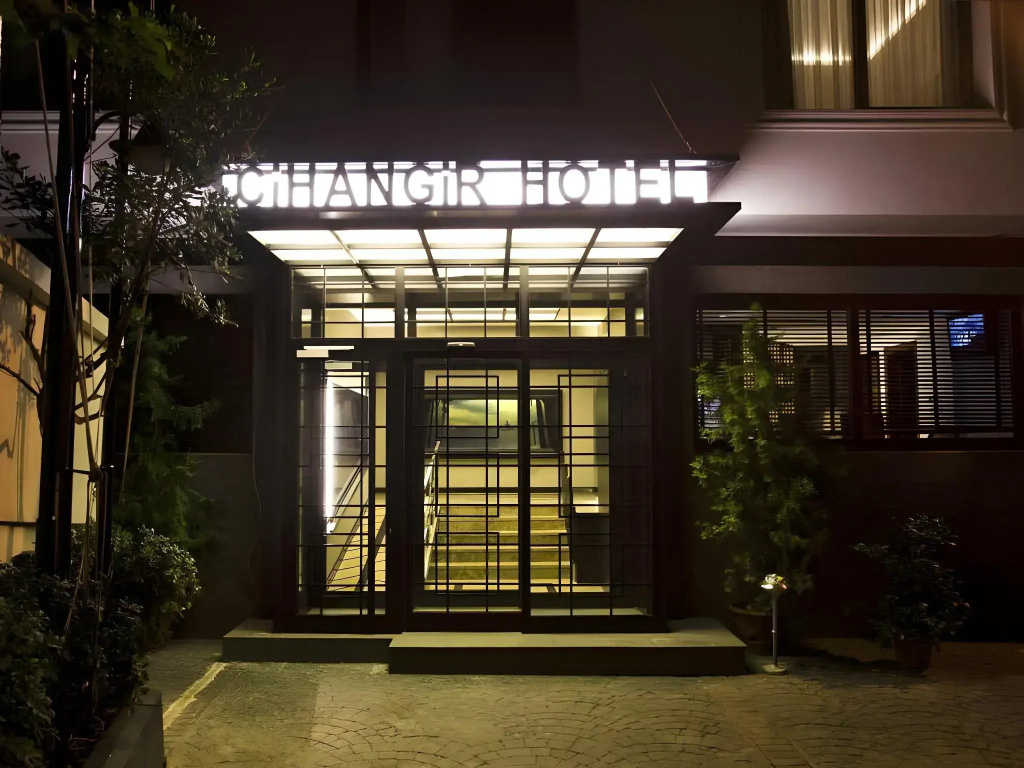
Cihangir Hotel Bosphorus
Within walking distance of İstiklal Avenue, Taksim and Galataport, with a bar, a restaurant and a café.
View on TRVL ↗The Essence
Istanbul rewards the visitor who keeps moving, but slowly. See the great domes early and outside prayer times, lose an hour in the bazaar, then let the ferries do the rest: a simit in hand, the skyline sliding by, dinner on the other side of the water. Two shores, one city, and always a boat waiting to take you back across.