
Naples is a city that lives at street level. Its old centre is a maze of narrow alleys, and a single long, straight street, Spaccanapoli, cuts through it all like a ruler laid across a map. The historic centre has been a UNESCO World Heritage Site since 1995, yet it is still very much a working neighbourhood, full of churches, workshops and coffee bars.
Then there is the setting. The city curves around its bay with Vesuvius on one side and the islands on the other, and the buried Roman towns of Pompeii and Herculaneum are a short train ride away. Come for the pizza, stay for the museum, the views from the hill and the boat to Capri, and you will find Naples is one of the most generous bases in Italy.
The Areas
Naples is big, but the parts a visitor needs sit close together, linked by the metro and by four funiculars that climb the hill. Choose by what you want to wake up to: alleys and churches, or the sea.
- Centro Storico — the maze of alleys crossed by Spaccanapoli, whose official names are Via Benedetto Croce and Via San Biagio dei Librai, and by Via dei Tribunali, the street of the historic pizzerias. Best for first-timers who want to walk everywhere and eat well.
- Quartieri Spagnoli — a dense grid of narrow lanes built in the 16th century to house Spanish garrisons under Viceroy Pedro de Toledo, right beside the shopping street of Via Toledo. Lively and full of character by day, and close to both the old centre and the waterfront.
- San Ferdinando and the seafront — the Royal Palace, Piazza del Plebiscito, Castel Nuovo and Castel dell'Ovo, with hotels and restaurants along Via Partenope. Suits travellers who want sea views and an easy walk to the ferries.
- Chiaia — the elegant, well-heeled quarter west of the palace, with good shopping and the seafront Via Caracciolo, laid out in the 1880s. Good for couples and for long evening walks by the water.
- Vomero — a hilly residential district above the centre, reached by the Centrale, Chiaia and Montesanto funiculars, with panoramic views over the bay. Calmer, and a fine choice for a longer stay.

What to See and Do
Start at the National Archaeological Museum, MANN, on Piazza Museo, housed in a building that began life as a cavalry barracks in 1585. It holds the Farnese collection, with the Farnese Hercules and the Farnese Bull, and much of the best of Pompeii and Herculaneum: the Alexander Mosaic, painted frescoes and the bronzes from the Villa of the Papyri. Seeing it before you visit the ruins makes both richer. Check opening times on the museum's own site before you go.
A few minutes away, the Cappella Sansevero holds Giuseppe Sanmartino's Veiled Christ of 1753, a marble figure under a shroud so fine it seems to be cloth. The chapel was given its final form by Raimondo di Sangro, Prince of Sansevero, and also contains Antonio Corradini's Veiled Truth and, in the basement, two 18th-century anatomical models. It opens daily from 09:00 to 19:00 except Tuesdays, and tickets are booked online only.
For the city beneath the city, Napoli Sotterranea, entered from Piazza San Gaetano on Via dei Tribunali, leads visitors 40 metres down through ancient tunnels and cisterns. Back on the surface, walk from Via Toledo to Piazza del Plebiscito and the Galleria Umberto I, the glass-roofed arcade across from the San Carlo opera house. Even the metro is worth a look: Toledo station on Line 1, designed by the Spanish architect Óscar Tusquets and opened in 2012, is lined with deep blue sea-themed mosaics and has often been named among the most beautiful stations in Europe.
Finally, ride a funicular up to Vomero for Castel Sant'Elmo, where the ramparts look out over the whole bay towards Ischia and Procida, a good spot at sunset. The Certosa di San Martino, a former monastery and museum, stands right next to it.

Pompeii, Herculaneum and the Islands
Pompeii is an easy day trip on the Circumvesuviana, the local railway that leaves from Porta Nolana and stops at Piazza Garibaldi; get off at Pompei Scavi, a short walk from the entrance, after about 30 to 40 minutes. From 15 October to 15 March the site opens from 09:00 to 17:00, with last entry at 15:30; in summer it stays open until 19:00. The Pompeii Express ticket for the ancient city costs €20, while Pompeii+ at €25 adds the Villa of the Mysteries and other suburban villas. Tickets are in your name, entries run on time slots with a daily cap of 20,000 visitors, and bags larger than 30 × 30 × 15 cm are not allowed. Wear good shoes for the old cart-rutted streets and carry water.
Herculaneum, on the same line at Ercolano, is smaller and better preserved, with some upper storeys still standing. It opens from 08:30 to 17:00 in winter and to 19:30 in summer, and a full ticket costs €16. Both sites are free on the first Sunday of the month, which also makes them busier.
For Capri, hydrofoils and fast ferries leave from Molo Beverello and take about 50 minutes; slower Caremar ferries leave from Calata Porta di Massa, a free shuttle away. Fares include an island landing fee, €2.50 per person from November to March and €5 from April to October, and booking ahead is wise at weekends and in July and August. From Marina Grande, a funicular climbs to Capri town; in Anacapri, a chairlift rises to the summit of Monte Solaro, 580 metres up, and Villa San Michele, built by the Swedish doctor Axel Munthe, has gardens over the sea. Boats to the Blue Grotto depend on the sea and the tide.
The Amalfi Coast is a longer day. Take the Circumvesuviana to Sorrento, about an hour, then the SITA bus along the cliffs to Positano and Amalfi; tickets are bought at bars and newsagents, not on board. Above Amalfi, Ravello is known for the gardens of Villa Cimbrone and Villa Rufolo. Walkers can follow the Path of the Gods, about 7 kilometres from Bomerano to Nocelle above Positano. Travelmar also runs ferries from Naples to Amalfi via Capri; check timetables, which change with the season.

What to Eat and Drink
This is the home of pizza, and the city takes it seriously: in 2017 UNESCO added the art of the Neapolitan pizzaiuolo to its list of the intangible heritage of humanity, noting that about 3,000 pizza makers live and work in Naples. The margherita is the benchmark, with tomato, mozzarella, basil and oil on a soft, blistered crust from a wood-fired oven. L'Antica Pizzeria da Michele, on Via Cesare Sersale, has been making it since 1870 from a menu of just four pizzas; expect to take a number and wait. On Via dei Tribunali, Gino Sorbillo's family has made pizza since 1935, and Di Matteo stands a few doors along.
For something sweet, order a sfogliatella. The riccia is the crisp one, its dough rolled and folded into many thin shell-like layers; the frolla is made with a soft shortcrust instead. Its ancestor, the Santa Rosa, was created in the 17th century in a monastery at Conca dei Marini on the Amalfi Coast, and the Neapolitan pastry chef Pasquale Pintauro began selling sfogliatelle in his shop in 1818. Naples also claims the babà, a small cake soaked in rum syrup.
Coffee is short, strong and drunk at the counter. Gran Caffè Gambrinus, on the corner of Via Chiaia and Piazza Trieste e Trento, opened in 1860 and has been the city's grand literary café ever since, a few steps from Piazza del Plebiscito.
Getting There and Around
Naples International Airport, Capodichino, lies just north of the centre and closes overnight, from 22:30 to 03:30. The Alibus, run by the city transport company ANM, links it with Piazza Garibaldi and the Central Station in about 15 minutes and with the port at Molo Beverello in about 35; buy tickets online or from the machines in the arrivals hall. Taxis charge fixed fares to the centre, the port and Mergellina, and a shared taxi to the station or Molo Beverello costs €6 per person including luggage. Buses also run from the airport straight to Sorrento and Pompeii.
In the city, walk the old centre and use the metro and funiculars for the hill and the seafront; contactless cards can be tapped on the metro, so remember to tap out too. Piazza Garibaldi, outside the Central Station, is also where you catch the Circumvesuviana to Pompeii, Herculaneum and Sorrento.
When to Go
July and August are hot, with average highs around 30 to 31°C, and the busiest time on Capri and the Amalfi Coast. Winter is mild, with January highs around 13°C, but November is the wettest month, and October and December are rainy too. For the most comfortable days, aim for late spring or September, between the summer heat and the autumn rains; until 14 October Pompeii and Herculaneum keep their long summer hours, and after that they close earlier, so start early.
Good to Know
Book the Cappella Sansevero and, in high season, the Capri boats in advance, and buy Pompeii tickets on the official sellers, since they carry your name. The first Sunday of the month is free at Pompeii and Herculaneum, and crowded. Like any big port city, Naples asks for some street sense: keep an eye on bags around the Central Station, stick to busy streets late at night, and take only licensed white taxis. A city tax is added to hotel bills, roughly €2 to €5 per person per night depending on the property, with children under 14 exempt; your hotel will confirm the current rate.
Our Picks
- To seeCappella Sansevero
Sanmartino's Veiled Christ in a small Baroque chapel; book online, closed on Tuesdays.
- To seeNational Archaeological Museum
The Farnese marbles and the Alexander Mosaic; go before Pompeii.
- To seeNapoli Sotterranea
Tunnels and cisterns 40 metres beneath the old centre.
- To seeToledo metro station
Óscar Tusquets' sea-blue station on Line 1; worth a single ticket.
- To walkCastel Sant'Elmo
The whole bay from the ramparts, best towards sunset; ride the funicular up.
- To walkVia Caracciolo
The seafront promenade, built in the 1880s, for an evening stroll.
- To eatL'Antica Pizzeria da Michele
Pizza since 1870 from a menu of four; take a number.
- To eatGino Sorbillo
A family of pizza makers since 1935, on the old centre's pizza street.
- To drinkGran Caffè Gambrinus
Coffee and a sfogliatella in the grand café of 1860.
Where to Stay
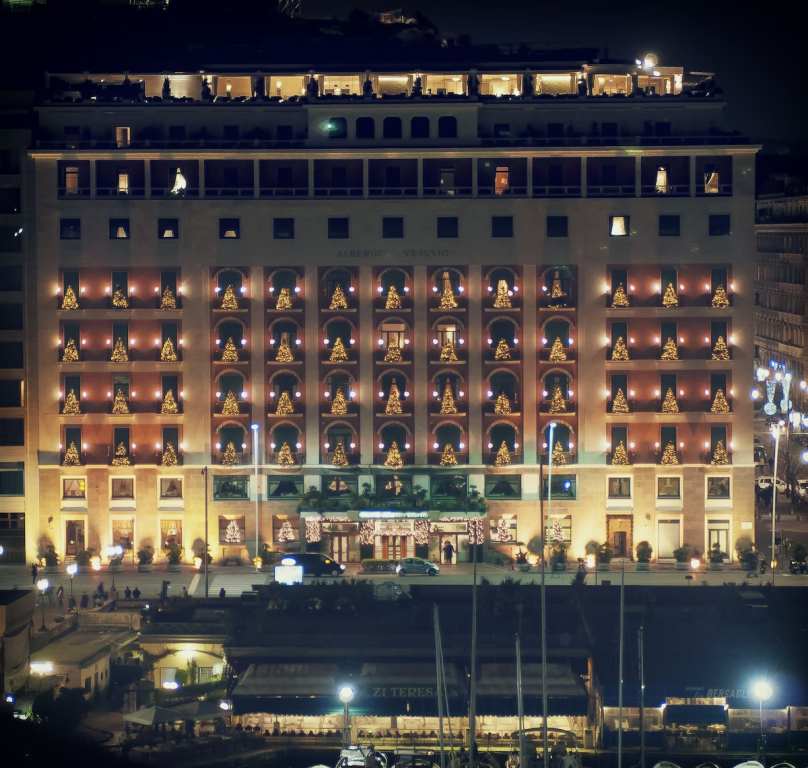
Grand Hotel Vesuvio
A sophisticated but very comfortable hotel close to Castel dell'Ovo, Piazza del Plebiscito and the Royal Palace, with a spa, a gym and an indoor pool.
View on TRVL ↗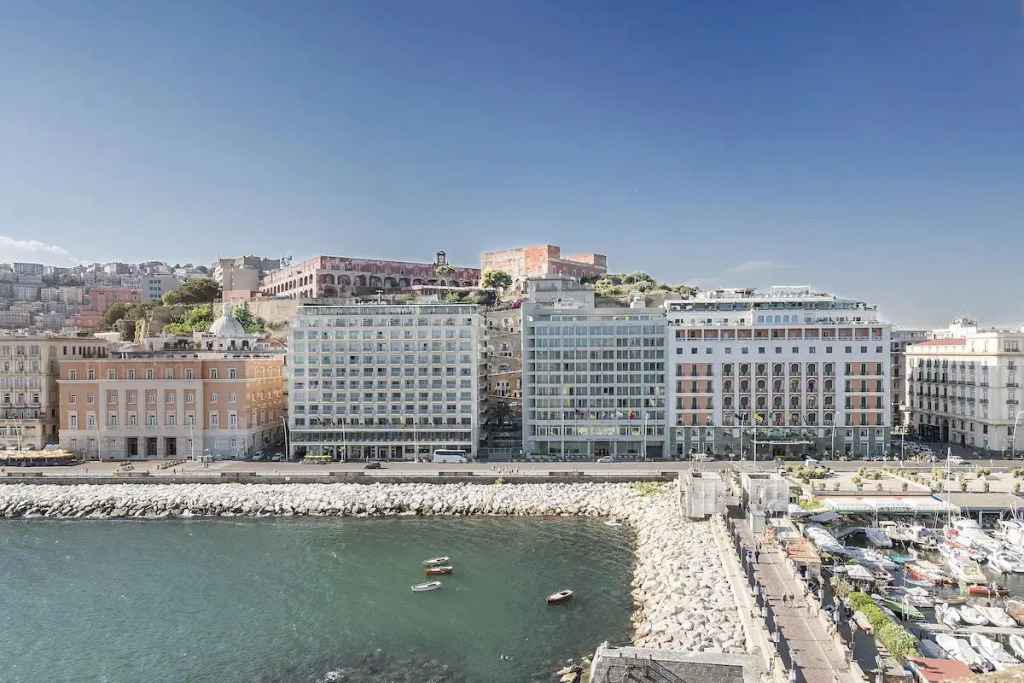
Royal Continental Hotel
Within a five-minute walk of Castel dell'Ovo and the Gulf of Naples, with a seasonal outdoor pool and Al Castello, a restaurant with a bar and a sea view.
View on TRVL ↗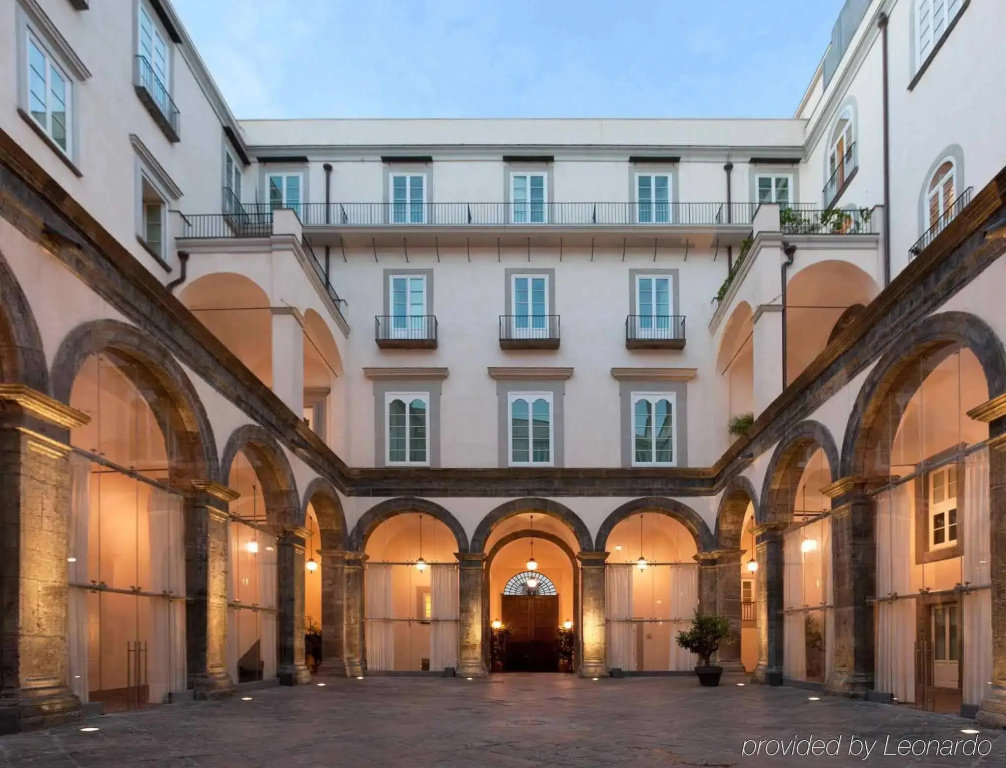
Palazzo Caracciolo Naples
A four-star hotel within walking distance of the historic centre, with a restaurant, an elegant bar, a sauna and a spa.
View on TRVL ↗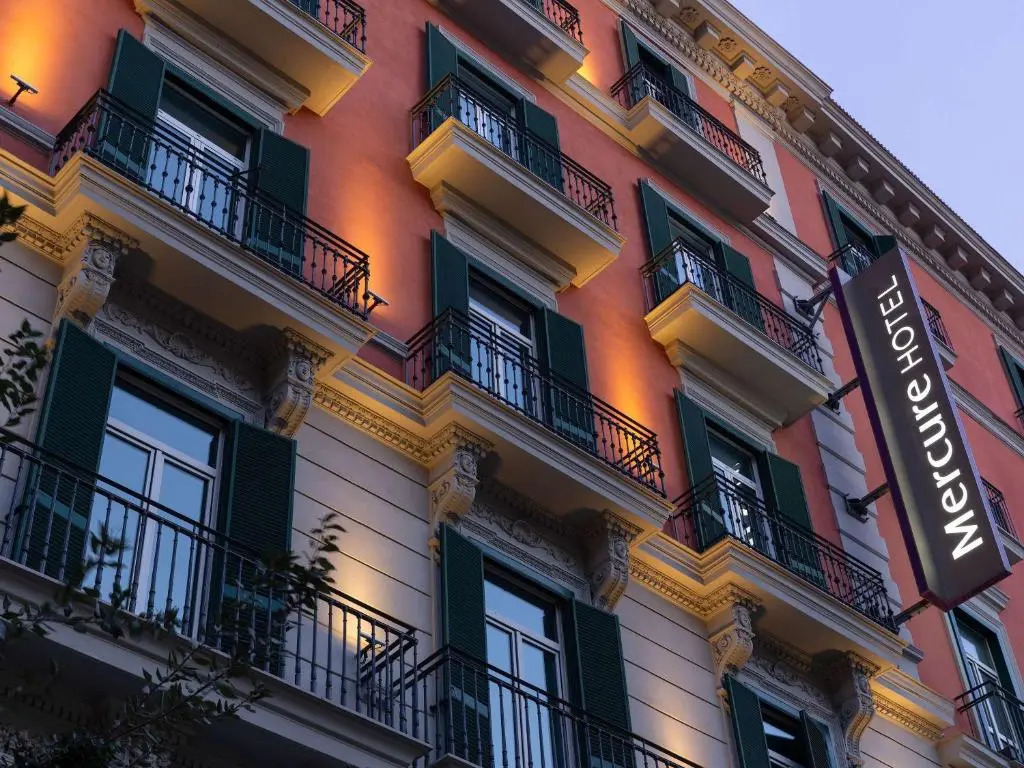
Mercure Napoli Centro
A comfortable four-star hotel within walking distance of the historic centre, with a stylish bar and a 24-hour reception.
View on TRVL ↗The Essence
Naples gives a lot and asks only that you join in. Queue for a margherita on Via dei Tribunali, stand at the counter for a coffee and a sfogliatella, stand before the Veiled Christ for as long as you like, then take the little train to Pompeii or the boat to Capri. In the evening, walk the seafront along Via Caracciolo towards Castel dell'Ovo. Few cities offer so much, so close together, with such appetite for life.