
Rome is a city you read from the pavement down. A market hall in Testaccio has an ancient Roman warehouse beneath its stalls, a few streets from a hill made entirely of broken amphorae; a new metro station at the Colosseum doubles as a display case for the things its builders dug up. Everywhere you turn, the present is simply carrying on over the past, and the past seems quite content with the arrangement.
The pleasure of a visit is in that mix. You can spend a morning under Michelangelo's ceiling and the afternoon eating supplì on a side street, walk the old Appian Way on a Sunday and finish at a piazza fountain at dusk. Treat the city as a set of neighbourhoods rather than a checklist, and it becomes easy to love.
The Areas
The historic centre is compact, and most first-time visitors are happiest staying within walking distance of it. Each quarter has its own pace, so it is worth choosing by mood as much as by map.
- Centro Storico — the old city inside the river bend, around the Pantheon, Piazza Navona and Campo de' Fiori, where a market fills the square on weekday mornings. Best for first-timers who want to walk everywhere.
- Monti — between the Colosseum and Santa Maria Maggiore, a village-like grid of lanes such as Via Urbana and Via del Boschetto, with vintage shops and the fountain of Piazza della Madonna dei Monti as its evening meeting point. Suits couples and anyone who likes to be close to the ancient sites.
- Trastevere — across the Tiber, with cobbled lanes, trattorias and the Basilica of Santa Maria in Trastevere and its gold mosaics. On Sundays the Porta Portese flea market spreads out nearby. Good for food lovers and evenings out.
- Prati and the Vatican — orderly streets just north of St Peter's, practical for an early start at the Vatican Museums, with the big covered Mercato Trionfale on Via Andrea Doria.
- Testaccio — a working Roman quarter south of the Aventine, built around its food market and Monte Testaccio, a hill made of ancient broken amphorae. The former slaughterhouse, the Mattatoio, is now an arts venue. For travellers who come to eat.

What to See and Do
Start with the Pantheon, rebuilt under Hadrian in the early 2nd century AD. Its dome is still the largest of unreinforced concrete in the world, and light falls through the open oculus at its crown onto a floor where Raphael was buried in 1520. Entry is ticketed: the full ticket rose to €7 in July 2026, and under-18s and Rome residents go free.
The Colosseum, the Roman Forum and the Palatine Hill share one ticket with a timed entry to the amphitheatre, sold on the official ticketing site, which releases slots about a month ahead. The Forum is the heart of the ancient city; climb the Palatine afterwards for the view back over it. The new Colosseo–Fori Imperiali station on Metro C, opened in December 2025, displays finds from its own excavation and is worth a look even if you are not catching a train.
For art, the Galleria Borghese is a smaller, gentler experience: Bernini's Apollo and Daphne, Canova's reclining Paolina Borghese and a room of Caravaggios, seen in two-hour timed visits that must be booked in advance. Afterwards, walk out into the park of Villa Borghese.
Then do as the Romans do and take the air. The Trevi Fountain is free to admire from the piazza; since February 2026 a €2 ticket is needed to go down the steps to the basin. Climb the Gianicolo, the Janiculum Hill, for one of the best views over the historic centre and the noon cannon, fired from below the belvedere every day since 1904. On the Aventine, look through the keyhole of the Priory of the Knights of Malta, where the dome of St Peter's appears framed by the garden hedges, then sit among the bitter orange trees of the Giardino degli Aranci next door.

Vatican City and Day Trips
The Vatican Museums open Monday to Saturday from 08:00 to 20:00, with last entry at 18:00. They close on Sundays, except the last Sunday of the month, when entry is free from 09:00 to 14:00 and the queues are long. Book on the official ticket site, tickets.museivaticani.va, and take the earliest slot you can. The route ends in the Sistine Chapel, where Michelangelo painted the ceiling between 1508 and 1512 and the Last Judgement on the altar wall later in his life.
St Peter's Basilica is free to enter, but there is a security check, so go early. Shoulders and knees must be covered, which applies to the museums too. The climb to the dome is ticketed and long, with a lift for the first stage if you prefer, and the view over the square from the top is the reward.
When you want a change of scene, three easy escapes. Ostia Antica, Rome's ancient port, is one of the largest archaeological sites anywhere, a whole town of houses, shops and public buildings, reached on the Roma–Lido train; it is closed on Mondays and the ticket office takes cards only. The Appia Antica archaeological park follows the old Appian Way past the tomb of Caecilia Metella, from the 1st century BC, and the Villa dei Quintili; bikes can be hired at the visitor centre at Via Appia Antica 60, and the Catacombs of San Callisto lie along the way. Or take a regional train of around half an hour from Termini to Frascati in the Castelli Romani hills, for its crisp white wine and a long lunch.

What to Eat and Drink
Roman cooking is built on a short list of ingredients used with great confidence. Four pastas make up the canon: gricia, with guanciale, pecorino and black pepper; amatriciana, which adds tomato and takes its name from Amatrice in the Lazio mountains; carbonara, with egg yolk and no cream; and cacio e pepe, just pecorino, pepper and the pasta's own starchy water. Order one of each over a few days and you will understand the city's kitchen.
The rest of the table follows the seasons. In spring the artichokes arrive, braised alla romana with mint and garlic, or fried whole alla giudia, the Jewish-Roman way, in the old Ghetto. The quinto quarto, the offal tradition tied to Testaccio's old slaughterhouse, gives you oxtail stew, coda alla vaccinara, and tripe. On the street, look for supplì, fried rice croquettes with a molten centre, and pizza al taglio, sold by weight and cut with scissors.
Coffee is taken standing at the counter, quickly and often. Sant'Eustachio Il Caffè, by the Pantheon, has roasted its own beans over wood since 1938, and its gran caffè arrives already sweetened. For a slower meal, a market hall is the best place to start: Testaccio, open Monday to Saturday from 07:00 to 15:30, has about a hundred stalls of produce and lunch counters.
Getting There and Around
Most international flights land at Fiumicino, west of the city. The non-stop Leonardo Express train runs to Termini in about 32 minutes for €14, and taxis charge a fixed fare of €55 to anywhere inside the Aurelian Walls. Ciampino, the smaller airport to the southeast, is linked to Termini by bus, or by a short shuttle to Ciampino station and a regional train.
In the centre, walking is the best way to get around. For longer hops, the metro, buses and trams share one ticket, the BIT, at €1.50 for 100 minutes, which covers one metro ride; you can also tap a contactless card or phone at the gates and validators, with a daily cap. Metro C now reaches the Colosseum, connecting with Line B.
When to Go
Spring, from April to May, and autumn, from September to October, are the most comfortable times: warm days, long evenings and fewer crowds than in summer. October is a particular favourite. July and August are hot, often well over 30°C, and around Ferragosto, on 15 August, many family-run restaurants and shops close; the Vatican Museums are shut on 14 and 15 August. Winter is quieter, good for museums, and spring brings the artichokes into season.
Good to Know
Book ahead for the big three: the Colosseum, the Vatican Museums and the Galleria Borghese, which sells no tickets at the door. Use the official sites, as many resellers charge more for the same entry. Cover shoulders and knees for St Peter's and the city's churches, and carry a light scarf. Rome's free water fountains, the nasoni, run all over the city, so a refillable bottle will serve you well. Sitting on the Spanish Steps is not allowed and can bring a fine, as can eating or drinking on the edge of historic fountains. Hotels collect a city tax per person per night, set by star rating and paid on top of the room rate. Popular restaurants fill up, so reserve where you can, and expect to queue where you cannot.
Our Picks
- To seePantheon
Hadrian's great dome and its open oculus; go at opening time, around 09:00, before the tour groups.
- To seeGalleria Borghese
Bernini, Canova and Caravaggio in a two-hour booked visit; closed on Mondays.
- To seeVatican Museums
Take the first slot of the morning and save energy for the Sistine Chapel at the end.
- To walkThe Gianicolo
A view across the domes of the centre, with the noon cannon as a bonus.
- To walkAventine keyhole and Orange Garden
The dome of St Peter's framed in a keyhole, then a bench among the orange trees.
- To eatRoscioli Salumeria con Cucina
A deli with a kitchen and a cellar of more than 2,800 labels; book a table.
- To eatSupplizio
Supplì in classic and pasta-inspired versions, from carbonara to cacio e pepe; closed on Sundays.
- To eatPizzarium Bonci
Gabriele Bonci's pizza al taglio, with seasonal toppings; standing room only.
- To shopMercato di Testaccio
About a hundred stalls over an ancient Roman warehouse; come for lunch, Monday to Saturday.
- To drinkSant'Eustachio Il Caffè
Wood-roasted coffee since 1938, a short walk from the Pantheon.
Where to Stay
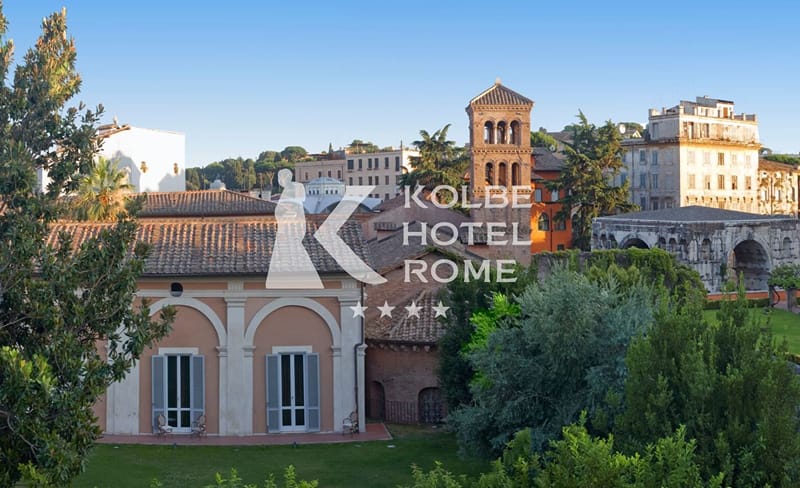
Kolbe Hotel Rome
In the deep historic centre, very close to the Roman Forum, behind the Capitol and in front of the Palatine Hill.
View on TRVL ↗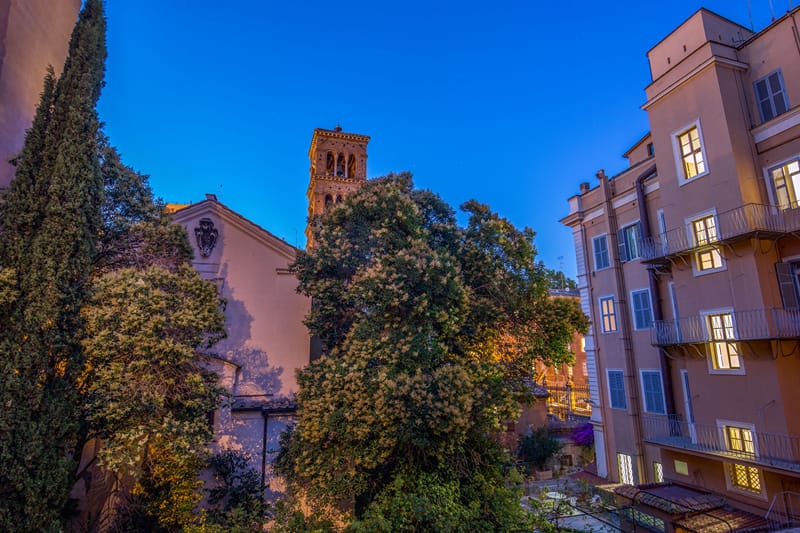
Aenea Superior Inn
A high-quality guest house set over two floors of an elegant Roman building, an easy walk from the Colosseum, the Roman Forum and Santa Maria Maggiore.
View on TRVL ↗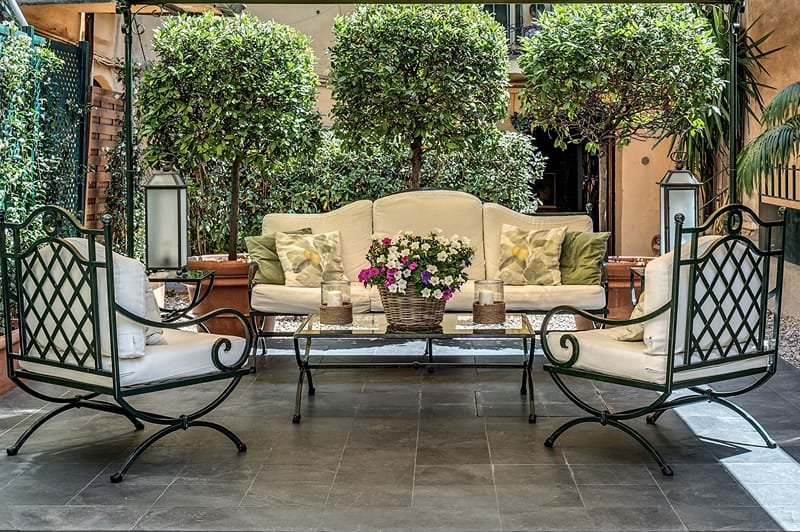
Santa Maria Hotel
Rooms connected by a monastic portico, facing a quiet garden of orange trees, flowers and Mediterranean plants or a rooftop garden framed by vines.
View on TRVL ↗
Orange Hotel
Within walking distance of the centre, in the neighbourhood of St Peter's Basilica, the Vatican Museums and the Sistine Chapel.
View on TRVL ↗The Essence
Rome rewards the visitor who slows down. See the great sights, by all means, booked and early, but leave room for the rest: a plate of cacio e pepe in Testaccio, a coffee at the counter, a walk up the Gianicolo as the light turns gold, a bicycle on the Appian Way. Every layer of this city is still in use, and the best way to enjoy it is to join in.